Rent Payment Tracking Software: The Complete Guide for Landlords and Property Managers
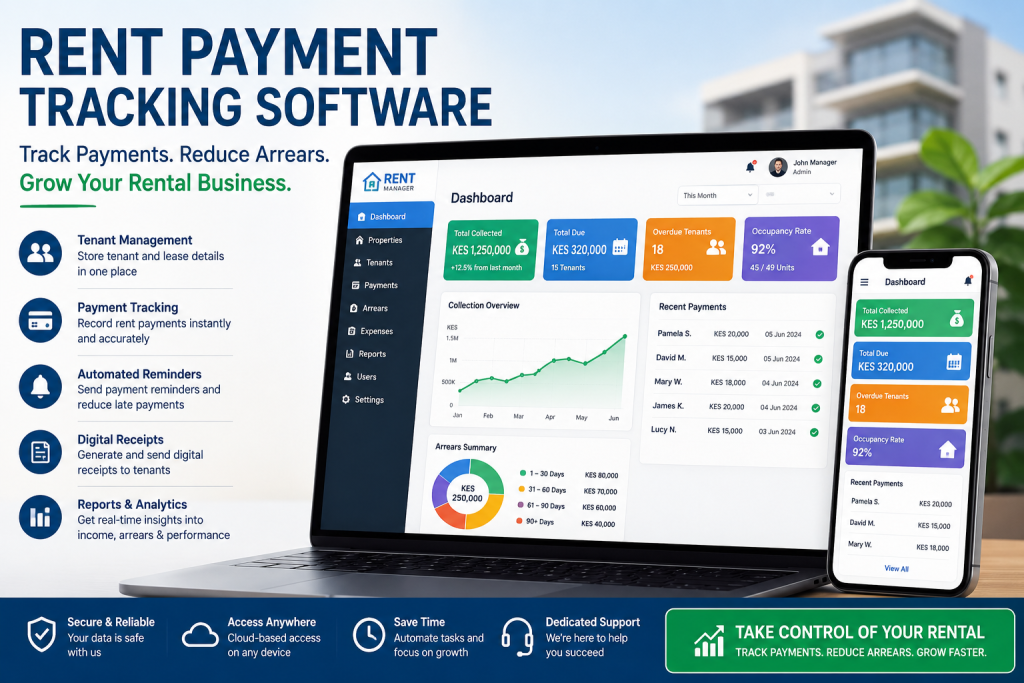
Managing rental properties involves much more than collecting rent. Landlords and property managers must keep accurate payment records, monitor outstanding balances, follow up on late payments, issue receipts, prepare financial reports, and maintain good communication with tenants. When these activities are handled manually, mistakes and delays can easily occur.
This is where rent payment tracking software becomes an important tool for modern property management.
A reliable system helps landlords know who has paid, who has not paid, how much has been collected, and which tenants have outstanding balances. Instead of depending on notebooks, spreadsheets, bank statements, or scattered payment messages, property owners can manage rental payments from one centralized platform.
For landlords managing a few units, keeping track of payments manually may seem manageable. However, as the number of properties and tenants increases, manual tracking becomes increasingly difficult. A professional digital solution can make the process faster, more accurate, and easier to manage.
What Is Rent Payment Tracking Software?
Rent payment tracking software is a digital property management solution designed to help landlords, property managers, real estate agencies, and property owners monitor rental payments.
The software records tenant information, rental units, payment amounts, payment dates, outstanding balances, arrears, and other important financial information. Depending on the platform, it may also support automated reminders, digital receipts, reports, tenant communication, and payment integrations.
Instead of asking tenants to provide payment confirmations every month, property managers can use the system to maintain organized payment records.
A typical system can answer important questions such as:
- Which tenants have paid rent?
- Which tenants have not paid?
- How much rent has been collected this month?
- How much rent remains outstanding?
- Which properties have the highest arrears?
- Which tenants are consistently late?
- How much has each tenant paid over a specific period?
- What rental income is expected?
- Which units are occupied or vacant?
These insights help property owners make better financial and operational decisions.
Why Rent Payment Tracking Matters
Rent is one of the most important sources of income for property owners. Poor payment tracking can therefore have a direct impact on cash flow.
Imagine a landlord managing 100 rental units. If payment records are stored in different spreadsheets, notebooks, mobile money messages, bank statements, and WhatsApp conversations, determining the exact financial position of the property can become difficult.
A modern rent payment tracking software solution brings this information together.
With centralized records, property managers can quickly identify outstanding payments and take action before arrears become too large.
Accurate tracking also improves accountability. Property owners can see how much money has been collected and compare actual collections with expected rental income.
Problems With Manual Rent Payment Tracking
Many landlords still use manual methods to manage rent payments. These may include Excel spreadsheets, notebooks, paper receipts, mobile phone messages, bank statements, and manual calculations.
Although these methods can work for a small number of tenants, they become challenging as a property portfolio grows.
1. Human Errors
Manual data entry can result in incorrect figures. A payment may be entered twice, omitted completely, or assigned to the wrong tenant.
Even a small mistake can make it difficult to determine the correct outstanding balance.
2. Lost Records
Paper receipts can be lost or damaged. Files can also become difficult to organize when there are hundreds of tenants.
Digital records provide a more reliable way to preserve important payment information.
3. Difficult Arrears Monitoring
When payment records are maintained manually, identifying tenants with outstanding balances can take considerable time.
A rent payment tracking software platform can automatically identify overdue payments and make arrears easier to monitor.
4. Time-Consuming Reconciliation
Property managers often need to compare expected payments with actual payments. Doing this manually can take hours.
Automated systems can make reconciliation much faster.
5. Poor Visibility
A landlord may know that rent has been collected but still lack a clear picture of total monthly income, arrears, or tenant payment patterns.
A digital system provides a clearer overview.
Key Features of Rent Payment Tracking Software
Not every software solution offers the same features. However, an effective platform should provide tools that simplify rental payment management.
Tenant Management
The system should allow property managers to create tenant profiles containing information such as:
- Tenant name
- Contact details
- Property
- Unit number
- Monthly rent
- Lease information
- Payment history
- Outstanding balance
Having all this information in one location makes tenant management easier.
Payment Recording
The software should allow authorized users to record rental payments quickly.
Each transaction can include the tenant, amount paid, payment date, payment method, and applicable reference information.
This creates a detailed history that can be reviewed whenever necessary.
Automated Payment Tracking
A major benefit of rent payment tracking software is the ability to reduce manual work.
When payments are integrated into the system, transactions can be matched with tenant accounts and reflected in payment records.
This reduces the need to update spreadsheets manually.
Arrears Management
Arrears are one of the biggest challenges for landlords.
The software should clearly show:
- Outstanding amount
- Number of overdue days
- Previous payments
- Tenant payment history
- Total arrears
This enables landlords to follow up quickly.
Payment Reminders
Automated reminders can help tenants remember upcoming or overdue payments.
Notifications may be sent through SMS, email, WhatsApp, or other supported communication channels.
Regular reminders can reduce missed payments and improve collection rates.
Digital Receipts
Digital receipts provide tenants with confirmation that their payments have been recorded.
This reduces disputes and creates a professional payment experience.
Reporting and Analytics
Reports can help landlords understand rental income and payment performance.
Useful reports may include:
- Monthly collections
- Outstanding rent
- Arrears reports
- Tenant payment history
- Property income
- Expected revenue
- Collection performance
These reports can be valuable for financial planning.
Benefits of Rent Payment Tracking Software
Implementing rent payment tracking software can provide significant benefits for property owners and managers.
Improved Accuracy
Automated calculations reduce the risk of mathematical errors.
The system can calculate balances based on recorded transactions, making it easier to identify exactly what a tenant owes.
Faster Rent Collection
Payment reminders and easier payment processes can encourage tenants to pay on time.
Property managers can also identify late payments quickly and follow up immediately.
Better Financial Control
Property owners can see their rental income more clearly.
Instead of waiting until the end of the month to calculate collections, managers can monitor performance throughout the month.
Reduced Administrative Work
Manual spreadsheets and paper records require constant updating.
A digital solution reduces repetitive administrative tasks and allows property managers to focus on more important responsibilities.
Better Tenant Communication
When tenant payment information is organized, customer service becomes easier.
Property managers can quickly answer questions about payment dates, balances, receipts, and arrears.
Easier Record Keeping
Digital records are easier to search and organize than paper files.
A manager can search for a tenant and review their complete payment history within seconds.
How Rent Payment Tracking Software Works
The process is generally straightforward.
First, the property manager adds properties and rental units to the platform.
Next, tenants are assigned to their respective units. The monthly rent amount and other relevant information are then recorded.
When a tenant makes a payment, the transaction is recorded or automatically imported if the system supports payment integration.
The tenant’s balance is updated accordingly.
If the tenant does not pay by the expected date, the system can identify the account as overdue.
A reminder can then be sent to the tenant.
The property manager can also generate reports showing the current payment position.
This creates a simple cycle:
Tenant registration → Rent setup → Payment → Recording → Reconciliation → Receipt → Balance update → Reporting
Rent Payment Tracking Software and M-Pesa
For property managers operating in Kenya, mobile money can be an important part of rent collection.
Many tenants prefer convenient digital payment methods. A solution that supports M-Pesa integration can make rent collection more efficient.
Instead of manually checking mobile money messages and updating spreadsheets, transactions can be connected to tenant accounts.
This can significantly reduce administrative work.
For example, when a tenant pays KSh 20,000, the payment can be associated with the correct rental account. The system can then update the tenant’s balance.
This makes rent payment tracking software particularly useful for landlords managing properties where mobile money is widely used.
Managing Rent Arrears
Rent arrears can become a serious problem if they are not identified early.
A tenant who is one day late requires a different approach from a tenant who has accumulated six months of unpaid rent.
A good system allows landlords to identify the age and size of arrears.
Property managers can categorize outstanding payments and prioritize follow-ups.
For example:
- 1–7 days overdue
- 8–30 days overdue
- 31–60 days overdue
- 61–90 days overdue
- More than 90 days overdue
This approach helps landlords create a structured collection strategy.
A rent payment tracking software platform can make this process easier by presenting overdue accounts in an organized dashboard.
Improving Tenant Accountability
Clear payment records encourage accountability.
When tenants receive receipts and can view their payment history, there is less uncertainty about what has been paid.
If a dispute occurs, the landlord can review the transaction history.
For example, a tenant may claim that they paid rent three weeks earlier. Instead of searching through messages or bank statements manually, the property manager can check the tenant’s digital record.
This improves transparency for both parties.
Choosing the Right Rent Payment Tracking Software
Landlords should consider several factors before choosing a software solution.
Ease of Use
The system should be simple enough for property managers to use without extensive technical training.
A complicated platform may create more work rather than reduce it.
Scalability
Choose software that can support portfolio growth.
A landlord managing 20 units today may manage 200 units in the future.
The software should be able to grow with the business.
Payment Integration
Consider whether the platform supports the payment methods commonly used by your tenants.
For Kenyan property managers, M-Pesa support can be particularly useful.
Automated Notifications
Look for systems that can send reminders and payment confirmations automatically.
This can reduce the amount of manual communication required.
Reporting
Strong reporting features are important.
The platform should make it easy to generate reports about rent collection, arrears, tenant balances, and property income.
Security
Rental payment information is sensitive business data.
Choose a platform with appropriate security controls, user permissions, backups, and secure access.
Customer Support
Good customer support is important, especially during implementation.
Choose a provider that can assist with onboarding, technical issues, and system usage.
Rent Payment Tracking Software for Property Managers
Professional property managers often manage multiple buildings and hundreds or thousands of tenants.
For these professionals, manual tracking becomes increasingly difficult.
A centralized platform allows property managers to manage multiple properties from one dashboard.
They can move between properties, review tenant accounts, monitor collections, and generate reports without maintaining separate spreadsheets for every building.
This improves operational efficiency.
Property managers can also assign different roles to employees. For example, an administrator may manage tenant information while an accountant reviews financial reports.
This creates better internal controls.
Rent Payment Tracking Software for Landlords
Individual landlords can also benefit from digital rent management.
A landlord with several apartments may initially manage rent using a notebook or spreadsheet.
However, as the portfolio grows, payment tracking can become complicated.
Using rent payment tracking software gives landlords a structured system for managing their rental income.
The landlord can see payment history, outstanding rent, and collection performance without depending on multiple documents.
This is particularly useful for landlords who live away from their properties.
Mobile Access
Modern property management requires flexibility.
Landlords may need to check payment information while traveling, attending meetings, or inspecting properties.
Cloud-based rent payment tracking software can allow authorized users to access information through computers, tablets, or smartphones.
This means property owners do not have to be physically present in an office to review their rental income.
Automating Rent Collection
Automation is one of the major trends in property management.
Instead of manually performing every step, landlords can automate repetitive processes.
For example:
- A tenant receives a rent reminder.
- The tenant makes a payment.
- The payment is recorded.
- The tenant balance is updated.
- A receipt is generated.
- The property manager receives an update.
- The transaction appears in reports.
Automation reduces repetitive work and creates a more consistent process.
How Software Reduces Rent Collection Errors
Payment errors often occur when information is transferred between multiple systems.
For example, a property manager may receive an M-Pesa message, copy the amount into a spreadsheet, calculate the balance, and then send a receipt.
Every manual step introduces the possibility of an error.
A digital platform reduces the number of manual steps.
With rent payment tracking software, payment records, balances, receipts, and reports can be connected.
This creates a more reliable workflow.
Using Reports to Make Better Decisions
Data is one of the most valuable resources for property owners.
A landlord can use rental payment reports to understand which properties generate the most income and which have persistent arrears.
Reports can also reveal payment trends.
For example, if many tenants consistently pay late during a particular period, the landlord may need to review the rent collection process.
Data can therefore support better decision-making.
Improving Cash Flow
Cash flow is essential for property owners.
Landlords have expenses such as:
- Property maintenance
- Utilities
- Security
- Staff salaries
- Loans
- Insurance
- Taxes
- Repairs
When rent is collected late, these expenses can become difficult to manage.
A rent payment tracking software platform helps landlords monitor expected income and outstanding payments.
This allows property owners to identify potential cash-flow problems earlier.
Reducing Disputes Between Landlords and Tenants
Rental disputes can consume considerable time.
A tenant may believe they paid the correct amount while the landlord’s records show something different.
Digital transaction histories can help resolve these disagreements.
The system can show the payment date, amount, reference, and balance.
This creates a transparent record.
Although software cannot eliminate every dispute, accurate records can make many issues easier to resolve.
The Role of Automation in Modern Property Management
Property management is increasingly becoming digital.
Landlords are adopting software for:
- Rent collection
- Tenant management
- Maintenance requests
- Accounting
- Communication
- Property marketing
- Reporting
- Lease management
Rent payment management is one of the areas where automation can have a significant impact.
A well-designed rent payment tracking software platform can connect several activities that were previously handled separately.
Rent Payment Tracking Software vs Excel
Excel remains a useful tool for many businesses. However, it has limitations when used for large rental portfolios.
Excel requires users to manually enter and update information.
It may also become difficult to manage when multiple employees need access.
A dedicated system is designed specifically for rental management.
| Feature | Excel | Dedicated Software |
|---|---|---|
| Tenant management | Manual | Centralized |
| Payment tracking | Manual | Automated or simplified |
| Arrears monitoring | Manual | Automated |
| Receipts | Manual | Digital |
| Reminders | Manual | Automated |
| Reports | Manual | Automated |
| Scalability | Limited | High |
| Mobile access | Depends on setup | Usually available |
For a small portfolio, Excel may be sufficient. For a growing property business, dedicated software can provide greater efficiency.
Cost Savings
At first, landlords may think software is an additional expense.
However, it is important to consider the cost of manual administration.
Employees spend time checking payments, updating spreadsheets, calculating balances, sending reminders, preparing receipts, and creating reports.
Automation can reduce these repetitive tasks.
The system can therefore help businesses save time and potentially reduce administrative costs.
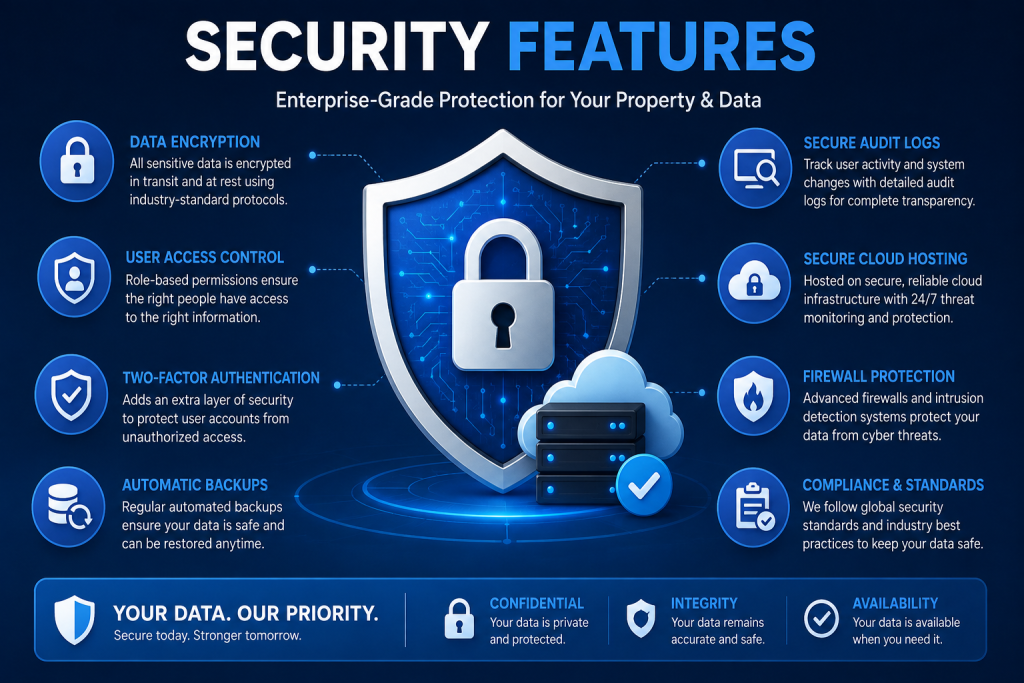
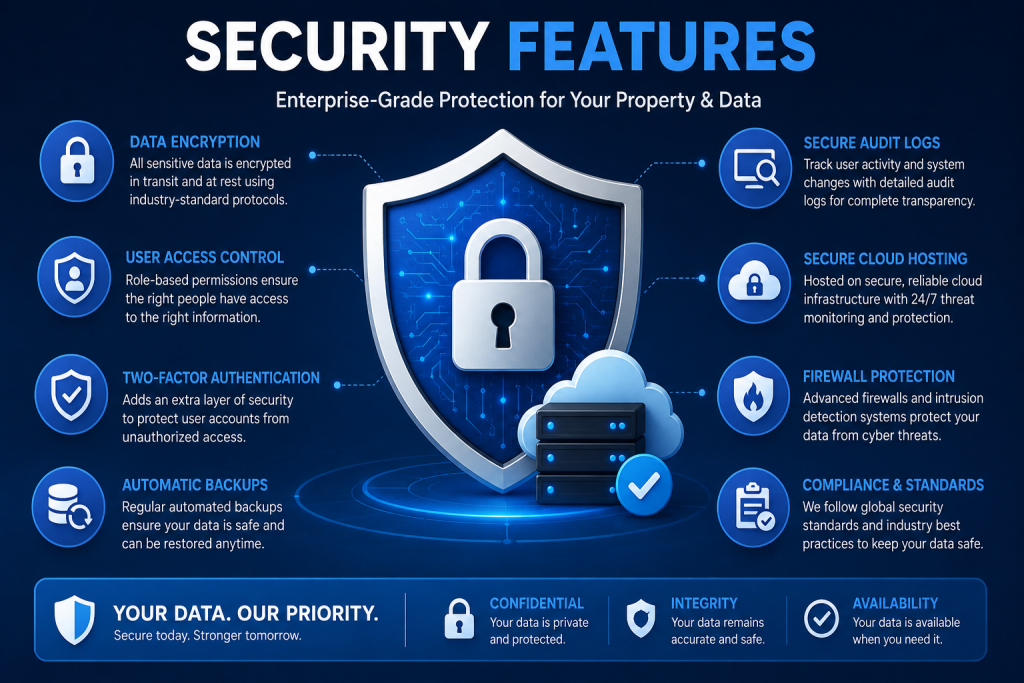
Security and Data Protection
Rental payment information should be handled carefully.
A professional system should provide secure user authentication and access controls.
Different employees should only access information relevant to their responsibilities.
Regular backups are also important.
Property owners should ask software providers how customer information is stored, protected, backed up, and recovered in case of technical problems.
Getting Started With Rent Payment Tracking Software
Moving from manual systems to digital software does not have to be difficult.
A practical implementation process can include the following steps.
Step 1: List Your Properties
Create a complete list of properties and rental units.
Step 2: Add Tenant Information
Enter tenant details and assign each tenant to the correct unit.
Step 3: Configure Rent Amounts
Record the agreed monthly rent for every unit.
Step 4: Enter Existing Balances
If there are outstanding balances, record them accurately before starting.
Step 5: Connect Payment Channels
Where possible, integrate the payment methods used by your tenants.
Step 6: Train Staff
Make sure employees understand how to record payments, generate reports, and follow up on arrears.
Step 7: Start Monitoring
Use dashboards and reports to monitor rental collections.
Best Practices for Rent Payment Management
Technology works best when combined with good processes.
Property managers should establish clear rent collection policies.
Tenants should know:
- When rent is due
- Which payment methods are accepted
- How receipts are provided
- What happens when payments are late
- How payment disputes are handled
Landlords should also review payment reports regularly.
Do not wait until the end of the year to discover that a tenant has accumulated substantial arrears.
Future of Digital Rent Management
The future of property management will continue to involve automation, mobile technology, artificial intelligence, payment integrations, and data analytics.
Artificial intelligence may help property managers identify unusual payment patterns and predict potential arrears.
Chatbots may help answer common tenant questions.
Automated communication may remind tenants about upcoming payments.
Payment integrations may make transactions easier to reconcile.
These developments will make property management increasingly data-driven.
Why Rental Businesses Should Go Digital
The rental industry is becoming more competitive.
Tenants expect convenient payment options and faster communication. Property owners expect accurate reports and greater visibility into their investments.
Manual processes can make it difficult to meet these expectations.
Digital systems provide a more professional approach.
A rent payment tracking software platform can become an important part of a broader property management strategy.
Instead of simply recording payments, it can help create a complete digital workflow for rental operations.
Common Mistakes to Avoid
When implementing a digital rent management system, landlords should avoid several mistakes.
Failing to Update Tenant Records
Old tenant information can lead to incorrect reports.
Entering Incorrect Opening Balances
If historical arrears are entered incorrectly, future calculations may also be incorrect.
Ignoring Reports
Collecting data is not enough. Property managers should regularly review reports and take action.
Not Following Up on Arrears
Software can identify overdue payments, but managers still need to communicate with tenants.
Giving Everyone Full Access
User permissions should be configured according to employee responsibilities.
Frequently Asked Questions
What is rent payment tracking software?
It is a digital system that helps landlords and property managers record, monitor, reconcile, and report rental payments.
Can it track rent arrears on rent payment tracking software?
Yes. Many systems can calculate outstanding balances and identify overdue tenant accounts.
Can landlords manage multiple properties in rent payment tracking software?
Yes. Dedicated platforms are designed to help users manage multiple properties and rental units from a centralized system.
Can tenants receive payment receipts in rent payment tracking software?
Many systems support digital receipts that confirm successful rental payments.
Can rent reminders be automated in rent payment tracking software?
Depending on the platform, landlords can automate reminders through channels such as SMS, email, or WhatsApp.
Is rent payment tracking software better than an Excel spreadsheet?
For larger property portfolios, dedicated software generally provides better automation, reporting, scalability, and centralized management.
Can rent payment tracking software support M-Pesa payments?
Some solutions integrate with M-Pesa and other digital payment methods. Landlords should confirm the specific integrations offered by their preferred provider.
Is rent payment tracking software suitable for small landlords?
Yes. Even landlords managing a relatively small number of units can benefit from organized payment records and automated reminders.
Conclusion
Managing rent payments efficiently is essential for every landlord and property manager.
As rental portfolios grow, manual spreadsheets, notebooks, paper receipts, and scattered payment messages become increasingly difficult to manage. They can consume valuable time and increase the possibility of errors.
A modern rent payment tracking software solution provides a centralized way to manage tenant payments, monitor arrears, generate receipts, automate reminders, and produce financial reports.
The biggest advantage is visibility. Property owners can quickly understand their rental income position and identify problems before they become serious.
For landlords managing multiple properties, the right technology can transform rent collection from a repetitive administrative task into a structured and efficient process.
Whether you manage apartments, commercial properties, student housing, residential homes, or a large real estate portfolio, investing in digital payment management can improve efficiency and financial control.
The future of property management is increasingly digital. Landlords who adopt reliable technology can save time, improve tenant communication, strengthen payment records, and gain better control over their rental businesses.
If your current rent collection process depends heavily on spreadsheets, notebooks, manual reconciliation, or constant follow-ups, it may be time to consider a professional rent payment tracking software solution.
With the right system, rent collection becomes easier to monitor, arrears become easier to control, and property managers can spend more time growing their businesses instead of chasing payment records.