Digital Landlord Management System: The Complete Guide for Modern Property Owners
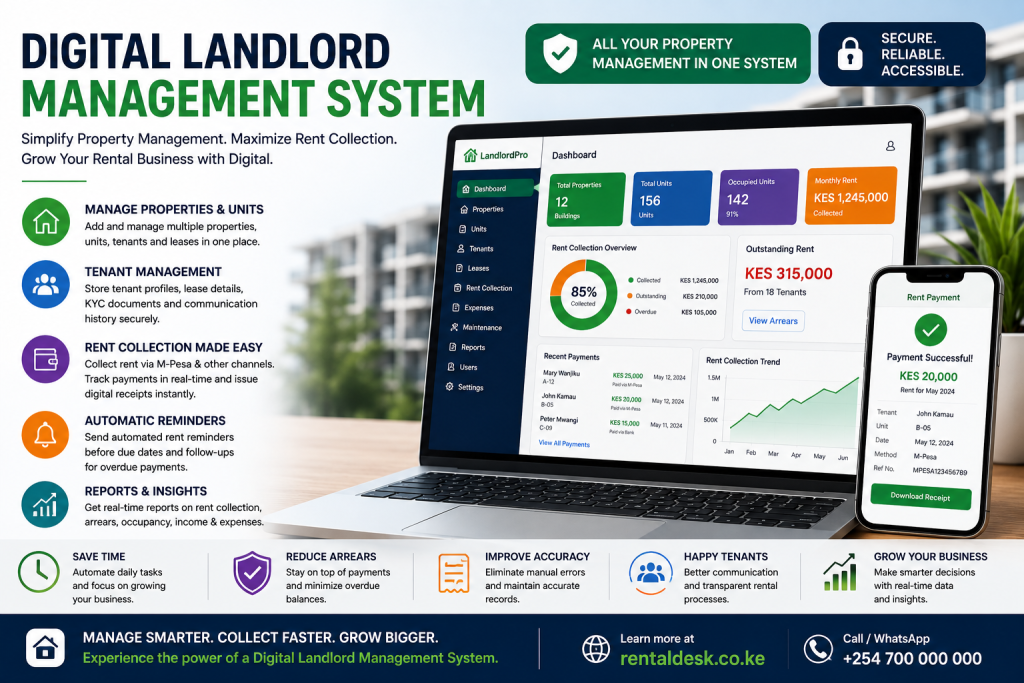
Managing rental property can be rewarding, but it can also become complicated as the number of tenants and properties increases. Landlords have to collect rent, track payments, monitor arrears, communicate with tenants, manage maintenance requests, keep records, and prepare financial reports.
When these activities are handled manually, they can consume a significant amount of time and create opportunities for errors.
A digital landlord management system provides a modern way to organize these responsibilities from one centralized platform. Instead of relying on notebooks, spreadsheets, paper receipts, mobile phone messages, and disconnected applications, landlords can manage important rental activities digitally.
For landlords with a few units, digital management can improve organization. For property managers with hundreds of tenants, it can become an important part of daily operations.
This guide explains what a digital landlord management system is, how it works, its benefits, important features, implementation strategies, and why landlords are increasingly adopting technology to manage rental properties.
What Is a Digital Landlord Management System?
A digital landlord management system is software designed to help property owners and property managers manage rental properties using a centralized digital platform.
Instead of managing different parts of the rental business separately, landlords can use one system to organize properties, units, tenants, rent payments, invoices, receipts, arrears, maintenance requests, and reports.
The exact features differ between platforms, but a modern system may include:
- Property management
- Tenant management
- Rent collection
- Payment tracking
- Arrears management
- Automated reminders
- Digital receipts
- Lease management
- Maintenance tracking
- Financial reporting
- Occupancy tracking
- User management
- Communication tools
The goal of a digital landlord management system is not simply to replace paperwork. It is to make the entire rental management process more organized, efficient, transparent, and scalable.
Why Landlords Need Digital Property Management
Many landlords begin with simple methods.
They may use a notebook to record tenants, Excel to track rent, WhatsApp to communicate with tenants, and mobile money messages to confirm payments.
This can work when the portfolio is very small.
However, as more tenants are added, the process becomes increasingly difficult.
Imagine a landlord managing 150 units. Every month, tenants make payments at different times. Some pay in full, some make partial payments, and some pay late.
The landlord may need to check hundreds of transactions and update records manually.
A digital landlord management system can bring these activities together.
The landlord can see expected rent, received payments, outstanding balances, tenant information, and property performance from one centralized location.
This provides much better visibility than scattered manual records.
Key Features of a Digital Landlord Management System
1. Property Management
The foundation of any rental management platform is property organization.
A landlord may own apartments, houses, commercial buildings, shops, offices, or mixed-use properties.
A good system allows each property to be recorded separately.
Information can include:
- Property name
- Location
- Number of units
- Property type
- Occupancy
- Rental rates
- Tenants
- Property expenses
With a digital landlord management system, landlords can organize multiple properties without maintaining separate spreadsheets for each building.
2. Unit Management
Property managers need to know the status of every rental unit.
A unit can be:
- Occupied
- Vacant
- Reserved
- Under maintenance
- Awaiting a tenant
A digital dashboard can provide this information quickly.
For example, a landlord managing three apartment buildings can see how many units are occupied and which units are available without manually reviewing separate documents.
This makes vacancy management easier.
3. Tenant Management
Tenant information is one of the most important parts of rental management.
A digital landlord management system can maintain organized tenant profiles containing information such as:
- Full name
- Phone number
- Email address
- Property
- Unit
- Monthly rent
- Deposit
- Lease details
- Payment history
- Outstanding balance
- Communication history
Instead of searching through physical files, landlords can find tenant information quickly.
This also helps property managers maintain accurate records when tenants move between units or properties.
4. Digital Rent Collection
Rent collection is one of the biggest responsibilities of a landlord.
A modern system can help landlords manage payments through supported digital channels.
In Kenya, mobile money is particularly important. Depending on the platform, landlords may be able to connect rent collection workflows with M-Pesa or other supported payment channels.
A digital landlord management system can help connect payment records to tenant accounts.
This reduces the need to manually copy transaction details into spreadsheets.
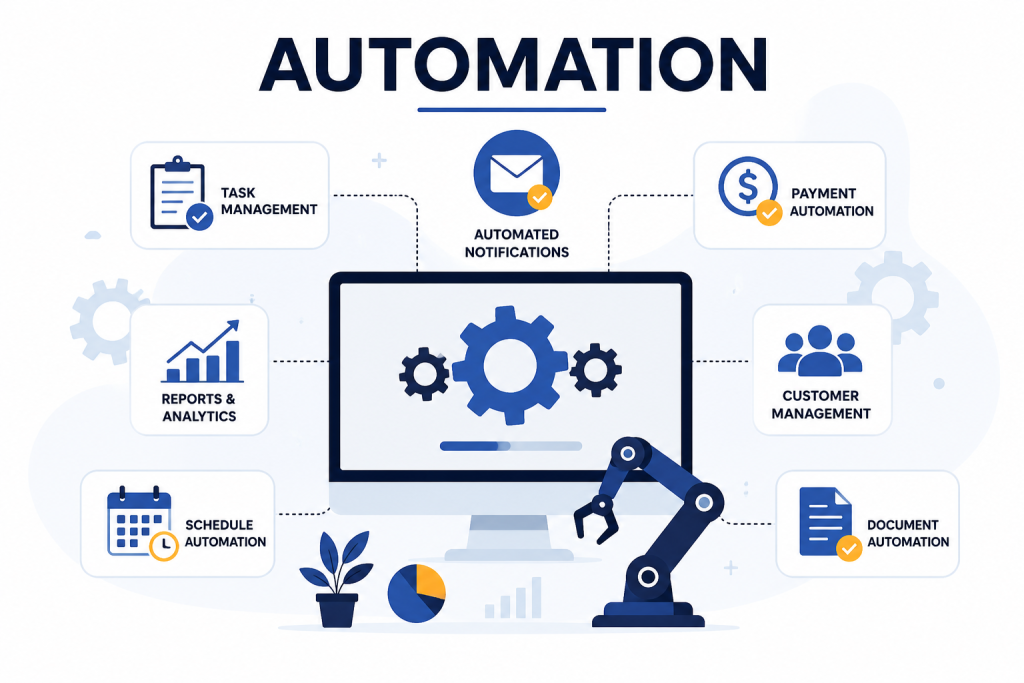
5. Automated Payment Tracking
Collecting rent is only one part of the process.
Landlords also need to know who has paid.
A digital system can display payment statuses such as:
Paid: The tenant has cleared the expected amount.
Partially Paid: The tenant has made a payment but still owes money.
Unpaid: No payment has been recorded.
Overdue: The payment is past the due date.
This makes payment monitoring much easier.
A digital landlord management system can also maintain historical payment records so landlords can review previous transactions when necessary.
6. Automated Rent Reminders
Late rent can affect a landlord’s cash flow.
Manually reminding every tenant can take hours.
Automated notifications can reduce this workload.
Depending on the software, reminders may be sent through SMS, email, WhatsApp, or other supported channels.
A reminder can be scheduled before rent is due and another can be sent after the payment deadline.
This helps landlords maintain consistent communication without manually contacting every tenant.
7. Arrears Management
Rent arrears are one of the biggest challenges in rental property management.
A landlord may know that a tenant has not paid, but may not immediately know the exact amount outstanding.
A digital landlord management system can calculate and display tenant balances.
Landlords can identify:
- Total arrears
- Individual tenant balances
- Overdue accounts
- Partial payments
- Aging arrears
- Payment history
This allows property managers to prioritize follow-ups.
Instead of discovering a serious arrears problem several months later, landlords can identify it much earlier.
8. Digital Receipts
Paper receipts can be lost, damaged, or difficult to organize.
Digital receipts provide a more convenient alternative.
After a tenant makes a payment, the system can generate a receipt containing relevant transaction information.
A receipt may include:
- Tenant name
- Property
- Unit
- Amount
- Payment date
- Transaction reference
- Balance
A digital landlord management system can store these records for future reference.
This can also help reduce disputes between landlords and tenants.
9. Lease Management
Lease information is another important part of rental administration.
Landlords may need to track:
- Lease start date
- Lease end date
- Rent amount
- Deposit
- Renewal date
- Notice period
- Special terms
A digital platform can organize this information and provide reminders about important dates.
This can prevent landlords from overlooking lease renewals or important contractual deadlines.
10. Maintenance Management
Rental property management is not only about rent.
Landlords also have to maintain their properties.
Tenants may report problems involving:
- Plumbing
- Electricity
- Doors
- Windows
- Water supply
- Security
- Appliances
- Structural issues
A modern platform can help record maintenance requests and track their status.
For example, a request can move through stages such as:
Reported → Assigned → In Progress → Completed
This gives landlords better visibility into maintenance activities.
Benefits of a Digital Landlord Management System
Saves Administrative Time
One of the biggest benefits is time savings.
Manual rent tracking requires repetitive work.
Landlords may need to check payments, update spreadsheets, calculate balances, prepare receipts, send reminders, and create reports.
Automation can reduce many of these activities.
A digital landlord management system allows landlords to spend less time on administrative tasks and more time on activities that grow the property business.
Reduces Human Errors
Manual data entry can lead to mistakes.
A landlord might enter the wrong amount or assign a payment to the wrong tenant.
A spreadsheet formula might also be accidentally changed.
Digital systems can automate calculations and standardize processes.
Although software does not eliminate all errors, it can reduce many common administrative mistakes.
Improves Financial Visibility
Property owners need to know how their investments are performing.
A digital dashboard can show:
- Expected rent
- Collected rent
- Outstanding rent
- Arrears
- Property income
- Occupancy
- Expenses
This makes it easier to understand the financial position of a rental portfolio.
A digital landlord management system can therefore become a valuable decision-making tool.
Improves Tenant Communication
Good tenant relationships depend on communication.
Tenants want quick answers about payments, balances, maintenance, and leases.
Digital systems can help landlords respond faster because tenant information is organized in one place.
Automated reminders and receipts can also make communication more consistent.
Supports Portfolio Growth
A landlord managing five units may be able to manage everything manually.
A landlord managing 500 units cannot rely on the same processes.
As a property portfolio grows, administrative requirements also increase.
A digital landlord management system can provide the infrastructure needed to manage a larger portfolio without increasing manual work at the same rate.
Why Excel Is Not Always Enough
Excel is a useful business tool, and many landlords use it successfully.
However, spreadsheets have limitations when rental portfolios become more complex.
Problems can include:
- Multiple users editing the same file
- Accidental deletion
- Manual payment entry
- Difficult arrears calculations
- Limited automation
- Poor communication integration
- Duplicate records
- Difficult tenant searches
- Complex reporting
A spreadsheet records information, but dedicated property management software can connect different rental processes.
That difference becomes important as the portfolio grows.
Digital Landlord Management for Kenyan Property Owners
Kenya has a large and diverse rental property market.
Landlords manage properties in Nairobi, Mombasa, Kisumu, Nakuru, Eldoret, Thika, Kiambu, Machakos, and many other towns.
Mobile money has also changed how tenants pay rent.
A digital landlord management system designed for the Kenyan market should therefore consider local payment behavior and landlord requirements.
For example, landlords may want to connect rental records with M-Pesa payment workflows, automate tenant reminders, generate receipts, and track arrears.
Local property management software can also make it easier to manage portfolios that use Kenyan currency and local rental practices.
How a Digital System Improves Rent Collection
Consider a landlord who has 100 tenants.
Before using software, the landlord may receive payment notifications throughout the month.
At the end of the month, they have to manually determine:
- Who paid?
- Who did not pay?
- Who paid partially?
- Who owes previous balances?
- How much was collected?
This process can take many hours.
With a digital landlord management system, payment information can be connected to tenant accounts.
The dashboard can show the current collection status.
The landlord can immediately identify accounts requiring attention.
This changes rent collection from a reactive activity into a more organized process.
Automated Arrears Follow-Up
Arrears management requires consistency.
A tenant who misses one payment should not disappear from the landlord’s radar.
A system can help property managers create structured follow-up workflows.
For example:
Day 1: Rent becomes overdue.
Day 2: Automated reminder is sent.
Day 5: Follow-up notification is sent.
Day 10: Property manager contacts the tenant.
Day 15: Account is escalated for further action.
The exact process depends on the landlord’s policies, but automation makes it easier to follow a consistent workflow.
Reporting for Property Owners
Property owners need reports to understand performance.
A digital landlord management system can provide reports covering different aspects of the portfolio.
Useful reports may include:
Rent Collection Report
Shows expected rent compared with actual collections.
Arrears Report
Shows tenants with outstanding balances.
Tenant Statement
Provides a detailed history of charges and payments for an individual tenant.
Occupancy Report
Shows occupied and vacant units.
Property Performance Report
Helps compare different properties.
Payment History
Provides historical transaction information.
These reports can help landlords make better decisions.
Managing Multiple Properties
Many landlords eventually expand from one property to several.
Managing each property separately can create unnecessary complexity.
A centralized platform can organize properties under one account.
For example, a landlord could manage:
- Apartment A
- Apartment B
- Commercial Building C
- Residential Estate D
from one dashboard.
A digital landlord management system makes it easier to move between properties and view consolidated information.
Managing Property Management Teams
Larger rental businesses may have several employees.
A property manager may handle tenants.
An accountant may handle financial information.
A caretaker may handle maintenance.
An administrator may handle documentation.
A digital platform can provide different user roles and permissions.
This can improve accountability and reduce unauthorized access.
It also ensures that different employees work from the same underlying information.
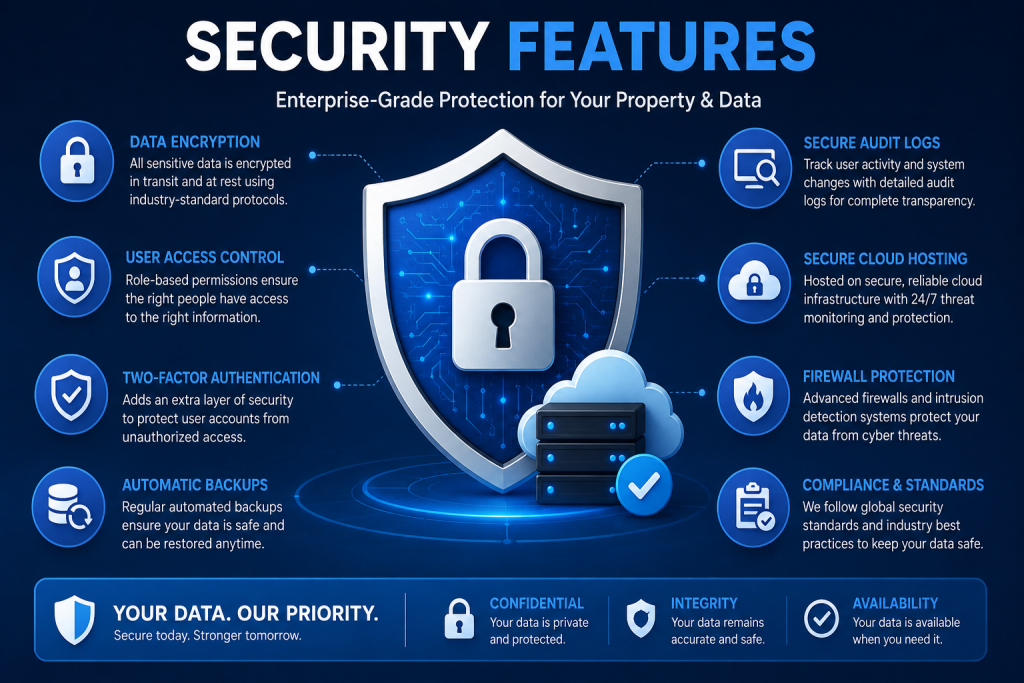
Data Security and Backups
Rental information contains sensitive data.
Landlords should consider how their software provider protects information.
Important considerations include:
- Secure login
- User permissions
- Data encryption
- Backups
- Activity logs
- Recovery processes
- Secure payment integrations
A digital landlord management system should provide appropriate security controls for the type of information being managed.
Landlords should also understand the provider’s data policies before subscribing.
Cloud-Based Landlord Management
Cloud software allows authorized users to access information through internet-connected devices.
This is useful for landlords who are frequently away from their offices.
A property manager can check a tenant’s account while visiting a property.
An owner can review reports without waiting for a spreadsheet to be emailed.
This accessibility makes cloud-based systems attractive to modern property businesses.
How to Choose the Right System
Choosing software requires careful evaluation.
Do not choose a platform simply because it has many features.
Look at how those features solve your actual problems.
Ease of Use
The system should be easy for landlords, accountants, caretakers, and administrators to understand.
Payment Integration
Check whether the software supports the payment methods your tenants use.
Arrears Management
Make sure overdue balances are easy to identify.
Tenant Management
Check whether tenant records can be stored and updated easily.
Reporting
Confirm that the reports match your business requirements.
Scalability
Choose a system that can support your future growth.
Customer Support
Reliable support can be important when dealing with financial and tenant records.
Pricing
Compare subscription costs against the value provided.
Implementing a Digital Landlord Management System
Moving from manual processes to digital management should be done carefully.
Step 1: Audit Your Current Records
Collect your existing tenant, property, payment, and lease information.
Step 2: Clean the Data
Remove duplicate records and correct inaccurate information.
Step 3: Add Properties
Create your buildings and units in the system.
Step 4: Add Tenants
Assign tenants to their respective properties and units.
Step 5: Add Rent Charges
Enter monthly rental amounts and other applicable charges.
Step 6: Add Existing Balances
Make sure current arrears and credits are correctly recorded.
Step 7: Configure Notifications
Set up rent reminders and other relevant messages.
Step 8: Train Your Team
Make sure employees understand how to use the platform.
Step 9: Monitor Results
Review collection rates, arrears, reporting speed, and user adoption.
A digital landlord management system delivers the greatest value when it becomes part of the daily operating process.
Common Mistakes When Going Digital
Technology alone does not guarantee success.
Landlords can still experience problems if implementation is poorly managed.
Common mistakes include:
- Entering inaccurate tenant information
- Failing to update records
- Not training employees
- Ignoring software reports
- Choosing software based only on price
- Failing to configure reminders
- Not reviewing user permissions
- Keeping duplicate systems indefinitely
The goal should be to create one reliable source of rental information.
The Future of Digital Landlord Management
The future of property management will likely involve increasing automation.
Artificial intelligence can help analyze payment patterns and identify unusual trends.
Predictive analytics may help landlords understand which accounts are at higher risk of becoming overdue.
Automated communication can make tenant engagement faster.
Mobile applications can make property management accessible from almost anywhere.
Payment integrations can further simplify rental transactions.
A digital landlord management system can therefore evolve from a simple record-keeping tool into a complete property operations platform.
Why RentalDesk Is Worth Considering
Landlords looking for a platform designed around rental property management can explore RentalDesk.
RentalDesk focuses on helping landlords and property managers organize tenants, rental payments, arrears, receipts, property information, and other rental operations.
For Kenyan landlords, having rental management tools connected to local payment workflows can make daily administration easier.
Instead of managing rent records, tenant information, and arrears across multiple spreadsheets, landlords can use a centralized platform.
This can be particularly useful for landlords who are growing their portfolios and want to create more professional processes.
Digital Management for Different Types of Landlords
Individual Landlords
An individual landlord may own a few houses or apartments.
The main benefits are organization, payment tracking, reminders, and easier record keeping.
Apartment Owners
Apartment owners managing dozens or hundreds of units need stronger automation and reporting.
Real Estate Agencies
Agencies require multi-property management, client reporting, tenant records, and staff access.
Commercial Property Owners
Commercial landlords may need to track offices, shops, warehouses, leases, and different payment arrangements.
Property Investment Companies
Large property investment businesses need centralized information and detailed financial reporting.
A digital landlord management system can support different property models when configured correctly.
Frequently Asked Questions
What is a digital landlord management system?
It is software that helps landlords manage properties, tenants, rent payments, arrears, leases, maintenance, receipts, and reports from a centralized digital platform.
Is digital landlord management system useful for small landlords?
Yes. Even landlords with a small number of units can benefit from better payment records, tenant management, reminders, and reporting.
Can digital landlord management system manage multiple properties?
Many platforms support multiple properties, buildings, and units. Always confirm the portfolio limits of the software you choose.
Can landlords track rent arrears?
Yes. Arrears tracking is one of the most useful features of modern rental management software.
Can tenants receive digital receipts?
Many systems support digital receipts that provide tenants with confirmation of their rental payments.
Can landlords manage M-Pesa payments?
Some property management platforms integrate with M-Pesa or support M-Pesa-based payment workflows. Landlords should confirm the exact integration offered by each provider.
Does digital landlord management system replace property managers?
No. Software supports property managers by automating administrative activities. Human professionals are still needed for tenant relationships, inspections, maintenance decisions, negotiations, and other responsibilities.
Is digital landlord management systemsafe?
Cloud platforms can provide strong security, but landlords should evaluate the provider’s security practices, access controls, backups, and data policies before choosing a platform.
Conclusion
Property management is becoming increasingly digital.
Landlords who rely entirely on notebooks, paper receipts, spreadsheets, and manual payment tracking may eventually struggle as their portfolios grow.
A digital landlord management system provides a more organized approach by bringing properties, units, tenants, payments, arrears, receipts, maintenance, and reports together.
The benefits can extend beyond saving time.
Digital management can improve financial visibility, reduce errors, strengthen tenant communication, simplify arrears follow-up, and help landlords make better investment decisions.
For a small landlord, digital software can provide organization.
For a growing property manager, it can provide scalability.
For a real estate agency, it can provide accountability and better reporting.
The important thing is to select a platform that matches your property’s size and operational requirements.
Before choosing software, evaluate payment integrations, tenant management, arrears tracking, automated reminders, reporting, security, ease of use, customer support, and pricing.
The right digital landlord management system can transform rental management from a collection of disconnected administrative tasks into one organized business process.
For landlords who want to modernize their rental operations, adopting digital technology is no longer simply about following a trend.
It is about creating a property business that is easier to manage, easier to monitor, and prepared for future growth.
With the right platform, landlords can spend less time searching for payment records and more time improving their properties, supporting tenants, controlling costs, and growing their rental portfolios.
Ready to simplify your rental management? Explore RentalDesk and move your property management operations into a smarter digital workflow.