
Keeping tenant balances accurate through M-Pesa rent collection in Kenya becomes easier to manage when every payment can be traced to a tenant, unit and billing period. Receiving money is only one part of the process. Your team also needs to know which balance changed and which payment still needs investigation.
RentalDesk’s M-Pesa rent collection workflow connects payment capture with tenant matching, receipts and balance updates. Clear reference rules and a routine for reviewing exceptions help the team use that workflow consistently.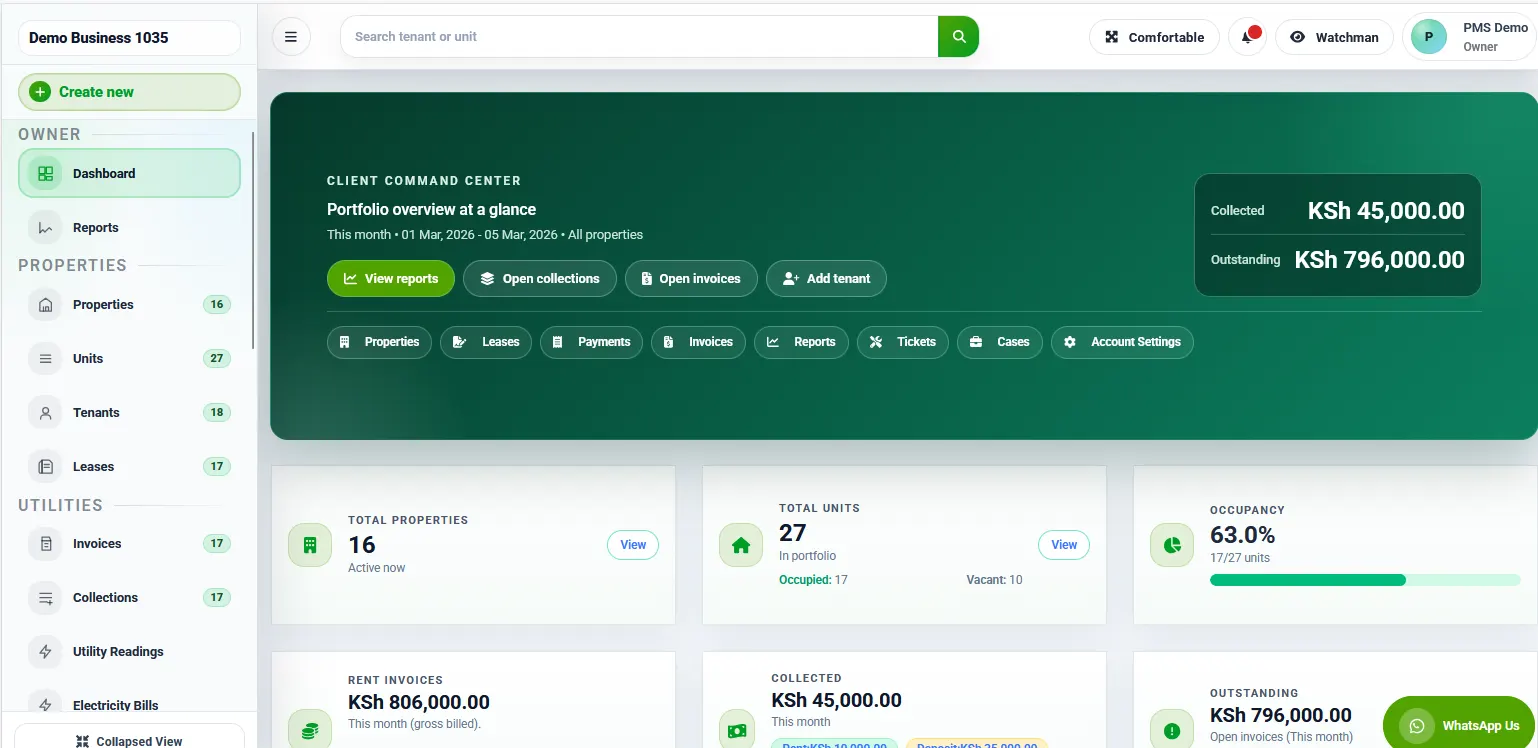
Start with a consistent payment reference
Give tenants clear payment instructions and an agreed account reference. When you manage several buildings, check that similar unit names cannot be confused. Keep the reference in the tenant record and use the same format in reminders.
Explain how tenants should report a payment sent with an incorrect reference. A clear correction process reduces the temptation to guess where a transaction belongs.
Review unclear payments before treating balances as final
RentalDesk’s bank and M-Pesa reconciliation tools support payment matching and exception review. Use that review stage when references are missing or a transaction does not clearly correspond to the expected tenant record.
Set aside a regular time to check the queue. Record what evidence resolved each unclear payment and who made the correction. A small daily review is easier to manage than a large collection of unexplained transactions at month-end.
Make partial payments visible
Consider an illustrative rent charge of KSh 20,000 and a payment of KSh 12,000. With no other charges or credits, the remaining balance is KSh 8,000. The record should show both the money received and what remains due.
Before contacting the tenant, check for another payment waiting to be matched. This simple review can prevent a reminder based on an incomplete record. Apply the same care to overpayments and payments covering more than one period.
Keep other business collections separate
A property owner may also operate a salon, shop or investment group. Keep those records distinct from rent. Tools such as Prim for salon operations, Vega POS for sales and stock, and TAS for chama records address different operational needs.
Clear separation helps your team understand why money was received. These examples do not imply that the platforms integrate with RentalDesk; ask each provider about any connection you need.
What should a daily rent review cover?
- Payments received and correctly allocated.
- Transactions still waiting for explanation.
- Part-paid accounts and their remaining balances.
- Follow-ups assigned to a named team member.
1. Connect tenant balances to a clear account reference
A payment reference should identify an account without forcing staff to guess. Agree on a consistent property and unit identifier, especially when the same unit number appears in several buildings. Keep the reference format in your working instructions and explain it clearly when communicating payment details.
Accurate tenant balances depend on accurate allocation. A received amount may be real while its destination remains uncertain. Keep that distinction visible: confirming receipt is one check, and linking the transaction to the correct account is another. Both need to be completed before a balance is treated as settled.
When introducing a new reference format, test it with sample records first. Ask a colleague to identify the correct building and unit from the reference alone. If they cannot, improve the format or the supporting instructions before using it across the portfolio.
2. Check incoming payments before updating tenant balances
Review the available transaction details against the intended account. Use the reference, amount, date and other appropriate supporting information in your normal reconciliation process. A similar amount is not sufficient evidence by itself, because several tenants may owe or pay the same figure.
Keep unclear items in an investigation queue with a named reviewer. Record what information is missing and where the next check should occur. Tenant balances should remain explainable while that investigation continues; avoid quietly assigning the payment to the first plausible record.
3. Explain partial payments with a worked example
Consider a fictional invoice of KSh 20,000 and a confirmed payment of KSh 12,000. With no other entries affecting the invoice, the remaining amount is KSh 8,000. If a second confirmed payment of KSh 5,000 is allocated to the same invoice, KSh 3,000 remains.
The records supporting tenant balances should show both payments and their references. Replacing the history with one unexplained figure makes it harder to answer a later question. A colleague covering the account should be able to trace the calculation without asking the original reviewer to reconstruct it.
Check whether the discussion concerns one invoice or the whole account. A tenant may settle a current invoice while an earlier supported charge remains outstanding. Explain the period and scope whenever quoting a figure so the tenant understands what the amount represents.
4. Keep reported payments distinct from verified transactions
A tenant may report a payment before the reviewer can locate or match it. Record the report and ask for the reference through the normal private communication channel. Investigate it promptly, but do not confuse the report itself with confirmation that allocation has been completed.
When reviewing tenant balances, refresh the record before preparing another reminder. A transaction received after yesterday’s review may have changed the position. This is particularly important when one colleague checks payments and another handles follow-up calls.
Leave a useful note when verification is incomplete. Identify the question, the person responsible and the next review date. A note that merely says “paid” can mislead the next reviewer if the actual transaction is still being investigated.
5. Review unusual entries before closing the account task
A possible duplicate should be checked against its source references before any correction is made. Two similar amounts may be separate legitimate payments, while a repeated record may describe the same transaction. Follow your agreed correction process and retain the explanation for the final treatment.
Overpayments also need clear handling. Do not assume an extra amount belongs to a different tenant or an unrelated charge. Confirm the account context and discuss the appropriate next step with the responsible reviewer. Tenant balances should reflect supported decisions rather than convenient guesses.
If a payment covers several periods, identify those periods in the account history. This makes the allocation easier to explain when preparing receipts or answering a question about the next bill. Keep your working notes consistent with the records used for reporting.
6. Link billing records and tenant balances
An invoice records a charge; a payment record describes money received. Reviewing only one side of the account can give an incomplete picture. Check the billing period, confirmed payments and any supported adjustments together before describing an account as clear or overdue.
Use the same identifiers across the billing and collection stages. If staff use slightly different names for the same unit, questions can become difficult to trace. Clear identifiers make tenant balances easier to review across buildings and during staff handovers.
7. Close each review with a clear next action
At the end of the review, distinguish completed items from those that still need evidence. Confirm which transactions were matched, which account questions remain open and who will handle them. A shared list is useful only when the next person can understand what it means.
For tenant balances requiring follow-up, record the period, the amount currently supported by the records and the relevant unresolved question. Keep the tone of any message factual. Invite the tenant to provide a missing reference if they believe the record is incomplete.
A promise to make a future payment is a follow-up note, not a received transaction. Keep the next review date visible, then confirm the actual payment before closing the task. This prevents a conversation outcome from being mistaken for an updated ledger.
Use a daily routine to maintain tenant balances
Choose a review time that fits when the team has usable transaction information. On busy collection days, an additional check may be helpful before another set of reminders is prepared. On quieter days, a shorter review may be enough to identify new exceptions.
Start with transactions awaiting explanation, then inspect the relevant accounts. Read the daily rent arrears review guide for a fuller follow-up routine. The goal is to keep tenant balances and the actions based on them aligned with the latest verified information.
Review the oldest unresolved items separately so they do not disappear beneath newer payments. Ask what evidence is still missing and whether the question needs manager input. Keep the reason for an open item visible rather than closing it merely to tidy the list.
Prepare staff to explain tenant balances consistently
Use fictional examples in training. Ask one colleague to record a sample charge, another to review a partial payment and a third to explain the remaining amount. This tests whether the team understands the sequence rather than simply recognising the screen.
Agree on the minimum information a handover note should contain. It usually needs the property and unit, the issue, the checks completed and the next action. Avoid copying unnecessary personal details into separate documents when a reference to the authorised account record is sufficient.
Have an authorised backup complete a sample review before the usual account handler is absent. Tenant balances should remain understandable without relying on one person’s memory. Use any confusion in the exercise to improve the working instructions.
Questions about M-Pesa payments and tenant balances
Does receipt of money automatically explain the account?
No. The transaction still needs to be linked to the correct account and interpreted alongside the relevant charges. An unclear reference can leave an otherwise genuine payment awaiting allocation. Review the supporting details before treating the resulting balance as final.
What if a payment uses the wrong reference?
Keep the transaction visible and investigate through your normal process. Ask for the information needed to identify the intended account and retain the explanation for the correction. Do not move money between tenant balances simply because one amount looks similar to another.
Can the same workflow serve several properties?
Yes, provided identifiers and responsibilities remain clear. Include the building identifier where unit names repeat, and decide who reviews exceptions for each property. The multi-property workflow guide explains how to organise those daily responsibilities.
What should I ask in a RentalDesk demonstration?
Ask to see a correctly referenced payment, a partial payment and an unclear transaction. Request an explanation of how each affects tenant balances and which actions remain with the staff reviewer. Confirm the current features and plan relevant to your collection arrangement.
Improve the source of recurring balance questions
If the same exception appears repeatedly, examine its source. Missing references may indicate unclear payment instructions. Delayed allocation may point to a handover gap. Repeated questions about a billing period may mean the account explanation needs clearer labels.
Choose one practical improvement and assign it to a responsible person. After the next working cycle, check whether the same issue still occurs. Accurate tenant balances rely on maintained records and consistent decisions as well as the tools used to display them.
Keep the setup process connected to everyday work. When adding another building or changing payment instructions, repeat the relevant sample checks. This gives the team a chance to identify ambiguity before it affects live accounts and owner reporting.
Keep a useful review trail
Choose a sample account at the end of the week and ask a colleague to explain its latest position. They should be able to locate the charge, identify the confirmed payments and find the reason for any unresolved item. If they need a separate private conversation to understand the record, improve the notes.
This small check helps keep tenant balances understandable as staff and properties change. Record the improvement agreed by the team and review it during the next cycle. A consistent explanation is useful to the tenant, the owner and the colleague who takes over the account tomorrow.
See the workflow before you adopt it
Review the RentalDesk platform and request a demonstration using sample tenant records. Ask to see a correct payment, a partial payment and an unclear reference. Call 0725345345 or WhatsApp RentalDesk to discuss your collection setup.
Tenant balances review when a payment is queried
Start by identifying the tenancy, period and specific payment the tenant is asking about. Keep the query connected to the correct unit while the authorised team checks the evidence. Tenant balances should not be adjusted merely because a message contains a plausible amount or a familiar name.
Record who is reviewing the question and what information is still needed. If a transaction has not yet been matched, keep that uncertainty visible. The tenant can receive an accurate update about the investigation without the team presenting an unverified allocation as a completed account decision.
Compare the record with the approved evidence
Check whether the payment has already been recorded, whether it was assigned to the intended tenancy and whether its timing explains the apparent difference. Tenant balances are easier to explain when staff can trace the sequence instead of looking only at the final total.
Use the organisation’s authorised process for corrections. Keep the reason and supporting reference clear, and confirm how the result appears in later reports. Do not edit several disconnected working files without identifying which one is the current operational source.
Keep tenant balances understandable after a handover
A new reviewer should be able to identify open queries, completed matches and authorised adjustments. Avoid abbreviations that only one employee understands. A short explanation of the current status and next action is more useful than a long conversation copied into an account note without context.
When responsibilities change, confirm that the receiving employee knows where to find the approved payment evidence and whom to ask for a decision. Tenant balances should remain traceable without giving every staff member unrestricted access to private transaction details.
Review a partial-payment example
Use a fictional sample to show the amount invoiced, the amount received and the remaining balance. Then add a later payment through the supported workflow and inspect the history. The purpose is to understand how the sequence is represented, not to introduce a charge or adjustment that has not been approved.
Ask the provider to demonstrate the current behaviour in your plan if the workflow is unclear. Tenant balances should be reviewed against the actual configuration in use. Do not assume that a feature described for another account or software product behaves identically in your setup.
Close the query with a clear outcome
Record whether the payment was matched, a correction was authorised or more information remains necessary. Communicate the relevant outcome through the approved channel and keep unrelated tenant information out of the response. A focused explanation helps the tenant understand the account without exposing a wider portfolio worksheet.
Use recurring questions about tenant balances to improve the source process. Inconsistent references, unclear unit identifiers or delayed internal updates may be causing repeated investigation. Assign a practical improvement to the responsible person and review it during the next working cycle.
Keep the current support contact and review procedure available to the team. Accurate records are easier to maintain when staff know how to raise uncertainty early and who can authorise the next action.