
A daily rent arrears review in Kenya works best when your team can explain each balance before contacting a tenant. An unpaid figure may need follow-up, but it may also reflect an unmatched transaction or a record that has not been updated. A consistent review helps you distinguish these situations.
RentalDesk provides visibility into paid, part-paid and overdue accounts. Build a daily routine around those records so that every follow-up starts with the latest available information and ends with a clear next action.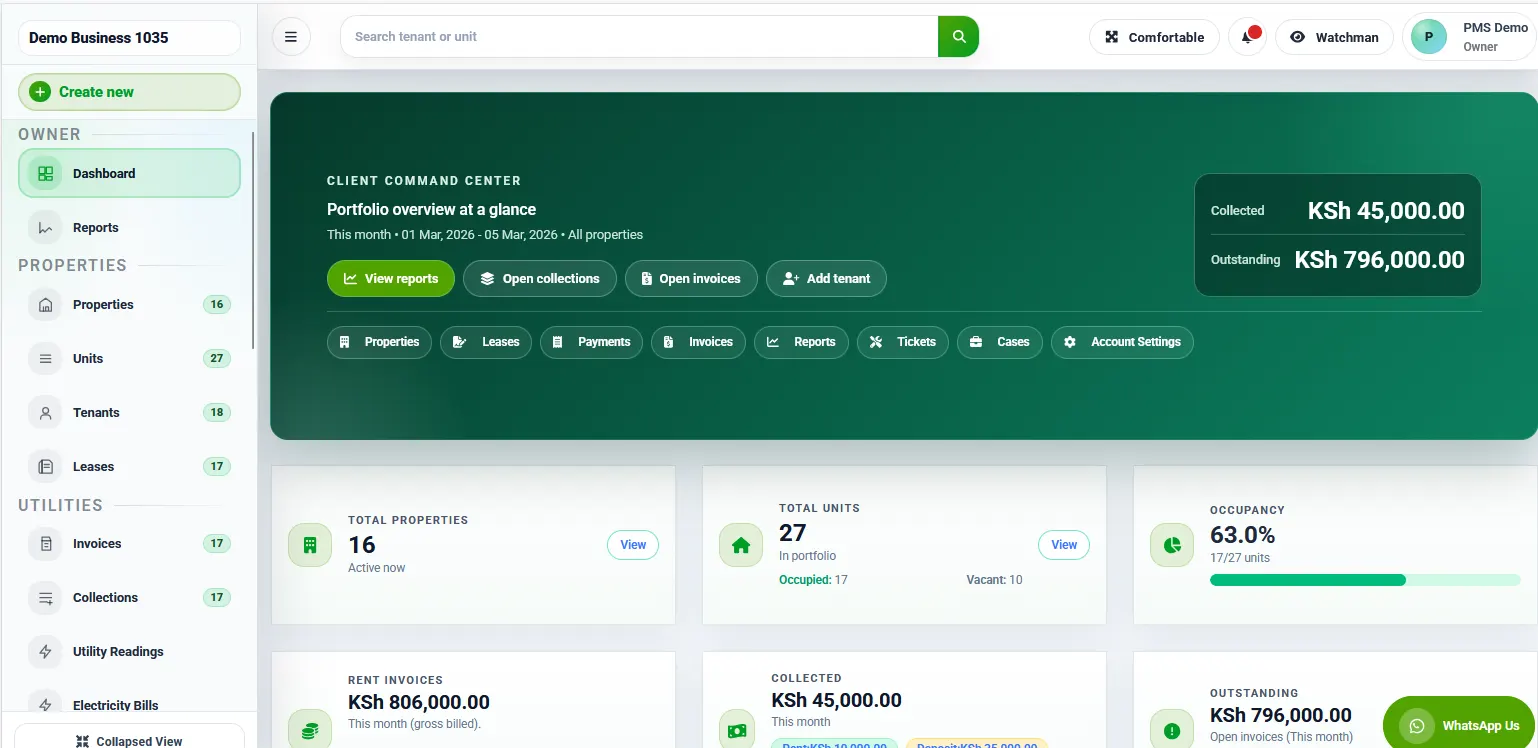
Begin with payments that need review
Before creating a contact list, check for transactions waiting to be matched. Compare the reference, amount and date against the tenant record. Keep unclear payments under investigation instead of allocating them to whichever balance looks closest.
The RentalDesk reconciliation workflow is a useful starting point for this review. Decide who is responsible for resolving each exception and what information is still missing.
Separate different types of outstanding balance
Distinguish a part-paid account from one with no payment recorded. Note whether a balance is newly overdue or carried forward from an earlier period. This helps staff understand the history without reopening several messages and spreadsheets.
For example, a sample account billed KSh 18,000 with a confirmed KSh 10,000 payment has KSh 8,000 remaining if there are no other entries. Before quoting that figure, verify whether any additional payment or adjustment is pending.
Make the first follow-up specific
A useful message identifies the unit, billing period and balance shown in the record. Invite the tenant to provide a transaction reference if they believe a payment is missing. Keep the tone clear and factual so the conversation can resolve the record.
Avoid promising that software alone will eliminate late payments. The value of a daily process is knowing what needs attention and keeping an understandable history of what your team has done.
Record the next step and responsible person
- What information was checked?
- What did the tenant or staff member report?
- Who will investigate the remaining question?
- When should the account be reviewed again?
Store these notes in your agreed workflow. If several staff members handle collections, a shared next-action record helps prevent duplicate calls or conflicting messages.
Keep rent distinct from other contributions
If an investment group owns the property, tenant rent and member contributions answer different questions. TAS supports chama administration, while rent records should remain tied to the tenant and unit. Keep the reporting boundary clear even when the same people oversee both activities.
1. Prepare a daily rent arrears review checklist
Start with a defined time and an agreed set of records. Confirm that the previous day’s payment entries have been reviewed, identify transactions still awaiting allocation and note any billing changes that affect the accounts being examined. This preparation gives the person making follow-up calls a dependable starting point.
A daily rent arrears review should answer three questions: what is outstanding, why does the record show that amount and what action is needed next? Keep those questions beside the task list. They prevent a busy reviewer from treating every unpaid figure as the same kind of problem.
2. Check the account behind the summary
A building-wide total is useful for deciding where to investigate, but it cannot explain an individual tenant’s position. Open the relevant record and check the period, charges, payments and supported adjustments. Look for a payment received shortly before the review that has not yet been allocated.
During the daily rent arrears review, separate confirmed information from an item awaiting evidence. If the tenant reports having paid, request the transaction reference through the normal private channel and check it against the payment records. Do not overwrite the balance simply to remove the account from the list.
3. Use a clear daily rent arrears review example
Consider a fictional tenant whose invoice is KSh 18,000. One confirmed payment of KSh 10,000 leaves KSh 8,000 on that invoice if no other entries apply. If the tenant then reports a further KSh 5,000 payment, keep that report distinct from a verified transaction until the reference is checked.
Once the second payment is confirmed and correctly allocated, the invoice balance becomes KSh 3,000. The daily rent arrears review should retain the history of both payments, rather than replacing them with an unexplained total. Anyone covering the account can then understand how the remaining amount was calculated.
The example also shows why contact notes should identify the reporting time. A message prepared before the second payment was reviewed may become out of date. Refresh the record before sending the next reminder, especially when several staff members are working on the same building.
4. Keep follow-up messages factual
A simple follow-up can identify the property, unit, billing period and amount currently shown, then invite the tenant to share a missing payment reference. Avoid using uncertain figures as established facts. If a transaction is under investigation, explain that the record is being checked and specify the information needed.
The daily rent arrears review is an operational check, not a substitute for your agreed tenancy procedures. Staff should know which questions they can resolve and which must go to the responsible manager. Keep communications private and limit the information to what the recipient needs to resolve the account.
5. Record useful outcomes, not just completed calls
A tick saying “called” does not explain whether the tenant answered or whether anything changed. Record a short factual outcome, the remaining question and the date for the next review. If another staff member needs to investigate, assign the task clearly rather than leaving it in a general inbox.
In the daily rent arrears review, distinguish a reported intention from a confirmed payment. A promise to pay is useful follow-up context, but it does not change the ledger. Check the actual transaction before updating the payment status or closing the task.
6. Organise exceptions for the next reviewer
Use a small set of understandable reasons for unresolved items: unclear reference, possible duplicate, missing evidence or a disputed charge requiring manager review. These categories explain why an item remains open. They also help identify repeated problems in the way payment instructions or records are maintained.
A daily rent arrears review works better when every exception has an owner. Give each task a responsible person, the next check and a due date appropriate to the situation. Review overdue tasks with the team so an old question does not disappear beneath newer transactions.
7. Close the daily rent arrears review with a handover
Before finishing, compare the open list with the work completed. Confirm that matched payments have been reflected in the relevant accounts, follow-up notes are understandable and unresolved questions remain visible. A colleague should be able to continue the review without reconstructing your decisions from memory.
Include a short note about anything unusual, such as a batch of transactions still awaiting verification. This prevents the next shift from assuming the figures are final. The handover should explain the limitation and the next action, without copying unnecessary tenant information into a separate document.
Questions teams ask about a daily rent arrears review
Should every unpaid account receive the same message?
No. An account with a recently received payment awaiting matching needs a different next step from one with no payment recorded. Read the account history first. The daily rent arrears review should help staff make that distinction consistently rather than send a generic message to everyone.
What if two staff members contact the same tenant?
Check the shared task notes before making another call and agree who owns the next action. Duplicate contact often indicates that responsibilities or notes are unclear. Improve the handover so both staff members can see the latest outcome and know whether another message is necessary.
How should the team measure improvement?
Track operational measures you can verify, such as unresolved payment items, tasks without an assigned owner and repeated enquiries caused by unclear balances. Compare like periods and note any changes in portfolio size. Do not describe every change in arrears as a result of software alone.
Can a small portfolio use the same process?
Yes. Scale the detail to the number of accounts and staff involved. A small team may need a short checklist and one reviewer, while a larger agency needs clearer handovers. The essential daily rent arrears review questions remain the same: evidence, balance and next action.
Connect the daily rent arrears review to the wider workflow
Good follow-up starts earlier than the reminder itself. Consistent unit names, accurate billing and clear payment references all make account review easier. If the same problem appears repeatedly, investigate the source instead of correcting the symptom every morning.
Read the M-Pesa payment matching guide for the collection stage and the multi-property daily workflow guide for team responsibilities. Use these routines together when planning a daily rent arrears review that staff can maintain.
Run a weekly quality check on the daily rent arrears review
Choose a few completed accounts and trace the path from the original charge to the final follow-up note. Look for the payment reference, the allocation decision and the reason the task was closed. This is a process check: the aim is to find unclear steps before they become a larger source of confusion.
Compare the work of different reviewers using the same checklist. One person may record a detailed explanation while another leaves only a short status. Agree on the minimum useful information so the daily rent arrears review remains understandable regardless of who performed it. Keep the format short enough to use during a busy day.
Check older unresolved items separately
Recent transactions can attract attention while older questions remain untouched. Set aside part of the weekly check for the oldest unresolved items. Ask what evidence is missing, whether the assigned person can obtain it and whether the question now needs manager input.
Do not close an old item solely because it has been open for a long time. Record the actual resolution or retain the reason it remains under review. This discipline keeps the daily rent arrears review connected to evidence rather than to the appearance of a clean task list.
Prepare for staff absence
Have a second authorised staff member complete a sample review using the existing notes. Ask them to explain the balance and identify the next action without asking the original reviewer for background. If they cannot, improve the notes and the supporting record links before the usual handler goes on leave.
Absence cover also needs a boundary for approvals. The replacement may be able to check a reference and prepare a follow-up, while a disputed adjustment still requires the manager. Write down those boundaries so a daily rent arrears review can continue without accidental changes outside someone’s responsibility.
Use patterns to improve payment instructions
If missing references account for many exceptions, review the instructions tenants receive. Check whether the property identifier is included, whether similar unit names can be confused and whether the message explains how to report an incorrect reference. Clearer instructions can reduce avoidable investigation work.
If the problem is delayed recording, examine the handover between receiving a payment and reviewing the account. The daily rent arrears review may be exposing a timing problem rather than a tenant problem. Assign an owner to the source issue and revisit it at the next team check.
Keep a practical review schedule
Choose a review time that fits when your team receives usable payment information. On busy collection days, an additional check may help prevent reminders being prepared against old figures. On quieter days, a shorter review may be sufficient. Base the routine on observed work rather than an arbitrary number of calls.
At the end of each week, ask whether staff can find the latest account position, explain unresolved items and identify the next action. Those are useful signs that the daily rent arrears review is supporting a clearer service for both the team and tenants.
Build a clearer collection routine
Review RentalDesk’s M-Pesa collection process and ask for a demonstration of a partial payment and an unmatched transaction. Call 0725345345 or WhatsApp RentalDesk to discuss a daily review suited to your team.
Daily rent arrears review when a colleague is absent
A daily rent arrears review should remain understandable when the usual reviewer is away. Keep the current unresolved items, responsible people and next actions in the agreed record. The backup reviewer should not need to search a private message history to determine whether a payment query has already been investigated.
Start by checking which information is current. A report prepared before recent allocations were completed may no longer reflect the working position. Record the time or period covered and use the approved source rather than mixing figures from several versions of a spreadsheet.
Separate the question from the conclusion
During the daily rent arrears review, a tenant’s report of a payment should be recorded as a query until the authorised matching process confirms the result. This keeps the team from treating an unverified message as an account adjustment while still ensuring that the tenant’s question receives attention.
Assign the investigation to the appropriate person and keep any supporting transaction information in the authorised record. Do not circulate a full payment screenshot to unrelated staff or residents. The backup reviewer needs the status and next action, not unrestricted access to every private detail.
Keep follow-up proportionate and factual
A daily rent arrears review should identify what is known about the balance and what remains under review. Use accurate, respectful communication that reflects the verified record. Avoid presenting a disputed or unmatched item as a settled conclusion before the relevant checks have been completed.
If a matter raises contractual or legal questions, refer it through the appropriate process rather than improvising enforcement action from a daily worksheet. The purpose of this operational review is to organise evidence and follow-up, not to replace the agreement or professional advice relevant to a particular situation.
Close the daily rent arrears review with ownership
For each open item, record the responsible person and the next review point. If the team is waiting for information, identify who will request it. A status such as “pending” is more useful when another employee can tell what must happen before the item can progress.
Keep resolved items traceable without leaving them in the active queue indefinitely. The daily rent arrears review should help staff focus on current work while preserving the explanation of authorised corrections and completed matching. Clear separation prevents the same query from being investigated repeatedly by different people.
Improve the next review
Note recurring sources of uncertainty, such as inconsistent references or delayed internal updates. Discuss a practical improvement with the people responsible for the source information. Better input quality can reduce repeated investigation while preserving the checks needed for accurate balances.
At handover, confirm that the receiving reviewer understands the current source, open queries and communication responsibilities. A consistent daily rent arrears review makes the portfolio easier to manage without depending on one person’s memory or an informal list that nobody else can interpret.