
service charge management Kenya is a high-intent topic for Kenyan landlords, property managers, accountants and real-estate investors who want to bill, collect and explain shared-property costs with greater transparency. This guide explains a practical, evidence-led approach without promising a one-size-fits-all result.
The right solution depends on the property or site, current records, users, budget and applicable rules. Prices, product terms and regulations can change, so confirm time-sensitive information before committing.
What the search really means for service charge management Kenya
People searching for service charge management Kenya rarely need a definition alone. They need a reliable way to bill, collect and explain shared-property costs with greater transparency. The decision affects money, time, accountability and the experience of the people using the service. A useful plan therefore begins with verified facts, clear ownership and records that another responsible person can understand later.
Document assumptions and ask what could cause the recommendation to fail. That question exposes missing dependencies early and creates a more realistic implementation plan.
Why the problem becomes expensive
The visible symptom is often only the final result of several disconnected problems: unclear budgets, inconsistent allocation methods, unpaid charges, unsupported expenses and statements that tenants or owners cannot reconcile. Quick fixes can make the dashboard look better for a day while leaving the underlying process unchanged. A strong solution identifies the source, records exceptions and prevents the same issue from returning.
Document assumptions and ask what could cause the recommendation to fail. That question exposes missing dependencies early and creates a more realistic implementation plan.
Start with a practical assessment
Write down the current situation before buying equipment or changing a workflow. Record the people involved, locations, dates, existing tools, known constraints and the result that matters most. Take screenshots, photos or transaction references where appropriate and lawful. This baseline makes quotations easier to compare and later shows whether the change worked.
Document assumptions and ask what could cause the recommendation to fail. That question exposes missing dependencies early and creates a more realistic implementation plan.
Define responsibility and approval
Assign one owner for the outcome and name the people allowed to approve cost, change records or contact third parties. Small teams often rely on verbal instructions, but important decisions should be recorded. Clear responsibility reduces duplicated work and prevents a supplier, caretaker, tenant, technician or employee from receiving conflicting directions.
Document assumptions and ask what could cause the recommendation to fail. That question exposes missing dependencies early and creates a more realistic implementation plan.
Compare solutions fairly
Ask every provider to respond to the same written requirements. Compare scope, exclusions, setup work, training, aftercare, recurring charges, data ownership, safety and the process for resolving faults. The cheapest headline figure is not necessarily the lowest total cost if essential work, travel, accessories or support are excluded.
Document assumptions and ask what could cause the recommendation to fail. That question exposes missing dependencies early and creates a more realistic implementation plan.
Protect safety, privacy and access
Use least-privilege access: each person should see or change only what their role requires. Protect passwords, personal information, payment details and equipment locations. Physical or electrical work should be completed by competent people with suitable tools. Never climb, open sealed equipment or improvise dangerous wiring simply to finish quickly.
Document assumptions and ask what could cause the recommendation to fail. That question exposes missing dependencies early and creates a more realistic implementation plan.
Test normal and exceptional cases
A demonstration under perfect conditions is not enough. Test the everyday workflow and likely exceptions: missing information, delayed action, partial completion, weak power, unavailable staff, incorrect references, failed connections or a user who needs help. Record the expected response and the point at which the matter is escalated.
Document assumptions and ask what could cause the recommendation to fail. That question exposes missing dependencies early and creates a more realistic implementation plan.
Measure results that matter
Choose a small set of useful measures before implementation. Examples include time to complete a task, unresolved exceptions, preventable errors, downtime, response time, recovery time, user complaints and cost per location. Review the measures on a consistent schedule and investigate unusual changes rather than celebrating a single favourable result.
Document assumptions and ask what could cause the recommendation to fail. That question exposes missing dependencies early and creates a more realistic implementation plan.
Keep evidence and reports
The minimum management pack should include a service-charge budget, unit allocation schedule, billing register, collection report, expense schedule and variance report. Reports should help a manager act, not simply produce more pages. Each important total or status should be traceable to its source. Keep issued reports, approvals and supporting evidence according to the organisation’s legal and operational requirements.
Document assumptions and ask what could cause the recommendation to fail. That question exposes missing dependencies early and creates a more realistic implementation plan.
Plan support and continuous improvement
Agree who provides first-line help, what evidence users should collect, expected response windows and when a specialist is required. Review the setup after the first week and first month. Remove confusing steps, update training and document successful fixes so the team does not rediscover the same answer every time.
Document assumptions and ask what could cause the recommendation to fail. That question exposes missing dependencies early and creates a more realistic implementation plan.
Detailed implementation notes
The following notes turn the main checklist into a working brief. They are deliberately practical so a manager can assign tasks, compare proposals and inspect the result instead of relying on marketing claims.
1. Define what the service charge covers
Begin by gathering direct evidence and identifying the person closest to this part of the work. Write the current state in plain language, including dates, locations, quantities and any known limitation. Then define an acceptable result and the evidence that will prove completion. This prevents a vague instruction from becoming a disputed outcome.
Ask the responsible person to record exceptions immediately rather than correcting them silently. Review cost, safety, privacy, user impact and future maintenance before approval. When the check is complete, retain the relevant document, photograph, report or test result with the project record. Schedule a later review because conditions, users and operational needs can change.
2. Document the allocation method
Begin by gathering direct evidence and identifying the person closest to this part of the work. Write the current state in plain language, including dates, locations, quantities and any known limitation. Then define an acceptable result and the evidence that will prove completion. This prevents a vague instruction from becoming a disputed outcome.
Ask the responsible person to record exceptions immediately rather than correcting them silently. Review cost, safety, privacy, user impact and future maintenance before approval. When the check is complete, retain the relevant document, photograph, report or test result with the project record. Schedule a later review because conditions, users and operational needs can change.
3. Approve a realistic annual budget
Begin by gathering direct evidence and identifying the person closest to this part of the work. Write the current state in plain language, including dates, locations, quantities and any known limitation. Then define an acceptable result and the evidence that will prove completion. This prevents a vague instruction from becoming a disputed outcome.
Ask the responsible person to record exceptions immediately rather than correcting them silently. Review cost, safety, privacy, user impact and future maintenance before approval. When the check is complete, retain the relevant document, photograph, report or test result with the project record. Schedule a later review because conditions, users and operational needs can change.
4. Bill each unit consistently
Begin by gathering direct evidence and identifying the person closest to this part of the work. Write the current state in plain language, including dates, locations, quantities and any known limitation. Then define an acceptable result and the evidence that will prove completion. This prevents a vague instruction from becoming a disputed outcome.
Ask the responsible person to record exceptions immediately rather than correcting them silently. Review cost, safety, privacy, user impact and future maintenance before approval. When the check is complete, retain the relevant document, photograph, report or test result with the project record. Schedule a later review because conditions, users and operational needs can change.
5. Receipt collections against the right charge
Begin by gathering direct evidence and identifying the person closest to this part of the work. Write the current state in plain language, including dates, locations, quantities and any known limitation. Then define an acceptable result and the evidence that will prove completion. This prevents a vague instruction from becoming a disputed outcome.
Ask the responsible person to record exceptions immediately rather than correcting them silently. Review cost, safety, privacy, user impact and future maintenance before approval. When the check is complete, retain the relevant document, photograph, report or test result with the project record. Schedule a later review because conditions, users and operational needs can change.
6. Keep supporting invoices and contracts
Begin by gathering direct evidence and identifying the person closest to this part of the work. Write the current state in plain language, including dates, locations, quantities and any known limitation. Then define an acceptable result and the evidence that will prove completion. This prevents a vague instruction from becoming a disputed outcome.
Ask the responsible person to record exceptions immediately rather than correcting them silently. Review cost, safety, privacy, user impact and future maintenance before approval. When the check is complete, retain the relevant document, photograph, report or test result with the project record. Schedule a later review because conditions, users and operational needs can change.
7. Review arrears separately from rent
Begin by gathering direct evidence and identifying the person closest to this part of the work. Write the current state in plain language, including dates, locations, quantities and any known limitation. Then define an acceptable result and the evidence that will prove completion. This prevents a vague instruction from becoming a disputed outcome.
Ask the responsible person to record exceptions immediately rather than correcting them silently. Review cost, safety, privacy, user impact and future maintenance before approval. When the check is complete, retain the relevant document, photograph, report or test result with the project record. Schedule a later review because conditions, users and operational needs can change.
8. Compare budget with actual spending
Begin by gathering direct evidence and identifying the person closest to this part of the work. Write the current state in plain language, including dates, locations, quantities and any known limitation. Then define an acceptable result and the evidence that will prove completion. This prevents a vague instruction from becoming a disputed outcome.
Ask the responsible person to record exceptions immediately rather than correcting them silently. Review cost, safety, privacy, user impact and future maintenance before approval. When the check is complete, retain the relevant document, photograph, report or test result with the project record. Schedule a later review because conditions, users and operational needs can change.
Step-by-step service charge management Kenya checklist
- Step 1: define what the service charge covers. Record the evidence, responsible person, deadline and result. If the check fails, resolve it before moving forward or document why accepting the risk is reasonable.
- Step 2: document the allocation method. Record the evidence, responsible person, deadline and result. If the check fails, resolve it before moving forward or document why accepting the risk is reasonable.
- Step 3: approve a realistic annual budget. Record the evidence, responsible person, deadline and result. If the check fails, resolve it before moving forward or document why accepting the risk is reasonable.
- Step 4: bill each unit consistently. Record the evidence, responsible person, deadline and result. If the check fails, resolve it before moving forward or document why accepting the risk is reasonable.
- Step 5: receipt collections against the right charge. Record the evidence, responsible person, deadline and result. If the check fails, resolve it before moving forward or document why accepting the risk is reasonable.
- Step 6: keep supporting invoices and contracts. Record the evidence, responsible person, deadline and result. If the check fails, resolve it before moving forward or document why accepting the risk is reasonable.
- Step 7: review arrears separately from rent. Record the evidence, responsible person, deadline and result. If the check fails, resolve it before moving forward or document why accepting the risk is reasonable.
- Step 8: compare budget with actual spending. Record the evidence, responsible person, deadline and result. If the check fails, resolve it before moving forward or document why accepting the risk is reasonable.
- Step 9: issue understandable periodic statements. Record the evidence, responsible person, deadline and result. If the check fails, resolve it before moving forward or document why accepting the risk is reasonable.
- Step 10: obtain legal or accounting advice where needed. Record the evidence, responsible person, deadline and result. If the check fails, resolve it before moving forward or document why accepting the risk is reasonable.
Common mistakes to avoid
Choosing from price alone
A low quote can omit installation, cleanup, migration, accessories, travel, support or training. Compare the complete scope and the expected useful life.
Skipping the baseline
Without a starting measurement, the team cannot prove improvement or identify whether a new issue was already present.
Giving everyone full access
Convenient access can expose personal, financial or network information. Use named accounts and role-based permissions.
Ignoring handover
Require written settings, records, contacts, warranties, known limitations and next steps. A good handover reduces dependence on one individual.
Frequently asked questions about service charge management Kenya
How quickly can it be implemented?
Timing depends on readiness, location, approvals, equipment or data quality. A clear assessment usually produces a more reliable schedule than a generic promise.
What information should I prepare?
Prepare the location or property details, current process, user count, examples of the problem, desired result, available budget range and decision deadline.
Can a small organisation use this approach?
Yes. Small teams benefit from simple controls because one missed payment, fault or record can have a large effect. Start with the essential workflow and expand only when the basics are stable.
How should success be checked?
Compare the agreed baseline with the same measures after implementation. Include user feedback and exception records, not only the main headline number.
Where can current official information be checked?
Review Office of the Data Protection Commissioner and seek qualified professional advice where legal, tax, electrical or safety questions apply.
Next step with RentalDesk
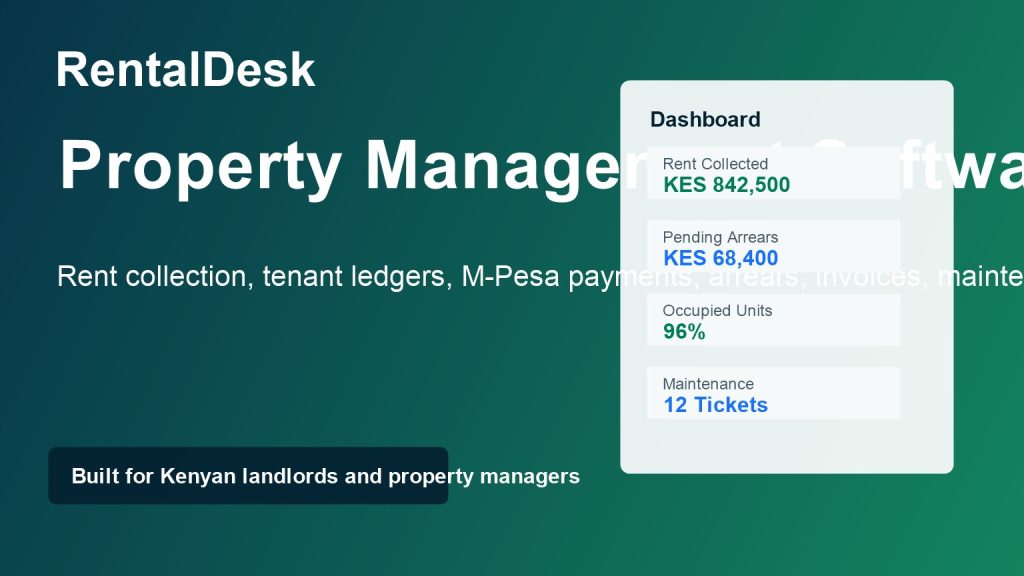
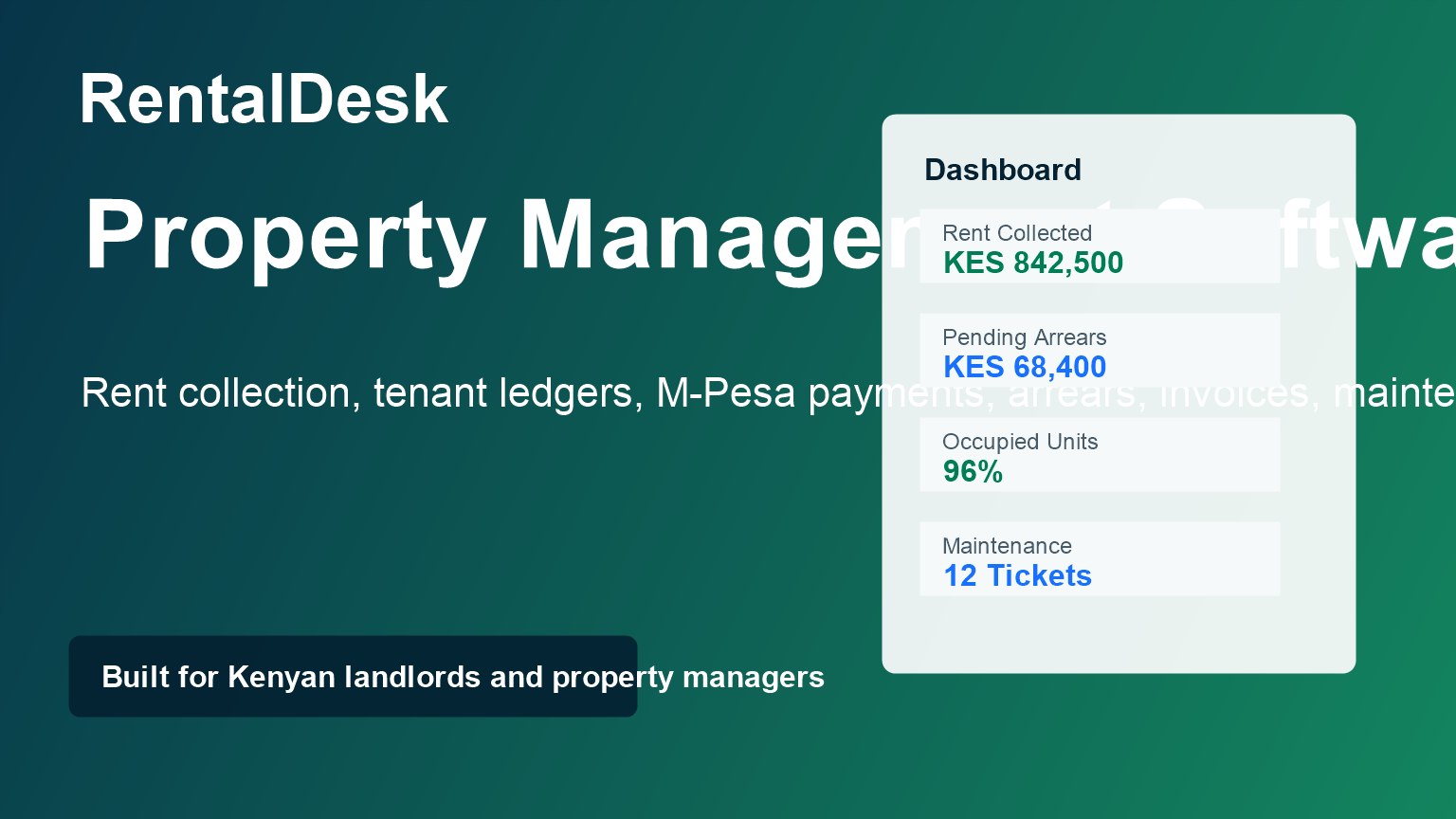
RentalDesk can help assess requirements and explain a suitable scope for service charge management Kenya. Visit rentaldesk.co.ke, share accurate details and request a written recommendation. Keep the final decision tied to evidence, safety, current terms and the outcome your users genuinely need.