Managing rental properties can be challenging, especially when a landlord has multiple buildings, dozens of tenants, and hundreds of transactions to track every month.
Traditional methods such as notebooks, Excel spreadsheets, WhatsApp messages, and paper files may work for a small number of units. However, as a property portfolio grows, these methods can become difficult to manage.
This is why property management software in Kenya is becoming increasingly useful for landlords, property managers, real estate companies, and property owners.
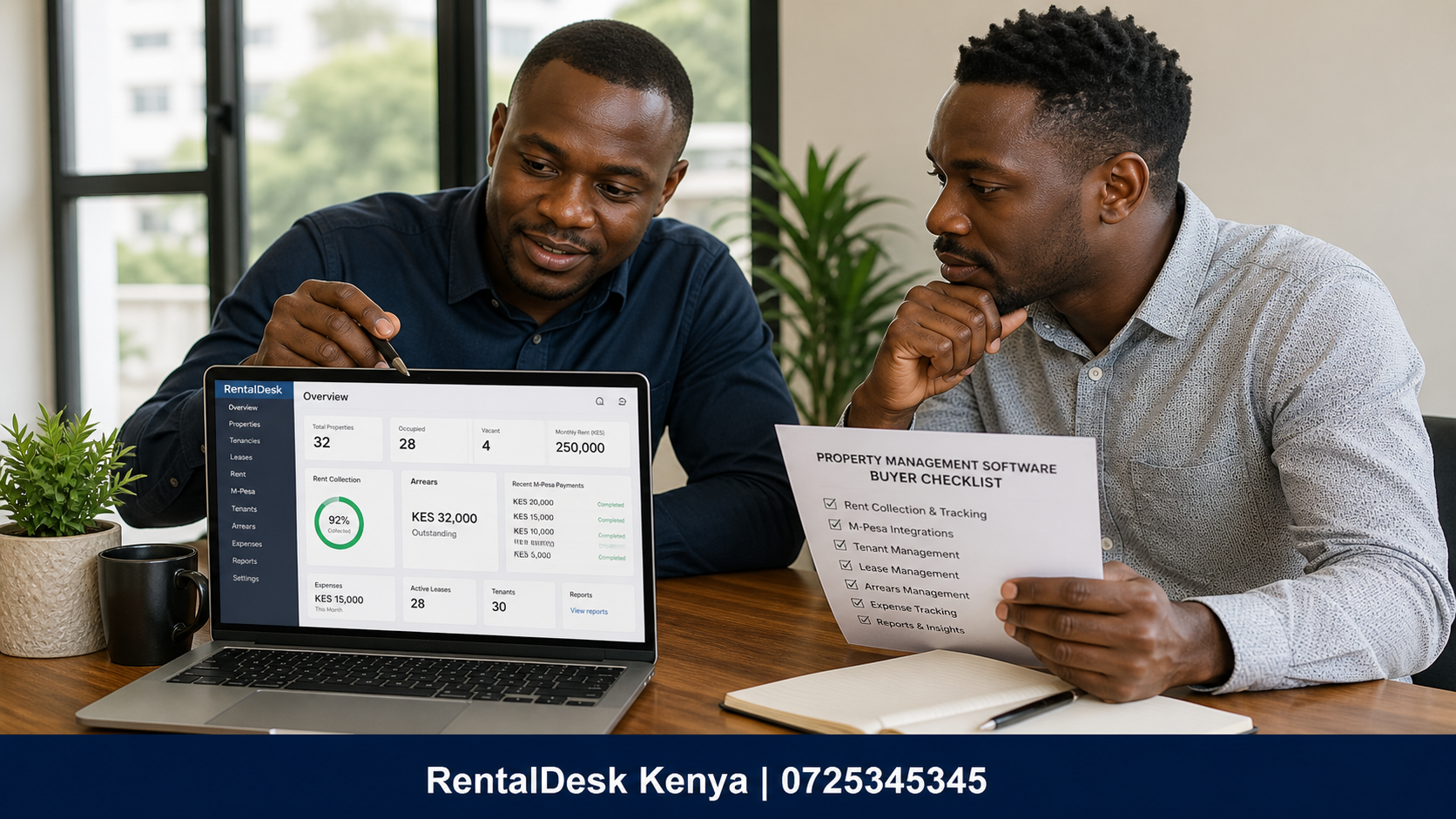
Property management software brings important rental activities into one centralized platform. Instead of managing tenants, rent payments, maintenance requests, invoices, and reports separately, property managers can manage these processes from one system.
RentalDesk is designed to help property owners and managers simplify rental operations and gain better visibility into their properties.
What Is Property Management Software?
Property management software is a digital platform that helps landlords and property managers manage their rental properties.
Depending on the platform, it can include features for:
- Property management
- Unit management
- Tenant management
- Rent invoicing
- Payment tracking
- Arrears management
- M-Pesa payments
- Maintenance management
- Utility billing
- Financial reporting
- Tenant communication
- Lease management
Instead of using several disconnected tools, property managers can centralize their information in one system.
Why Kenyan Landlords Need Property Management Software
The rental industry in Kenya is growing, and many landlords are managing increasingly large portfolios.
Managing several properties manually can create a number of challenges.
1. Too Much Paperwork
Traditional property management involves keeping contracts, receipts, tenant information, payment records, maintenance documents, and other paperwork.
As the number of tenants increases, keeping these records organized becomes difficult.
Digital property management reduces dependence on physical documents and makes information easier to access.
2. Difficult Rent Tracking
Rent collection is one of the most important responsibilities of a landlord.
Without proper software, landlords may have to manually check M-Pesa messages, bank statements, spreadsheets, and receipts.
This can make it difficult to determine exactly who has paid and who still owes rent.
A property management system can centralize payment records and provide better visibility into rent collection.
3. Managing Tenant Information
Landlords need accurate information about their tenants.
A centralized tenant management system can help store information such as:
- Tenant names
- Contact details
- Unit numbers
- Lease information
- Rent amounts
- Payment history
- Outstanding balances
- Tenant status
Having this information in one place makes tenant management easier.
Key Features of Property Management Software
A modern property management platform should provide tools that cover the major areas of rental operations.
Property and Unit Management
Landlords can organize properties and their individual rental units.
For example, a property manager may manage:
Property A
- Shop 1
- Shop 2
- Apartment 1
- Apartment 2
Property B
- Apartment 1
- Apartment 2
- Apartment 3
This structure makes it easier to understand occupancy, tenants, rent, and performance at each property.
Tenant Management
Tenant information can be stored digitally instead of relying on paper files.
This allows property managers to quickly access tenant records whenever needed.
Automated Rent Invoicing
Property managers can create recurring rent invoices and track their status.
Instead of manually preparing rent demands every month, the system can help organize the billing process.
M-Pesa Payment Management
M-Pesa is widely used for payments in Kenya.
Integrating payment workflows with property management can help reduce manual recording and make it easier to match transactions with tenants and rental units.
Arrears Management
Late rent payments can negatively affect a property’s cash flow.
Property management software can help identify overdue balances and tenants with outstanding rent.
This allows managers to follow up on arrears more efficiently.
Maintenance Management
Property maintenance is another important part of managing rental buildings.
Tenants may report problems such as:
- Plumbing issues
- Electrical faults
- Broken doors
- Water problems
- Leaking roofs
- Damaged fixtures
A maintenance management system can help property managers record requests, assign tasks, track progress, and maintain a history of completed work.
How Property Management Software Saves Time
One of the biggest advantages of property management software is automation.
Without software, a property manager may need to:
- Create rent records manually.
- Check payment messages.
- Update spreadsheets.
- Calculate tenant balances.
- Send rent reminders.
- Prepare reports.
- Record maintenance requests.
These activities can consume many hours every month.
A centralized rental platform can automate or simplify many of these processes.
This allows property managers to focus more on managing properties and less on administrative work.
Property Management Software vs Excel
Excel remains a useful tool for many businesses, but it has limitations when used to manage large rental portfolios.
| Excel/Spreadsheets | Property Management Software |
|---|---|
| Manual data entry | Centralized digital records |
| Manual calculations | Automated calculations |
| Difficult to track arrears | Dedicated arrears management |
| Separate payment records | Centralized payment tracking |
| Limited automation | Automated workflows |
| Manual reports | Automated reporting |
| Difficult to scale | Designed for growing portfolios |
For a landlord with only a few units, spreadsheets may be sufficient.
However, property managers handling multiple properties can benefit significantly from dedicated software.
Benefits of Using RentalDesk
RentalDesk helps landlords and property managers centralize important rental operations.
Instead of using different tools for tenants, rent, payments, maintenance, and reports, property managers can manage these activities from one platform.
Some of the major benefits include:
Better Organization
Property information, tenant records, payment information, and other rental data can be managed centrally.
Improved Rent Visibility
Landlords can monitor rent collections and outstanding balances more easily.
Faster Tenant Communication
Digital communication and notifications can make it easier to keep tenants informed.
Easier Maintenance Tracking
Maintenance requests can be recorded and followed up systematically.
Better Financial Reporting
Property owners can generate reports to understand how their rental investments are performing.
Easier Portfolio Management
Multiple properties and units can be managed from a centralized system.
Who Can Use Property Management Software?
Property management software is not only for large real estate companies.
Individual Landlords
A landlord with apartments, bedsitters, shops, or houses can use software to organize rental operations.
Property Managers
Professional property managers can manage properties belonging to different owners.
Apartment Managers
Large apartment buildings can use software to manage large numbers of tenants and units.
Commercial Property Owners
Owners of offices, shops, warehouses, and other commercial properties can use digital systems to organize rent and tenant records.
Real Estate Companies
Real estate businesses managing multiple properties can use centralized software to improve operational efficiency.
How Technology Can Improve Tenant Experience
Property management is not only about collecting rent.
Tenants also expect convenient and professional services.
Technology can make it easier for tenants to:
- Receive rent reminders
- Access payment information
- Receive receipts
- Report maintenance issues
- Communicate with property managers
- View account information
- Receive important property announcements
A better tenant experience can contribute to stronger tenant relationships and improved retention.
The Importance of Rental Data
Property owners need reliable information to make good investment decisions.
A property management system can help organize data about:
- Rental income
- Occupancy
- Vacancies
- Arrears
- Expenses
- Maintenance
- Tenant turnover
- Property performance
This information can help landlords identify problems and opportunities.
For example, if one property consistently has high vacancy rates, the owner can investigate the possible causes and take corrective action.
Improve Your Property Management With RentalDesk
Managing rental properties manually can become increasingly difficult as a portfolio grows.
From rent collection and tenant management to maintenance, invoices, payments, and reporting, there are many processes that need to be coordinated.
Property management software in Kenya provides landlords and property managers with a more organized way to handle these responsibilities.
RentalDesk brings essential rental management activities together in one platform, helping property managers save time, improve record keeping, monitor rental income, and manage their properties more efficiently.
Whether you manage a few rental units or a growing property portfolio, moving from manual processes to a centralized property management system can make your operations more efficient.