
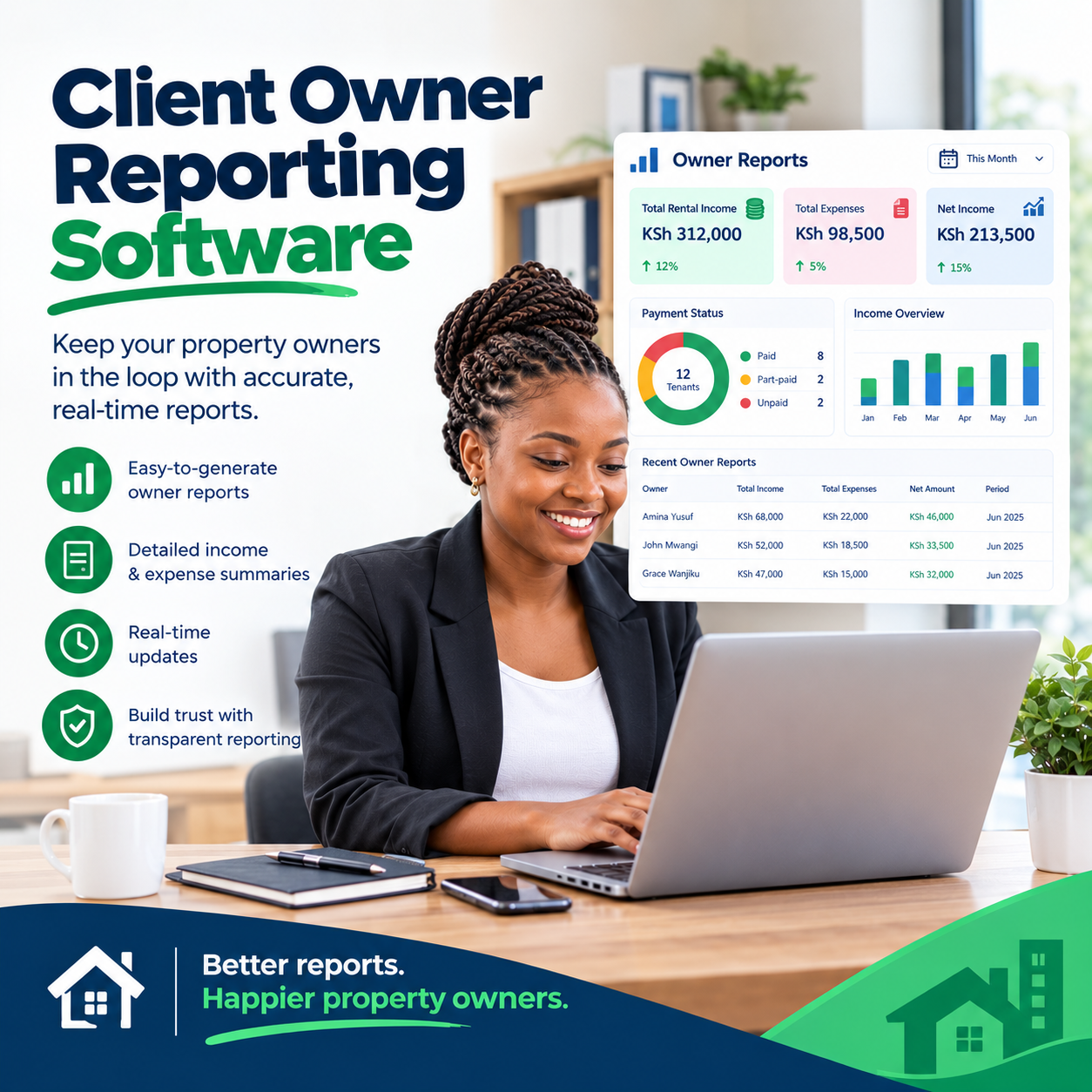
A client owner reporting software is the system that keeps every landlord client informed month after month — and quietly keeps every one of their mandates on your books. The agencies that grow fastest in 2026 share one visible habit: their clients hear from them on schedule, in writing, with numbers that prove the work. The agencies that shrink share the opposite habit, and most of them never connect their losses to their silence.
The mechanism is simple to describe and demanding to sustain. Delivering a clear report to every owner, every month, forever, is exactly the kind of promise that human discipline struggles to keep. A client owner reporting software platform keeps it automatically — compiling collections, occupancy, maintenance, and commentary into branded documents that go out on time, every time.
That reliability is the entire product. This guide examines the category from the agency owner’s commercial perspective: what silence costs in churn, how reporting wins mandates before you manage them, and the layers — packages, cadences, portals, and branding — that turn reporting into a retention machine. By the end, you will be able to buy and deploy a client owner reporting software platform as a growth investment rather than an administrative chore.
Whether you serve two landlords or two hundred, the arithmetic never changes. Retained mandates compound, and lost ones bleed. Nothing compounds retention more reliably than a well-run client owner reporting software routine — and that commercial framing, reporting as revenue protection, is where this guide begins.
The Cost of Silence: What Poor Reporting Actually Costs
Run the churn mathematics honestly and the case closes itself. A mandate over five units at KSh 30,000 each generates meaningful commission every month, and losing it erases that income instantly while opening a recruitment bill to replace it. Against those stakes, the modest cost of running client owner reporting software is not an expense but an insurance premium.
Silence has a specific mechanism of harm. A landlord who receives nothing for three months does not conclude that nothing is happening — they conclude they cannot tell, and uncertainty is where every competitor’s pitch takes root. The owners retained on client owner reporting software routines are not better served than the silent ones; they are simply better informed, which clients experience as the same thing.
Silence also costs you the fee conversation. When a landlord cannot see the work, the monthly commission reads as an expense to be negotiated rather than value being delivered. Agencies with visible reporting describe fee discussions becoming rare — the documented commercial effect of disciplined client owner reporting software.
The deepest cost is strategic blindness of your own. Agencies that report poorly are usually agencies that review poorly, and the ones that review poorly discover portfolio problems at the same moment their clients do. The operational mirror inside client owner reporting software protects the agency from itself before it protects the client from surprises.
Reporting as a Sales Weapon: Winning Mandates Before You Manage Them
Most agencies treat reporting as an after-sales duty, and the smartest ones treat it as a sales asset. A sample report — branded, complete, and anonymized — is the single most persuasive document an agency can present when pitching a landlord. Prospects who see exactly what their first client owner reporting software report will look like are comparing you against agencies promising only promises.
The pitch conversation transforms with evidence. Instead of claiming transparency, you show it; instead of describing responsiveness, you display the cadence the prospect will experience from month one. Demonstration has closed more mandates in the client owner reporting software era than any listing of services ever has.
Referrals compound the same way. A landlord forwarding a clean monthly report to a fellow owner is doing your marketing for you, with proof attached. Every well-built report from your client owner reporting software is therefore a sales document traveling into rooms you will never enter.
The onboarding promise completes the weapon. New clients who receive their first report on schedule in month one start the relationship with proof rather than hope. That first impression, generated automatically by client owner reporting software, sets the standard every subsequent renewal will inherit.
What Client Owner Reporting Software Really Is
A client owner reporting software platform is a system that generates, brands, schedules, and delivers periodic performance reports to every property owner you serve. It draws from live operational data — payments, vacancies, tickets, leases — so the reports describe reality rather than reconstruct it. Think of it as the publishing department of your agency, running on infrastructure instead of effort.
The platform is distinct from the tools around it. Accounting software records the money, operations tools run the work, and statements prove individual accounts. A client owner reporting software platform is the audience-facing layer — built for the person paying your commission rather than the person doing the work.
Three capabilities define the category. Generation from live data, so reports cannot drift from the truth; scheduling, so delivery survives holidays, staff changes, and busy seasons; and branding, so every document carries your agency’s identity rather than a software vendor’s. Together they are the working definition of genuine client owner reporting software.
The best platforms add a fourth capability: the owner portal. A private login where each client views their own portfolio’s live data between reports turns communication from a monthly event into a standing service. That self-service layer is what elevates client owner reporting software from a document producer into a relationship platform.
What it is not matters just as much. It is not a template, not a mail merge, and not a feature you can convincingly improvise at month-end. It is infrastructure for trust — and that role is why serious agencies standardize on client owner reporting software rather than assembling it by hand each cycle.
The Report Package: What Goes Out the Door
A complete report package has a recognizable anatomy, and knowing it lets you judge any platform’s output in one look. The summary opens the document — three or four sentences stating the month’s headline: collections, occupancy, and anything needing attention. Owners who read nothing else still absorb that opening, which is why the summary is the most crafted element of any client owner reporting software output.
The financial section follows with precision. Rent charged, rent received, arrears with their age, expenses itemized, and the remittance due to the owner — every figure reconciling to the statement attached. Internal consistency of that kind is the credibility test that separates genuine client owner reporting software output from a newsletter with numbers.
The property section proves the asset is watched. Every unit’s occupancy status, any vacancy with its days-on-market and marketing activity, and maintenance completed or pending with costs and photographs. That visible care is the retention heart of the package produced by client owner reporting software.
The advice section closes the document. Rent review suggestions, planned maintenance, and market context — each stated with a reason, so the owner receives judgment rather than just data. Agencies that advise retain clients; agencies that merely report get compared on fees, which is the strategic difference a complete client owner reporting software package creates.
Attachments complete the mailing. The account statement, the remittance advice, and any invoices referenced — bundled so the owner receives one complete, self-contained pack. That one-touch completeness is the delivery standard of mature client owner reporting software in daily use.
The Three Cadences: Weekly, Monthly, Quarterly
Reporting works best as a rhythm with three speeds, each answering a different question. The monthly report is the backbone — performance, position, and remittance for every owner, without exception. Consistency at that cadence is the operating heart of any client owner reporting software deployment.
The quarterly report goes deeper. Trends across three months, comparisons against prior periods, and strategic items — rent reviews, renovations, repositioning — that monthly reporting cannot carry. Owners genuinely value that wider lens, and it is where client owner reporting software demonstrates judgment rather than administration.
The event report fires between cadences. A major repair, a tenant dispute, a notice received, or an insurance matter each deserves an immediate written summary, even mid-month. Clients remember the managers who told them first — the reputational power of the event layer inside client owner reporting software.
Weekly touches serve the largest clients. A short digest — collections to date, viewings booked, issues opened — keeps big mandates feeling individually managed without adding work. That graduated attention is the scaling trick built into sophisticated client owner reporting software configurations.
The Portal and the PDF: Two Layers of Communication
The scheduled PDF is the ritual layer. It arrives on a known date, carries the full package, and becomes the document clients file, forward, and rely on at tax time. That dependable artifact is the foundation layer of every client owner reporting software system.
The portal is the between-times layer. Clients log in whenever curiosity strikes, see live collections and status, and answer their own questions without calling your office. Self-service visibility of that kind is the modern expectation set by the newest client owner reporting software platforms.
The two layers reinforce each other. The PDF satisfies the need for a complete, shareable record, while the portal satisfies the daily impulse to check. Agencies running both report the quietest client phones in the business — the practical dividend of a complete client owner reporting software deployment.
Choose platforms that treat the portal as genuine client infrastructure. Read-only views, per-owner logins, and mobile-friendly design are the baseline, because a portal clients cannot use is a portal that exists in name only. That usability test is the fairest way to evaluate the client-facing half of any client owner reporting software offering.
White-Labeling: Make Every Report Unmistakably Yours
Branding is not decoration; it is ownership of the relationship. Every report should carry your logo, your colors, your contact details, and your tone — so the client experiences the document as yours, not your vendor’s. That identity layer is the white-label standard of professional client owner reporting software.
The stakes are commercial. If reports arrive wearing a software company’s brand, the client’s loyalty quietly attaches to the tool rather than to you. Agencies that insist on full white-labeling from their client owner reporting software keep the credit where it belongs.
Customization should extend to language. The summary’s voice, the section order, and the terminology should reflect how your agency communicates, per client where useful. Personalized output at that depth is what distinguishes mature client owner reporting software from template generators.
Test the branding during evaluation. Generate a sample report for your own agency, and judge whether a client would instantly recognize it as yours. If the answer is no, the client owner reporting software in question is borrowing your relationship — and pricing should reflect that.
Onboarding Clients Onto the Rhythm
New reporting habits need a warm introduction, and the first month sets the tone for years. A short message explaining what will arrive, when, and why — framed as a service upgrade for the client’s benefit — is the entire onboarding script. Clients consistently welcome well-explained client owner reporting software changes rather than questioning them.
Walk the first report personally. Call the client after their first document lands, walk them through the sections, and invite them to tell you what they want more of. That single conversation converts a client owner reporting software rollout into a collaboration.
Then let the rhythm take over. By the third month, clients expect the report, and expectation is the habit that anchors retention. Hands-free consistency from that point forward is the operating promise of a proper client owner reporting software deployment.
Why 2026 Is the Breakout Year
Three forces have converged to make dedicated reporting tools mainstream this year. First, the data is effortless: M-Pesa reconciliation, ticketing, and occupancy registers feed the reports automatically. The raw material for genuine client owner reporting software now exists as a byproduct of well-run operations.
Second, landlord expectations have professionalized. Owners compare agencies on transparency before signing mandates and judge ongoing value through the documents they receive. In that market, client owner reporting software has become a competitive requirement rather than a courtesy.
Third, delivery has become free and instant. Branded PDFs travel through WhatsApp and email in seconds, and portals put every report on the client’s phone the moment it is ready. Distribution — once the excuse for irregular reporting — is a solved problem for any agency running client owner reporting software today.
Features to Demand in 2026
Evaluate any platform against a demanding checklist. First, demand generation from live data, because reports built from operations cannot drift from the truth. That live connection is the foundation of trustworthy client owner reporting software.
Second, expect full white-labeling with per-owner personalization produced in batch. Third, look for the complete package — financials, occupancy, maintenance, and advice — with statements attached. Fourth, confirm multi-channel scheduling across WhatsApp, email, and portal. Those capabilities together define a mature client owner reporting software platform.
Fifth, verify the searchable archive, with every report ever sent retrievable by owner, property, and date. Sixth, confirm M-Pesa integration depth, since the financial sections are only as accurate as the reconciliation beneath them. Seventh, test the export door — your reporting history must always be portable. Breadth of that kind separates real client owner reporting software from templates with a logo.
Choosing Your Platform
Selection starts from your client base rather than the loudest advert. Number of owners, portfolio spread, and where your current reporting hurts most should shape the choice. The right client owner reporting software fits your operation exactly.
Trial with real data, without exception. Generate reports for three actual landlords, deliver them through real channels, and watch how the documents land. One honest cycle reveals more than any demonstration of client owner reporting software ever will.
What It Costs
Pricing is friendly, because reporting rides on systems you may already be running. Standalone generators start free, while full platforms include the capability in plans ranging from free tiers to a few thousand shillings monthly. Against a single retained mandate, any client owner reporting software investment repays itself immediately.
The honest framing is that reporting is rarely a separate purchase. It is a capability inside the operations, statements, and portfolio tools covered across our other guides. That bundling makes the reporting layer one of the highest-value features per shilling in the entire client owner reporting software market.
Common Mistakes to Avoid
The most common mistake is automating delivery without the honesty. A system that sends polished reports on schedule still fails if bad news is softened into invisibility. Candor remains a human discipline — client owner reporting software carries it, but your culture sets it.
The second mistake is treating the portal as a replacement for the report. Clients value both the scheduled document and the ability to check between sends, and dropping either weakens the relationship. The strongest client experience runs both layers of your client owner reporting software together.
The third mistake is onboarding nobody. Reports that begin arriving unexplained read as new bureaucracy rather than upgraded service. One warm message and one walkthrough call are what turn a client owner reporting software rollout into a welcomed change.
Real Scenarios from Real Agencies
Picture a letting agency in Kilimani serving twenty-five landlords through occasional phone calls. After adopting automated reporting, mandate renewals stopped being negotiations and became confirmations — and two competitors’ pitches failed against the agency’s documented track record. Retention like that is the classic first-year outcome of disciplined client owner reporting software.
Picture a property manager in Nakuru who lost a mandate to a cheaper rival. Eighteen months later the landlord returned, because the rival never sent a single report and the owner had spent the year unable to answer basic questions about their own property. The returned client became the firm’s most vocal referral — proof of the compounding value of client owner reporting software done consistently.
Picture a two-person office in Kitengela that adopted reporting software before it grew. Every mandate it wins arrives with the same promise — portals, reports, and documented remittances from month one — and the firm now competes for clients far larger than its size suggests. That professional identity is the growth dividend of client owner reporting software built in early.
The Road Ahead: 2027 and Beyond
The trajectory points toward reports that increasingly advise rather than describe. Prediction is arriving — systems that forecast next month’s collections, flag rent review windows, and recommend maintenance before failures happen. The client owner reporting software of 2027 will feel less like a document and more like a consultant’s memo.
Integration is deepening alongside it. Portals, reports, statements, and approvals are converging into single flows where the owner experiences one continuous conversation with their portfolio. The connected future is already visible across the client owner reporting software market, and it will accelerate.
Frequently Asked Questions
What does client owner reporting software actually do?
It generates, brands, schedules, and delivers periodic performance reports to your landlord clients automatically — compiling collections, occupancy, maintenance, and advice from your live operational data. Think of it as the communication engine between your agency’s work and the owner’s understanding of it. That owner-facing role defines genuine client owner reporting software.
How is this different from the landlord report practice guide on this site?
The practice guide explains what a great report contains and why it retains clients, while this category covers the tools that produce those reports automatically at scale. The strongest agencies combine both — the discipline from the practice, delivered through client owner reporting software that makes it sustainable.
How often should reports go out?
Monthly performance reports are the professional backbone, quarterly reviews add strategy, and event reports fire the moment something significant happens. Consistency matters more than frequency, and automation makes that consistency effortless — the core promise of a client owner reporting software system.
Where can agencies find tools that combine listings and reporting?
Start with platforms that combine verified listings with agency-grade reporting, such as rentaldesk.co.ke. Pairing genuine business with disciplined client owner reporting software takes your agency from hoping clients stay to knowing they will — report by report, mandate by mandate, year after year.