
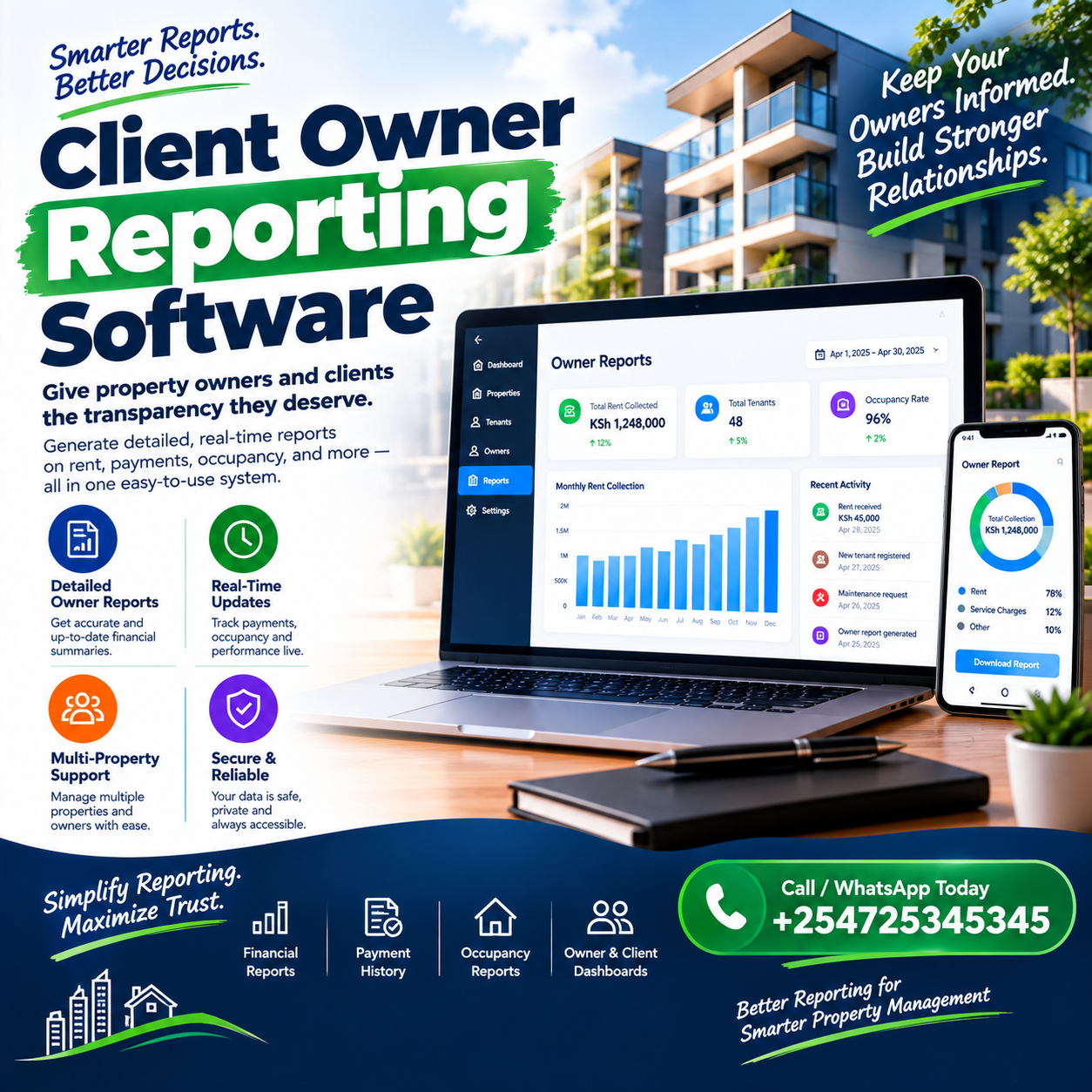
Client owner reporting software is the technology that keeps every landlord client informed, engaged, and loyal — automatically and on schedule. Instead of hand-assembling figures each month, property managers configure the system once, and it compiles collections, occupancy, maintenance, and commentary into branded reports that reach each owner exactly when promised. The result is a client base that feels informed rather than ignored, which is precisely the feeling that renews management contracts year after year.
The reporting moment is where management relationships are actually decided. A landlord who receives a clear monthly report rarely questions the fee, rarely takes a competitor’s call seriously, and rarely leaves without a conversation. A landlord who hears nothing for three months is already halfway to whichever agency promises better communication, and no amount of good management work can undo that silence after the fact.
This guide is the complete buyer’s guide to the category in 2026. We cover what the software actually does, why reporting decides agency retention, and the dashboard views that matter most. We also cover report types, automation, the features worth demanding, realistic pricing, and the mistakes that waste money either way.
By the end, you will be able to evaluate any option in the market like a professional. Whether you manage five units for two landlords or five hundred for forty, the principle never changes: clients renew managers who keep them informed. And nothing keeps owners informed more reliably than purpose-built client owner reporting software running quietly beneath your entire operation.
What Is Client Owner Reporting Software?
Client owner reporting software is a system that generates and delivers periodic performance reports to property owners on behalf of the manager or agency. It draws directly from your operational records — payments, vacancies, maintenance tickets, and lease dates — and turns them into readable documents per client. Think of it as the bridge between everything your agency does on the ground and everything your landlord client actually sees.
The software centers on the owner as the audience, which distinguishes it from every other tool in the property stack. Tenant documents speak to occupants, account statements show balances, and internal dashboards serve your own team. This category alone is built for the client relationship — the person paying your commission and deciding your contract’s future.
A complete platform typically bundles report generation, branding, scheduling, and delivery through the channels owners actually use. The best systems also include owner portals, where clients can view live data between reports instead of waiting for the next send. That self-service layer is what turns client owner reporting software from a document producer into a relationship platform.
What it is not matters just as much. It is not an accounting system, not a listing tool, and not a generic PDF template with property fields. It is the communication engine of the management business — and that focused role defines every serious client owner reporting software platform on the market.
Why Reporting Makes or Breaks Agencies
Agency work has an uncomfortable asymmetry: owners judge what they can see. An agency can manage brilliantly and still lose mandates if the client never perceives the work, because silence reads as neglect regardless of the reality behind it. Consistent, professional reporting is how invisible work becomes visible value, and it is the single most controllable factor in client retention.
The economics are stark when you run them honestly. Losing one management mandate costs the annual commission of every unit it contains, plus the acquisition cost of replacing it. Against that, the effort of maintaining client owner reporting software on a schedule is almost nothing — which makes the return on disciplined reporting one of the best in the entire business.
Reporting also protects agencies in the hard moments. Markets soften, tenants pay late, and repairs cost money, and the agencies that report bad news early with context keep their clients through it. Candor delivered on schedule is the trust discipline that a proper client owner reporting software routine makes effortless.
Why 2026 Is the Breakout Year
Three forces are converging to make 2026 the year dedicated reporting tools go mainstream across Kenyan agencies. First, landlord expectations have risen with the market. Owners now compare agencies on transparency before signing mandates, and they judge ongoing value through the documents they receive — which makes strong client owner reporting software a competitive weapon rather than a back-office courtesy.
Second, the data has become effortless to gather. M-Pesa reconciliation, maintenance logs, and occupancy registers live in systems now, so reports compile from live records instead of weekend reconstruction projects. That shift has turned client owner reporting software from a luxury into a natural byproduct of well-run operations.
Third, delivery has become free and instant. Branded PDFs travel through WhatsApp and email in seconds, and portals put every report on the client’s phone the moment it is ready. Distribution — once the excuse for irregular reporting — is a solved problem for any agency running client owner reporting software today.
Who Needs It Most
Full-service property managers benefit first and most. Their entire client relationship rests on the monthly rhythm of collections, expenses, and updates, and software makes that rhythm unbreakable. For firms of any size serving multiple owners, client owner reporting software is the retention engine of the whole business.
Growing agencies form the second audience. An agency serving ten owners can hand-hold each one personally, but an agency serving a hundred needs systems to keep every client equally informed. Automation of that depth is what lets a firm scale its client list without thinning its communication — the structural promise of client owner reporting software.
Diaspora-serving agencies form the third audience. Owners abroad depend entirely on documented reporting, because distance leaves no room for verbal reassurance. Firms that serve the diaspora well describe client owner reporting software as the foundation of every relationship they hold across time zones.
The Owner Dashboard: What You Should See
The dashboard is where the software earns its keep, so know exactly what to demand. The headline view shows each owner’s portfolio at a glance — collections this month, occupancy, and any items needing attention. That single opening screen is the signature of professional client owner reporting software.
The per-property breakdown belongs beneath the headline. Every unit should show its status, its rent position, and its maintenance activity, so owners can drill from the summary into any detail. Layered transparency of that kind is the trust architecture inside serious client owner reporting software.
The remittance view matters as much as the collection view. Owners should see what was collected on their behalf, what fees were applied, and what was disbursed to them, with dates attached. That money trail is the credibility core of client owner reporting software, and it ends fee questions before they begin.
Alerts and exceptions complete the picture. A vacancy entering its second week, a lease approaching expiry, or an unusual repair cost should surface without waiting for the monthly send. Proactive visibility like that is what elevates client owner reporting software from a reporting tool into an early-warning system.
Finally, the dashboard should be client-facing, not manager-only. The best platforms give owners their own login, so they can check their portfolio whenever curiosity strikes instead of calling your office. Self-service access is the quiet differentiator that defines the newest generation of client owner reporting software.
The Report Types That Matter
The monthly performance report is the backbone of the entire practice. It summarizes collections, arrears, occupancy, and maintenance per property, with the owner’s remittance confirmed inside. Consistency at that rhythm is what defines a professional client owner reporting software deployment.
The quarterly review goes deeper. It adds trends across three months, compares performance against previous periods, and raises strategic questions like rent reviews or renovations. Owners genuinely value that wider lens, and it is where client owner reporting software demonstrates judgment rather than just administration.
The annual statement closes the year. It aggregates twelve months of income, expenses, occupancy averages, and major works, setting the agenda for the year ahead. Tax season and portfolio planning both draw on the archive that client owner reporting software builds automatically.
Event reports complete the set. A major repair, a tenant dispute, or a notice received each deserves its own immediate written summary, even mid-month. Owners remember the managers who told them first — the reputational power of the event layer inside a complete client owner reporting software system.
How the Automation Actually Works
The workflow runs itself once your operational records are current. Collections post through M-Pesa reconciliation, maintenance closes through tickets, and occupancy updates through the register — then reports compile on schedule from that live data. That build-from-operations design is what distinguishes genuine client owner reporting software from a mail-merge template.
Branding and personalization sit on top of the automation. Every report carries your agency’s identity, each owner’s name and properties, and a summary written in plain language. Automated output that still feels personally addressed is the craft standard of a mature client owner reporting software implementation.
Scheduling closes the loop. Set the date, set the channel, and every owner receives their report without anyone touching a keyboard. Hands-free consistency is the operating promise of proper client owner reporting software, and it survives holidays, staff changes, and busy seasons alike.
The archive accumulates alongside the sending. Every report ever generated files itself, searchable by owner, property, and date, building a permanent record of the relationship. That evidentiary history is the compounding asset inside every client owner reporting software deployment that lasts.
Features to Demand in 2026
The market is growing quickly, so evaluate against a demanding checklist. First, demand generation from live data rather than manual entry, because reports built from operations cannot drift from the truth. That live connection is the foundation of trustworthy client owner reporting software.
Second, expect branded, professional PDFs with per-owner personalization produced in batch. Third, look for the full section coverage — financials, occupancy, maintenance, and commentary — drawn from one connected system. Those capabilities together define a mature client owner reporting software platform rather than a template with ambitions.
Fourth, confirm multi-channel scheduling across WhatsApp, email, and portal access. Fifth, verify the searchable archive and full data export, because your reporting history must always be portable. Sixth, check M-Pesa integration depth, since the financial sections are only as accurate as the reconciliation beneath them. Breadth of that kind separates real client owner reporting software from tools that merely format numbers.
Finally, mind the practical basics. The system must work on affordable phones and weak networks, and it must serve owners on the devices they actually carry. Real-world usability decides whether your client owner reporting software becomes infrastructure or shelfware.
Choosing the Right Platform
Selection starts from your client base rather than the loudest advert. Number of owners, portfolio spread, and where your current reporting hurts most should shape the choice. The right client owner reporting software fits your operation exactly, not the one with the biggest billboard.
Trial with real data, without exception. Generate reports for three actual landlords, deliver them through real channels, and watch how the documents land. One honest cycle reveals more than any demonstration of client owner reporting software ever will.
Ask about the practice side too, not just the product. Providers who understand reporting rhythms, retention strategy, and owner psychology will configure your system far better than ones selling features alone. That difference in guidance is often what separates satisfying client owner reporting software experiences from abandoned ones.
What It Costs in 2026
Pricing in this category is friendly, because reporting rides on systems you may already be running. Standalone report generators start free, while full property management platforms include the capability in plans ranging from free tiers to a few thousand shillings monthly. Against a single retained mandate, any client owner reporting software investment repays itself immediately.
The honest framing is that reporting is rarely a separate purchase. It is a capability inside the operations, statements, and portfolio tools covered across our other guides. That bundling makes the reporting layer one of the highest-value features per shilling in the entire client owner reporting software market.
Getting Started the Right Way
Begin with one landlord rather than the whole client book. Choose your most engaged owner, configure their report to the full standard, and deliver it personally with a short explanation of the new rhythm. A warm, well-received pilot is the foundation of every successful client owner reporting software rollout.
Then standardize and scale. Template the structure, automate the data flow, and schedule delivery for every owner on your books. Within one quarter, the practice becomes the visible identity of your agency — the quiet reputation engine of a disciplined client owner reporting software routine.
Review the results as you go. Watch which sections owners actually read, which questions stop arriving, and how renewals begin to feel different. That feedback loop is how a client owner reporting software deployment improves from functional to indispensable.
Common Mistakes to Avoid
The most common mistake is automating delivery but not the honesty. A system that sends polished reports on schedule still fails if the underlying data is incomplete or the bad news is softened into invisibility. Candor remains a human discipline — client owner reporting software carries it, but your culture sets it.
The second mistake is treating the portal as a replacement for the report. Owners value both the scheduled document and the ability to check between sends, and dropping either weakens the relationship. The strongest client experience comes from running both layers of your client owner reporting software together.
Real Scenarios from Real Agencies
Picture a letting agency in Kilimani serving twenty-five landlords through occasional phone calls. After adopting automated monthly reporting, mandate renewals stopped being negotiations and started being confirmations — and two competitors’ pitches failed against the agency’s documented track record. Retention like that is the classic first-year outcome of disciplined client owner reporting software.
Picture a property manager in Nakuru who lost a mandate to a cheaper competitor. Eighteen months later the landlord returned, because the cheaper agency never sent a single report and the owner had spent the year unable to answer basic questions about their own property. The returned client became the firm’s most vocal referral — proof of the compounding value of client owner reporting software done consistently.
Picture a diaspora-serving agency in Nairobi whose clients span three continents. Its reports now land in London, Toronto, and Doha on the same morning, in the same format, with the same evidence attached every time. Confidence at that distance is the everyday export of a well-run client owner reporting software practice.
Picture a two-person office in Kitengela that adopted reporting software before it grew. Every new mandate it wins comes with the same promise — portals, reports, and documented remittances from the first month of management. That professional identity, built on client owner reporting software, is what allowed the firm to compete for clients far larger than its size suggested.
The Road Ahead: 2027 and Beyond
The trajectory points toward reports that increasingly advise rather than describe. Prediction is arriving — systems that forecast next month’s collections, flag rent review windows, and recommend maintenance before failures happen. The client owner reporting software of 2027 will feel less like a document and more like a consultant’s memo.
Integration is deepening alongside it. Portals, reports, statements, and approvals are converging into single flows where the owner experiences one continuous conversation with their portfolio. The connected future is already visible across the client owner reporting software market, and it will accelerate.
Frequently Asked Questions
What does client owner reporting software actually do?
It generates and delivers periodic performance reports to your landlord clients automatically — compiling collections, occupancy, maintenance, and commentary from your live operational data. Think of it as the communication engine between your agency’s work and the owner’s understanding of it. That owner-focused role defines genuine client owner reporting software.
Is this different from the landlord report practice I have read about elsewhere?
Yes — the practice article explains what a great report contains and why it retains clients, while this category covers the tools that produce those reports automatically. The strongest agencies combine both: the report discipline from the practice, delivered through client owner reporting software that makes it sustainable at scale.
How is it different from a rental statement generator?
A statement shows account activity — charges, payments, and balances — while owner reporting interprets the whole picture: financials, occupancy, maintenance, and recommendations. The strongest platforms produce both from the same records, with client owner reporting software carrying the strategic layer the statement cannot.
Do I still need it if I already use property management software?
Check whether your current platform generates scheduled, branded, per-owner reports as a built-in feature. Many modern suites include it, and if yours does, you may only need to switch the capability on. If reporting still means manual assembly at month-end, dedicated client owner reporting software is the missing layer.
How often does the software send reports?
Most agencies configure monthly performance reports as the backbone, quarterly reviews for strategy, and event reports triggered the moment something significant happens. The exact rhythm is yours to set, and consistency — not frequency — is what clients feel. That flexibility is standard across mature client owner reporting software platforms.
Will landlords find automated reports impersonal?
Not when the reports are accurate, well-branded, and personally addressed, and when humans handle the meaningful moments. Most owners experience automated reporting as attentiveness rather than machinery, because what they actually want is to be informed. Well-configured client owner reporting software delivers that feeling on schedule, every month.
What data does the system need to work well?
Complete payment records, current occupancy status, maintenance activity, and lease dates — all of which modern operations already generate through M-Pesa, registers, and ticketing. The quality of your reporting equals the quality of your records, which is why client owner reporting software works best sitting on disciplined operations.
How many owner clients do I need before it makes sense?
The honest signal is a symptom rather than a number — when keeping every client informed starts depending on memory and goodwill instead of systems. Even five owners benefit, because one silent client is proportionally painful for a small agency. Whenever the signal appears, client owner reporting software is the cure.
Where can agencies find tools that combine listings and reporting?
Start with platforms that combine verified listings with agency-grade reporting, such as rentaldesk.co.ke. Pairing genuine business with disciplined client owner reporting software takes your agency from hoping clients stay to knowing they will — report by report, mandate by mandate, year after year.