Tenant Occupancy Management System
Tenant Occupancy Management System has become an essential technology for landlords, property managers, and real estate investors who need complete visibility over tenant occupancy, vacancy rates, lease status, and residential property performance. Managing occupied and vacant units manually becomes increasingly difficult as rental portfolios grow. A Tenant Occupancy Management System provides a centralized digital platform that simplifies occupancy management while improving operational efficiency, tenant satisfaction, and long-term profitability.
The Kenyan real estate market continues to expand with new apartment developments, gated communities, mixed-use properties, affordable housing projects, and commercial buildings. As property portfolios increase, landlords require efficient systems that allow them to monitor occupancy levels, manage tenant records, coordinate move-ins and move-outs, process lease agreements, and reduce vacancy periods. Tenant Occupancy Management System software automates these activities while providing real-time information that supports better decision-making.
Occupancy management extends beyond simply knowing whether a unit is occupied or vacant. Property managers must coordinate tenant onboarding, maintain lease records, schedule inspections, process security deposits, communicate with tenants, prepare units for new occupants, monitor renewal opportunities, and analyze occupancy trends across entire property portfolios. Tenant Occupancy Management System solutions integrate all these responsibilities into one intelligent platform that improves organization and operational performance.
Traditional property management methods often rely on spreadsheets, filing cabinets, paper lease agreements, and manual reporting. These processes make it difficult to monitor occupancy accurately, respond quickly to vacancies, or identify opportunities to improve rental income. Tenant Occupancy Management System software replaces disconnected processes with centralized digital workflows that reduce administrative work while improving data accuracy.
Modern property owners require instant access to occupancy information from any location. Whether managing residential apartments in Nairobi, student accommodation in Eldoret, commercial units in Mombasa, or mixed-use developments across Kenya, Tenant Occupancy Management System technology enables property professionals to manage occupancy efficiently while supporting business growth.
Table of Contents
- Understanding Tenant Occupancy Management
- Why Property Managers Need Occupancy Management Software
- Core Features of a Tenant Occupancy Management System
- Managing Move-Ins and Move-Outs
- Occupancy Monitoring and Vacancy Reduction
- Integration with Property Management Systems
- Who Benefits from Occupancy Management Software
Understanding Tenant Occupancy Management
Occupancy management involves monitoring every rental unit throughout its lifecycle, from vacancy to tenant onboarding, active occupancy, lease renewal, and move-out. Tenant Occupancy Management System software automates these processes while providing accurate occupancy data.
Typical occupancy management functions include:
- Property registration
- Unit availability tracking
- Tenant profiles
- Lease management
- Move-in scheduling
- Move-out processing
- Vacancy monitoring
- Inspection management
- Security deposit tracking
- Communication management
- Occupancy reporting
- Portfolio analytics
A centralized system ensures property managers always know the occupancy status of every rental unit.
Why Property Managers Need Occupancy Management Software
Managing occupancy manually often results in delayed leasing, extended vacancies, poor communication, and inconsistent record keeping. Tenant Occupancy Management System software helps eliminate these challenges through automation and centralized management.
Key benefits include:
- Real-time occupancy tracking
- Faster tenant onboarding
- Reduced vacancy periods
- Better communication
- Improved lease coordination
- Automated notifications
- Centralized tenant records
- Increased operational efficiency
- Improved reporting
- Better portfolio management
For landlords managing multiple residential estates or apartment complexes across Kenya, occupancy management software simplifies daily operations while improving rental performance.
Core Features of a Tenant Occupancy Management System
Professional Tenant Occupancy Management System solutions include comprehensive tools that support every stage of tenant occupancy.
Tenant Management
Maintain complete tenant records, communication history, emergency contacts, and lease information.
Unit Availability Tracking
Monitor occupied, vacant, reserved, and maintenance units in real time.
Lease Administration
Track lease start dates, expiry dates, renewals, and contractual obligations.
Inspection Management
Schedule move-in, move-out, and periodic property inspections.
Vacancy Reporting
Generate reports showing occupancy percentages, vacant units, turnover rates, and leasing performance.
Communication Tools
Improve communication through notifications, reminders, emails, SMS messages, and tenant portals.
These features make Tenant Occupancy Management System software an essential solution for professional property management.
Managing Move-Ins and Move-Outs
Tenant transitions require careful coordination to maintain occupancy and minimize revenue loss. Tenant Occupancy Management System software streamlines every stage of the move-in and move-out process.
Move-in capabilities include:
- Tenant registration
- Digital documentation
- Lease signing
- Inspection scheduling
- Key management
- Deposit recording
- Utility setup
- Welcome communication
Move-out capabilities include:
- Notice management
- Final inspections
- Deposit reconciliation
- Maintenance scheduling
- Unit preparation
- Vacancy updates
- Financial reconciliation
Digital workflows reduce delays while improving tenant experiences.
Occupancy Monitoring and Vacancy Reduction
Reducing vacancy periods directly improves rental income. Tenant Occupancy Management System provides property managers with real-time occupancy insights that support proactive leasing decisions.
Key capabilities include:
- Vacancy alerts
- Occupancy dashboards
- Lease expiry tracking
- Renewal reminders
- Marketing readiness
- Unit availability reports
- Tenant turnover analysis
- Occupancy forecasting
These insights help landlords minimize vacant periods while maximizing rental revenue.
Integration with Property Management Systems
Occupancy management becomes more valuable when connected with other operational systems. Tenant Occupancy Management System software integrates with modern property management platforms.
Common integrations include:
- Tenant management
- Lease administration
- Rent collection
- M-Pesa payment integration
- Maintenance management
- Accounting software
- CRM systems
- Email platforms
- SMS gateways
- Financial reporting dashboards
Integration creates one connected property management ecosystem while eliminating duplicate data entry.
Who Benefits from Occupancy Management Software
Many organizations involved in rental property management benefit from Tenant Occupancy Management System solutions.
These include:
- Independent landlords
- Property management companies
- Residential estate managers
- Apartment developers
- Housing associations
- Student accommodation providers
- Affordable housing organizations
- Mixed-use developments
- Commercial property managers
- Real estate investment firms
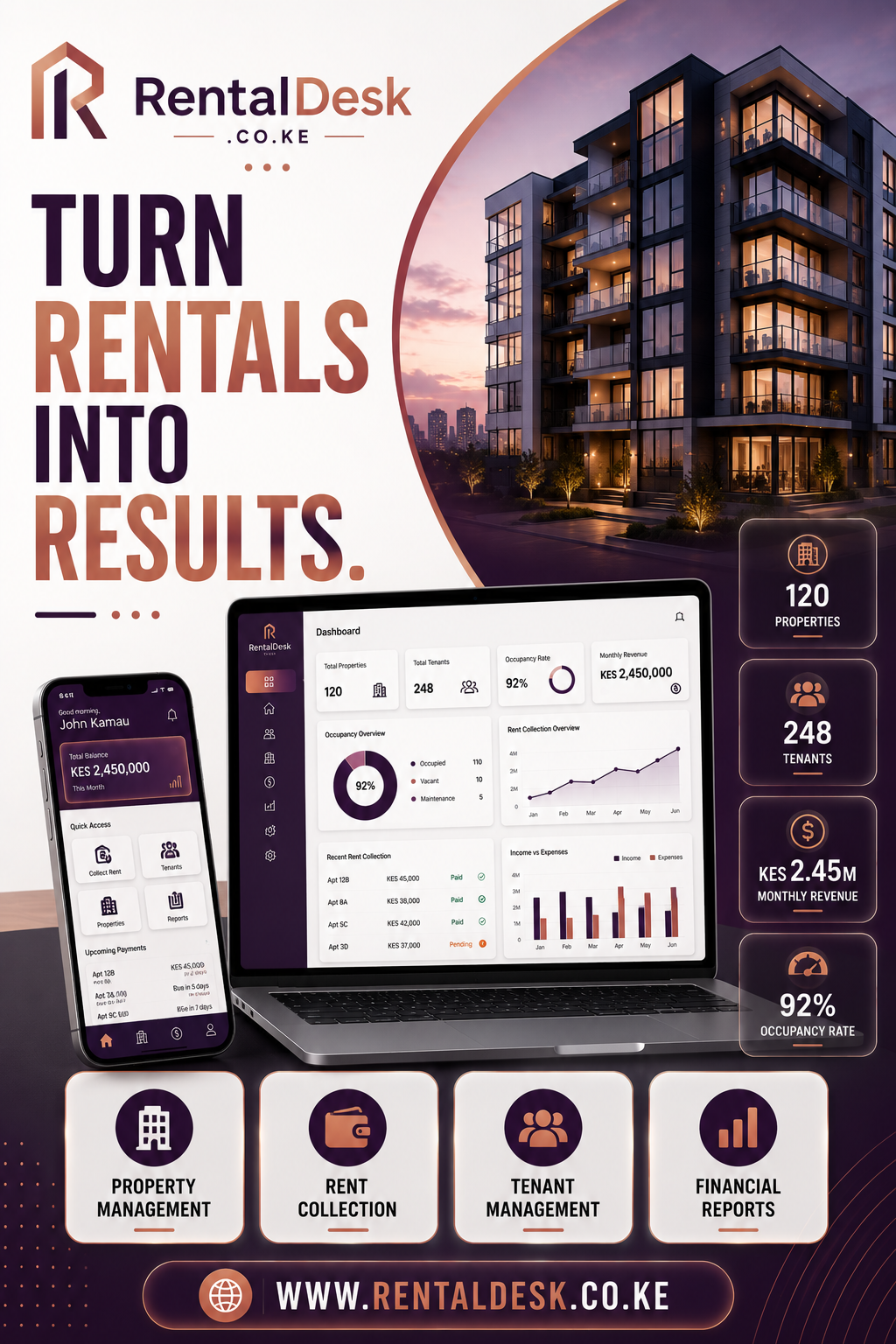
Organizations looking for a complete occupancy management platform can implement RentalDesk PMS, which combines tenant management, occupancy monitoring, lease administration, rent collection, maintenance coordination, financial reporting, and portfolio analytics within one cloud-based property management solution.
Benefits for Different Stakeholders
Tenant Occupancy Management System benefits every stakeholder involved in rental property management by improving visibility, communication, and operational efficiency. Property owners gain better occupancy insights, property managers simplify tenant administration, leasing teams reduce vacancy periods, maintenance teams coordinate unit preparation more effectively, and tenants enjoy a smoother rental experience. By centralizing occupancy management, Tenant Occupancy Management System helps organizations maximize rental income while delivering better services.
Benefits for Property Owners and Real Estate Investors
Property owners depend on high occupancy rates to maximize rental income and investment returns. Tenant Occupancy Management System provides real-time information that helps investors monitor portfolio performance and make informed decisions.
Property owners benefit from:
- Higher occupancy rates
- Reduced vacancy periods
- Better rental income forecasting
- Improved portfolio visibility
- Faster leasing decisions
- Centralized property information
- Better investment planning
- Automated occupancy reporting
- Reduced administrative costs
- Increased return on investment
With Tenant Occupancy Management System, investors can oversee multiple residential and commercial properties from a single dashboard while tracking occupancy trends across their entire portfolio.
Benefits for Property Managers
Property managers coordinate tenants, leases, inspections, maintenance, communication, and occupancy planning. Tenant Occupancy Management System simplifies these responsibilities by automating repetitive administrative tasks.
Property managers benefit from:
- Real-time occupancy monitoring
- Faster tenant onboarding
- Simplified lease coordination
- Better vacancy management
- Digital inspection scheduling
- Improved communication
- Automated reminders
- Accurate operational reporting
Instead of relying on spreadsheets and paper files, managers can access complete occupancy information instantly through one centralized system.
Benefits for Leasing Teams
Leasing teams play a critical role in minimizing vacancies and maintaining consistent occupancy levels. Tenant Occupancy Management System provides tools that improve leasing efficiency.
Leasing teams benefit through:
- Vacancy tracking
- Unit availability management
- Faster tenant placement
- Lease renewal reminders
- Occupancy forecasting
- Applicant tracking
- Improved lead management
- Better reporting
By identifying available units early and managing lease expirations proactively, leasing teams reduce downtime between tenants.
Benefits for Maintenance Teams
Efficient occupancy management depends on timely maintenance during tenant transitions. Tenant Occupancy Management System helps maintenance teams prepare units more efficiently.
Maintenance teams benefit from:
- Move-out notifications
- Inspection scheduling
- Work order management
- Unit preparation tracking
- Maintenance history
- Vendor coordination
- Repair scheduling
- Completion monitoring
Coordinated maintenance helps reduce vacancy periods while maintaining high property standards.
Benefits for Tenants
Modern tenants expect efficient and transparent property management. Tenant Occupancy Management System improves the tenant experience from move-in to move-out.
Tenants benefit from:
- Faster application processing
- Digital lease access
- Online communication
- Maintenance request tracking
- Occupancy notifications
- Inspection scheduling
- Secure document access
- Improved customer service
Providing digital self-service tools creates a smoother and more professional tenant experience.
Improving Efficiency Through Automation
Automation is one of the most valuable features of Tenant Occupancy Management System because it eliminates repetitive manual work while improving occupancy management.
Automated Tenant Onboarding
The platform streamlines new tenant registration by automating:
- Application processing
- Document collection
- Lease generation
- Move-in scheduling
- Welcome notifications
Automation reduces onboarding time while improving consistency.
Automated Vacancy Management
When a tenant provides notice, the system can automatically:
- Update occupancy status
- Notify leasing teams
- Schedule inspections
- Trigger maintenance workflows
- Prepare marketing activities
This helps minimize vacancy periods and maintain rental income.
Automated Lease Monitoring
The platform continuously tracks lease timelines and automatically sends reminders for:
- Lease renewals
- Expiry dates
- Rent adjustments
- Contract reviews
- Tenant notifications
Automation reduces missed opportunities while improving occupancy planning.
Automated Occupancy Reporting
Property owners and managers can instantly generate reports showing:
- Occupancy rates
- Vacancy trends
- Tenant turnover
- Lease expirations
- Property utilization
- Revenue performance
Real-time reporting enables faster strategic decision-making.
Compliance, Security and Risk Management
Tenant records contain confidential personal and financial information that must be protected. Tenant Occupancy Management System includes comprehensive security features that support professional property management.
Security capabilities include:
- Secure user authentication
- Multi-factor authentication
- Role-based permissions
- Data encryption
- Secure cloud storage
- Activity monitoring
- Audit logs
- Automated backups
- Disaster recovery planning
- Regular security updates
Digital audit trails record occupancy changes, tenant updates, inspections, lease modifications, and communication history, improving accountability and operational transparency.
For property organizations across Kenya, maintaining secure digital occupancy records strengthens compliance while protecting tenant information.
Why RentalDesk PMS is the Ideal Solution
Managing occupancy efficiently requires a fully integrated property management platform rather than separate software applications. RentalDesk PMS provides comprehensive Tenant Occupancy Management System capabilities that connect occupancy management with every aspect of property operations.
Key features include:
- Tenant management
- Occupancy monitoring
- Vacancy tracking
- Lease administration
- Rent collection
- M-Pesa integration
- Maintenance management
- Property inspections
- Financial reporting
- Owner dashboards
- Cloud accessibility
- Mobile-friendly management
Unlike generic occupancy software, RentalDesk PMS is designed specifically for the Kenyan property market, allowing landlords and property managers to manage portfolios of every size with greater efficiency.
Whether managing:
- Apartment buildings
- Residential estates
- Student accommodation
- Affordable housing
- Mixed-use developments
- Commercial rental properties
RentalDesk PMS provides one centralized platform for improving occupancy, reducing vacancies, and maximizing portfolio performance.
Future Trends in Tenant Occupancy Management System
Technology continues changing how rental properties are managed. Tenant Occupancy Management System solutions will continue evolving through intelligent automation and data-driven decision-making.
Artificial Intelligence
AI will help property managers predict vacancies, identify tenant retention opportunities, recommend rental pricing, and improve occupancy forecasting.
Smart Tenant Screening
Future platforms will integrate advanced tenant verification, digital identity validation, and automated background checks.
Predictive Occupancy Analytics
Advanced analytics will forecast occupancy trends based on historical data, seasonal demand, and local market conditions.
Mobile Property Management
Property managers will increasingly manage occupancy using smartphones and tablets while accessing real-time portfolio information.
Smart Building Integration
Future occupancy systems will integrate with smart locks, access control systems, utility monitoring, and IoT devices.
Enhanced Tenant Portals
Tenants will gain more self-service capabilities, including online applications, digital renewals, maintenance scheduling, payment management, and communication tools.
Organizations investing in Tenant Occupancy Management System today will be better positioned to improve operational efficiency and adapt to future property technology innovations.
Getting Started
Implementing an occupancy management platform requires careful planning and structured deployment.
Recommended implementation steps include:
- Review current occupancy management processes.
- Register all properties and rental units.
- Import tenant and lease information.
- Configure occupancy statuses and workflows.
- Integrate M-Pesa and accounting systems.
- Train property management teams.
- Launch tenant communication tools.
- Monitor occupancy performance using dashboards.
- Analyze vacancy trends regularly.
- Continuously optimize occupancy strategies.
A structured implementation approach ensures organizations maximize occupancy rates while improving operational efficiency.
Conclusion
Tenant Occupancy Management System enables landlords, property managers, and real estate investors to manage tenant occupancy more efficiently through centralized records, automation, and intelligent reporting. By simplifying tenant onboarding, vacancy tracking, lease coordination, inspections, and communication, organizations improve occupancy rates while delivering better tenant experiences.
As Kenya’s rental market continues to expand, professional occupancy management has become essential for maintaining profitability and operational excellence. Organizations implementing Tenant Occupancy Management System gain improved portfolio visibility, reduced vacancy periods, stronger tenant relationships, and more consistent rental income.
With RentalDesk PMS, property professionals can modernize occupancy management through a cloud-based platform that combines tenant management, lease administration, M-Pesa integration, maintenance coordination, financial reporting, and advanced portfolio analytics. RentalDesk PMS provides a complete solution for managing occupancy efficiently while supporting long-term business growth.
Benefits for Different Stakeholders
Tenant Occupancy Management System benefits every stakeholder involved in rental property management by improving visibility, communication, and operational efficiency. Property owners gain better occupancy insights, property managers simplify tenant administration, leasing teams reduce vacancy periods, maintenance teams coordinate unit preparation more effectively, and tenants enjoy a smoother rental experience. By centralizing occupancy management, Tenant Occupancy Management System helps organizations maximize rental income while delivering better services.
Benefits for Property Owners and Real Estate Investors
Property owners depend on high occupancy rates to maximize rental income and investment returns. Tenant Occupancy Management System provides real-time information that helps investors monitor portfolio performance and make informed decisions.
Property owners benefit from:
Higher occupancy rates
Reduced vacancy periods
Better rental income forecasting
Improved portfolio visibility
Faster leasing decisions
Centralized property information
Better investment planning
Automated occupancy reporting
Reduced administrative costs
Increased return on investment
With Tenant Occupancy Management System, investors can oversee multiple residential and commercial properties from a single dashboard while tracking occupancy trends across their entire portfolio.
Benefits for Property Managers
Property managers coordinate tenants, leases, inspections, maintenance, communication, and occupancy planning. Tenant Occupancy Management System simplifies these responsibilities by automating repetitive administrative tasks.
Property managers benefit from:
Real-time occupancy monitoring
Faster tenant onboarding
Simplified lease coordination
Better vacancy management
Digital inspection scheduling
Improved communication
Automated reminders
Accurate operational reporting
Instead of relying on spreadsheets and paper files, managers can access complete occupancy information instantly through one centralized system.
Benefits for Leasing Teams
Leasing teams play a critical role in minimizing vacancies and maintaining consistent occupancy levels. Tenant Occupancy Management System provides tools that improve leasing efficiency.
Leasing teams benefit through:
Vacancy tracking
Unit availability management
Faster tenant placement
Lease renewal reminders
Occupancy forecasting
Applicant tracking
Improved lead management
Better reporting
By identifying available units early and managing lease expirations proactively, leasing teams reduce downtime between tenants.
Benefits for Maintenance Teams
Efficient occupancy management depends on timely maintenance during tenant transitions. Tenant Occupancy Management System helps maintenance teams prepare units more efficiently.
Maintenance teams benefit from:
Move-out notifications
Inspection scheduling
Work order management
Unit preparation tracking
Maintenance history
Vendor coordination
Repair scheduling
Completion monitoring
Coordinated maintenance helps reduce vacancy periods while maintaining high property standards.
Benefits for Tenants
Modern tenants expect efficient and transparent property management. Tenant Occupancy Management System improves the tenant experience from move-in to move-out.
Tenants benefit from:
Faster application processing
Digital lease access
Online communication
Maintenance request tracking
Occupancy notifications
Inspection scheduling
Secure document access
Improved customer service
Providing digital self-service tools creates a smoother and more professional tenant experience.
Improving Efficiency Through Automation
Automation is one of the most valuable features of Tenant Occupancy Management System because it eliminates repetitive manual work while improving occupancy management.
Automated Tenant Onboarding
The platform streamlines new tenant registration by automating:
Application processing
Document collection
Lease generation
Move-in scheduling
Welcome notifications
Automation reduces onboarding time while improving consistency.
Automated Vacancy Management
When a tenant provides notice, the system can automatically:
Update occupancy status
Notify leasing teams
Schedule inspections
Trigger maintenance workflows
Prepare marketing activities
This helps minimize vacancy periods and maintain rental income.
Automated Lease Monitoring
The platform continuously tracks lease timelines and automatically sends reminders for:
Lease renewals
Expiry dates
Rent adjustments
Contract reviews
Tenant notifications
Automation reduces missed opportunities while improving occupancy planning.
Automated Occupancy Reporting
Property owners and managers can instantly generate reports showing:
Occupancy rates
Vacancy trends
Tenant turnover
Lease expirations
Property utilization
Revenue performance
Real-time reporting enables faster strategic decision-making.
Compliance, Security and Risk Management
Tenant records contain confidential personal and financial information that must be protected. Tenant Occupancy Management System includes comprehensive security features that support professional property management.
Security capabilities include:
Secure user authentication
Multi-factor authentication
Role-based permissions
Data encryption
Secure cloud storage
Activity monitoring
Audit logs
Automated backups
Disaster recovery planning
Regular security updates
Digital audit trails record occupancy changes, tenant updates, inspections, lease modifications, and communication history, improving accountability and operational transparency.
For property organizations across Kenya, maintaining secure digital occupancy records strengthens compliance while protecting tenant information.
Why RentalDesk PMS is the Ideal Solution
Managing occupancy efficiently requires a fully integrated property management platform rather than separate software applications. RentalDesk PMS provides comprehensive Tenant Occupancy Management System capabilities that connect occupancy management with every aspect of property operations.
Key features include:
Tenant management
Occupancy monitoring
Vacancy tracking
Lease administration
Rent collection
M-Pesa integration
Maintenance management
Property inspections
Financial reporting
Owner dashboards
Cloud accessibility
Mobile-friendly management
Unlike generic occupancy software, RentalDesk PMS is designed specifically for the Kenyan property market, allowing landlords and property managers to manage portfolios of every size with greater efficiency.
Whether managing:
Apartment buildings
Residential estates
Student accommodation
Affordable housing
Mixed-use developments
Commercial rental properties
RentalDesk PMS provides one centralized platform for improving occupancy, reducing vacancies, and maximizing portfolio performance.
Future Trends in Tenant Occupancy Management System
Technology continues changing how rental properties are managed. Tenant Occupancy Management System solutions will continue evolving through intelligent automation and data-driven decision-making.
Artificial Intelligence
AI will help property managers predict vacancies, identify tenant retention opportunities, recommend rental pricing, and improve occupancy forecasting.
Smart Tenant Screening
Future platforms will integrate advanced tenant verification, digital identity validation, and automated background checks.
Predictive Occupancy Analytics
Advanced analytics will forecast occupancy trends based on historical data, seasonal demand, and local market conditions.
Mobile Property Management
Property managers will increasingly manage occupancy using smartphones and tablets while accessing real-time portfolio information.
Smart Building Integration
Future occupancy systems will integrate with smart locks, access control systems, utility monitoring, and IoT devices.
Enhanced Tenant Portals
Tenants will gain more self-service capabilities, including online applications, digital renewals, maintenance scheduling, payment management, and communication tools.
Organizations investing in Tenant Occupancy Management System today will be better positioned to improve operational efficiency and adapt to future property technology innovations.
Getting Started
Implementing an occupancy management platform requires careful planning and structured deployment.
Recommended implementation steps include:
Review current occupancy management processes.
Register all properties and rental units.
Import tenant and lease information.
Configure occupancy statuses and workflows.
Integrate M-Pesa and accounting systems.
Train property management teams.
Launch tenant communication tools.
Monitor occupancy performance using dashboards.
Analyze vacancy trends regularly.
Continuously optimize occupancy strategies.
A structured implementation approach ensures organizations maximize occupancy rates while improving operational efficiency.
Conclusion
Tenant Occupancy Management System enables landlords, property managers, and real estate investors to manage tenant occupancy more efficiently through centralized records, automation, and intelligent reporting. By simplifying tenant onboarding, vacancy tracking, lease coordination, inspections, and communication, organizations improve occupancy rates while delivering better tenant experiences.
As Kenya’s rental market continues to expand, professional occupancy management has become essential for maintaining profitability and operational excellence. Organizations implementing Tenant Occupancy Management System gain improved portfolio visibility, reduced vacancy periods, stronger tenant relationships, and more consistent rental income.
With RentalDesk PMS, property professionals can modernize occupancy management through a cloud-based platform that combines tenant management, lease administration, M-Pesa integration, maintenance coordination, financial reporting, and advanced portfolio analytics. RentalDesk PMS provides a complete solution for managing occupancy efficiently while supporting long-term business growth.