Tenant Database Management Kenya: The Complete Guide for Landlords and Property Managers
Managing tenants efficiently is one of the most important aspects of successful property management. Whether you own a few rental units or manage hundreds of apartments, keeping accurate tenant records is essential for improving operations, reducing disputes, and maximizing rental income.
This is where Tenant Database Management Kenya solutions become invaluable. Traditional paper files, spreadsheets, and manual record-keeping methods are increasingly becoming outdated. Modern landlords and property managers need a centralized digital system that stores all tenant information securely while providing quick access whenever needed.
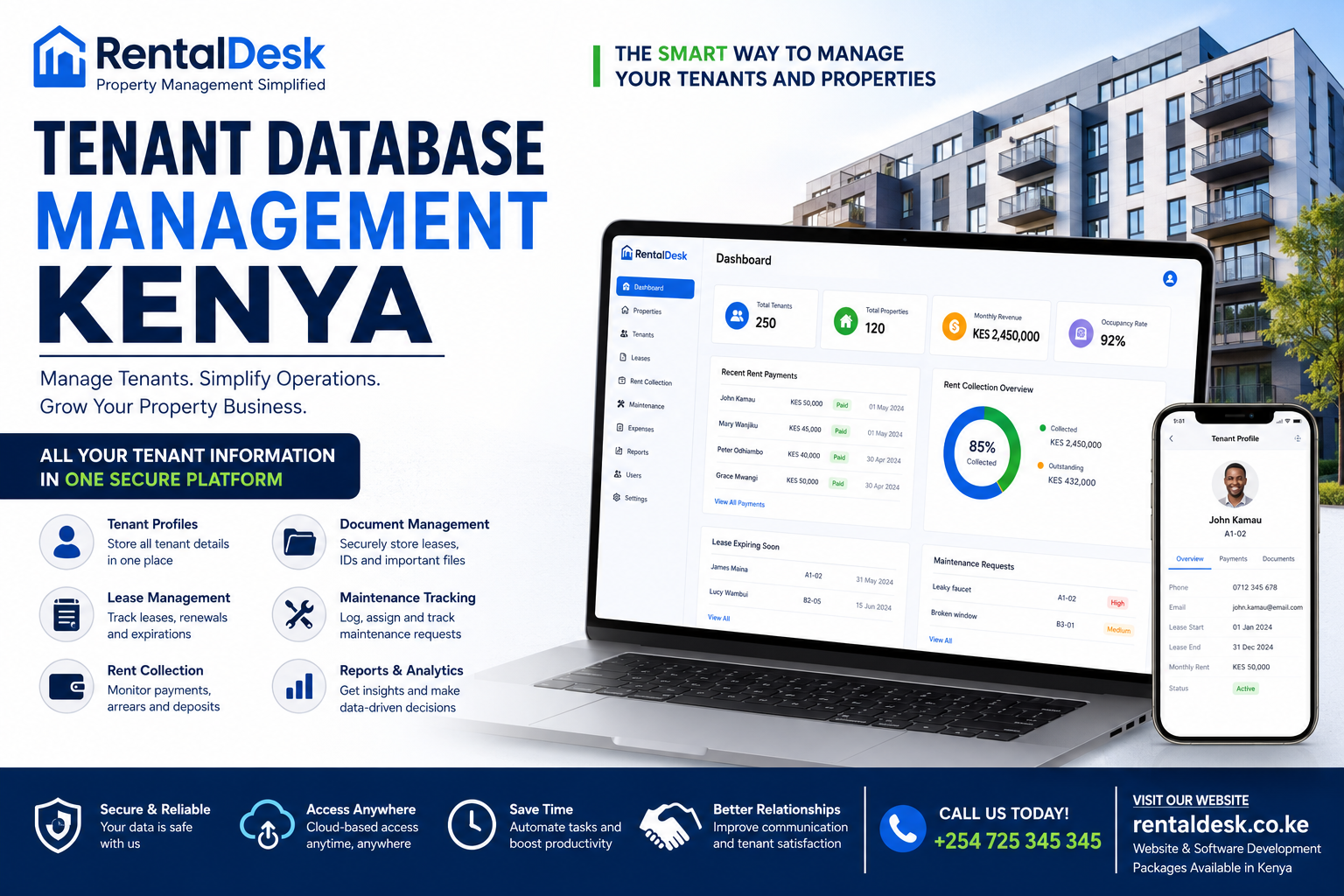
RentalDesk offers a comprehensive Tenant Database Management Kenya platform that enables landlords, property managers, and real estate companies to manage tenant information, lease agreements, rent payments, maintenance records, and communication from a single dashboard.
In this guide, we explore everything you need to know about tenant database management, its benefits, features, implementation strategies, and why RentalDesk is the preferred solution for property professionals in Kenya.
What is Tenant Database Management?
Tenant database management refers to the process of collecting, storing, organizing, updating, and managing tenant information within a secure digital system.
A tenant database typically contains:
- Tenant names
- Identification details
- Contact information
- Lease agreements
- Rent payment history
- Security deposit records
- Emergency contacts
- Occupancy status
- Maintenance requests
- Communication logs
- Tenant documents
Instead of searching through filing cabinets or multiple spreadsheets, property managers can instantly retrieve tenant information whenever required.
A modern Tenant Database Management Kenya platform allows property owners to streamline operations while maintaining accurate records across all their properties.
Why Tenant Database Management is Important in Kenya
The Kenyan real estate industry continues to grow rapidly, especially in cities such as Nairobi, Mombasa, Kisumu, Nakuru, Eldoret, and Thika.
As rental portfolios expand, managing tenants manually becomes increasingly difficult.
Common challenges faced by landlords include:
- Missing tenant records
- Lost lease agreements
- Inaccurate payment tracking
- Difficulty monitoring lease expirations
- Delayed communication
- Inefficient maintenance tracking
- Poor reporting capabilities
Without a structured database system, these challenges can lead to:
- Revenue leakage
- Increased vacancies
- Tenant dissatisfaction
- Compliance risks
- Operational inefficiencies
Tenant Database Management Kenya software eliminates these issues by centralizing all tenant information in one secure location.
Key Components of an Effective Tenant Database
1. Tenant Profiles
Each tenant should have a dedicated profile containing:
- Full name
- National ID or passport number
- Phone number
- Email address
- Physical address
- Occupation
- Emergency contacts
Having complete tenant profiles improves communication and record management.
2. Lease Management
Lease records should include:
- Lease start date
- Lease end date
- Rent amount
- Payment frequency
- Deposit information
- Special lease conditions
This ensures property managers always know the status of every tenancy.
3. Payment Records
An effective database tracks:
- Rent payments
- Outstanding balances
- Penalties
- Arrears
- Deposit balances
This improves financial transparency and accountability.
4. Document Storage
Property managers often handle numerous documents.
A centralized database should securely store:
- Lease agreements
- Identification documents
- Application forms
- Inspection reports
- Maintenance records
Digital storage reduces paperwork and improves accessibility.
5. Maintenance Tracking
Tenant requests should be recorded and monitored within the database.
Examples include:
- Plumbing repairs
- Electrical issues
- Security concerns
- Water supply problems
Tracking maintenance requests improves tenant satisfaction and accountability.
Benefits of Using Tenant Database Management Kenya Software
Improved Organization
A centralized database helps property managers organize all tenant records in one location.
This eliminates the need for:
- Physical files
- Multiple spreadsheets
- Manual record books
Everything becomes searchable and accessible within seconds.
Better Tenant Communication
Property managers can easily communicate with tenants using stored contact information.
This enables:
- Rent reminders
- Lease renewal notices
- Maintenance updates
- Property announcements
Improved communication enhances tenant relationships.
Faster Decision Making
With access to complete tenant histories, property managers can make informed decisions regarding:
- Lease renewals
- Tenant screening
- Rent adjustments
- Property planning
Accurate data leads to better business decisions.
Reduced Administrative Work
Automation significantly reduces repetitive tasks.
Examples include:
- Rent reminders
- Lease alerts
- Payment tracking
- Reporting
This saves time and increases productivity.
Enhanced Data Security
Modern Tenant Database Management Kenya solutions offer:
- Cloud storage
- Secure backups
- User permissions
- Data encryption
This protects sensitive tenant information from loss or unauthorized access.
Common Problems with Manual Tenant Management
Many landlords still rely on spreadsheets and paper files.
While this may work initially, it becomes problematic as portfolios grow.
Data Loss
Physical documents can be:
- Misplaced
- Damaged
- Stolen
- Destroyed
Digital databases provide secure backups.
Human Errors
Manual data entry often results in:
- Duplicate records
- Missing information
- Incorrect calculations
These errors can affect operations and financial reporting.
Limited Accessibility
Paper records can only be accessed from one location.
Cloud-based systems allow access from:
- Offices
- Homes
- Mobile devices
- Field locations
Slow Reporting
Generating reports manually can take hours or days.
Automated systems produce reports instantly.
Features to Look for in Tenant Database Management Kenya Software
When selecting a tenant database solution, look for the following features.
Cloud-Based Access
Cloud technology enables access from anywhere with an internet connection.
Benefits include:
- Remote management
- Automatic updates
- Secure backups
- Real-time synchronization
Tenant Portal
A tenant portal allows occupants to:
- View balances
- Download statements
- Submit maintenance requests
- Access lease documents
This improves convenience for both landlords and tenants.
Automated Notifications
Automation can send:
- Rent reminders
- Lease expiry alerts
- Maintenance updates
- Payment confirmations
This reduces administrative workload.
Reporting and Analytics
Property managers need insights into:
- Occupancy rates
- Revenue performance
- Rent collection trends
- Arrears management
Comprehensive reporting supports better decision-making.
Mobile Accessibility
A mobile-friendly platform enables management on the go.
This is particularly useful for:
- Property inspections
- Tenant meetings
- Maintenance coordination
How RentalDesk Simplifies Tenant Database Management Kenya
RentalDesk has been developed specifically for landlords, agents, and property managers seeking a modern and reliable property management solution.
The platform provides:
- Tenant management
- Lease tracking
- Rent collection
- Financial reporting
- Maintenance management
- Property administration
With RentalDesk, all tenant information is securely stored in one centralized system.
Property managers can instantly access:
- Tenant profiles
- Payment histories
- Lease records
- Maintenance requests
- Occupancy information
This creates a more efficient and professional property management process.
Tenant Screening and Database Integration
Tenant screening is an important part of property management.
A good database system allows property managers to store:
- Application records
- Verification documents
- Employment details
- Reference information
This creates a historical record that supports future decision-making.
Having screening information integrated into the tenant database improves consistency and accountability.
Digital Lease Management
Lease agreements are among the most important documents in property management.
RentalDesk enables digital lease management by storing:
- Lease contracts
- Renewal records
- Amendments
- Termination notices
This reduces paperwork and improves document accessibility.
Property managers can quickly identify upcoming lease expirations and take proactive action.
Rent Collection Integration
One of the greatest advantages of Tenant Database Management Kenya software is integration with rent collection processes.
Payment information can be linked directly to tenant profiles, allowing managers to monitor:
- Paid rent
- Outstanding balances
- Arrears
- Historical transactions
This improves financial accuracy while reducing manual reconciliation.
(Continue with Part 2 covering M-Pesa integration, reporting, compliance, security, AI-driven tenant insights, website and software development packages, FAQs, and conclusion to reach the full 4,000+ words.)