
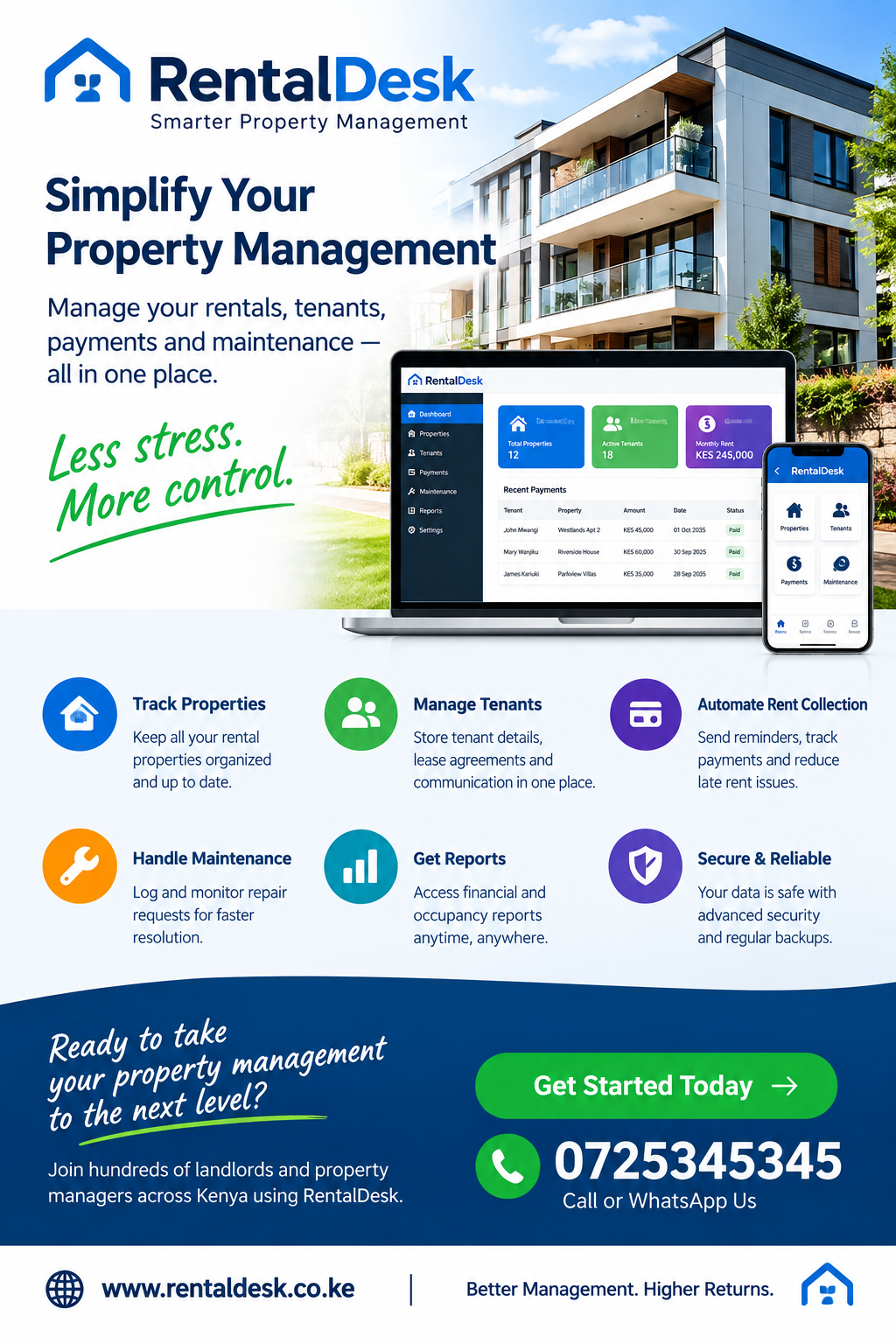
Managing rental properties involves much more than collecting rent. Landlords and property managers need to know the condition of every unit, identify maintenance problems early, document inspections, follow up on repairs, and maintain reliable records. Rental Property Inspection Software Kenya provides a practical way to organize these activities while reducing the dependence on notebooks, spreadsheets, WhatsApp messages, and scattered photographs.
For landlords, agents, estate managers, and property management companies, property inspections are particularly important when tenants move in, move out, report problems, or when routine checks are required. This guide explains how Rental Property Inspection Software Kenya can improve inspection workflows, what features to look for, how digital inspections work, and how Kenyan property owners can use technology to manage rental units more efficiently.
Table of Contents
ToggleWhat Is Rental Property Inspection Software?
Rental Property Inspection Software Kenya is a digital solution designed to help landlords and property managers record, organize, and monitor the condition of rental properties. Instead of relying entirely on paper inspection forms, property teams can use software to create inspection records for individual buildings, apartments, houses, rooms, or commercial rental spaces.
A typical inspection process may involve checking:
- Walls and ceilings
- Floors and tiles
- Doors and windows
- Plumbing fixtures
- Electrical fittings
- Kitchen equipment
- Bathrooms
- Water systems
- Security features
- Furniture in furnished units
- External areas
- Common areas
- Damage caused during tenancy
- Maintenance requirements
With Rental Property Inspection Software Kenya, these observations can be recorded systematically. An inspection can contain notes, dates, assigned staff members, property details, issue descriptions, and photographs where the software supports image documentation.
The main advantage is organization. A property manager does not have to search through several files to determine what condition an apartment was in before a tenant occupied it. Inspection information can be stored alongside the relevant property and tenant records.
Why Property Inspections Matter in Rental Management
Regular inspections help property owners protect their investments. A rental property is exposed to everyday use, and small problems can become expensive if they are ignored.
For example, a leaking pipe may initially appear to be a minor plumbing issue. If the problem continues for several weeks, it could damage cabinets, walls, flooring, or electrical installations.
Rental Property Inspection Software Kenya helps create a structured process for identifying such issues before they become difficult to manage.
Inspections are also useful when tenants leave a property. Comparing the condition at move-in and move-out can help a landlord determine whether repairs are normal wear and tear or whether there has been avoidable damage.
Move-In Inspections
A move-in inspection establishes the condition of a property before a tenant begins occupancy.
The inspection may record:
- Existing wall marks
- Condition of doors
- Working condition of lights
- Condition of bathroom fixtures
- Water and plumbing issues
- Window condition
- Floor condition
- Kitchen fittings
- Appliances
- Other property-specific items
Rental Property Inspection Software Kenya can help make this process repeatable. A property manager can follow the same inspection checklist across multiple units instead of creating a different paper form every time.
Routine Property Inspections
Routine inspections allow property managers to identify maintenance requirements during a tenancy.
The objective is not simply to find faults. A good inspection system helps property teams understand the overall condition of the asset.
Rental Property Inspection Software Kenya can support scheduled inspections so that property teams have a consistent record of previous observations and outstanding issues.
Move-Out Inspections
When a tenant vacates, the property can be inspected against its previous condition.
This is especially valuable for properties with many tenants because manually comparing old records can become time-consuming. A digital inspection history provides a clearer record of what was previously observed.
Problems With Manual Property Inspections
Many landlords begin with simple methods. They may use notebooks, printed forms, Excel files, photographs stored on personal phones, and WhatsApp conversations.
These methods can work for a small number of properties, but problems often appear as the portfolio grows.
Information Becomes Scattered
A property manager might have photographs on one phone, inspection notes in a notebook, repair conversations in WhatsApp, and tenant details in a spreadsheet.
Rental Property Inspection Software Kenya brings inspection information into a more organized workflow.
Follow-Up Becomes Difficult
Recording an issue is only the first step.
If an inspection identifies a leaking tap, damaged door, faulty light, or plumbing problem, someone needs to follow up. Manual systems make it easy for issues to remain unresolved.
Digital workflows can make outstanding inspection issues easier to monitor.
Historical Records Are Hard to Find
Property managers may need to answer questions such as:
- When was this unit last inspected?
- What problems were found?
- Was the issue repaired?
- Who reported it?
- Was the same problem recorded previously?
- What was the property’s condition before the current tenant moved in?
Rental Property Inspection Software Kenya can help organize these records so that historical information is easier to retrieve.
Key Features to Look For
Not every inspection platform provides the same capabilities. Property owners should focus on features that solve real operational problems.
Property and Unit Management
The system should allow properties and individual rental units to be identified clearly.
For example, a portfolio might contain:
| Property | Unit | Type | Status |
|---|---|---|---|
| Riverside Apartments | A01 | One-bedroom | Occupied |
| Riverside Apartments | A02 | One-bedroom | Vacant |
| Kilimani Heights | B04 | Two-bedroom | Occupied |
| Westlands Court | C12 | Three-bedroom | Vacant |
Rental Property Inspection Software Kenya becomes more useful when inspection records can be connected to the correct property and unit.
Digital Inspection Checklists
A checklist reduces the likelihood of important areas being forgotten.
A standard apartment inspection checklist could include:
- Entrance door
- Locks
- Windows
- Walls
- Ceiling
- Floor
- Electrical sockets
- Light switches
- Kitchen sink
- Taps
- Toilet
- Shower
- Water heater
- Cabinets
- Balcony
- General cleanliness
Property-specific checklists can be adapted according to the type of building.
Inspection Notes
Inspectors need space to explain what they find.
A checklist might show that a bathroom is in acceptable condition, but notes can provide additional information such as a loose tap or small crack that requires attention.
Rental Property Inspection Software Kenya can make these observations part of the property’s digital history.
Photo Documentation
Photos can provide useful visual evidence of property condition.
For example, an inspector could photograph:
- Damaged tiles
- Wall cracks
- Broken fittings
- Water stains
- Damaged doors
- Appliance conditions
- Meter readings
Images should be clearly associated with the relevant inspection rather than stored randomly on a device.
Maintenance Issue Tracking
An inspection should ideally connect identified problems with follow-up work.
Rental Property Inspection Software Kenya can help property teams treat inspection findings as actionable maintenance requirements rather than simply recording them and forgetting them.
How Digital Property Inspections Work
A typical digital inspection workflow can be divided into several stages.
Step 1: Select the Property
The property manager identifies the building or rental property that needs inspection.
Step 2: Select the Unit
The specific apartment, house, office, shop, or room is selected.
Step 3: Start the Inspection
The inspector opens the relevant checklist.
Step 4: Assess Each Area
The inspector checks each item and records its condition.
Step 5: Add Notes and Evidence
Where necessary, the inspector adds comments and photographs.
Step 6: Identify Repairs
Problems that require attention are documented and assigned for follow-up.
Step 7: Complete the Inspection
The final inspection record is saved for future reference.
Rental Property Inspection Software Kenya can support this structured approach and make the inspection process more consistent across different properties.
Using Inspections to Improve Maintenance Management
Property inspections and maintenance management should not operate as completely separate activities.
An inspection can reveal several types of maintenance requirements.
Preventive Maintenance
Preventive maintenance involves addressing potential problems before they become major failures.
For example, an inspection might identify:
- A leaking water connection
- A loose electrical fitting
- Deteriorating paint
- Early signs of water damage
- A damaged door hinge
Rental Property Inspection Software Kenya can help property teams capture these issues while they are still manageable.
Corrective Maintenance
Corrective maintenance addresses problems that already exist.
If an inspection identifies a broken shower fitting, blocked drain, damaged lock, or faulty electrical component, the property manager can create a maintenance task.
Emergency Maintenance
Some problems require immediate attention.
Examples include:
- Major water leaks
- Serious electrical faults
- Security failures
- Severe plumbing problems
The inspection record can provide useful information for determining the urgency of the response.
The Role of Photos in Rental Inspections
Property photographs can be particularly valuable during move-in and move-out inspections.
Suppose a tenant moves into an apartment with a small crack on a bathroom tile. If the issue is documented at move-in, the property manager has a dated record showing that the condition existed before occupancy.
Rental Property Inspection Software Kenya can make photographic documentation part of an organized inspection workflow.
However, photographs should not replace written descriptions. A good record combines visual evidence with clear notes.
For example:
Weak note:
“Bathroom damaged.”
Better note:
“Two cracked floor tiles observed next to the shower entrance. No active water leak observed during inspection.”
The second description provides more useful information for future follow-up.
Improving Tenant Communication
Property inspections can also improve communication between landlords and tenants.
When an issue is clearly documented, both parties have a better understanding of what was observed.
Rental Property Inspection Software Kenya can contribute to better record keeping when inspection information is maintained consistently.
For tenants, clear documentation can reduce confusion about maintenance responsibilities. For landlords, it creates a more organized history of property conditions.
The goal should be transparency rather than confrontation.
Rental Property Inspections in Kenya
Kenyan rental property managers operate in a market with diverse property types.
A single management company might handle:
- Apartments in Nairobi
- Student housing
- Bedsitters
- Townhouses
- Standalone rental houses
- Serviced apartments
- Commercial premises
- Mixed-use developments
Each category has different inspection requirements.
Rental Property Inspection Software Kenya can be particularly useful where a property manager has to coordinate inspections across multiple buildings.
For example, an apartment manager in Nairobi may need to inspect dozens or hundreds of units over a month. A structured digital system can make it easier to maintain consistent inspection procedures.
Connecting Inspections With Rental Operations
A strong property management workflow does not treat inspections as an isolated activity.
Inspection information can contribute to broader property management operations.
Tenant Management
Knowing which tenant occupies which unit helps ensure inspection records are associated with the correct property.
Maintenance
Inspection findings can identify repair requirements.
Property Accounting
Maintenance costs can eventually affect property expenses and financial reporting.
Vacancy Management
A move-out inspection can help determine what work needs to be completed before a unit is advertised again.
Rental Property Inspection Software Kenya supports the concept of connecting inspection activities with wider rental management processes.
Inspection Reports and Property Records
Reports are important because property owners often need a historical view rather than a single inspection.
Useful reports may include:
- Completed inspections
- Pending inspections
- Failed inspection items
- Open maintenance issues
- Repeated property problems
- Recently inspected units
- Vacant units requiring attention
Rental Property Inspection Software Kenya can help create a central reference point for inspection information when the platform supports appropriate reporting features.
A property owner managing several buildings can use these records to identify patterns.
For example, if the same type of plumbing problem repeatedly appears in one building, that may suggest the need for a broader maintenance intervention.
Using Inspection Data to Identify Recurring Problems
One of the biggest advantages of structured records is the ability to identify patterns.
Imagine that a manager notices the following over six months:
- Apartment 12 has repeated plumbing problems.
- Apartment 15 has recurring electrical issues.
- Several units have damaged bathroom fittings.
- Multiple tenants report similar water pressure concerns.
Without organized records, these patterns may be difficult to recognize.
Rental Property Inspection Software Kenya can make historical information easier to review, helping property managers distinguish isolated incidents from recurring problems.
This can support better budgeting and maintenance planning.
How Inspections Can Reduce Property Management Costs
Software does not automatically eliminate costs. Its value comes from helping teams manage information and processes more efficiently.
Consider a property manager responsible for 100 rental units.
If every inspection requires:
- Printing forms
- Completing paperwork
- Taking separate photographs
- Sending photos through WhatsApp
- Updating a spreadsheet
- Calling a contractor
- Searching for the issue later
the administrative workload can become significant.
Rental Property Inspection Software Kenya can simplify the information flow by reducing unnecessary duplication.
The greatest savings may come from preventing small maintenance problems from becoming expensive ones.
Inspection Software for Landlords With Multiple Properties
A landlord with one house may be able to manage inspections manually.
A landlord with ten, twenty, or fifty properties faces a different challenge.
At that scale, the landlord needs reliable answers to questions such as:
- Which properties have been inspected?
- Which units require repairs?
- Which inspections are overdue?
- Which issues remain unresolved?
- Which properties have recurring maintenance problems?
Rental Property Inspection Software Kenya can provide a more structured approach to these questions.
The larger the portfolio becomes, the more important standardized processes become.
Inspection Software for Property Management Companies
Property management companies often manage properties on behalf of different owners.
This creates an additional need for clear organization.
A property manager may need to distinguish between:
- Owner A’s apartments
- Owner B’s townhouses
- Owner C’s commercial units
- Different inspection teams
- Different maintenance contractors
Rental Property Inspection Software Kenya can be valuable in this environment because structured property records help separate operational information by property and unit.
A professional property management process should make it easy to determine what happened, when it happened, and what action followed.
Choosing the Right Inspection Software
Before selecting a system, property managers should evaluate their actual requirements.
1. Understand Your Portfolio
Count the number of:
- Buildings
- Units
- Tenants
- Vacant properties
- Property managers
- Inspectors
A solution suitable for ten units may not be appropriate for several hundred.
2. Identify Your Current Problems
Ask:
- Are inspections being missed?
- Are records difficult to retrieve?
- Are photographs scattered across phones?
- Are maintenance requests being forgotten?
- Are move-in and move-out records inconsistent?
Your answers will help determine which features matter most.
3. Check Mobile Usability
Property inspections often happen away from a desk.
An inspector may be walking through an apartment while carrying a phone.
Rental Property Inspection Software Kenya should therefore be easy to use on a mobile device if mobile inspection is part of your workflow.
4. Review Reporting
Reports should help answer operational questions rather than simply produce attractive charts.
Useful reporting should make it possible to understand outstanding issues, inspection activity, and property condition.
5. Consider User Roles
If several staff members use the system, consider whether it provides suitable access controls.
For example:
- Property manager
- Inspector
- Maintenance staff
- Administrator
- Owner
Each user may require different permissions.
Questions to Ask a Software Provider
Before adopting an inspection platform, ask practical questions.
Can inspections be customized?
Different properties require different checklists.
Can staff use the system on mobile devices?
This matters when inspections happen in the field.
Can photographs be attached?
Visual documentation can be important.
Can maintenance issues be tracked?
Recording a problem without following up reduces the value of the inspection.
Can reports be generated?
Reports can help owners and managers monitor property conditions.
Can the system support multiple properties?
This is important for growing portfolios.
Rental Property Inspection Software Kenya should be evaluated according to these operational requirements rather than simply the number of features advertised.
Common Mistakes When Managing Property Inspections
Relying Entirely on Memory
Property managers handle many tasks. Memory is not a reliable record-keeping system.
Using Different Checklists for Every Inspection
Inconsistent checklists make comparisons difficult.
Taking Photos Without Descriptions
Photos are more useful when accompanied by context.
Recording Problems but Not Following Up
The purpose of an inspection is action, not just documentation.
Waiting Until Problems Become Serious
Regular inspections should help identify issues early.
Keeping Records in Too Many Places
Scattered records increase the likelihood of lost information.
Creating an Effective Inspection Checklist
A good checklist should be detailed enough to be useful but simple enough that inspectors can complete it consistently.
A residential apartment checklist might include:
Exterior
- Entrance
- Gates
- Walkways
- Drainage
- External lighting
Living Areas
- Walls
- Ceiling
- Floor
- Windows
- Doors
- Electrical sockets
- Lighting
Kitchen
- Sink
- Taps
- Cabinets
- Countertops
- Cooker area
- Drainage
Bathroom
- Toilet
- Shower
- Basin
- Taps
- Tiles
- Drainage
- Ventilation
Security
- Locks
- Doors
- Windows
- Access points
Rental Property Inspection Software Kenya can be used as part of a structured inspection process where the system supports configurable checklists and digital records.
Inspection Frequency
There is no single inspection schedule suitable for every rental portfolio.
Frequency can depend on:
- Property type
- Lease arrangements
- Owner requirements
- Previous maintenance history
- Tenant circumstances
- Local management policies
A property with repeated maintenance problems may require closer monitoring than a recently renovated unit with a strong maintenance history.
The important principle is consistency.
Rental Property Inspection Software Kenya can help property managers maintain records of when inspections occur and what was found.
Property Inspections and Vacant Units
Vacant units require special attention.
A property can remain empty for weeks or months between tenants. During that time, problems such as leaks, security issues, dust accumulation, or damaged fixtures may develop.
A vacancy inspection can verify that:
- Water systems are functioning correctly
- Doors are secure
- Electrical systems appear normal
- Plumbing is not leaking
- The property is clean
- Required repairs are complete
- The unit is ready for viewing
Rental Property Inspection Software Kenya can help make vacancy inspections part of a repeatable turnover process.
Improving Property Turnover
Tenant turnover can create a busy period for property managers.
After one tenant leaves, the manager may need to:
- Conduct a move-out inspection.
- Identify repairs.
- Schedule contractors.
- Complete maintenance.
- Clean the property.
- Conduct a follow-up inspection.
- Prepare the unit for marketing.
- Record the property’s ready status.
Rental Property Inspection Software Kenya can help organize inspection information within this broader workflow.
A faster turnover process can reduce the time a property remains unavailable for rent, provided the work is completed properly.
The Importance of Accurate Inspection Records
Inspection records should be accurate, specific, and consistent.
Instead of writing:
“Everything okay.”
an inspector should provide useful information about the property.
For example:
“Living room walls in good condition. One minor paint mark near the eastern window. Floor tiles intact. Two ceiling lights functioning during inspection.”
Rental Property Inspection Software Kenya can support structured documentation that makes records easier to understand later.
Good records are particularly valuable when a property changes managers or when an owner wants to review the history of a unit.
Training Staff to Conduct Better Inspections
Software alone cannot guarantee good inspections.
Staff should understand:
- What each checklist item means
- How to describe defects
- When to photograph an issue
- How to classify urgency
- How to record tenant-related observations professionally
- When to escalate maintenance problems
Rental Property Inspection Software Kenya becomes more effective when employees use the same standards.
A short training session can establish clear expectations.
Protecting Property Information
Property management systems contain valuable operational information.
A responsible organization should consider:
- User permissions
- Password security
- Backups
- Access controls
- Device security
- Staff account management
- Data retention
Property managers should also avoid giving unnecessary system access to users who do not need it.
Rental Property Inspection Software Kenya should therefore be assessed not only for convenience but also for how well it fits the organization’s information-management requirements.
Measuring Inspection Performance
Property managers can monitor several indicators to determine whether their inspection process is improving.
Useful metrics include:
| Metric | What It Shows |
|---|---|
| Completed inspections | Inspection activity |
| Overdue inspections | Scheduling gaps |
| Open issues | Outstanding maintenance |
| Average resolution time | Maintenance responsiveness |
| Repeat issues | Recurring property problems |
| Vacant-unit readiness | Turnover efficiency |
Rental Property Inspection Software Kenya can support better operational visibility where these reporting capabilities are available.
The goal is not to create unnecessary statistics. Metrics should help managers make better decisions.
A Practical Example for a Nairobi Property Manager
Consider a property manager responsible for 80 apartments in Nairobi.
The manager previously used paper forms for inspections and stored photographs on a phone.
When a tenant moved out, the manager had to search through old WhatsApp conversations to determine whether a damaged bathroom fitting was present before the tenancy.
After adopting a structured inspection process, the manager could record the move-in condition, attach relevant photographs, document move-out observations, and track maintenance requirements.
Rental Property Inspection Software Kenya can support this type of organized workflow.
The benefit is not simply having software. The real benefit is having reliable information available when a decision needs to be made.
How Inspection Software Supports Better Owner Reporting
Property owners want confidence that their assets are being managed properly.
A property management company can use inspection information to demonstrate:
- When units were inspected
- What issues were identified
- What repairs were recommended
- Which issues were resolved
- Which problems remain outstanding
Rental Property Inspection Software Kenya can help create a more transparent operational record.
This can strengthen communication between owners and property management teams.
Digital Inspections and M-Pesa-Based Rental Operations
M-Pesa is widely used in Kenya for business and consumer payments. Property management software may also integrate payment management with broader rental operations depending on the platform.
However, inspection software should not be judged solely on payment capabilities.
Rental Property Inspection Software Kenya has a different core purpose: ensuring that property condition information is captured and managed effectively.
A strong rental management system may combine inspections with tenant records, rent information, maintenance, expenses, and other property operations.
What Makes an Inspection System Practical?
The best system is not necessarily the one with the longest feature list.
A practical system should make everyday work easier.
Ask yourself:
- Can an inspector understand it quickly?
- Can a manager find old records?
- Can issues be followed up?
- Can reports be understood?
- Can multiple properties be handled?
- Does it reduce duplicate data entry?
- Does it support the way your team actually works?
Rental Property Inspection Software Kenya should solve operational problems rather than introduce unnecessary complexity.
When Should a Landlord Move From Spreadsheets to Software?
There is no universal property-count threshold.
However, software becomes increasingly valuable when:
- The number of units is growing.
- Several employees are involved.
- Inspections happen frequently.
- Maintenance issues are increasing.
- Records are becoming difficult to find.
- Multiple properties are managed.
- Owners require regular reports.
Rental Property Inspection Software Kenya can provide a more structured environment as rental operations become more complex.
A landlord does not have to wait until record keeping becomes unmanageable.
Benefits of Standardizing Property Inspections
Standardization creates consistency.
When every inspector follows a similar process, management can compare properties more effectively.
For example, a property manager can determine whether a problem is:
- New
- Existing
- Repaired
- Repeated
- Unresolved
Rental Property Inspection Software Kenya can support standardized inspection procedures where checklist and reporting features are available.
Consistency also makes employee training easier.
Future-Proofing Rental Property Operations
Rental portfolios can grow quickly.
A landlord who manages five units today may manage fifty in the future. A process that works manually at five units may become difficult at fifty.
Rental Property Inspection Software Kenya can be part of a broader digital strategy for property businesses that want to create repeatable processes as their portfolios expand.
The key is to establish organized records before the volume of information becomes difficult to manage.
Frequently Asked Questions
1. What does rental property inspection software do?
Rental Property Inspection Software Kenya helps landlords and property managers organize property inspections, record conditions, document issues, and track inspection-related maintenance activities.
The exact capabilities depend on the software provider, but the goal is generally to replace fragmented inspection processes with structured digital records.
2. Can inspection software be used for apartments?
Yes. Rental Property Inspection Software Kenya can be useful for apartment buildings where managers need to inspect many individual units.
The system can help organize inspections by building, unit, tenant, date, and inspection type where those features are supported.
3. Can landlords use digital inspections for move-in and move-out?
Yes. Rental Property Inspection Software Kenya can support move-in and move-out workflows when the platform provides appropriate inspection functionality.
Recording the property’s condition at both points creates a useful historical record.
4. Is inspection software useful for small landlords?
It can be. Rental Property Inspection Software Kenya is not only relevant to large property management companies.
Small landlords can also benefit when they want to keep organized records as their portfolio grows.
5. Can inspection software track maintenance issues?
Many property management platforms connect inspections with maintenance workflows. Rental Property Inspection Software Kenya can be useful for this purpose where the chosen platform provides issue tracking and maintenance management features.
6. Why are photographs useful during inspections?
Photographs provide visual documentation of property conditions. Rental Property Inspection Software Kenya can be particularly useful when images can be associated with specific inspection records.
Photos should complement clear written observations rather than replace them.
7. Can Kenyan property managers use inspection software on mobile devices?
This depends on the platform. Rental Property Inspection Software Kenya should ideally support the devices used by inspectors if inspections are performed in the field.
Mobile access can make it easier to record information while walking through a property.
8. How often should rental properties be inspected?
The appropriate frequency depends on the property, lease arrangement, owner requirements, and maintenance history. Rental Property Inspection Software Kenya can help managers maintain an organized inspection schedule where scheduling features are supported.
9. What should a rental property inspection checklist include?
A checklist can include walls, ceilings, floors, doors, windows, electrical fittings, plumbing, bathrooms, kitchens, security features, appliances, and other property-specific components. Rental Property Inspection Software Kenya can help digitize such checklists where configurable inspection forms are available.
10. How can inspection software improve property management?
It can centralize inspection records, reduce paperwork, improve follow-up, create clearer property histories, and help managers identify recurring problems. Rental Property Inspection Software Kenya is most valuable when it forms part of a consistent property management process rather than being used only occasionally.
Conclusion
Property inspections are an important part of protecting rental assets and maintaining good relationships with tenants. They help landlords identify problems, document property conditions, organize maintenance work, and understand how properties change over time.
For a growing rental portfolio, manual inspection methods can become difficult to manage. Paper forms, spreadsheets, phone photographs, and messaging applications may create fragmented records that are difficult to retrieve when information is needed.
Rental Property Inspection Software Kenya provides a more structured approach by helping property teams organize inspections and create consistent records.
The biggest value comes from combining inspections with a wider rental management process. Property managers should be able to move from identifying a problem to documenting it, assigning the necessary work, following up, and confirming completion.
When evaluating a solution, focus on practical requirements such as mobile usability, inspection checklists, property records, photographs, issue tracking, reporting, user access, and scalability.
For landlords and property managers in Kenya, the right digital inspection process can turn property condition monitoring from a scattered administrative task into a reliable part of everyday rental operations. Rental Property Inspection Software Kenya can therefore be an important component of a broader strategy for managing properties efficiently, protecting assets, and keeping accurate records as a rental portfolio grows.