Property Performance Management: A Complete Guide to Maximizing Rental Property Success
In today’s competitive real estate market, property owners and managers must go beyond simply collecting rent and maintaining buildings. Success now depends on understanding how properties perform financially, operationally, and strategically. This is where Property Performance Management becomes essential.
Property Performance Management involves monitoring, measuring, and improving the overall effectiveness of rental properties. From occupancy rates and rent collection to maintenance costs and tenant retention, property managers need access to reliable data that helps them make informed decisions.
Modern property management software makes it possible to track performance in real time, identify opportunities for improvement, and maximize returns on investment. Platforms such as RentalDesk provide property managers with the tools needed to gain visibility into key performance indicators and optimize every aspect of property operations.
Whether managing a single apartment building or an extensive portfolio, implementing a strong Property Performance Management strategy can significantly improve profitability and long-term growth.
What Is Property Performance Management?
Property Performance Management is the process of evaluating and optimizing how rental properties perform across various operational and financial metrics.
The goal is to ensure that properties:
- Generate consistent revenue
- Maintain high occupancy levels
- Control operating expenses
- Deliver positive tenant experiences
- Preserve long-term asset value
Rather than relying on assumptions, property owners use performance data to understand how well their investments are performing and where improvements are needed.
Effective Property Performance Management combines technology, analytics, financial oversight, and operational efficiency to achieve better outcomes.
Why Property Performance Management Matters
Many property owners focus primarily on rent collection. While revenue is important, it represents only one aspect of overall property performance.
A property may collect rent consistently while still experiencing:
- High tenant turnover
- Excessive maintenance costs
- Poor occupancy rates
- Delayed repairs
- Administrative inefficiencies
Property Performance Management helps identify these hidden issues before they negatively impact profitability.
Benefits include:
- Improved financial performance
- Better operational efficiency
- Higher tenant retention
- Reduced vacancies
- Enhanced decision-making
- Increased property value
By actively monitoring performance, managers can make proactive adjustments rather than reacting to problems after they occur.
Key Metrics in Property Performance Management
Occupancy Rate
Occupancy rate measures the percentage of units currently occupied by tenants.
A high occupancy rate generally indicates:
- Strong demand
- Effective tenant retention
- Competitive pricing
- Efficient property management
Monitoring occupancy trends allows managers to identify vacancy issues early and implement corrective actions.
Rental Income Performance
Revenue remains one of the most important indicators of success.
Property managers should regularly track:
- Monthly rental income
- Collection rates
- Outstanding balances
- Revenue growth trends
- Lease renewal income
Strong rental income performance contributes directly to property profitability.
Tenant Retention Rate
Finding new tenants often costs more than retaining existing ones.
A high tenant retention rate suggests:
- Good property management
- Satisfied tenants
- Effective communication
- Well-maintained facilities
Property Performance Management focuses heavily on strategies that improve tenant satisfaction and lease renewals.
Maintenance Efficiency
Maintenance activities significantly impact tenant experiences and operational costs.
Important maintenance metrics include:
- Response times
- Completion rates
- Maintenance costs
- Recurring issues
- Contractor performance
Efficient maintenance management supports both property value and tenant retention.
Operating Expenses
Expense control is a critical component of Property Performance Management.
Managers should monitor:
- Utility costs
- Maintenance expenses
- Administrative expenses
- Vendor costs
- Property improvement expenditures
Tracking expenses helps identify areas where costs can be reduced without compromising service quality.
The Role of Technology in Property Performance Management
Traditional property management methods often rely on spreadsheets, paper records, and manual reporting.
Modern software platforms provide a more efficient approach.
Property management technology allows users to:
- Monitor performance in real time
- Generate automated reports
- Track financial metrics
- Manage maintenance workflows
- Analyze occupancy trends
- Store property records securely
With centralized access to performance data, property managers can make faster and more informed decisions.
How Property Performance Management Improves Revenue
Reducing Vacancy Periods
Vacant units represent lost income.
Performance monitoring helps managers:
- Identify vacancy trends
- Improve marketing strategies
- Adjust rental pricing
- Enhance tenant retention efforts
Reducing vacancy durations directly increases rental revenue.
Improving Rent Collection
Late payments affect cash flow and operational planning.
Property Performance Management supports:
- Automated reminders
- Payment tracking
- Arrears monitoring
- Collection reporting
These tools help improve payment consistency and reduce outstanding balances.
Optimizing Rental Pricing
Performance data provides insights into market demand and property competitiveness.
Managers can use analytics to:
- Evaluate pricing strategies
- Compare unit performance
- Adjust rates based on occupancy trends
- Maximize revenue potential
Strategic pricing decisions contribute significantly to long-term profitability.
Enhancing Tenant Satisfaction Through Performance Management
Tenant satisfaction has a direct impact on property performance.
Satisfied tenants are more likely to:
- Renew leases
- Pay rent on time
- Recommend properties
- Report issues promptly
Property managers can improve tenant experiences by monitoring:
Response Times
Fast communication improves tenant confidence.
Maintenance Resolution
Quick repairs increase tenant satisfaction and reduce complaints.
Property Conditions
Regular inspections help maintain high-quality living and working environments.
Service Quality
Consistent service delivery strengthens tenant relationships.
A strong Property Performance Management strategy places tenant experiences at the center of operational decision-making.
Financial Reporting and Property Performance Management
Accurate financial reporting is essential for measuring success.
Modern systems generate reports covering:
- Rental income
- Expense analysis
- Profitability trends
- Occupancy performance
- Arrears tracking
- Budget comparisons
These reports help property owners understand how investments are performing and where improvements are needed.
Financial visibility also supports long-term planning and investment decisions.
Property Performance Management for Multi-Property Portfolios
Managing multiple properties introduces additional complexity.
Property managers must oversee:
- Multiple tenant groups
- Diverse lease agreements
- Separate maintenance schedules
- Various revenue streams
Property Performance Management platforms simplify portfolio oversight by providing:
- Centralized dashboards
- Portfolio-wide reporting
- Comparative property analysis
- Consolidated financial data
- Performance benchmarking
This allows managers to evaluate individual property performance while maintaining a portfolio-wide perspective.
Common Challenges Solved by Property Performance Management
Lack of Visibility
Without proper systems, managers struggle to understand property performance.
Performance dashboards provide instant access to key metrics.
Inconsistent Reporting
Manual reporting often leads to inaccuracies.
Automated reporting improves reliability and consistency.
Delayed Decision-Making
Real-time data allows managers to respond quickly to emerging issues.
Rising Operating Costs
Expense tracking helps identify inefficiencies and opportunities for cost reduction.
Tenant Retention Issues
Performance analytics reveal trends that may impact tenant satisfaction and retention.
Why RentalDesk Supports Effective Property Performance Management
RentalDesk helps property managers gain complete visibility into property operations and performance.
Key benefits include:
- Real-time performance monitoring
- Rent collection tracking
- Occupancy management
- Maintenance oversight
- Tenant management tools
- Financial reporting capabilities
- Portfolio-wide analytics
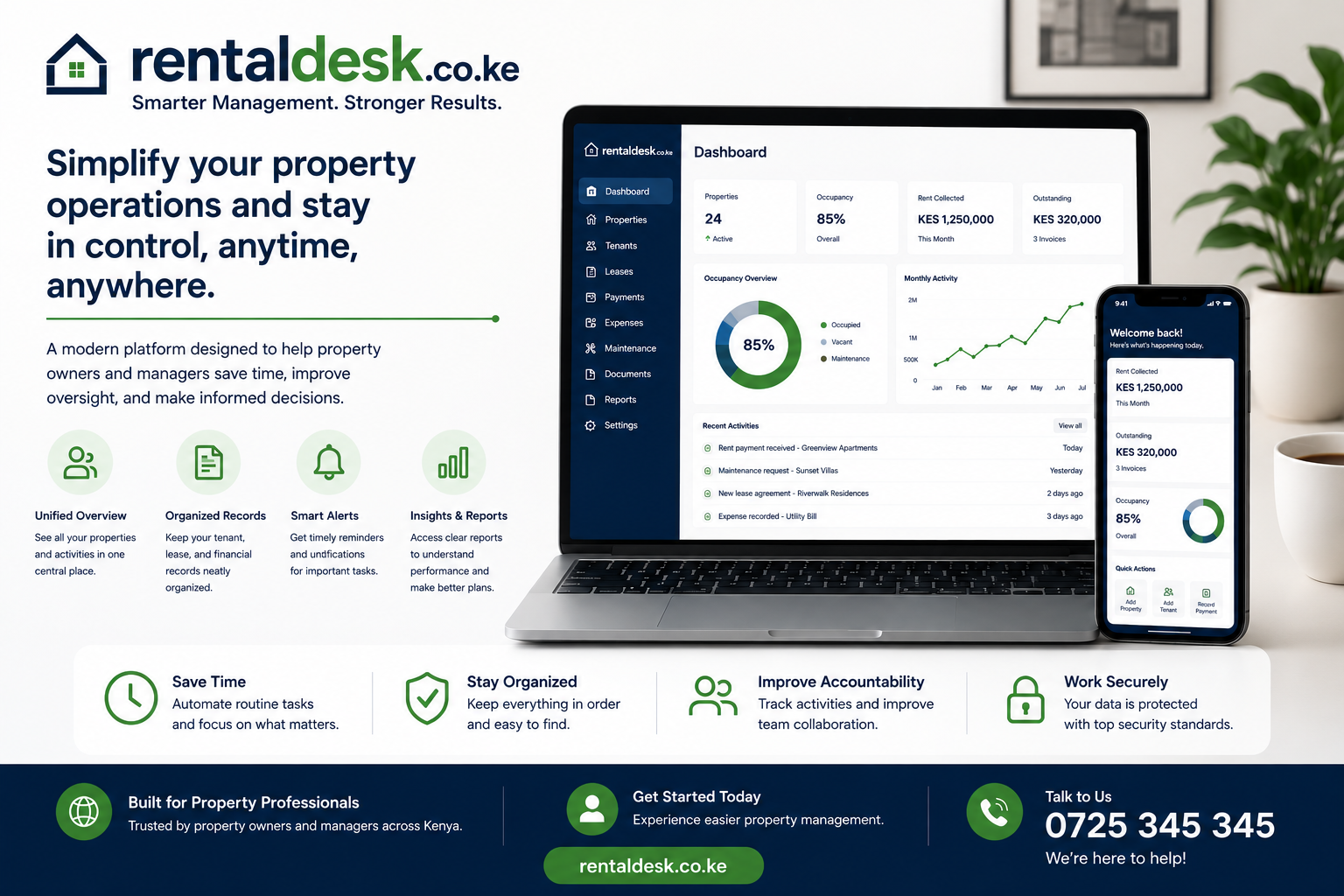
With RentalDesk, property owners can monitor critical metrics from a centralized platform and make data-driven decisions that improve profitability.
The platform enables managers to move beyond basic administration and focus on strategic property growth.
The Future of Property Performance Management
The property management industry continues to evolve through digital innovation.
Future trends include:
- Artificial intelligence analytics
- Predictive maintenance systems
- Automated reporting
- Mobile property management
- Advanced tenant engagement tools
- Cloud-based performance monitoring
Organizations that adopt modern Property Performance Management solutions today will be better positioned to compete in tomorrow’s real estate market.
Conclusion
Effective Property Performance Management is essential for maximizing rental property success. By tracking key metrics, improving operational efficiency, controlling expenses, and enhancing tenant satisfaction, property owners can significantly increase profitability and long-term asset value.
Modern property management platforms provide the visibility and automation required to monitor performance continuously and make informed decisions. Whether managing a single property or a large portfolio, investing in Property Performance Management helps ensure sustainable growth and stronger financial outcomes.
RentalDesk provides the tools needed to monitor, analyze, and optimize property performance, helping property professionals achieve greater efficiency, better tenant experiences, and higher returns on investment.
FAQ
What is Property Performance Management?
Property Performance Management is the process of monitoring and improving the financial and operational performance of rental properties using data, analytics, and management tools.
Why is Property Performance Management important?
It helps property owners improve occupancy rates, increase revenue, reduce costs, and make better business decisions.
Which metrics are used in Property Performance Management?
Common metrics include occupancy rates, rental income, tenant retention, maintenance efficiency, and operating expenses.
How does technology support Property Performance Management?
Technology provides real-time reporting, automated tracking, centralized records, and performance analytics that improve decision-making.
Can RentalDesk help with Property Performance Management?
Yes. RentalDesk offers performance monitoring, reporting, tenant management, rent tracking, and analytics tools designed to help property managers optimize property performance.