Property Management Software vs Spreadsheets: Which Is the Better Choice for Modern Property Managers?
Managing rental properties has become increasingly complex as landlords and property managers handle multiple tenants, rent payments, maintenance requests, financial records, and legal compliance. While many landlords still rely on spreadsheets to organize their rental operations, technology has introduced smarter and more efficient alternatives.
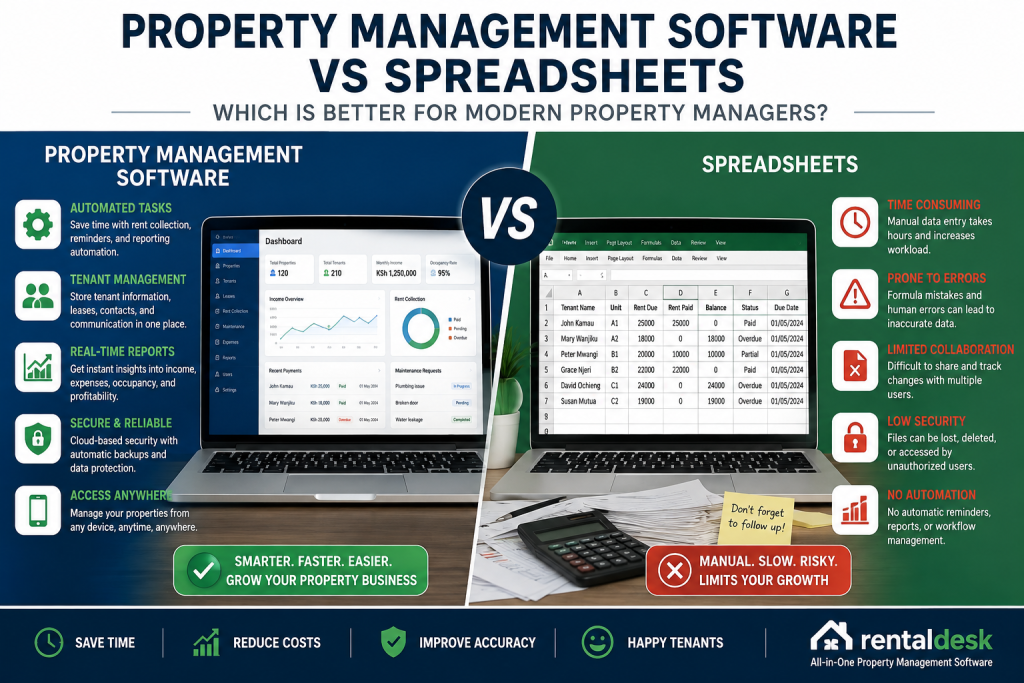
The debate surrounding Property Management Software vs Spreadsheets has become more relevant than ever. Small landlords often begin with Microsoft Excel or Google Sheets because they are familiar and inexpensive. However, as portfolios grow, spreadsheets become difficult to maintain, prone to errors, and incapable of automating essential tasks.
Modern property management software provides automation, centralized data, real-time reporting, tenant communication tools, and secure cloud storage. These features help landlords save time, reduce mistakes, and improve profitability.
In this comprehensive guide, we’ll compare Property Management Software vs Spreadsheets, examine their strengths and weaknesses, and help you determine which option is best for your rental business.
What Is Property Management Software?
Property Management Software is a digital platform designed specifically for landlords, property managers, and real estate companies. Instead of manually updating rental records, users can automate nearly every aspect of property management.
Typical features include:
- Tenant management
- Rent collection
- Online payment tracking
- Maintenance request management
- Financial reporting
- Vacancy tracking
- Lease management
- Expense monitoring
- Automated reminders
- Owner reporting
- Multi-property management
- Cloud access
Unlike spreadsheets, property management software connects all your data into one intelligent system.
When comparing Property Management Software vs Spreadsheets, the biggest difference is automation. Software performs repetitive work automatically while spreadsheets depend almost entirely on manual input.
What Are Spreadsheets?
Spreadsheets like Microsoft Excel and Google Sheets are general-purpose tools used to organize information into rows and columns.
Many landlords use spreadsheets to keep track of:
- Tenant names
- Rent due dates
- Payment history
- Expenses
- Maintenance costs
- Lease dates
- Occupancy status
Although spreadsheets are flexible, they were never designed specifically for managing rental properties.
This explains why discussions around Property Management Software vs Spreadsheets are becoming increasingly important as rental businesses grow.
Why Many Landlords Start with Spreadsheets
There are several reasons landlords begin with spreadsheets.
1. Low Initial Cost
Most computers already include spreadsheet software or provide free alternatives like Google Sheets.
There is no monthly subscription.
2. Familiar Interface
Almost everyone has used Excel during school or work.
There is very little learning required.
3. Customizable
Users can create their own columns, formulas, and reports.
This flexibility appeals to landlords managing only one or two properties.
4. Easy Setup
Creating a rent tracker only takes a few minutes.
No installation or training is required.
5. Good for Beginners
Someone managing a single apartment may not immediately need advanced software.
However, the situation changes quickly as more tenants are added.
This is where Property Management Software vs Spreadsheets becomes a critical comparison.
Limitations of Spreadsheets
Although spreadsheets seem simple, they introduce numerous challenges over time.
Manual Data Entry
Every payment must be entered manually.
Every expense must be recorded manually.
Every balance must be calculated correctly.
One typing mistake can affect dozens of calculations.
Human Error
Research consistently shows spreadsheets are prone to errors.
Common mistakes include:
- Wrong formulas
- Missing rows
- Duplicate entries
- Deleted data
- Incorrect calculations
When evaluating Property Management Software vs Spreadsheets, data accuracy becomes one of the biggest deciding factors.
No Automation
Spreadsheets cannot automatically:
- Send rent reminders
- Notify overdue tenants
- Generate invoices
- Track maintenance
- Produce financial reports
- Record online payments
Everything depends on the user.
Difficult Collaboration
If multiple employees edit the same spreadsheet, confusion often occurs.
Problems include:
- Duplicate versions
- Lost files
- Overwritten information
- Conflicting edits
Poor Scalability
Managing:
- 3 tenants
is easy.
Managing:
- 300 tenants
using spreadsheets becomes exhausting.
This is another major difference in Property Management Software vs Spreadsheets.
Advantages of Property Management Software
Modern property management systems eliminate many manual processes.
Centralized Information
Instead of storing data in multiple Excel files, everything is kept in one secure dashboard.
Users can quickly access:
- Tenant profiles
- Rent history
- Lease agreements
- Maintenance records
- Financial reports
- Property details
Automated Rent Collection
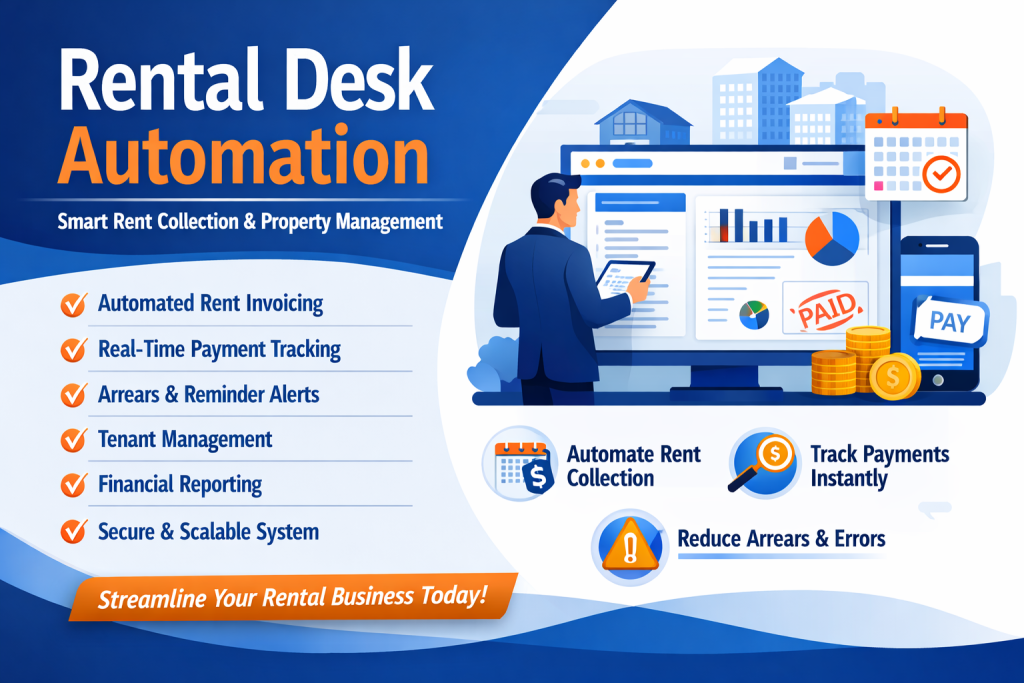
One of the biggest advantages is automated rent collection.
The system can:
- Generate invoices
- Send reminders
- Track payments
- Update balances automatically
- Produce receipts instantly
This alone saves hours every month.
It’s one of the strongest arguments in the Property Management Software vs Spreadsheets debate.
Real-Time Reporting
Instead of creating reports manually, software generates them instantly.
Examples include:
- Monthly income
- Expenses
- Outstanding rent
- Occupancy rates
- Cash flow
- Profit analysis
Decision-making becomes much faster.
Cloud Access
Most property management systems operate in the cloud.
Users can access their accounts from:
- Laptop
- Phone
- Tablet
- Office
- Home
- While travelling
Unlike spreadsheets stored on one computer, cloud software provides greater flexibility.
Better Security
Property management software protects sensitive information through:
- Password protection
- User permissions
- Automatic backups
- Secure servers
- Data encryption
Spreadsheets stored on local computers are more vulnerable to accidental deletion or hardware failure.
Property Management Software vs Spreadsheets: Feature Comparison
| Feature | Property Management Software | Spreadsheets |
|---|---|---|
| Rent Collection | Automated | Manual |
| Payment Tracking | Automatic | Manual |
| Financial Reports | Instant | Manual |
| Maintenance Management | Built-in | Manual |
| Tenant Communication | Automated | Separate tools |
| Lease Tracking | Automatic alerts | Manual reminders |
| Cloud Access | Yes | Limited |
| Data Security | High | Moderate |
| Multi-User Access | Yes | Limited |
| Scalability | Excellent | Poor |
The table clearly shows why many growing property businesses choose dedicated systems over spreadsheets. When assessing Property Management Software vs Spreadsheets, automation, security, and scalability consistently favor property management software.
How Spreadsheets Affect Productivity
Imagine a landlord managing 50 rental units.
Every month they must:
- Record payments
- Update balances
- Check arrears
- Calculate totals
- Create reports
- Send reminders
- Record expenses
- Monitor maintenance
- Track leases
Using spreadsheets, these tasks may consume several days each month.
With property management software, many of these activities happen automatically, allowing landlords to focus on expanding their investments rather than administrative work.
This productivity gain is one of the most compelling reasons why Property Management Software vs Spreadsheets is a common topic among modern real estate professionals.
Who Should Still Use Spreadsheets?
Despite their limitations, spreadsheets can still be suitable for:
- Landlords with one rental unit
- Temporary record keeping
- Simple budgeting
- Personal financial planning
- Learning basic rental management
However, once a portfolio begins to grow, the risks and inefficiencies often outweigh the benefits.
Property Management Software vs Spreadsheets: The Cost of Manual Management
Many landlords hesitate to invest in dedicated software because spreadsheets appear to be “free.” While there is little or no direct cost to using Excel or Google Sheets, the hidden costs of manual management can be significant. This is one of the most overlooked aspects of Property Management Software vs Spreadsheets.
Hidden Costs of Using Spreadsheets
A spreadsheet may not require a monthly subscription, but it often costs more in terms of time, productivity, and errors.
Some hidden costs include:
- Hours spent entering rent payments manually
- Time creating financial reports
- Mistakes caused by incorrect formulas
- Lost income from missed rent follow-ups
- Difficulty tracking maintenance expenses
- Delayed decision-making due to outdated information
As your portfolio grows, these hidden costs increase dramatically.
Time Savings: Software Wins Every Time
Time is one of the most valuable resources for landlords. Every hour spent updating spreadsheets is an hour not spent finding new investment opportunities, improving tenant relationships, or growing your business.
Property management software automates many repetitive tasks, including:
- Rent reminders
- Payment reconciliation
- Lease renewal notifications
- Maintenance tracking
- Financial reporting
- Tenant communication
When comparing Property Management Software vs Spreadsheets, automation gives software a clear advantage in operational efficiency.
Accuracy Matters in Property Management
Property management involves handling financial records, legal documents, tenant information, and lease agreements. Even a small error can have costly consequences.
Common spreadsheet mistakes include:
- Incorrect rent balances
- Formula errors
- Duplicate tenant records
- Missing payments
- Deleted rows
- Accidental overwriting of data
Property management software minimizes these risks by automating calculations and maintaining a structured database.
This is another key reason why Property Management Software vs Spreadsheets is an important decision for landlords managing multiple properties.
Managing Multiple Properties
A landlord with two apartments may find spreadsheets manageable.
A landlord with:
- 20 apartments
- 100 rental units
- Multiple buildings
- Commercial properties
- Mixed-use developments
will quickly encounter the limitations of spreadsheets.
Dedicated software allows users to:
- Group properties
- Filter tenants
- Track occupancy
- Monitor income by property
- Generate owner reports
- Compare property performance
As portfolios expand, Property Management Software vs Spreadsheets becomes less of a debate and more of a necessity.
Rent Collection Comparison
One of the biggest operational differences lies in rent collection.
Using Spreadsheets
The landlord must:
- Check bank statements.
- Confirm payments.
- Update the spreadsheet manually.
- Calculate outstanding balances.
- Contact tenants with overdue rent.
- Update reports.
Each step requires manual effort.
Using Property Management Software
The system can:
- Record payments automatically
- Update tenant balances
- Issue digital receipts
- Send overdue reminders
- Display arrears dashboards
- Generate collection reports
This level of automation significantly improves cash flow management and highlights why Property Management Software vs Spreadsheets often favors dedicated software.
Maintenance Management
Maintenance is another area where spreadsheets struggle.
A spreadsheet can record maintenance requests, but it cannot manage the entire workflow.
Property management software enables landlords to:
- Log maintenance requests
- Assign technicians
- Track repair progress
- Record costs
- Notify tenants of updates
- Store maintenance history
Having everything in one place reduces delays and improves tenant satisfaction.
Financial Reporting
Every landlord needs clear financial reports to understand business performance.
With spreadsheets, preparing reports usually involves:
- Copying data
- Checking formulas
- Updating tables
- Creating charts
- Verifying totals
This process can take hours.
Property management software generates reports instantly, including:
- Income statements
- Expense summaries
- Rent arrears reports
- Occupancy reports
- Cash flow reports
- Profit analysis
When considering Property Management Software vs Spreadsheets, reporting capabilities are a major differentiator.
Security and Data Protection
Rental records contain sensitive information such as:
- Tenant names
- Contact details
- Payment history
- Lease agreements
- Financial records
Spreadsheets stored on personal computers can be:
- Accidentally deleted
- Corrupted
- Lost due to hardware failure
- Shared without proper permissions
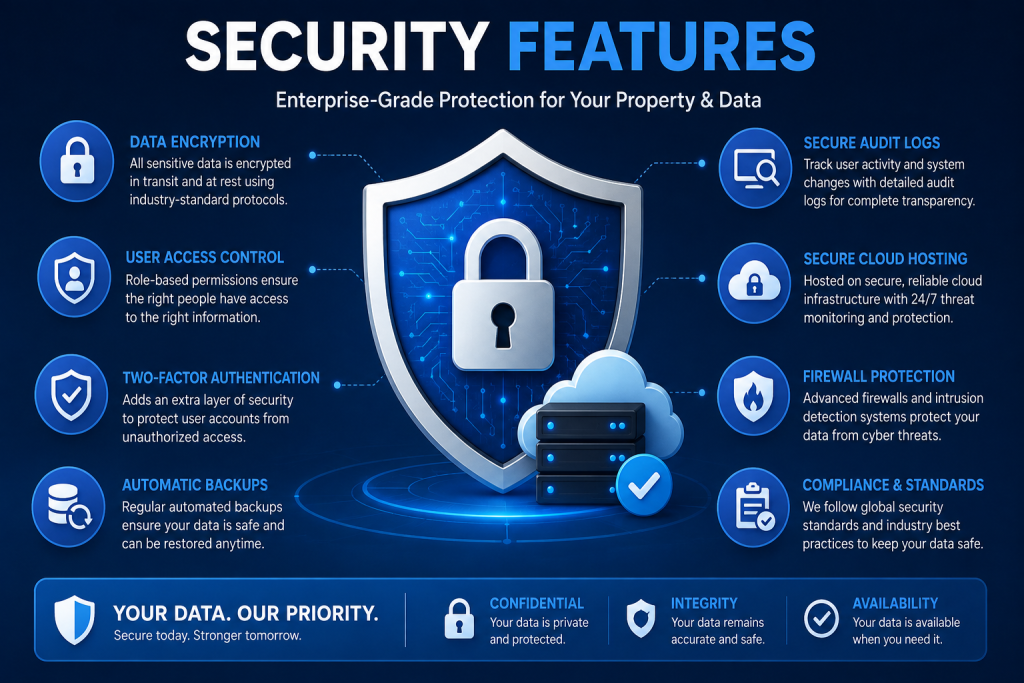
Modern property management software typically offers:
- Secure cloud storage
- Automatic backups
- Role-based access controls
- Encrypted data
- Activity logs
These features provide greater peace of mind for landlords and property managers.
Collaboration Across Teams
As businesses grow, multiple people may need access to property information.
Examples include:
- Property managers
- Accountants
- Maintenance teams
- Customer service staff
- Property owners
Spreadsheets often create confusion when several people edit the same file.
Property management software allows authorized users to work from the same system simultaneously without creating duplicate versions.
This collaborative capability is another advantage in the Property Management Software vs Spreadsheets comparison.
Real-Life Case Study
From Manual Tracking to Digital Success
A property management company overseeing 80 residential units relied on spreadsheets for several years.
Challenges
- Rent updates were entered manually.
- Reports took two days to prepare each month.
- Maintenance requests were tracked through phone calls and emails.
- Duplicate tenant records caused billing errors.
- Staff spent excessive time reconciling payments.
The company decided to implement dedicated property management software.
Results After Six Months
- Monthly reporting time reduced by 90%.
- Rent collection improved significantly through automated reminders.
- Maintenance response times became faster.
- Financial records became more accurate.
- Staff focused more on customer service than administrative work.
- Management gained real-time visibility into business performance.
This transformation illustrates why many growing businesses choose software over spreadsheets.
Common Mistakes Landlords Make
Many landlords continue using spreadsheets longer than they should.
Some common mistakes include:
Waiting Too Long to Upgrade
By the time manual processes become overwhelming, valuable time has already been lost.
Relying on Memory
Without automated reminders, landlords may forget lease renewals or overdue payments.
Keeping Multiple Spreadsheet Versions
Different files on different computers often result in inconsistent information.
Ignoring Data Backups
A damaged laptop or accidental deletion can erase years of rental records.
Underestimating Growth
Many landlords assume they will always manage a small portfolio. As they acquire more properties, spreadsheets become increasingly difficult to maintain.
Recognizing these pitfalls early can help landlords make a smoother transition when evaluating Property Management Software vs Spreadsheets.
When Is the Right Time to Switch?
You should seriously consider moving from spreadsheets to property management software if you:
- Manage more than five rental units.
- Spend hours updating records each week.
- Frequently chase late rent manually.
- Need better financial reports.
- Have multiple staff members accessing rental data.
- Want to scale your property business.
- Need secure cloud access.
- Want to reduce manual errors.
These indicators suggest that software can provide a strong return on investment through improved efficiency and better decision-making.
How Automation Improves Daily Property Management
Automation is one of the biggest advantages highlighted in the Property Management Software vs Spreadsheets comparison. Instead of performing repetitive administrative tasks every day, landlords can allow the system to handle routine operations automatically.
Examples of automated tasks include:
- Rent reminders before due dates
- Late payment notifications
- Receipt generation
- Lease expiry alerts
- Maintenance request updates
- Monthly financial reports
- Tenant balance calculations
Automation not only saves time but also ensures consistency. Tenants receive timely communication, and landlords spend less time on paperwork.
Tenant Experience: Software Creates Better Relationships
Today’s tenants expect convenience. They want quick responses, digital communication, and simple payment methods. Spreadsheets do not provide any tenant-facing features, meaning landlords must rely on separate tools such as email, messaging apps, or phone calls.
Property management software often includes features like:
- Tenant portals
- Online rent payments
- Digital lease agreements
- Maintenance request submission
- Payment history access
- Automated notifications
When evaluating Property Management Software vs Spreadsheets, tenant satisfaction is an important factor. A smoother tenant experience can lead to higher retention rates and fewer disputes.
Scalability for Growing Property Businesses
Many landlords begin with one or two rental units, but successful investors often expand their portfolios over time. What works for five units may not work for fifty.
Spreadsheets Become Harder to Manage
As more properties are added, spreadsheets become:
- Larger
- Slower
- More difficult to navigate
- More prone to errors
- Harder to audit
Searching for a specific tenant or payment history may require scrolling through thousands of rows.
Property Management Software Grows with Your Business
Dedicated software is designed to handle growth without becoming more difficult to use.
It can easily manage:
- Hundreds of tenants
- Multiple buildings
- Commercial and residential properties
- Different property owners
- Multiple user accounts
- Branch offices
This scalability is a major reason businesses choose software when considering Property Management Software vs Spreadsheets.
Compliance and Record Keeping
Property managers must maintain accurate records for legal, financial, and operational purposes.
Property management software helps by storing:
- Lease agreements
- Payment records
- Maintenance history
- Inspection reports
- Tenant communications
- Financial statements
Because these records are organized and searchable, responding to audits or resolving disputes becomes much easier than searching through numerous spreadsheet files.
Comparing Long-Term Value
Although spreadsheets may appear to save money initially, they often become more expensive over time due to:
- Increased administrative work
- Higher risk of mistakes
- Lost productivity
- Delayed reporting
- Poor visibility into business performance
Property management software requires an investment, but the return often comes through:
- Faster operations
- Improved rent collection
- Better financial control
- Reduced administrative costs
- More informed decision-making
Looking beyond the initial price is essential when assessing Property Management Software vs Spreadsheets.
RentalDesk: A Smarter Way to Manage Rental Properties
If you’re looking for a solution built to simplify rental management, RentalDesk provides a comprehensive platform for landlords, property managers, and real estate companies.
Key features include:
- Tenant management
- Rent collection tracking
- Arrears management
- Financial reporting
- Property management dashboards
- Maintenance tracking
- Secure cloud access
- Real-time analytics
- User-friendly interface
- Multi-property support
Instead of juggling multiple spreadsheets, RentalDesk brings all your property information into one centralized system, helping you save time and improve operational efficiency.
Frequently Asked Questions
Is property management software suitable for small landlords?
Yes. Even landlords with a few rental units can benefit from automation, accurate reporting, and secure record keeping. As your portfolio grows, the advantages become even greater.
Can spreadsheets still be useful?
Yes. Spreadsheets can work for very small portfolios or basic budgeting. However, they become increasingly difficult to manage as the number of properties and tenants grows.
Is property management software expensive?
Many solutions offer affordable pricing compared to the time and money saved through automation and reduced errors.
Which option is better for long-term growth?
For landlords planning to expand their business, Property Management Software vs Spreadsheets clearly favors dedicated software due to its scalability, automation, and reporting capabilities.
Conclusion
The debate around Property Management Software vs Spreadsheets ultimately comes down to efficiency, accuracy, and long-term business growth. While spreadsheets may work for landlords managing a few rental units, they quickly become difficult to maintain as property portfolios expand. Choosing Property Management Software vs Spreadsheets is no longer just about convenience—it is about making smarter business decisions.
When evaluating Property Management Software vs Spreadsheets, property management software consistently delivers greater value through automation, real-time reporting, secure data storage, and streamlined tenant management. Unlike manual spreadsheets, dedicated software reduces errors, saves valuable time, and improves the overall rental experience for both landlords and tenants.
Another important factor in Property Management Software vs Spreadsheets is scalability. As your rental business grows, software grows with you, while spreadsheets become increasingly complex and time-consuming. This makes Property Management Software vs Spreadsheets an important consideration for anyone planning to expand their property investments.
From rent collection and maintenance tracking to financial reporting and tenant communication, Property Management Software vs Spreadsheets clearly shows the advantages of using a purpose-built solution. Businesses that transition from spreadsheets often experience increased productivity, better cash flow management, and improved operational control.
If you are still relying on spreadsheets, now is the perfect time to reconsider Property Management Software vs Spreadsheets and embrace modern technology. Investing in the right software today can eliminate repetitive manual work, improve decision-making, and help your business remain competitive.
For landlords, property managers, and real estate companies seeking efficiency and sustainable growth, Property Management Software vs Spreadsheets is a comparison with a clear winner. Solutions like RentalDesk provide everything needed to manage properties more effectively, helping you save time, reduce costs, and deliver exceptional service.
Don’t let outdated tools slow your business down. Make the switch after carefully evaluating Property Management Software vs Spreadsheets, and discover how digital property management can transform your daily operations. The future of rental management belongs to those who choose innovation, and Property Management Software vs Spreadsheets proves that dedicated software is the smarter investment for long-term success.
Choosing between Property Management Software vs Spreadsheets ultimately depends on the size of your portfolio, your operational needs, and your long-term goals. While spreadsheets may be adequate for managing a handful of properties, they quickly become inefficient as rental businesses grow.
Property management software offers automation, real-time reporting, enhanced security, better collaboration, and a superior experience for both landlords and tenants. These advantages translate into time savings, improved accuracy, and stronger financial performance.
If you’re serious about growing your rental business and reducing manual work, investing in dedicated property management software is a strategic step toward more efficient and profitable property management.
Call to Action
Stop spending valuable hours updating spreadsheets and chasing manual records. Upgrade to RentalDesk and experience a smarter way to manage your rental properties.
With RentalDesk, you can:
- Automate rent collection
- Track tenant payments in real time
- Manage multiple properties from one dashboard
- Generate professional financial reports
- Monitor arrears with ease
- Improve operational efficiency
- Scale your property business confidently
Start transforming the way you manage your rental portfolio today with RentalDesk.