 Digital Property Records Management: Transforming Property Management in Kenya
The real estate industry in Kenya is rapidly evolving. Gone are the days when landlords and property managers relied entirely on filing cabinets, notebooks, and spreadsheets to manage their properties. Today, digital transformation is changing how rental businesses operate, and one of the biggest innovations is Digital Property Records Management.
Whether you manage apartments, commercial buildings, hostels, gated communities, or multiple rental units across different locations, having organized and secure property records is essential for success. Digital Property Records Management allows landlords and property managers to store, access, update, and retrieve property information electronically from one centralized platform. Modern property management systems increasingly centralize tenant information, leases, payments, and maintenance records into one digital workspace while reducing manual administration and improving operational visibility.
At RentalDesk Kenya, we understand the challenges of handling property records manually. That is why our cloud-based property management platform provides a secure and efficient way to manage every document and record associated with your rental business.
What Is Digital Property Records Management?
Digital Property Records Management is the process of storing and managing all property-related information electronically rather than using paper files or scattered spreadsheets.
These records may include:
- Property details
- Tenant information
- Lease agreements
- Payment histories
- Rent invoices
- Receipts
- Deposit records
- Maintenance requests
- Utility records
- Financial reports
- Inspection reports
- Legal documents
- Landlord statements
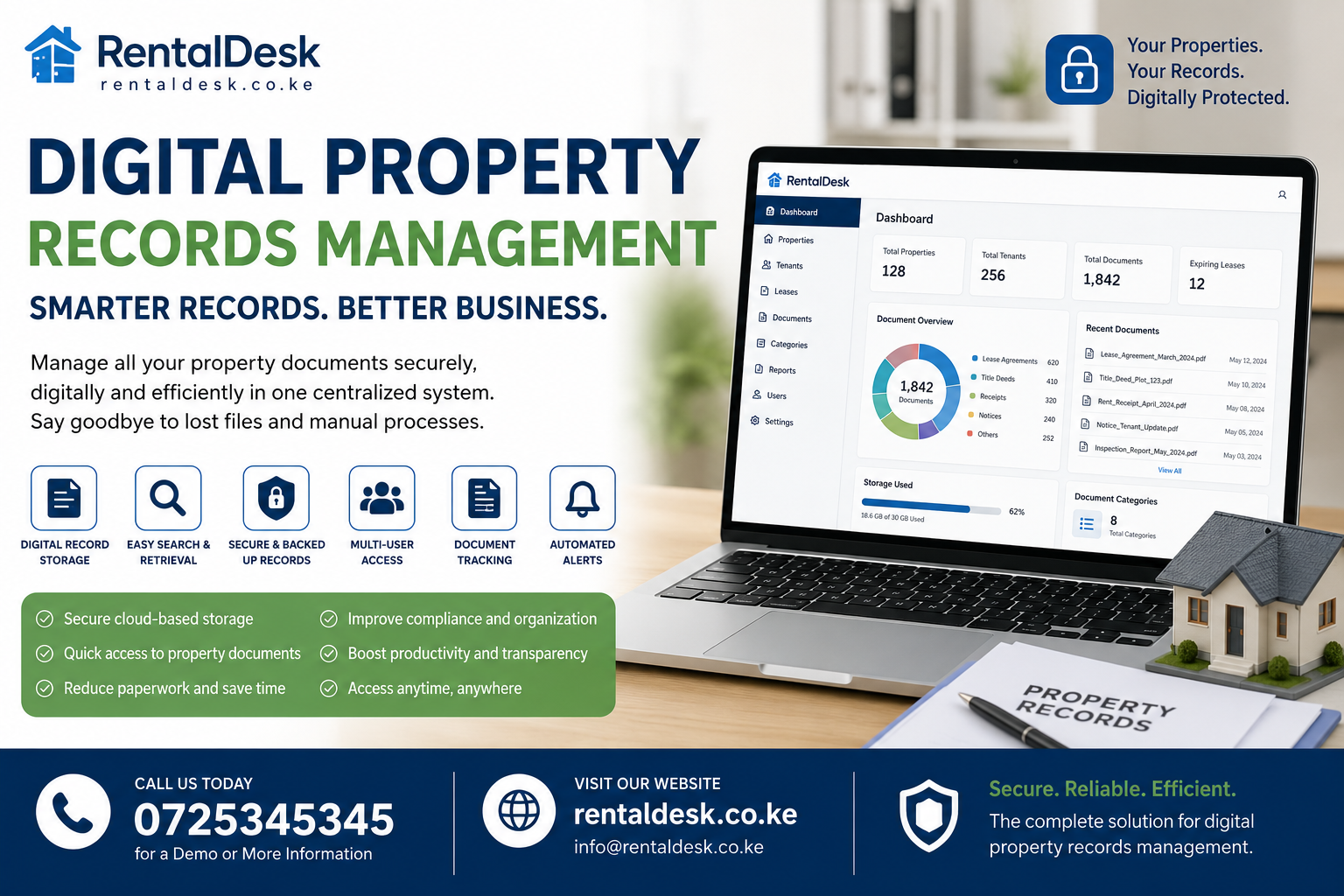
Instead of searching through piles of paperwork, property managers can access everything from a single dashboard in seconds. Cloud-based systems make these records available from anywhere and update them in real time, improving visibility and reducing errors.
Why Digital Property Records Management Matters
Property management involves handling a large amount of information every day. Managing these records manually often creates challenges such as:
- Lost documents
- Missing tenant information
- Delayed reporting
- Duplicate records
- Human errors
- Poor communication
- Difficulty tracking payments
- Inefficient maintenance processes
- Compliance risks
As rental portfolios grow, manual systems become increasingly difficult to manage. Digital systems provide better organization and make information easily searchable and accessible.
Common Challenges of Manual Property Records Management
1. Misplaced Documents
Paper files can be lost, damaged, or misplaced. Losing lease agreements or payment records can create disputes and legal complications.
2. Time-Consuming Retrieval
Searching through filing cabinets and spreadsheets wastes valuable time.
3. Data Inconsistencies
Manual record keeping often leads to duplicated information and inaccurate reports.
4. Limited Accessibility
Property information stored in physical files cannot be accessed remotely.
5. Poor Reporting
Generating financial reports manually can be tedious and prone to errors.
6. Security Risks
Paper records are vulnerable to theft, fire, water damage, and unauthorized access.
Benefits of Digital Property Records Management
1. Centralized Information Management
Digital Property Records Management brings all property data together in one location.
This includes:
- Property records
- Tenant files
- Lease agreements
- Financial statements
- Maintenance history
- Occupancy records
Centralized records eliminate confusion and improve operational efficiency.
2. Instant Access to Information
One of the biggest advantages of digital property management is immediate access to information.
Property managers can instantly view:
- Tenant balances
- Lease expiry dates
- Rent payment history
- Property expenses
- Maintenance requests
Cloud-based platforms make this information accessible from phones, tablets, and computers anywhere.
3. Enhanced Data Security
Digital systems provide better security than physical filing systems.
Key security features include:
- User authentication
- Role-based permissions
- Data encryption
- Automatic backups
- Audit logs
This protects sensitive information and reduces the risk of data loss.
4. Better Tenant Management
Tenant information is one of the most critical components of property management.
Digital records allow you to store:
- Names
- Contact information
- Identification details
- Lease agreements
- Payment history
- Deposit records
- Communication records
Having all tenant information in one place makes management easier and more professional. Tenant management systems help keep records organized and accessible whenever needed.
5. Faster Rent Collection
Digital systems improve rent management by providing:
- Automated invoicing
- Real-time payment updates
- Digital receipts
- Arrears tracking
- Payment reports
Automated payment tracking reduces errors and improves cash flow visibility. Many modern property systems also integrate digital payment methods and automatically reconcile transactions.
6. Improved Lease Management
Managing lease agreements manually can become complicated.
Digital Property Records Management allows you to track:
- Lease start dates
- Lease expiry dates
- Renewal dates
- Rent amounts
- Deposit terms
- Unit assignments
Everything remains organized and easy to retrieve.
7. Efficient Maintenance Tracking
Property maintenance generates a significant amount of documentation.
Digital systems allow property managers to record:
- Maintenance requests
- Assigned contractors
- Costs
- Completion dates
- Inspection reports
Tracking maintenance digitally improves accountability and speeds up issue resolution. Modern property platforms increasingly use structured maintenance workflows and digital reporting to preserve property value and improve tenant satisfaction.
Key Features of Digital Property Records Management
Property Database
Store all property information, including:
- Property names
- Building details
- Unit information
- Ownership records
- Occupancy status
Digital Tenant Files
Maintain complete tenant records:
- Contact information
- Lease agreements
- Payment history
- Deposits
- Notices
Lease Management System
Track:
- Lease renewals
- Expiration dates
- Rental charges
- Contract documentation
Document Management
Upload and organize:
- Lease agreements
- Inspection reports
- Utility records
- Receipts
- Legal documents
Financial Record Management
Track:
- Rent collections
- Expenses
- Service charges
- Deposits
- Arrears
Reporting Dashboard
Generate reports on:
- Occupancy
- Revenue
- Expenses
- Tenant balances
- Property performance
Automated reporting provides better financial transparency and supports informed decision-making.
Why Landlords Need Digital Property Records Management
Reduced Administrative Work
Manual administration consumes valuable time.
Digital records automate many processes, including:
- Rent invoicing
- Report generation
- Payment tracking
- Tenant communication
Automation can remove much of the repetitive workload and improve operational efficiency.
Improved Transparency
Digital records provide clear visibility into:
- Rental income
- Expenses
- Occupancy
- Arrears
- Property performance
This transparency helps landlords make better decisions.
Better Compliance
Maintaining accurate records helps landlords:
- Prepare financial reports
- Maintain legal documentation
- Track agreements
- Produce audit records
Digital systems also provide structured audit trails and document tracking.
Better Communication
Property managers can quickly retrieve information and respond to tenant inquiries professionally.
Digital records improve:
- Response times
- Tenant satisfaction
- Internal coordination
Digital Property Records Management for Property Management Companies
Property management companies often manage hundreds or thousands of units.
Digital systems make it possible to:
- Manage multiple properties
- Monitor occupancy
- Track finances
- Manage maintenance
- Generate landlord reports
- Control staff access
Cloud platforms are especially valuable for multi-property management because they allow centralized oversight across different locations.
How RentalDesk Simplifies Digital Property Records Management
At RentalDesk Kenya, our property management software is designed to eliminate paperwork and simplify property administration.
Our platform enables property managers to:
Manage Tenant Records
Store complete tenant information securely.
Manage Lease Agreements
Track lease periods and renewals.
Monitor Rent Collection
View payments in real time.
Generate Financial Reports
Access accurate reports instantly.
Manage Multiple Properties
Handle several properties from one dashboard.
Record Maintenance Activities
Track requests and expenses efficiently.
Access Information Anywhere
Manage properties remotely from any device.
RentalDesk centralizes lease management, tenant onboarding, reporting, maintenance tracking, and financial monitoring in one cloud-based platform built for landlords and property managers.
Who Can Benefit from Digital Property Records Management?
Digital Property Records Management is ideal for:
- Individual landlords
- Property management companies
- Real estate agencies
- Commercial property owners
- Estate developers
- Student housing managers
- SACCO housing departments
- Diaspora property investors
The Future of Property Management Is Digital
Technology is rapidly transforming real estate management.
Property managers who continue relying on paper records face:
- Higher operational costs
- Increased errors
- Limited visibility
- Slower decision-making
Digital Property Records Management provides:
- Better organization
- Improved security
- Faster access to information
- Better financial management
- Enhanced tenant experience
- Increased efficiency
- Scalability for growing portfolios
Technology adoption in property management increasingly focuses on reducing manual processes, improving communication, and giving landlords better visibility into their operations.
Conclusion
Digital Property Records Management is no longer a luxury—it is a necessity for modern property management.
As rental portfolios continue to grow, landlords and property managers need secure, centralized, and easily accessible systems for managing property records. Digital record management improves efficiency, eliminates paperwork, enhances transparency, and provides real-time visibility into property operations.
RentalDesk Kenya offers a powerful cloud-based solution that enables landlords and property managers to manage tenant records, leases, payments, maintenance, and financial reporting from one secure platform.
If you are ready to eliminate paperwork and take control of your rental operations, RentalDesk’s Digital Property Records Management system is the smart solution for your business.