Caretaker vs property manager in Kenya difference is a distinction that often gets blurred, leading to operational chaos and financial loss for landlords. Many property owners assume that hiring a caretaker is the same as hiring a property manager, or that one person can effectively do both. In reality, these are two distinct roles with different skill sets, legal obligations, and scopes of authority. A caretaker is the hands-on presence on the ground, while a property manager is the strategic and administrative head of the operation. Understanding this distinction is the first step toward building a professional rental business that protects your investment.
The Core Distinction: Hands-On vs Administrative
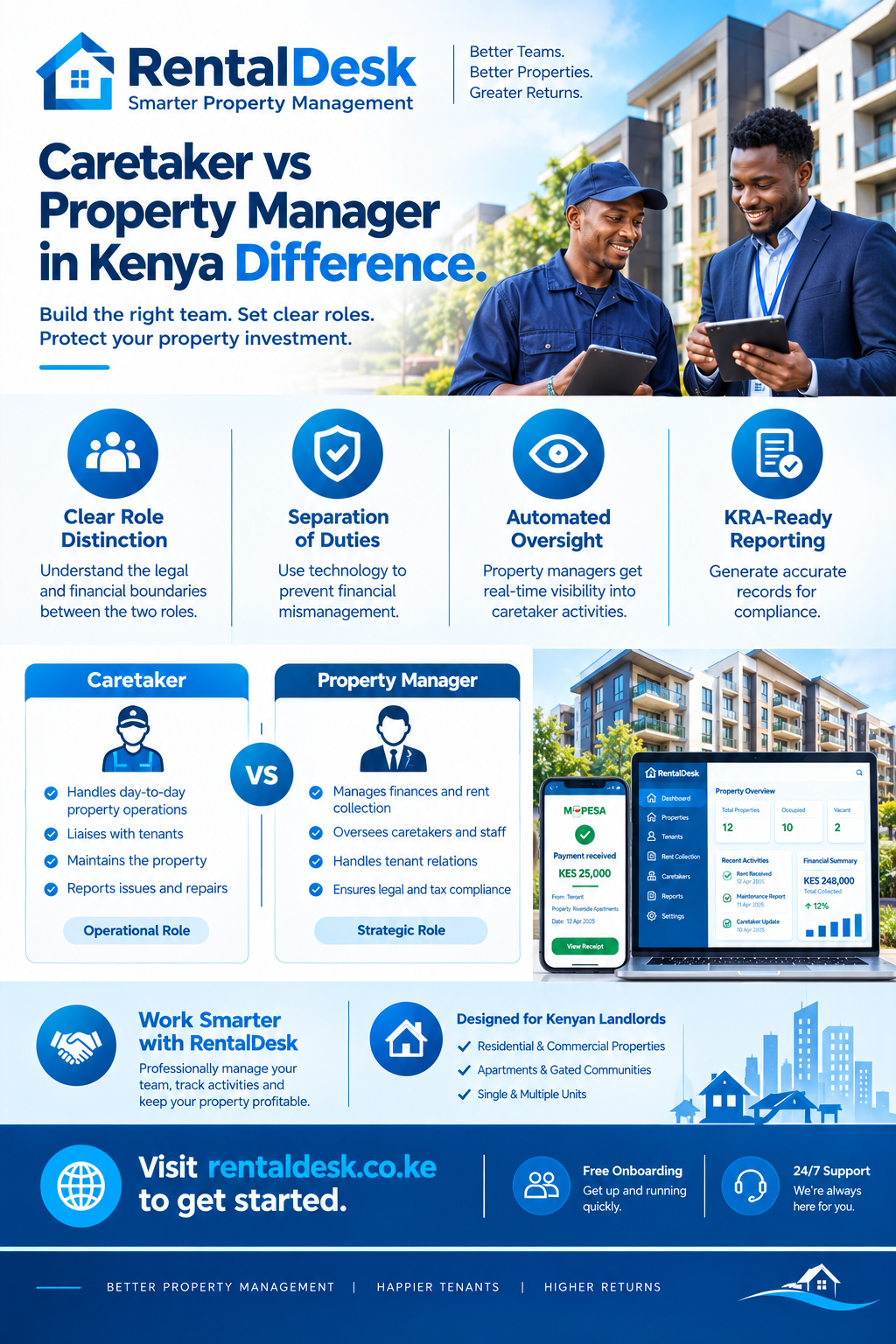
The fundamental caretaker vs property manager in Kenya difference lies in the scope of their work. A property caretaker is more hands-on in their daily tasks, dealing with the physical reality of the property. They are the eyes and ears of the operation, reporting directly to the property manager or the landlord.
A property manager, on the other hand, is in charge of the broader administrative and financial picture. They ensure that bills are paid, contracts are signed, and financial reports are generated. A property manager may oversee multiple properties, whereas a caretaker is typically responsible for only one building or estate. This structural difference is the foundation of the caretaker vs property manager in Kenya difference.
What a Caretaker Does: The Ground-Level Role
To grasp the caretaker vs property manager in Kenya difference, you must look at the specific duties of a caretaker. In Kenya, the caretaker is often the first point of contact for tenants, handling day-to-day concerns and emergencies.
Their responsibilities include conducting daily inspections of the property to ensure all assets are secure and identifying maintenance issues like leaks or faulty fittings. They monitor security, manage access to the premises, and supervise the work of cleaners and external contractors.
Importantly, the caretaker is usually responsible for rent collection follow-up. They remind tenants of due dates and report the status to the property manager. However, the caretaker vs property manager in Kenya difference becomes clear here: the caretaker records facts, but the property manager makes the financial decisions.
What a Property Manager Does: The Strategic Role
The caretaker vs property manager in Kenya difference is most visible in the property manager’s duties. A property manager is the lawful agent of the landlord, expected to collect rent, pay expenses, and remit the balance without delay.
They are responsible for the overall financial administration of the property, including budgeting, financial reporting, and ensuring legal compliance. They market vacant units, screen prospective tenants, and draft and manage lease agreements. They also handle complex issues like tenancy disputes and service charge administration.
While a caretaker might note a repair need, the property manager approves the expenditure and manages the maintenance budget. This high-level responsibility is what fundamentally defines the caretaker vs property manager in Kenya difference.
The Legal Distinction: Registration and Liability
The caretaker vs property manager in Kenya difference is not just operational; it is also legal. Under the Estate Agents Act, Cap 533, a person who acts as a property manager for a fee must be registered with the Estate Agents Registration Board (EARB). A caretaker does not require this registration, as they are not acting as an independent agent negotiating leases or handling client funds at a high level.
This legal distinction is crucial because property managers can be held liable for the misappropriation of funds. In Koira Limited v My Space Management Properties Limited [2024], the court found a property manager liable for failing to remit over KSh 17 million in collected rent. Similarly, in Good Living Properties v Pearl Garden Management Limited [2024], a former property manager was sued for misappropriated funds. The caretaker vs property manager in Kenya difference in legal liability is immense.
The Financial Reality: Separation of Duties
The most dangerous mistake a landlord can make is ignoring the caretaker vs property manager in Kenya difference by allowing a caretaker to handle large sums of cash without oversight. While a caretaker may assist in collecting rent on the ground, they should not be the final authority on reconciliation.
A property manager is responsible for the financial integrity of the portfolio. They reconcile M-Pesa payments, issue digital receipts, and generate rent ledgers. If a caretaker collects cash, the property manager must account for it. This separation of duties is a vital internal control.
Systems like RentalDesk help enforce this caretaker vs property manager in Kenya difference by providing role-based access. Caretakers can record field collections, but property managers retain the authority to reconcile and audit the transactions, ensuring no funds are lost.
How Technology Bridges the Gap
The caretaker vs property manager in Kenya difference used to mean that small landlords could only afford a caretaker, leaving them without financial oversight. However, modern property management software has democratized access to professional tools.
Cloud-based platforms allow a caretaker to log maintenance issues or record a rent payment on their phone, while the property manager or landlord reviews the dashboard remotely. This technology blurs the operational line while maintaining the crucial separation of financial duties.
RentalDesk provides the infrastructure for this partnership. The caretaker acts as the ground-level data collector, and the software provides the automated reconciliation and reporting that a property manager would traditionally handle.
Common Mistakes Landlords Make
The confusion over the caretaker vs property manager in Kenya difference leads to several common pitfalls.
Many landlords give a caretaker total control over rent collection, only to discover shortages months later. Without a separate property manager or software to audit the caretaker’s records, accountability is lost.
Others expect a caretaker to perform property management duties, such as marketing and tenant screening. This often results in poor tenant quality and high vacancy rates.
Failing to define the caretaker vs property manager in Kenya difference in a written agreement is another major error. Without clear boundaries, the caretaker may overstep their authority, or the property manager may neglect ground-level issues.
How to Get Started with the Right Structure
To implement the correct caretaker vs property manager in Kenya difference, follow these steps:
-
Define the Roles: Clearly outline the duties of the caretaker (inspections, maintenance, tenant liaison) and the property manager (financials, leases, compliance).
-
Hire Appropriately: Ensure your property manager is registered with the EARB if they are acting as an agent for a fee. Hire a caretaker based on technical or practical skills.
-
Implement Separation of Duties: Do not let the caretaker be the sole handler of cash. Use a system where collections are recorded digitally and reconciled by the manager.
-
Use Technology: Adopt a platform like RentalDesk to give the property manager real-time visibility into the caretaker’s activities and the property’s financial health.
-
Review and Audit: Regularly review the caretaker vs property manager in Kenya difference in practice. Ensure the caretaker is reporting accurately and the manager is providing financial reports.
The Future of Property Roles in Kenya
As the Kenyan rental market matures, the caretaker vs property manager in Kenya difference will become even more defined. The use of PropTech will likely reduce the administrative burden on property managers, allowing them to oversee larger portfolios, while caretakers will be equipped with digital tools to perform their roles more efficiently.
Landlords who embrace this distinction and the technology that supports it will be best positioned to maximize their returns. For deeper insights into the industry, exploring resources on property maintenance strategies can help you keep tenants satisfied.
Understanding the regulatory environment is also key. The legal framework for tenancy agreements provides the foundation for how these roles interact.
Staying updated on real estate investment planning will help you structure your team for growth.
Tracking the latest property market trends is essential for making informed decisions about hiring and team structure.
Finally, mastering the managing rental finances ensures that the separation of duties between your caretaker and property manager protects your bottom line.