
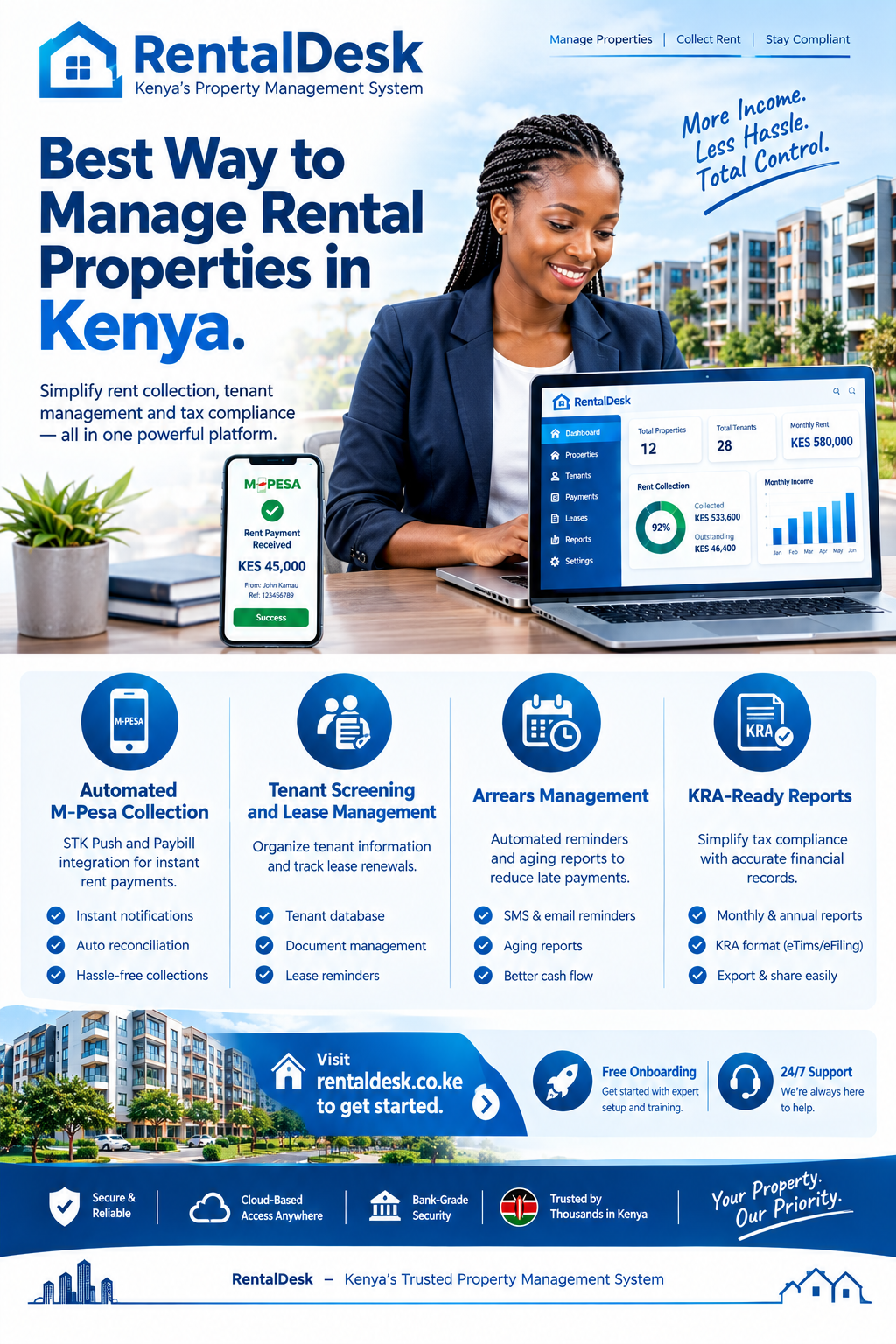
Best way to manage rental properties in Kenya is a question every landlord and property investor must answer to protect their investment and maximize returns. In Kenya’s dynamic rental market, managing properties effectively requires more than collecting rent—it demands a structured approach to tenant screening, lease agreements, rent collection, maintenance, financial record-keeping, and legal compliance. Industry data reveals that late rent payments and vacancies can cost landlords up to 30% of expected rental income, while proactive property management can increase rental income by 15-25% through better tenant management, reduced vacancies, and proactive maintenance. RentalDesk provides the complete solution for Kenyan landlords seeking to professionalize their operations and adopt the best way to manage rental properties in Kenya.
Why Finding the Best Way to Manage Rental Properties in Kenya Matters
The best way to manage rental properties in Kenya conversation is urgent because the rental market is evolving rapidly. Tenants now expect online receipts, mobile-based rent payments, and maintenance responsiveness. Local property tech has advanced, bringing tools that allow landlords to automate payments, communicate with tenants, and track maintenance. Landlords who fail to adopt modern management practices risk losing tenants to competitors, falling into arrears, and facing legal complications.
A 2025 survey revealed that Kenyan landlords who use professional property management systems reduce arrears by up to 60% and save 70-90% of manual work time. The best way to manage rental properties in Kenya combines technology, structured processes, and legal compliance into a cohesive system that protects rental income and builds long-term tenant relationships.
Tenant Screening: The Foundation of the Best Way to Manage Rental Properties in Kenya
The best way to manage rental properties in Kenya begins with selecting reliable tenants. Landlords and letting agents in Nairobi’s higher-value rental market are increasingly seeking employment letters, payslips, KRA PIN details, and salary information from prospective tenants. This tightened vetting reflects the growing recognition that tenant quality determines rental success.
A comprehensive screening process should include employment verification, previous landlord references, credit history checks where permissible, and affordability assessment. RentalDesk helps landlords organize screening information, record application details, and document decisions, ensuring consistency across all tenancies.
Clear Lease Agreements
The best way to manage rental properties in Kenya requires every tenancy to be backed by a written lease agreement outlining rent terms, payment due dates, deposit requirements, and notice periods. Kenyan landlords should use a proper written tenancy agreement, handle deposits correctly, give proper notice, and follow the law on rent and evictions rather than taking matters into their own hands.
A well-drafted lease should specify the rent amount, due date, acceptable payment methods, late payment penalties, utility responsibilities, and consequences of default. RentalDesk allows landlords to store lease agreements digitally, track key dates, and receive renewal alerts, ensuring no lease expires without notice.
Automated Rent Collection and M-Pesa Reconciliation
The best way to manage rental properties in Kenya includes automating rent collection. M-Pesa rent collection allows tenants to pay rent digitally through M-Pesa instead of relying on cash, cheques, or manual bank deposits. When tenants pay via M-Pesa Paybill, Safaricom sends a C2B callback containing the amount, phone number, and account number, enabling automatic reconciliation.
RentalDesk integrates directly with M-Pesa STK Push, Paybill, and Till options, allowing tenants to pay instantly. The system matches payments to the correct tenant, generates digital receipts automatically, and updates balances in real-time. This eliminates manual reconciliation, reduces errors, and ensures every payment is accurately recorded.
Arrears Management and Follow-Up
The best way to manage rental properties in Kenya must include structured arrears management. Best practices include digital payment channels, clear payment deadlines, automated reminders, and formal arrears notices. Delayed enforcement encourages chronic non-payment.
RentalDesk automates arrears tracking, showing total arrears per property, tenants behind on payments, and aging analysis (30, 60, 90+ days). The system sends progressive reminders, escalates overdue accounts, and maintains a complete communication history for legal purposes.
Maintenance Management
The best way to manage rental properties in Kenya requires prompt and professional maintenance handling. A self-managing Kenyan landlord spends an average of 48 hours to fix one maintenance task, but this time can be dramatically reduced with structured workflows. Property managers should budget approximately 1.5 to 2 percent of a property’s current market value annually for maintenance and repairs.
RentalDesk allows tenants to submit maintenance requests with photos, assigns tasks to vendors, tracks progress, and records costs. This structured approach ensures no repair is forgotten and all costs are properly documented.
Financial Record-Keeping and Tax Compliance
The best way to manage rental properties in Kenya includes maintaining accurate financial records. Landlords earning residential rental income between KES 288,000 and KES 15 million annually must pay Monthly Rental Income (MRI) tax at 7.5% of gross income. The Kenya Revenue Authority has launched the Electronic Rental Income Tax System (eRITS) to facilitate compliance.
RentalDesk generates KRA-compliant reports, making tax filing straightforward. The system tracks all rental income, expenses, and arrears, providing the accurate records needed for MRI returns and avoiding penalties.
Legal Compliance and Tenant Rights
The best way to manage rental properties in Kenya requires staying compliant with local laws. Kenyan landlords must understand the Land Act 2012, the Rent Restriction Act, and the Landlord and Tenant (Shops, Hotels and Catering Establishments) Act. Self-help measures such as disconnection of utilities or lockouts are illegal and can cost landlords more than the rent arrears they seek to recover.
RentalDesk helps landlords maintain proper documentation, track notice periods, and generate audit-ready records that support legal compliance.
Property Inspections and Preventive Maintenance
The best way to manage rental properties in Kenya includes scheduling regular property inspections. Best practice recommends a minimum of two property inspections per year for each unit to identify issues before they become costly repairs.
RentalDesk helps landlords schedule inspections, record findings, and track completion of recommended maintenance tasks.
Tenant Communication and Retention
The best way to manage rental properties in Kenya includes maintaining strong tenant relationships. Clear invoices, polite reminders, and easy payment methods signal that you run a serious operation. Responding to maintenance quickly and giving fair renewal conversations improve tenant retention.
RentalDesk provides tenant portals where residents can view invoices, download receipts, submit maintenance requests, and access payment history. This transparency builds trust and reduces disputes.
Choosing the Right Property Management Software
The best way to manage rental properties in Kenya includes using property management software. Spreadsheets cost nothing upfront but demand significant time and carry substantial risk. Property management software requires a monthly investment that eliminates hours of manual work and reduces costly errors.
RentalDesk is built specifically for the Kenyan market, with M-Pesa integration, KES currency, reports suitable for local tax filing, and responsive WhatsApp support. The platform combines rent tracking, tenant management, arrears visibility, digital receipts, maintenance records, expense tracking, and landlord reports into one centralized system.
Multi-Property Portfolio Management
For landlords with properties in different locations, the best way to manage rental properties in Kenya includes using a unified dashboard. RentalDesk allows landlords to view all properties at a glance, monitor rent collection per building, track occupancy and vacancies, and generate property-specific reports.
Remote Property Management for Diaspora Landlords
The best way to manage rental properties in Kenya for diaspora landlords includes cloud-based access. RentalDesk is cloud-based, allowing landlords to manage properties from anywhere in the world. All data is synced in real-time, so landlords always have access to current information.
How to Get Started with the Best Way to Manage Rental Properties in Kenya
Implementing the best way to manage rental properties in Kenya is straightforward with RentalDesk :
Step 1: Sign Up for RentalDesk
Visit RentalDesk and create your account. Choose a plan that matches your portfolio size.
Step 2: Set Up Your Properties
Add your properties, units, and tenants to the system, including lease agreements and rent amounts.
Step 3: Configure M-Pesa Payment Collection
Set up M-Pesa Paybill or STK Push for rent collection to enable automatic reconciliation.
Step 4: Activate Automated Invoicing and Reminders
Configure rent invoices and automated reminders. RentalDesk automatically generates invoices and sends reminders to tenants before the due date.
Step 5: Track Payments and Manage Arrears
Once configured, RentalDesk automatically reconciles payments, updates tenant balances, and generates arrears reports.
Step 6: Monitor and Optimize
Use RentalDesk dashboards and reports to monitor performance, identify trends, and optimize your rental operations.