Choosing the Best Property Management Software in Kenya can help landlords, property managers and real estate companies simplify rent collection, tenant management, maintenance and financial reporting.Managing rental property in Kenya has become increasingly demanding. Whether you own a few rental units, manage apartments, operate an estate, or run a professional property management company, keeping track of tenants, rent payments, arrears, maintenance, leases and financial records can quickly become difficult when everything is handled manually.
For many landlords, the traditional approach involves spreadsheets, notebooks, M-Pesa messages, paper receipts, phone calls and WhatsApp conversations. While these methods may work for a small number of tenants, they become difficult to control as a property portfolio grows.
This is where property management software in Kenya comes in.
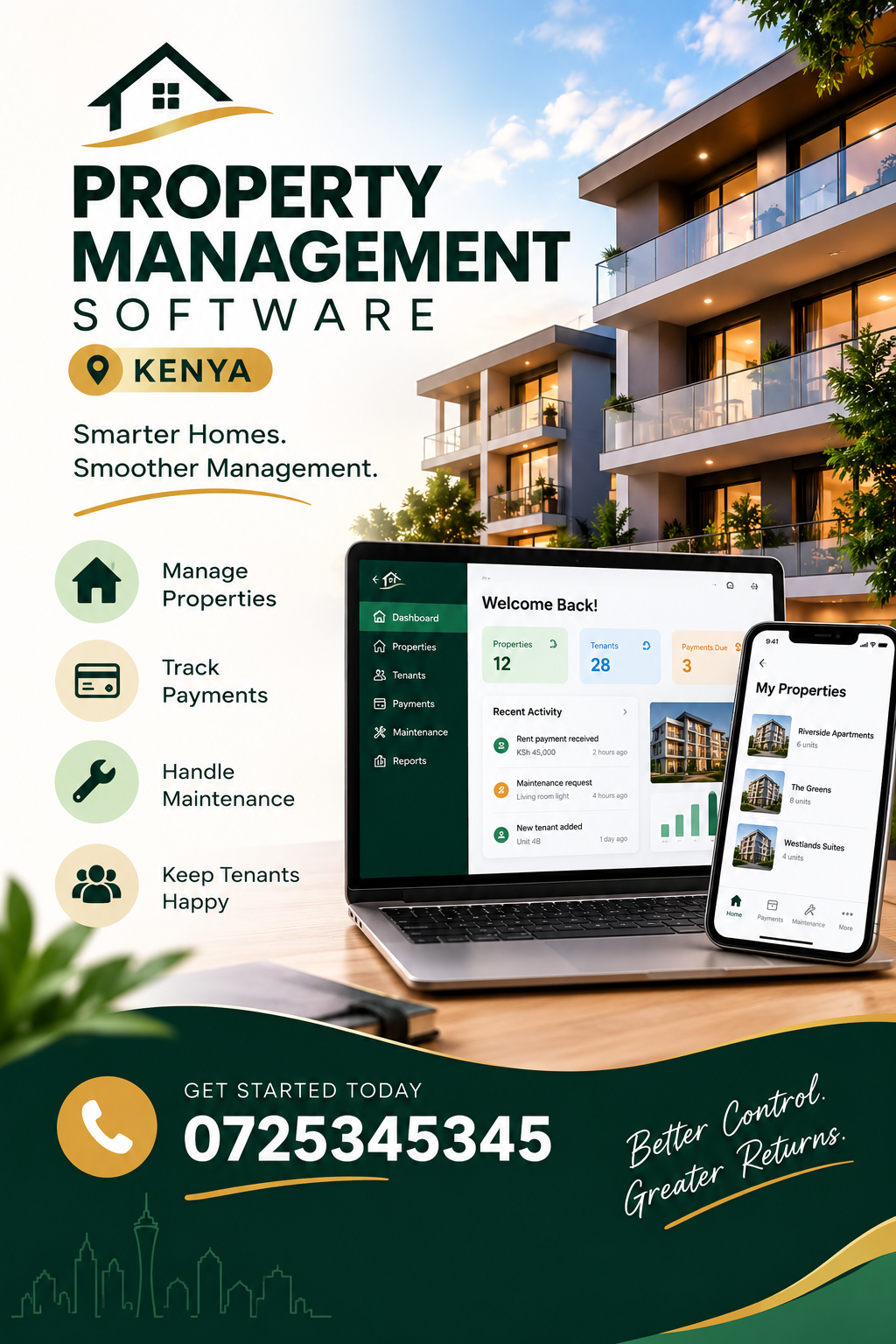
A modern property management system can bring property records, tenants, rent collection, payment tracking, maintenance, communication and reporting into one centralized platform.
But with many solutions available, how do you choose the best property management software in Kenya in 2026?
The answer depends on your portfolio size, business model, required features and budget.
This complete comparison guide explains what property management software is, the most important features to consider, how Kenyan solutions compare, what to look for in M-Pesa integration, and how to select the right system for your rental business.
How to Choose the Best Property Management Software in Kenya
Property management software is a digital platform designed to help landlords, property managers, estate agents and real estate businesses manage rental properties from a centralized system.
Instead of maintaining separate spreadsheets and paper records, users can manage important information through one dashboard.
Depending on the platform, a property management system may include:
- Property and unit management
- Tenant management
- Rent invoicing
- M-Pesa payment tracking
- Automated rent reminders
- Digital receipts
- Arrears management
- Lease management
- Maintenance management
- Utility billing
- Expense tracking
- Financial reports
- Occupancy reports
- Owner statements
- Staff accounts
- Mobile access
For the Kenyan market, payment functionality is particularly important because M-Pesa is widely used for rent payments. Current Kenyan property-management platforms commonly highlight M-Pesa collection, payment matching and tenant balances as important features.
Why Kenyan Landlords Need Property Management Software
Property management becomes more complicated as the number of units increases.
A landlord managing five units might be able to remember most tenant details. Someone managing 100, 500 or 1,000 units needs a structured system.
1. Manual Rent Tracking Takes Time
Without dedicated software, landlords may need to:
- Check M-Pesa messages
- Identify who has paid
- Update spreadsheets
- Send receipts
- Calculate outstanding balances
- Follow up with tenants
- Prepare monthly reports
These repetitive activities consume valuable time.
A rental management system can automate many of these processes.
2. M-Pesa Payments Can Become Difficult to Reconcile
A property manager handling hundreds of tenants may receive many payments every month.
The software should help match payments to the correct tenant and unit, reducing the need to manually compare transaction messages with spreadsheets.
Some Kenyan platforms offer automated M-Pesa workflows and reconciliation, while others may provide simpler payment-recording functionality. Therefore, landlords should check exactly how payment integration works before purchasing software.
3. Tenant Records Need to Be Organized
A good property management system should allow you to keep tenant information in an organized digital profile.
Depending on the system, this may include:
- Tenant name
- Contact details
- Unit
- Rent amount
- Deposit
- Lease information
- Payment history
- Outstanding balance
- Maintenance requests
- Notices
This makes it easier to find information when it is needed.
4. Maintenance Requests Can Get Lost
Maintenance is another area where manual management can cause problems.
A tenant may report a leaking pipe through WhatsApp, call the caretaker about another issue, and send an SMS about something else.
Without a centralized maintenance system, requests can easily be forgotten.
Property management software can provide maintenance tickets that allow managers to record, assign and monitor repair requests.
5. Reporting Becomes Easier
Property owners need to understand how their properties are performing.
Useful reports may include:
- Rent collection reports
- Arrears reports
- Occupancy reports
- Income reports
- Expense reports
- Property performance reports
- Tenant statements
- Owner statements
- Cash-flow reports
A centralized system can generate these reports from the data already stored in the platform.
What Makes the Best Property Management Software in Kenya?
There is no single system that is automatically best for every landlord.
A landlord with 10 units may need a much simpler platform than a professional property management company managing several hundred units.
However, there are several features that should be considered essential.
1. M-Pesa Integration
For Kenyan rental businesses, M-Pesa support should be one of the first things you investigate.
Do not simply ask whether a platform “supports M-Pesa.”
Ask how it supports M-Pesa.
Important questions include:
- Does it support Paybill workflows?
- Does it support Till workflows?
- Can payments be matched to tenants?
- Does it support automated reconciliation?
- Are digital receipts generated?
- Can tenants see their balances?
- Does it support payment reminders?
- Does it support STK Push where applicable?
The difference between simply recording an M-Pesa payment and automatically reconciling it can be significant.
2. Tenant Management
A good property management system should provide a centralized tenant database.
Look for features such as:
- Tenant profiles
- Contact information
- Lease history
- Payment history
- Deposit tracking
- Unit assignment
- Tenant statements
- Arrears information
- Communication records
This reduces dependence on paper files and scattered spreadsheets.
3. Property and Unit Management
The system should allow you to organize properties into buildings, blocks and individual units.
For example:
Property: Sunrise Apartments
Block A
- A01
- A02
- A03
- A04
Block B
- B01
- B02
- B03
- B04
This structure makes it easier to monitor occupancy, rent collection and tenant information.
4. Automated Rent Collection
Rent collection is one of the most important functions of rental management software.
The system should help you:
- Generate rent charges
- Track payments
- Identify unpaid rent
- Monitor arrears
- Send reminders
- Generate receipts
- View tenant balances
- Produce collection reports
Automation can reduce repetitive administrative work and give property managers better visibility over collections.
5. Arrears Management
Late rent payments can affect cash flow.
A good system should make it easy to identify:
- Tenants who have not paid
- Amount outstanding
- Number of days overdue
- Previous payment history
- Outstanding balances by property
Instead of checking several spreadsheets, the property manager should be able to see arrears from the main dashboard.
6. Lease Management
Lease management is another important feature.
A property management platform may help track:
- Lease start dates
- Lease expiry dates
- Renewal dates
- Rent amounts
- Deposits
- Tenant agreements
- Notices
Automated reminders can help property managers stay aware of upcoming lease events.
7. Maintenance Management
Maintenance software should make it possible to create and track repair requests.
Useful functionality includes:
- Maintenance ticket creation
- Tenant requests
- Photos
- Work assignment
- Contractor management
- Repair status
- Maintenance costs
- Completion records
This creates a clear history of maintenance activity.
8. Financial Reporting
The best property management software should turn property data into useful reports.
Look for:
Rent Collection Reports
Show how much rent was billed, collected and remains outstanding.
Arrears Reports
Identify tenants with unpaid balances.
Income Reports
Show rental income across selected properties or periods.
Expense Reports
Track property-related expenses.
Occupancy Reports
Show occupied and vacant units.
Tenant Statements
Provide a transaction history for individual tenants.
Professional Kenyan property management platforms increasingly emphasize reporting, rent rolls, arrears visibility and owner reporting.
9. Mobile Access
Property managers are not always sitting in an office.
A cloud-based property management system should allow authorized users to access important information from smartphones, tablets and computers.
Mobile access is particularly useful for:
- Checking rent collections
- Viewing tenant information
- Monitoring maintenance
- Checking vacancies
- Reviewing reports
- Managing properties remotely
10. Multi-Property Management
If you manage several properties, make sure the software can handle multiple buildings.
For example, you may manage:
- Apartments
- Bedsitters
- Offices
- Shops
- Houses
- Commercial buildings
- Mixed-use developments
The system should allow you to separate properties while providing consolidated reporting.
Best Property Management Software in Kenya: Comparison Criteria
When comparing property management systems, use the following criteria.
| Feature | Importance |
|---|---|
| M-Pesa integration | Very High |
| Tenant management | Very High |
| Rent collection | Very High |
| Arrears tracking | Very High |
| Lease management | High |
| Maintenance | High |
| Financial reporting | Very High |
| Mobile access | High |
| Multi-property support | High |
| Automated reminders | High |
| Utility billing | Medium/High |
| Staff accounts | High |
| Owner reporting | High |
| Data security | Very High |
| Customer support | High |
A system with many features is not necessarily the best choice. The most important question is whether those features solve your actual property-management problems.
Property Management Software vs Excel
Many landlords start with Excel or Google Sheets.
Spreadsheets can be useful for small portfolios, but they can become difficult to manage when the number of properties and tenants increases.
| Excel/Spreadsheet | Property Management Software |
|---|---|
| Manual data entry | Automated workflows |
| Manual rent tracking | Automated rent tracking |
| Separate files | Centralized database |
| Manual reminders | Automated reminders |
| Manual reports | Automated reports |
| Difficult collaboration | User permissions |
| Limited tenant access | Tenant portals where supported |
| Manual reconciliation | Automated reconciliation where supported |
| Higher risk of duplicate data | Centralized records |
The right decision depends on the size and complexity of the portfolio.
Property Management Software for Small Landlords in Kenya
If you manage a small number of rental units, you may not need an expensive enterprise system.
Prioritize:
- Simple setup
- Affordable pricing
- Rent tracking
- M-Pesa support
- Tenant records
- Automated reminders
- Digital receipts
- Basic reports
- Mobile access
Avoid paying for advanced functionality that you will never use.
Property Management Software for Large Portfolios
Property managers with hundreds or thousands of units need more advanced functionality.
Important features may include:
- Multi-property management
- Multiple user accounts
- Role-based permissions
- Automated rent collection
- Advanced reporting
- Owner statements
- Maintenance workflows
- Audit trails
- Utility billing
- Service-charge management
- API integrations
- Bulk communication
At this level, scalability becomes extremely important.
Property Management Software for Property Management Companies
Professional property management companies have different requirements from individual landlords.
They may manage properties on behalf of multiple owners.
Therefore, the system should support:
- Multiple property owners
- Owner statements
- Management fees
- Client reporting
- Staff accounts
- Permission management
- Portfolio reporting
- Tenant management
- Rent collection
- Maintenance
- Accounting workflows
Some Kenyan platforms specifically target professional property management companies with multi-user and owner-reporting capabilities.
Property Management Software for Diaspora Landlords
Kenyan property owners living abroad also benefit from cloud-based property management software.
A diaspora landlord should be able to monitor:
- Rent collection
- Tenant balances
- Occupancy
- Maintenance
- Expenses
- Property performance
- Reports
Remote access is particularly valuable because the owner may not be physically present at the property.
How Much Does Property Management Software Cost in Kenya?
Pricing varies significantly depending on the provider and the size of the portfolio.
Some systems use:
- Monthly subscriptions
- Per-unit pricing
- Tiered plans
- Custom enterprise pricing
- Free trials
- Setup fees
For example, one current Kenyan provider lists plans beginning at KES 5,000 per month for up to 99 units, with larger plans priced according to portfolio size.
However, price should not be the only consideration.
A cheaper system that requires extensive manual work may cost more in time than a slightly more expensive system that automates rent collection and reporting.
How to Choose the Best Property Management Software in Kenya
Before selecting a system, follow these steps.
Step 1: Count Your Units
Determine exactly how many units you manage.
Consider both your current portfolio and expected growth.
Step 2: Identify Your Biggest Problems
Ask yourself:
- Is rent reconciliation taking too long?
- Are tenants frequently asking for balances?
- Are maintenance requests being missed?
- Are reports difficult to prepare?
- Are lease dates being forgotten?
- Are arrears difficult to track?
Choose software that solves your biggest problems first.
Step 3: Check M-Pesa Functionality
Do not assume all M-Pesa integrations are identical.
Ask for a demonstration of the actual payment workflow.
Step 4: Test Reporting
Ask the provider to demonstrate:
- Rent roll
- Arrears
- Income
- Expenses
- Tenant statements
- Owner reports
- Occupancy
Step 5: Check Mobile Experience
Test the platform from your smartphone.
The interface should be practical for daily property-management work.
Step 6: Ask About Data Security
Property-management systems handle sensitive business and tenant information.
Ask about:
- User permissions
- Backups
- Account security
- Data access
- Audit logs
- Data export
Step 7: Ask About Support
Find out how support is provided.
Possible channels include:
- Phone
- Live chat
- Knowledge base
- Account managers
Local support can be especially useful when dealing with Kenya-specific workflows.
Questions to Ask Before Buying Property Management Software
Before signing up, ask the provider:
- Does the system support M-Pesa?
- How are M-Pesa payments reconciled?
- Can I manage multiple properties?
- Can I create different user accounts?
- Can tenants access their statements?
- Can I track arrears?
- Can I automate rent reminders?
- Can I generate digital receipts?
- Does it support maintenance management?
- Can I track expenses?
- Can I generate owner reports?
- Can I export my data?
- Is there a mobile application or mobile-friendly interface?
- How is my data protected?
- What happens if I cancel my subscription?
- Is customer support included?
- Is there a free trial or demo?
- Does the pricing increase as units increase?
These questions can help you avoid choosing a system based purely on marketing claims.
Common Mistakes When Choosing Property Management Software
Choosing Based Only on Price
The cheapest platform is not necessarily the best.
Consider the total value you receive.
Choosing a System Without M-Pesa Workflows
For many Kenyan landlords, M-Pesa is central to rent collection.
Make sure the platform supports the payment workflow your business actually uses.
Buying Too Many Features
Advanced functionality can be useful, but unnecessary complexity can make software harder to use.
Ignoring Scalability
Choose a system that can grow with your portfolio.
Not Testing the Software
Whenever possible, request a demo or trial before making a long-term commitment.
Best Property Management Software in Kenya: What Should You Prioritize in 2026?
In 2026, landlords should focus less on having the longest feature list and more on automation and usability.
A strong property management system should make it easier to:
Collect → Reconcile → Record → Report → Manage
The ideal workflow is simple.
A tenant pays rent.
The payment is recorded.
The tenant’s balance is updated.
A receipt is generated.
The property manager can see the collection.
The owner can review the report.
That is the type of workflow that can make property management more efficient.
Frequently Asked Questions
What is the best property management software in Kenya?
The best property management software depends on your portfolio size, budget and required features. Kenyan landlords should particularly evaluate M-Pesa integration, tenant management, rent collection, arrears tracking, maintenance, reporting and mobile access.
Is property management software suitable for small landlords?
Yes. Small landlords can use property management software to organize tenants, track rent, monitor arrears and maintain digital records.
Does property management software support M-Pesa?
Many Kenyan property management platforms support M-Pesa-related rent collection workflows, but the level of integration varies. Some offer automated payment matching and reconciliation, while others provide simpler payment-recording functions.
Can property management software manage multiple properties?
Yes. Many systems support multiple properties, buildings and units from one dashboard.
Can I manage rental properties remotely?
Yes. Cloud-based property management software can allow authorized users to access property information remotely using a computer or smartphone.
Can property management software track rent arrears?
Yes. Arrears tracking is a core feature of many modern rental management platforms.
Can software help with maintenance?
Yes. Many systems allow property managers to record maintenance requests, assign tasks and monitor repair progress.
Is property management software better than Excel?
For larger or more complex rental portfolios, dedicated software can provide automation, centralized records, permissions, reporting and payment workflows that are difficult to maintain manually in spreadsheets.
How much does property management software cost in Kenya?
Pricing depends on the provider, features and number of units. Some providers publish tiered monthly pricing, while others offer customized enterprise plans. Always compare the total cost against the features you actually need.
Final Verdict: Choosing the Best Property Management Software in Kenya
The best property management software in Kenya in 2026 is not necessarily the software with the most features or the lowest monthly price.
It is the platform that fits your property portfolio and reduces the amount of manual work required to manage it.
For most Kenyan landlords and property managers, the most important features to prioritize are:
- M-Pesa rent collection
- Automated payment reconciliation
- Tenant management
- Rent tracking
- Arrears management
- Lease management
- Maintenance tracking
- Digital receipts
- Financial reporting
- Multi-property management
- Mobile access
- Reliable customer support
- Data security
Finding the Best Property Management Software in Kenya depends on your number of units, M-Pesa requirements, reporting needs and budget.
If you manage only a few units, focus on simplicity and affordability.
If you manage hundreds of units, prioritize automation, reporting, scalability and user permissions.
And if you operate a professional property management company, look for advanced owner reporting, multi-property management, staff accounts and financial workflows.
The right property management system can help replace scattered spreadsheets and manual processes with a centralized digital workflow.
As Kenya’s rental market continues to become more technology-driven, choosing the right property management software in Kenya can help landlords and property managers improve visibility, organization and operational efficiency.