
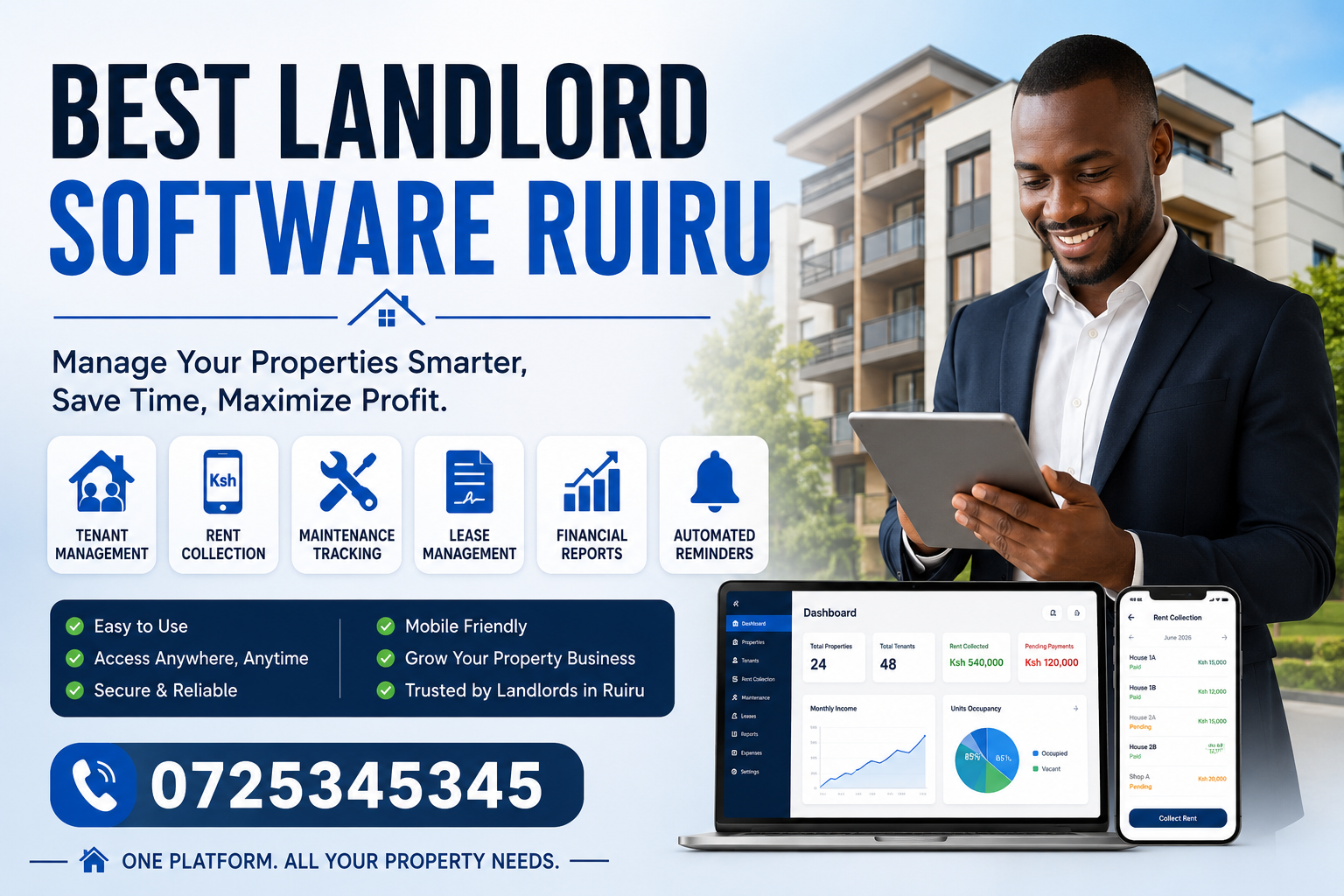
Property Management System Kenya: Complete Guide to Smart Real Estate Management
The real estate industry in Kenya is rapidly evolving as landlords, property managers, real estate agencies, and hospitality businesses shift from manual processes to digital automation. A Property Management System Kenya has become an essential tool for managing rentals, tenants, payments, maintenance, and reporting in a more efficient and scalable way.
With rising urbanization in cities like Nairobi, Mombasa, Kisumu, Nakuru, and Eldoret, property owners are handling multiple units and tenants, making manual tracking almost impossible. This is where property management software plays a transformative role.
A modern system helps automate rent collection, track tenant records, manage maintenance requests, generate financial reports, and ensure smooth communication between landlords and tenants.
H2: What is a Property Management System Kenya?
A Property Management System (PMS) in Kenya is a digital software platform designed to help property owners and managers handle all real estate operations from a single dashboard.
It replaces traditional paperwork, spreadsheets, and manual tracking systems with an automated cloud-based or desktop solution.
Key Functions of a Property Management System:
- Tenant management
- Rent collection and tracking
- Lease and contract management
- Maintenance request handling
- Accounting and financial reporting
- Property listing and marketing
- Communication between tenants and landlords
H2: Why Property Management System Kenya is Important
The Kenyan real estate market is growing fast, and managing properties manually is becoming inefficient and risky.
1. Increased Number of Rental Units
Landlords now manage multiple apartments, making manual tracking difficult.
2. Rent Collection Challenges
Late payments and missed records can affect cash flow.
3. Tenant Management Complexity
Tracking tenant details, leases, and renewals manually leads to errors.
4. Maintenance Requests
Without automation, maintenance issues are often delayed or lost.
5. Financial Transparency
Property owners need accurate financial reporting for decision-making.
A Property Management System Kenya solves all these challenges through automation.
H2: Key Features of Property Management System Kenya
A modern PMS comes with advanced features designed to simplify real estate operations.
H3: 1. Tenant Management System
This feature stores tenant information such as:
- Personal details
- Lease agreements
- Payment history
- Communication records
H3: 2. Rent Collection Automation
Tenants can pay rent via:
- Mobile money (M-Pesa integration)
- Bank transfer
- Online payment gateways
The system automatically records payments and sends reminders.
H3: 3. Lease Management
Helps track:
- Lease start and end dates
- Renewal notifications
- Contract documents
H3: 4. Maintenance Management
Tenants can submit maintenance requests, and property managers can:
- Assign tasks
- Track progress
- Close completed jobs
H3: 5. Accounting and Financial Reporting
The system generates:
- Income reports
- Expense reports
- Profit and loss statements
- Tax summaries
H3: 6. Property Listing Management
Allows landlords to:
- Advertise vacant units
- Manage listings
- Attract new tenants
H3: 7. Communication Tools
Built-in messaging allows:
- Tenant-landlord communication
- Automated notifications
- Alerts for rent due dates
H2: Types of Property Management Systems Kenya
Different systems serve different types of property owners.
H3: 1. Residential Property Management System
Used for:
- Apartments
- Rental houses
- Hostels
H3: 2. Commercial Property Management System
Used for:
- Office buildings
- Retail spaces
- Warehouses
H3: 3. Hotel Management System
Used for:
- Hotels
- Lodges
- Guest houses
H3: 4. Airbnb Management System
Used for:
- Short-term rentals
- Vacation homes
- Serviced apartments
H2: Benefits of Property Management System Kenya
H3: 1. Saves Time
Automates repetitive tasks like rent tracking and reporting.
H3: 2. Reduces Human Errors
Eliminates mistakes in manual calculations and records.
H3: 3. Improves Cash Flow
Ensures timely rent collection through reminders and automation.
H3: 4. Enhances Tenant Experience
Tenants enjoy faster communication and service delivery.
H3: 5. Increases Efficiency
Property managers can manage multiple properties easily.
H3: 6. Real-Time Data Access
Owners can monitor property performance anytime, anywhere.
H2: How Property Management System Works Kenya
The system operates through a simple digital workflow:
Step 1: Property Setup
The landlord enters property details into the system.
Step 2: Tenant Registration
Tenant information is added to the database.
Step 3: Lease Configuration
Rental agreements and payment terms are set.
Step 4: Rent Billing
System generates monthly rent invoices automatically.
Step 5: Payment Collection
Tenants pay through integrated payment methods.
Step 6: Reporting
The system generates financial and operational reports.
H2: Who Needs a Property Management System Kenya?
H3: Landlords
For managing rental properties efficiently.
H3: Real Estate Agencies
To handle multiple clients and listings.
H3: Property Developers
To manage large-scale residential or commercial projects.
H3: Hotel Owners
To manage bookings, rooms, and guest services.
H3: Airbnb Hosts
To automate short-term rental operations.
H2: Challenges of Manual Property Management
Before digital systems, property management in Kenya faced several challenges:
- Lost rental records
- Delayed rent collection
- Poor tenant communication
- Lack of financial transparency
- Maintenance delays
- Difficulty scaling operations
A Property Management System eliminates these inefficiencies.
H2: Cloud-Based Property Management System Kenya
Cloud-based systems are becoming more popular due to flexibility and accessibility.
Advantages:
- Access from any device
- Real-time updates
- Secure data storage
- Automatic backups
- Easy scalability
H2: On-Premise Property Management Systems
Some companies still use offline systems installed on local computers.
Advantages:
- No internet dependency
- Full data control
- One-time installation cost
However, they lack remote access and real-time updates.
H2: Property Management System Kenya for Mobile Use
Modern systems are mobile-friendly, allowing landlords to:
- Track rent payments on phone
- Receive instant notifications
- Manage tenants remotely
- Approve maintenance requests
Mobile integration is essential in Kenya due to high mobile usage.
H2: Integration with M-Pesa in Kenya
One of the most important features is M-Pesa integration, which allows:
- Instant rent payments
- Automatic transaction recording
- Payment confirmations via SMS
- Reduced cash handling risks
This makes rent collection faster and more reliable.
H2: Security in Property Management Systems
Security is critical when handling tenant and financial data.
Key security features include:
- Data encryption
- Secure login systems
- Role-based access control
- Regular backups
- Fraud prevention mechanisms
H2: Future of Property Management System Kenya
The future of real estate technology in Kenya is highly digital.
Expected trends include:
- AI-powered property management
- Smart rent prediction systems
- IoT-enabled smart buildings
- Blockchain-based contracts
Property Management System Kenya Pricing Models
Understanding pricing is essential when choosing a Property Management System Kenya. Different providers offer flexible pricing depending on property size, features, and number of units managed.
H3: 1. Subscription-Based Pricing
This is the most common model in Kenya.
- Monthly subscription fees
- Annual payment discounts
- Scalable plans based on units
Ideal for:
- Small landlords
- Medium property managers
- Growing real estate agencies
H3: 2. One-Time License Fee
Some systems offer a lifetime license.
- Pay once and use forever
- No recurring monthly charges
- May include optional paid updates
Best for:
- Large property owners
- Established real estate firms
H3: 3. Pay-Per-Unit Pricing
Charges depend on number of rental units.
- Small portfolios pay less
- Large portfolios pay more
- Fair scaling system
H3: 4. Enterprise Custom Pricing
For large organizations such as:
- Property developers
- Hotel chains
- Government housing projects
Includes:
- Custom features
- Dedicated support
- Advanced integrations
H2: How to Choose the Best Property Management System Kenya
Selecting the right system determines efficiency and profitability.
H3: 1. Ease of Use
A good system should be simple and intuitive.
Look for:
- Clean dashboard
- Easy navigation
- Minimal training required
H3: 2. Mobile Accessibility
In Kenya, mobile-first solutions are essential.
Ensure:
- Mobile app availability
- Responsive web design
- Real-time notifications
H3: 3. M-Pesa Integration
A must-have feature in the Kenyan market.
Check for:
- Automatic payment recording
- SMS confirmation
- Transaction reconciliation
H3: 4. Reporting and Analytics
Strong reporting tools help in decision-making.
Important reports:
- Monthly rent summaries
- Vacancy reports
- Expense tracking
- Profit analysis
H3: 5. Customer Support
Reliable support is crucial.
Look for:
- 24/7 support availability
- Local Kenyan support team
- Training resources
H3: 6. Scalability
Choose a system that grows with your portfolio.
It should handle:
- More tenants
- More properties
- More users
H2: Property Management System Kenya for Real Estate Agencies
Real estate agencies benefit significantly from automation.
Key Advantages:
Centralized Property Listings
All properties managed from one dashboard.
Client Management
Track buyers, sellers, and tenants efficiently.
Commission Tracking
Automated calculation of agent commissions.
Faster Deal Closing
Digital workflows reduce delays in transactions.
H2: Property Management System Kenya for Airbnb and Short-Term Rentals
Short-term rental businesses are growing in Kenya, especially in Nairobi, Diani, and Mombasa.
Key Features for Airbnb Hosts:
Booking Management
Automates reservations and availability updates.
Calendar Synchronization
Avoids double bookings across platforms.
Guest Communication
Automated messages for check-in and check-out.
Payment Tracking
Secure collection of short-term rental income.
H2: Property Management System Kenya for Hotels and Lodges
Hospitality businesses rely heavily on efficient operations.
Benefits include:
Room Management
Track room availability in real-time.
Guest Check-In/Check-Out
Streamlined digital process.
Billing System
Automated invoicing and receipts.
Housekeeping Management
Assign and track cleaning tasks.
H2: Advantages of Cloud-Based Property Management System Kenya
Cloud systems dominate modern real estate technology.
H3: Real-Time Access
Access data from anywhere in the world.
H3: Automatic Backups
Prevents data loss.
H3: Lower IT Costs
No need for expensive servers.
H3: Easy Updates
Software updates happen automatically.
H3: Multi-User Access
Landlords, agents, and accountants can collaborate.
H2: Challenges Solved by Property Management System Kenya
H3: Late Rent Payments
Automated reminders reduce delays.
H3: Poor Record Keeping
Digital systems eliminate paperwork errors.
H3: Maintenance Delays
Requests are tracked and assigned instantly.
H3: Fraud Risks
Transparent financial records improve accountability.
H3: Tenant Miscommunication
Centralized messaging improves clarity.
H2: Integration Features in Property Management System Kenya
Modern systems integrate with other tools.
H3: Payment Gateways
- M-Pesa
- Bank transfers
- Card payments
H3: Accounting Software
Syncs with financial systems for bookkeeping.
H3: CRM Systems
Improves customer relationship management.
H3: SMS & Email Alerts
Automated notifications for tenants and owners.
H2: Property Management System Kenya for Large Portfolios
Large-scale property owners require advanced features.
Key Requirements:
- Bulk tenant management
- Multi-property dashboards
- Advanced financial reporting
- Role-based access control
- Automated rent escalation
H2: Digital Transformation of Real Estate in Kenya
The Kenyan property market is undergoing rapid digital transformation.
Key Drivers:
- Increased smartphone usage
- Growth of online payments
- Expansion of real estate investment
- Demand for automation
Property management software is at the center of this transformation.
H2: Case Study Example (Kenya Market Scenario)
A property manager in Nairobi managing 50 rental units faced challenges with manual rent collection and tenant tracking.
Before PMS:
- Late payments common
- Lost records
- High administrative workload
After PMS:
- 95% rent collection efficiency
- Automated reminders
- Real-time financial reporting
- Reduced workload by 60%
H2: Common Mistakes Property Owners Make in Kenya
1. Using Manual Systems Too Long
Delays digital transformation.
2. Ignoring Automation Tools
Reduces efficiency and profitability.
3. Poor Tenant Screening
Leads to payment issues.
4. Lack of Financial Tracking
Causes revenue leakage.
H2: Why Property Management System Kenya is a Must-Have in 2026
The real estate industry is becoming more competitive.
A PMS is essential because it:
- Saves time
- Increases income efficiency
- Reduces operational costs
- Improves tenant satisfaction
- Enhances transparency
END OF PART 2
This section expanded the article significantly with:
- Pricing models
- Real estate use cases
- Airbnb and hotel systems
- Cloud advantages
- Case studies and transformation insights