Property Management System Kenya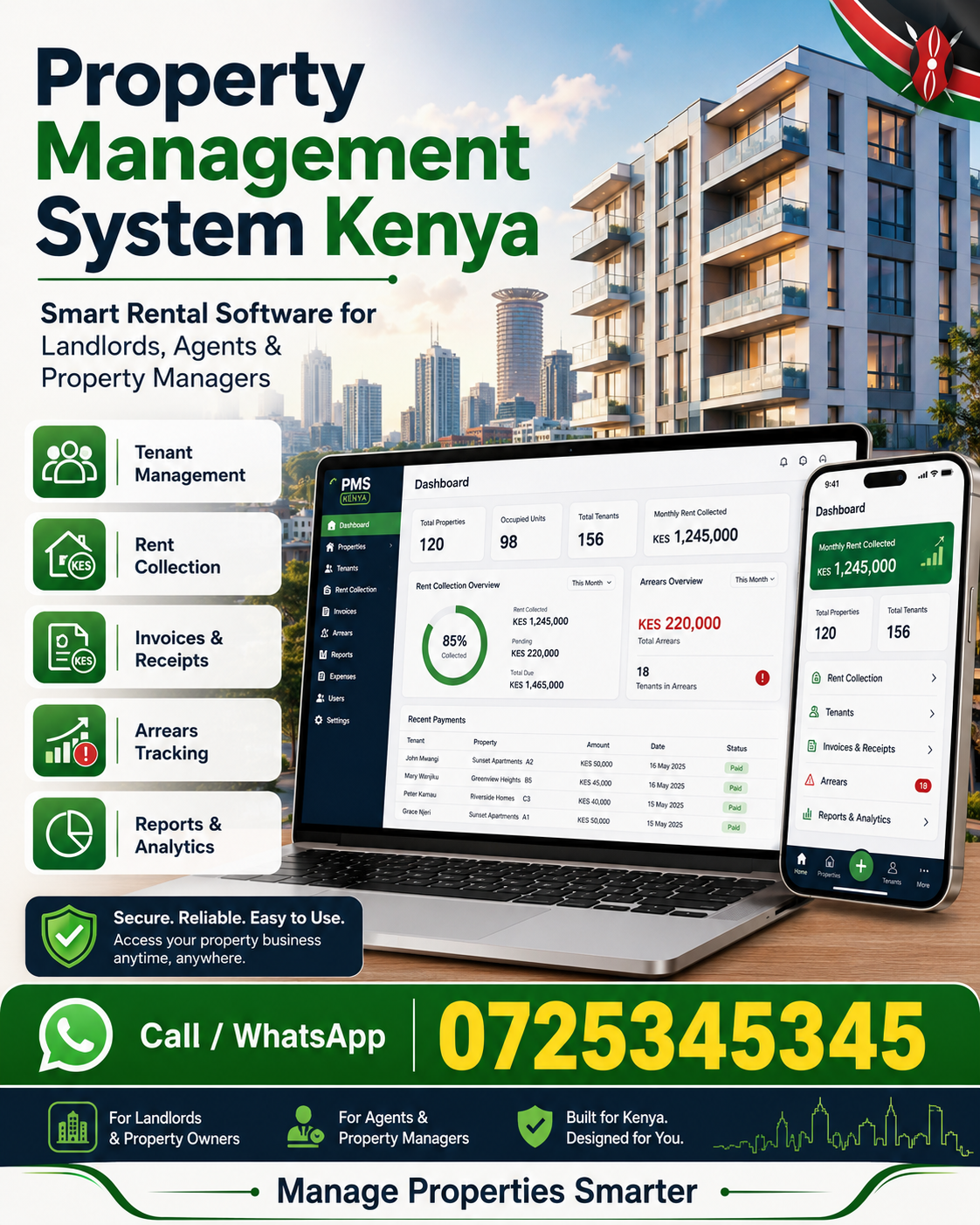
Property Management System Kenya – Smart rental software for landlords, agents, caretakers, and property managers.
Managing rental properties in Kenya is no longer something landlords and property managers should do using books, Excel sheets, WhatsApp messages, and manual receipts. As rental businesses grow, manual management becomes slow, confusing, and risky. A modern Property Management System Kenya helps landlords, real estate companies, caretakers, agents, and property managers control everything from one simple digital platform.
Whether you manage bedsitters, apartments, estates, commercial units, hostels, offices, shops, or mixed-use properties, a property management system gives you a better way to track rent, tenants, invoices, arrears, payments, vacancies, reports, and property performance.
At Zama Systems, we build smart property management solutions for the Kenyan market. Our system is designed for local landlords, Kenyan tenants, M-Pesa payments, real estate agencies, caretakers, and growing property businesses that want order, speed, and accountability.
Why You Need a Property Management System Kenya
Many landlords in Kenya lose money without realizing it. Not because tenants refuse to pay, but because records are scattered. One payment is on M-Pesa, another is written in a book, another is confirmed through WhatsApp, and another is remembered by the caretaker. After some time, it becomes hard to know who paid, who has arrears, which unit is vacant, and how much income the property has made.
A Property Management System Kenya solves this problem by bringing everything into one organized platform.
With the right system, you can:
Track rent payments clearly
Know tenants with arrears
Generate invoices automatically
Record deposits and service charges
View vacant and occupied units
Manage multiple properties
Give staff controlled access
Generate financial reports
Reduce manual errors
Improve tenant communication
This helps you run your rental business like a serious company, not like a guessing game.
Built for Kenyan Landlords and Property Managers
Kenya’s rental market has its own way of operating. Tenants pay through M-Pesa, rent is often due monthly, caretakers help with collection, service charge may be separate, and landlords want quick reports. A foreign system may not understand these local needs.
That is why a good Property Management System Kenya must support how Kenyan property businesses actually work.
The system should help with:
M-Pesa rent tracking
Monthly rent billing
Service charge management
Tenant statements
Unit allocation
Deposit tracking
Caretaker access
Landlord reports
Arrears reminders
Multi-property management
This makes the platform useful for small landlords and large real estate companies.
Key Features of Our Property Management System Kenya
1. Property and Unit Management
You can add all your properties in one place. Each property can have blocks, floors, rooms, houses, offices, shops, or units. The system shows which units are occupied, vacant, reserved, or under maintenance.
This helps you avoid confusion when managing many tenants.
Example:
Property: Sunrise Apartments
Units: A1, A2, A3, B1, B2, B3
Status: Occupied, vacant, unpaid, under repair
A property manager can quickly see what is happening without opening many files.
2. Tenant Management
A strong Property Management System Kenya should keep every tenant record safely. You can store tenant names, phone numbers, ID/passport details, lease dates, unit assigned, deposit paid, rent amount, and payment history.
This makes tenant follow-up easier and more professional.
You no longer need to search old notebooks to confirm when a tenant moved in or how much deposit they paid.
3. Rent Invoicing
The system can automatically generate rent invoices every month. This saves time and reduces mistakes.
You can create invoices for:
Monthly rent
Service charge
Water bills
Garbage fees
Penalty fees
Electricity charges
Parking fees
Maintenance charges
Every tenant gets a clear statement showing what they are supposed to pay.
4. Payment Tracking
Payment tracking is one of the most important features of any Property Management System Kenya. Once payments are recorded, the system updates tenant balances automatically.
You can know:
Who has paid
Who has partially paid
Who has not paid
Who has overpaid
Which payments are unmatched
How much money has been collected
This gives landlords and managers full control over rent collection.
5. Arrears Management
Rent arrears can destroy cash flow if they are not monitored early. The system helps you see all tenants with outstanding balances.
You can generate arrears reports by:
Tenant
Property
Unit
Month
Amount
Due date
This makes it easy to follow up professionally instead of waiting until debts become too high.
6. Vacancy Management
Vacant units mean lost income. A good property management system helps you know which units are empty and for how long.
You can track:
Vacant houses
Available shops
Reserved units
Move-in dates
Move-out dates
Units under maintenance
This helps the property manager act faster, advertise available units, and reduce income loss.
7. Lease Management
The system helps you manage tenant lease agreements, start dates, expiry dates, renewals, and move-out records.
This is useful for landlords who manage commercial spaces, offices, malls, apartments, and long-term rentals.
You can know which leases are active, expired, or about to expire.
8. Reports and Analytics
A Property Management System Kenya should not only store data. It should help you understand your business.
You can generate reports such as:
Rent collection report
Arrears report
Occupancy report
Vacancy report
Tenant statement
Property income report
Monthly financial summary
Payment history report
Deposit report
These reports help landlords make better decisions.
Who Can Use This Property Management System?
Our property management system is suitable for:
Landlords
Real estate agents
Property managers
Caretakers
Estate managers
Apartment owners
Commercial property owners
Hostel managers
Mall managers
Rental agencies
Sacco property departments
Church-owned properties
Family-owned rental businesses
Whether you manage 10 units or 1,000+ units, the system can help you organize your rental operations.
Benefits of Using a Property Management System Kenya
Better Rent Collection
You can track rent faster and reduce cases of forgotten payments or missing records.
Less Manual Work
No more writing everything in books or updating many Excel sheets every day.
Clear Tenant Records
Every tenant has a profile, statement, unit record, and payment history.
Improved Accountability
Staff, caretakers, and managers can be given specific roles. You can see who updated what.
Faster Reports
You can generate reports in seconds instead of spending hours calculating manually.
Reduced Losses
The system helps you identify arrears, vacant units, missing payments, and income gaps.
Professional Image
Tenants trust a landlord or agency that sends proper invoices, receipts, and statements.
Property Management System Kenya for Small Landlords
You do not need to own a large estate to use a property management system. Even if you manage a few rental houses, the system helps you stay organized.
Small landlords can use it to:
Track rent
Record tenant details
Know who has arrears
Manage deposits
View monthly income
Send reminders
Avoid confusion
This is especially helpful for landlords who are busy or live far from their properties.
Property Management System Kenya for Real Estate Agencies
Real estate agencies manage properties for different landlords. This requires strong organization because every landlord needs accurate reports.
The system helps agencies manage:
Multiple landlords
Multiple properties
Commission tracking
Tenant records
Maintenance follow-ups
Rent collection
Monthly owner statements
This improves trust between the agency and property owners.
Property Management System Kenya for Commercial Properties
Commercial properties require more detailed management because they may include rent, service charge, goodwill, parking, VAT, utility bills, and lease terms.
Our system can support:
Shops
Malls
Offices
Warehouses
Business parks
Mixed-use buildings
Commercial property managers can track tenants, leases, invoices, payments, arrears, and reports from one platform.
Why Manual Property Management Is Risky
Many landlords still depend on notebooks and WhatsApp screenshots. This may work for a few tenants, but it becomes dangerous as the business grows.
Manual management can cause:
Lost payment records
Wrong balances
Duplicate records
Delayed reports
Tenant disputes
Staff dishonesty
Poor follow-up
No clear history
Difficult auditing
A Property Management System Kenya reduces these risks by keeping all records in one digital place.
How the System Helps Caretakers
Caretakers play a big role in Kenyan rental management. They meet tenants, handle complaints, confirm occupancy, and sometimes help with rent follow-up.
The system can give caretakers limited access so they can:
View assigned properties
Confirm occupied units
Report vacant units
Record tenant issues
Send updates to management
Support rent follow-up
This improves communication between caretakers and the office.
M-Pesa and Rent Payment Tracking
Most tenants in Kenya pay rent through M-Pesa. A property management system should make it easy to record and reconcile these payments.
The system can help you match payments to tenants and invoices, reducing the problem of unidentified payments.
This gives the landlord a clear view of daily, weekly, and monthly collections.
Tenant Statements
Tenants often ask, “How much do I owe?” or “Can I get my statement?”
Instead of checking manually, the system generates a tenant statement showing invoices, payments, balances, deposits, and arrears.
This reduces arguments and improves transparency.
Why Choose Zama Systems?
Zama Systems builds practical digital solutions for Kenyan businesses. We understand how landlords, tenants, caretakers, property managers, and agencies operate locally.
Our Property Management System Kenya is built to help you simplify rental operations, reduce losses, improve reporting, and manage properties professionally.
We focus on:
Simple user experience
Kenyan rental workflows
M-Pesa-friendly operations
Role-based access
Clear reports
Scalable system design
Business growth support
We do not just give you software. We help you organize your rental business.
Property Management System Kenya Pricing
Pricing can depend on the number of units, modules required, customization, onboarding, support, and whether you need advanced integrations.
Common pricing options may include:
Starter plan for small landlords
Growth plan for agencies and medium properties
Enterprise plan for large property companies
Custom setup for malls and commercial properties
For a serious property business, the system quickly pays for itself by reducing losses, improving rent collection, and saving management time.
Signs You Need a Property Management System
You need a property management system if:
You manage many tenants
You struggle to know who has paid
You use books and Excel only
You have frequent tenant balance disputes
You cannot get reports quickly
You manage properties for other landlords
You have unpaid rent that is hard to follow
You do not know your real occupancy rate
You depend too much on one caretaker
You want to grow your rental business
When your property business becomes bigger than your notebook, it is time to go digital.
Property Management System Kenya – The Future of Rental Management
The future of property management in Kenya is digital. Landlords who adopt smart systems early will manage better, collect rent faster, reduce losses, and make better business decisions.
A Property Management System Kenya gives you power over your rental data. It shows you what is happening in your properties, who is paying, who is delaying, which units are vacant, and how much money is coming in.
This is how modern landlords and property managers stay ahead.