
Rent Tracking Software Kenya is becoming an essential solution for landlords, property managers, real estate companies, agents, and property investors who want a simpler way to monitor rent payments, tenant balances, arrears, leases, expenses, and property performance.
Managing rental properties manually can quickly become difficult, especially when a landlord has multiple houses or several tenants paying at different times. Using notebooks, spreadsheets, WhatsApp messages, bank statements, and mobile money records can make it harder to know who has paid, who still owes rent, and which properties are generating the most income.
A modern rent tracking software in Kenya brings these activities into one organized system. Instead of checking multiple records, property owners can manage rent information from a centralized platform.
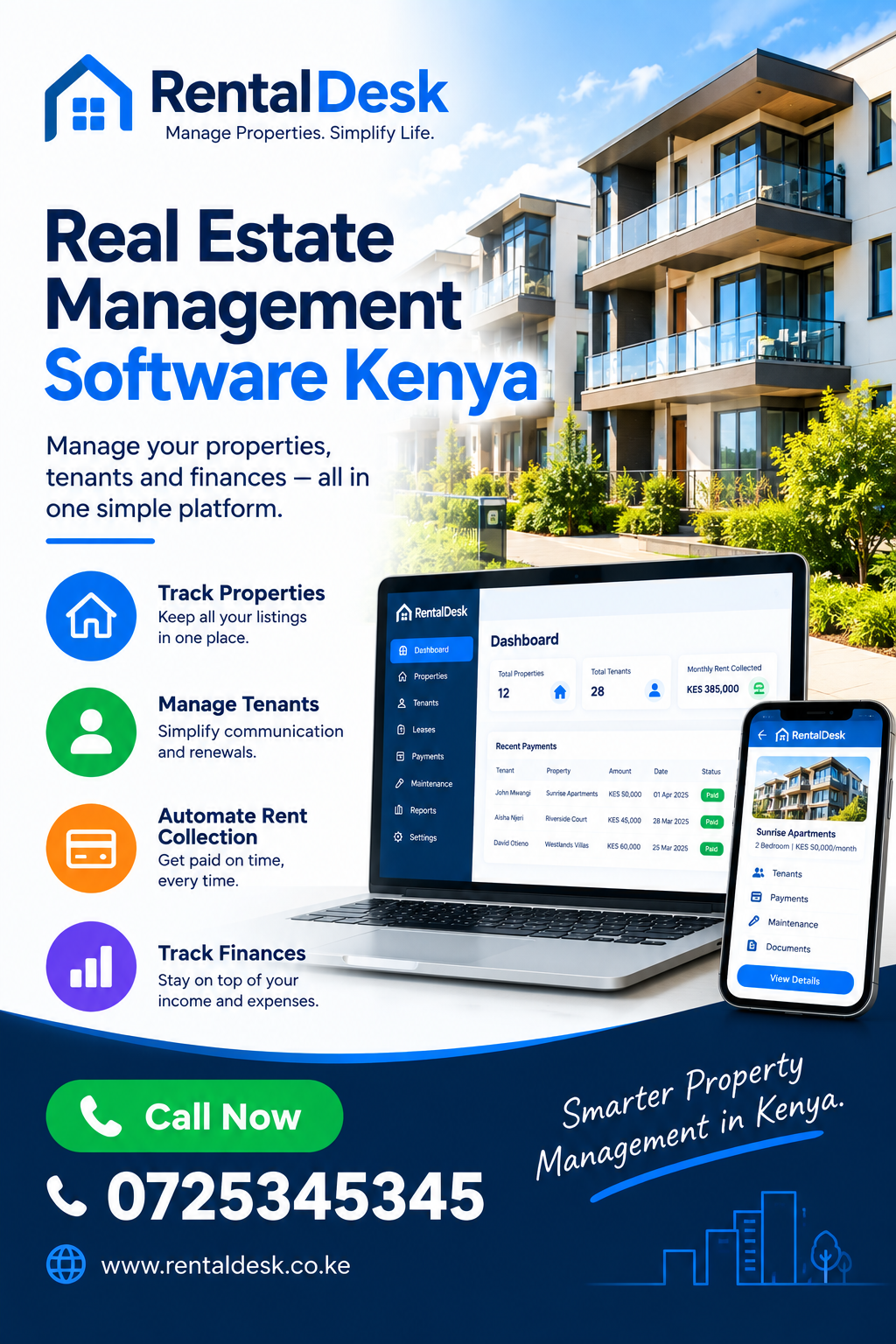 What Is Rent Tracking Software?
Rent tracking software is a digital system designed to help landlords and property managers record, monitor, and manage rental payments and tenant information.
The software can help users track:
- Monthly rent payments
- Outstanding rent balances
- Rent arrears
- Tenant information
- Rental properties
- Units and houses
- Lease information
- Payment history
- Receipts
- Property expenses
- Maintenance requests
- Rental income reports
For landlords managing several properties, this can significantly reduce the amount of manual record keeping required.
Why Use Rent Tracking Software in Kenya?
Rental property management in Kenya involves more than collecting rent. Property owners need to keep accurate records, communicate with tenants, monitor vacancies, follow up on arrears, and understand their rental income.
A Rent Tracking Software Kenya solution can bring these processes together.
1. Track Rent Payments Easily
One of the main purposes of rent tracking software is to provide a clear view of tenant payments.
Instead of searching through notebooks or messages, landlords can check a tenant’s payment history and determine whether rent has been paid.
This makes it easier to identify:
- Paid rent
- Partially paid rent
- Unpaid rent
- Overdue rent
- Outstanding balances
2. Monitor Rent Arrears
Rent arrears can affect a property’s cash flow. When payment records are scattered across different platforms, following up on outstanding balances becomes difficult.
With digital rent tracking, landlords can identify tenants with outstanding balances and follow up promptly.
The system can provide a clearer picture of how much rent is outstanding across individual units or an entire property portfolio.
3. Maintain Accurate Tenant Records
A good rental management system can store important tenant information in one place.
Depending on the software, records may include:
- Tenant names
- Contact details
- Rental units
- Monthly rent
- Lease dates
- Payment history
- Outstanding balances
- Tenant status
Having organized tenant records makes property management easier and more professional.
Rent Tracking Software for Landlords in Kenya
Landlords with one property may manage rent manually, but the process becomes more challenging as the number of tenants increases.
A landlord with multiple apartments, bedsitters, offices, shops, or residential houses may have dozens or hundreds of transactions to monitor every month.
Rent Tracking Software Kenya can help landlords centralize rental information and reduce dependence on manual records.
For example, a landlord can use the system to monitor:
Property → Building → Unit → Tenant → Monthly Rent → Payment → Balance
This creates a structured rental record that can be easier to review and manage.
Rent Tracking Software for Property Managers
Property managers often handle properties belonging to different owners. This requires accurate records and efficient reporting.
A rental tracking platform can help property managers organize properties according to owners, buildings, units, and tenants.
Useful functions may include:
- Property portfolio management
- Tenant management
- Rent tracking
- Arrears monitoring
- Payment records
- Expense tracking
- Maintenance management
- Financial reports
- Owner reports
This can make it easier for property managers to provide landlords with accurate information about rental income and property performance.
Automated Rent Collection and Rent Tracking
Modern rental software can go beyond simply recording payments.
Some platforms support automated rent collection, allowing payment information to be connected to the rental management process.
For Kenyan property owners, integration with commonly used payment channels can make rent management more convenient.
A connected system can help reduce the need to manually update spreadsheets after receiving payments.
The exact payment integrations available depend on the software provider.
Track Rent Payments and Balances
A major advantage of rent tracking software is visibility.
For each tenant, the system can provide information such as:
| Information | Example |
|---|---|
| Tenant | Tenant Name |
| Unit | Apartment 12 |
| Monthly Rent | KSh 25,000 |
| Amount Paid | KSh 20,000 |
| Balance | KSh 5,000 |
| Payment Date | Monthly payment date |
| Status | Partially Paid |
This type of information can make it easier for landlords and property managers to understand their current rental position.
Rent Arrears Management in Kenya
Rent arrears are among the common challenges faced by rental property owners.
Without proper tracking, small outstanding balances can accumulate and become difficult to monitor.
A digital rent management system can help landlords identify arrears and maintain a record of outstanding amounts.
Instead of manually calculating balances for every tenant, the software can automate much of the tracking process.
Benefits of Digital Rent Arrears Tracking
A digital system can help you:
- Identify overdue accounts
- Monitor outstanding balances
- Review payment history
- Follow up with tenants
- Generate financial reports
- Reduce calculation errors
This gives landlords better visibility into their rental income.
Property and Unit Management
Rent tracking should not be separated from property management.
A useful system should allow property owners to organize properties and units.
For example:
Property A
- House 1
- House 2
- House 3
- House 4
Apartment Building B
- Unit 101
- Unit 102
- Unit 103
- Unit 104
Each unit can be associated with a tenant and rental payment information.
This structure becomes particularly useful for landlords managing multiple properties.
Rental Income Reporting
Understanding rental income is important for property owners.
Rent tracking software can help generate reports showing rental income over a selected period.
Reports may include:
- Monthly rent collected
- Outstanding rent
- Rental arrears
- Property income
- Unit occupancy
- Expenses
- Payment history
These reports can help landlords understand how their properties are performing.
Rent Tracking Software vs Excel
Many landlords use Excel spreadsheets to track rental payments. Excel can work for a small number of tenants, but managing a large rental portfolio may become complicated.
| Feature | Excel | Rent Tracking Software |
|---|---|---|
| Tenant records | Yes | Yes |
| Rent tracking | Manual | Automated/structured |
| Arrears monitoring | Manual | Easier |
| Payment history | Manual | Centralized |
| Reports | Requires setup | Built-in in many systems |
| Multiple properties | Can become complex | Designed for portfolios |
| Maintenance tracking | Limited | Available in many platforms |
| User access | Depends on setup | Often role-based |
The right option depends on the size and complexity of your rental business.
Benefits of Rent Tracking Software Kenya
Saves Time
Automating repetitive rental management tasks can reduce the amount of time spent updating records manually.
Reduces Human Errors
Manual calculations can result in incorrect balances or missing records. Digital systems can reduce these errors by keeping information structured.
Improves Organization
Tenant, property, payment, and financial information can be stored in one centralized platform.
Improves Visibility
Landlords can quickly see rental income, outstanding balances, and tenant payment histories.
Supports Business Growth
As the number of rental units increases, having a structured system can make it easier to manage a larger portfolio.
Who Needs Rent Tracking Software?
Rent Tracking Software Kenya can be useful for:
- Individual landlords
- Property managers
- Real estate companies
- Property management companies
- Apartment owners
- Commercial property owners
- Residential property investors
- Real estate agents managing rentals
- Owners of multiple rental units
- Property investment companies
Whether you manage apartments, houses, shops, offices, or mixed-use properties, digital rent tracking can simplify financial record keeping.
Features to Look for in Rent Tracking Software
Before choosing a rental management system, consider the features available.
Tenant Management
The software should allow you to create and maintain organized tenant profiles.
Rent Payment Tracking
You should be able to record and monitor rental payments.
Arrears Management
The system should make it easy to identify outstanding rent.
Property Management
Look for software that allows you to manage multiple properties and rental units.
Payment Integration
If you collect rent digitally, consider whether the platform supports the payment methods you use.
Reports
Financial and rental reports can help you understand your property’s performance.
Maintenance Management
Some rental platforms also allow tenants or property managers to record maintenance issues.
Notifications
Automated reminders and notifications can help improve communication with tenants.
How Rent Tracking Software Can Improve Property Management
Property management involves many repetitive tasks.
A landlord may need to:
- Check whether rent has been paid.
- Update tenant records.
- Calculate outstanding balances.
- Follow up on arrears.
- Record expenses.
- Prepare monthly reports.
- Manage maintenance requests.
- Monitor vacant units.
A centralized rental management system can bring many of these processes into one platform.
This can make property management more organized and easier to monitor.
Choosing the Right Rent Tracking Software in Kenya
Before selecting software, consider the size of your property portfolio and the features you actually need.
Ask questions such as:
- How many properties do I manage?
- How many tenants do I have?
- How do my tenants pay rent?
- Do I need automated payment tracking?
- Do I need tenant communication?
- Do I need maintenance management?
- Do I need financial reports?
- Can the software support multiple properties?
- Can additional users access the system?
- Is the system easy to use?
A system should match your current needs while allowing your rental business to grow.
Why Digital Rent Management Matters
The Kenyan property market continues to include landlords and investors managing increasingly complex rental portfolios.
Using digital tools can help property owners move away from fragmented records and adopt a more organized approach to rental management.
Instead of relying entirely on notebooks, spreadsheets, messages, and manually calculated balances, landlords can use a centralized system to manage rental information.
This can improve visibility and make day-to-day property administration more efficient.
Rent Tracking Software Kenya for Growing Rental Portfolios
For landlords managing several units, rental management can become increasingly difficult as the portfolio grows.
A system that works for five tenants may not be sufficient for 100 or 500 tenants.
This is why scalability is an important consideration when choosing Rent Tracking Software Kenya.
The system should ideally allow you to add:
- More properties
- More units
- More tenants
- Additional users
- More payment records
- More financial information
A scalable rental management platform can support your business as your property portfolio expands.
Rent Tracking Software Kenya provides landlords, property managers, and real estate businesses with a digital way to organize rental payments, tenants, properties, arrears, and financial records.
Instead of depending entirely on manual rent books and spreadsheets, property owners can use rental management technology to centralize information and improve visibility.
For landlords managing multiple rental units, choosing a system with rent tracking, tenant management, arrears monitoring, reporting, payment management, and property management capabilities can make everyday operations more organized.
If you are looking for a modern way to manage rental properties, a dedicated rental management platform can provide the tools needed to monitor rent and manage your property portfolio from one place.
How Rent Tracking Software Helps Landlords Save Time
Managing rent manually can involve checking payment messages, updating spreadsheets, calculating balances, preparing receipts, and contacting tenants about overdue payments.
As the number of rental units increases, these tasks can consume a significant amount of time.
Rent Tracking Software Kenya helps organize these activities in one digital system. Instead of maintaining separate records for every tenant, landlords can access rental information from a centralized dashboard.
This makes it easier to monitor the rental business without going through multiple notebooks, spreadsheets, or communication channels.
Centralized Rental Records
One of the biggest advantages of rental management software is having centralized information.
A landlord can organize information according to:
- Property
- Building
- Floor
- Unit
- Tenant
- Monthly rent
- Payment history
- Outstanding balance
- Lease information
- Property expenses
Having this information together makes it easier to search for a particular tenant or review the financial position of a property.
Digital Rent Receipts
Keeping proof of rent payments is important for both landlords and tenants.
Depending on the platform, rent management software can support digital receipts or payment records that show when a payment was received and the amount paid.
Digital records can make it easier to retrieve previous transactions when questions about rent payments arise.
Tenant Payment History
A tenant’s payment history provides useful information about previous rental transactions.
Instead of searching through old documents, landlords can review payment records within the software.
A payment history may show:
- Payment date
- Amount paid
- Rent period
- Outstanding balance
- Transaction reference
- Payment status
This creates a clearer financial record for each rental unit.
Managing Multiple Properties
Property investors may own rental houses in different locations or manage different types of properties.
For example, one investor could manage:
- Residential apartments
- Townhouses
- Commercial shops
- Office spaces
- Bedsitters
- Single-family homes
A centralized Rent Tracking Software Kenya platform can help organize these properties within one account, depending on the software’s capabilities.
Rental Property Occupancy Tracking
Vacant units can affect rental income. For this reason, landlords need to know which units are occupied and which ones are available.
Rental management software can help organize unit status, such as:
- Occupied
- Vacant
- Reserved
- Under maintenance
This can give property managers a clearer overview of their portfolio.
Rent Due Date Management
Keeping track of different rent due dates can become challenging when managing many tenants.
A rental management platform can organize tenant payment schedules and, where supported, provide reminders or notifications.
This can help landlords maintain a consistent rent collection process.
Automated Tenant Reminders
Some rental management systems provide automated notifications.
Depending on the platform, reminders can be used for:
- Upcoming rent
- Overdue rent
- Payment confirmations
- Lease expiry
- Maintenance updates
Automated communication can reduce the need to manually contact every tenant for routine reminders.
Property Expense Tracking
Managing rental income is only one part of property management. Property owners also need to understand their expenses.
Common property expenses may include:
- Repairs
- Plumbing
- Electrical work
- Cleaning
- Security
- Landscaping
- Property management fees
- Utilities
- Maintenance materials
Recording expenses alongside rental income can provide a more complete view of property finances.
Understanding Rental Property Performance
A property owner should be able to understand how individual properties are performing.
Rental management reports can help answer questions such as:
- How much rent was collected this month?
- Which units have outstanding balances?
- How much rent is overdue?
- Which properties generate the most rental income?
- How many units are occupied?
- How much was spent on maintenance?
Having organized information can support better property administration and financial planning.
Rent Collection Software Kenya and M-Pesa
Mobile money is an important part of Kenya’s digital payment environment, and many businesses use mobile payments for transactions.
For landlords, connecting payment information with rental records can make reconciliation easier where the chosen software supports the relevant integration.
When evaluating rental software, landlords should check which payment integrations are actually supported, the transaction process, applicable charges, and how payment records are synchronized.
Security of Rental Records
Rental management systems contain important business information, including tenant records and financial transactions.
When choosing Rent Tracking Software Kenya, landlords should consider security features such as:
- User accounts
- Password protection
- Role-based access
- Data backups
- Secure connections
- Access controls
- Activity records
The exact security features vary between providers, so users should review the provider’s documentation before choosing a platform.
Cloud-Based Rent Tracking Software
Cloud-based rental software allows authorized users to access their property information through an internet-connected device.
This can be useful for property managers who need to work away from the office.
Depending on the platform, users may be able to access the system using:
- Desktop computers
- Laptops
- Tablets
- Smartphones
Cloud access can make property administration more flexible.
Mobile-Friendly Rent Management
Landlords and property managers are often away from their offices.
A mobile-friendly rental management platform can make it easier to check payment information, tenant records, and property information while managing properties in different locations.
Before choosing software, test whether the interface works properly on the devices your team uses.
How to Implement Rent Tracking Software
Moving from manual records to digital property management does not need to happen all at once.
A simple implementation process can include:
Step 1: List Your Properties
Create a list of all buildings and rental properties.
Step 2: Add Rental Units
Enter the units belonging to each property.
Step 3: Add Tenant Information
Create tenant profiles and connect each tenant to the appropriate rental unit.
Step 4: Enter Rent Amounts
Record the monthly rent applicable to each unit.
Step 5: Add Existing Balances
If tenants have outstanding balances, record the correct opening balances.
Step 6: Configure Payment Tracking
Set up the payment process supported by your selected rental management platform.
Step 7: Start Monitoring Payments
Use the system consistently to record and monitor rental transactions.
Step 8: Review Reports
Regularly review rent collection, arrears, occupancy, expenses, and other available reports.
Common Problems with Manual Rent Tracking
Manual rental management can create several administrative challenges.
Lost Records
Paper records can be misplaced or damaged.
Calculation Errors
Manual calculations can result in incorrect balances.
Duplicate Records
Information stored across different spreadsheets and notebooks can become inconsistent.
Difficult Reporting
Preparing monthly reports manually can take considerable time.
Delayed Arrears Follow-Up
If payment information is not updated regularly, overdue rent may not be identified quickly.
Digital rental software can help address many of these administrative challenges by organizing information in one system.
Rent Tracking Software for Apartments
Apartment owners often manage many units within the same building.
For example, an apartment building may contain 50, 100, or more units.
Managing each tenant individually using paper records can become difficult.
A centralized rental system can organize the building into units and connect each unit to its tenant and payment information.
This makes it easier to monitor the building as a whole while still accessing individual tenant records.
Rent Tracking Software for Commercial Properties
Rent tracking is not limited to residential properties.
Commercial landlords can also use rental management systems to organize:
- Shops
- Offices
- Warehouses
- Business premises
- Commercial buildings
Commercial tenants may have different rental agreements and payment schedules, making organized records particularly useful.
Rent Tracking Software for Real Estate Companies
Real estate companies managing rental properties for clients need accurate records and professional reporting.
A centralized system can help organize different property portfolios and provide information to property managers and owners.
Features such as user permissions and reporting can be particularly useful where several employees are involved in property administration.
Questions to Ask Before Buying Rental Management Software
Before selecting a platform, ask the provider:
- Does the software support multiple properties?
- Can I manage multiple rental units?
- Can I track tenant payment history?
- Can I monitor rent arrears?
- Does it support digital receipts?
- Does it integrate with the payment methods I use?
- Can I generate rental reports?
- Can I track property expenses?
- Can tenants receive notifications?
- Is the software mobile-friendly?
- Can multiple staff members use it?
- What security features are available?
- What happens if I need to add more properties?
- What customer support is provided?
- What are the software’s pricing and subscription terms?
Answering these questions can help you determine whether the platform fits your rental management requirements.
Future of Rental Property Management in Kenya
Technology is increasingly being used to simplify business administration.
For landlords and property managers, rental management software can bring together payment tracking, tenant records, property information, maintenance, reporting, and other administrative activities.
As rental portfolios grow, digital systems can provide a structured alternative to managing everything manually.
The most suitable system will depend on the size of the portfolio, payment methods, required features, budget, and operational needs of each property owner.
Conclusion: Simplify Rental Management with Rent Tracking Software Kenya
Rent Tracking Software Kenya can help landlords, property managers, real estate companies, and property investors organize rental payments, tenants, properties, arrears, expenses, and reports.
Instead of relying entirely on manual rent books and spreadsheets, property owners can use digital tools to centralize rental information and improve the visibility of their property operations.
Whether you manage a few rental houses or a large apartment portfolio, the right rental management platform can help create a more organized process for tracking rent and managing tenants.
When choosing a solution, focus on practical features such as rent payment tracking, tenant management, arrears monitoring, property management, reporting, payment integration, security, and scalability.
A well-organized digital rental system can provide the foundation needed to manage rental properties more efficiently as your portfolio grows.