Property Management Software Lamu: The Complete Guide to Smarter Rental Property Management
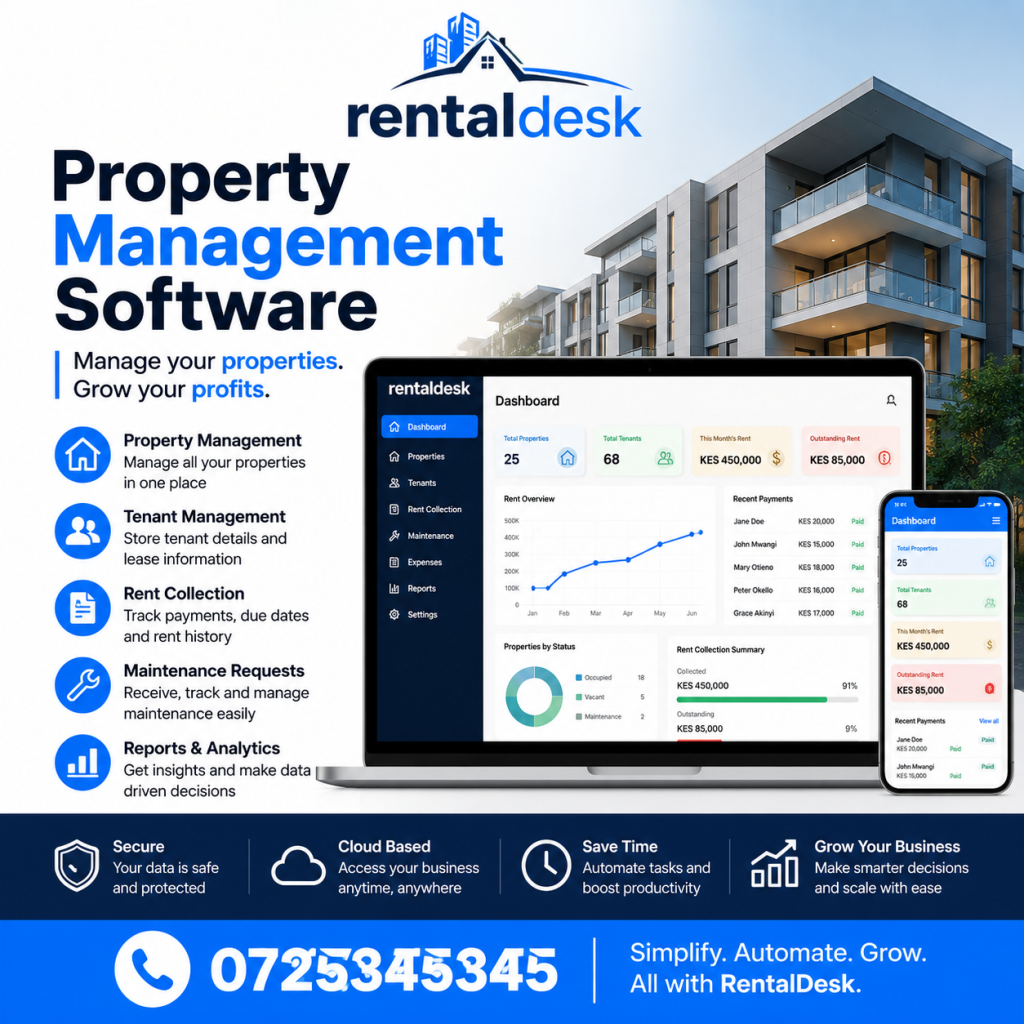
Managing rental properties can become increasingly challenging as the number of tenants, units, payments, maintenance requests, and records grows. For landlords and property managers operating in Lamu, relying on notebooks, spreadsheets, WhatsApp messages, and manual payment records can make everyday property management unnecessarily difficult.
Property Management Software Lamu provides a more organized approach by bringing essential property management activities into one centralized digital platform. Instead of maintaining separate records for tenants, rent payments, expenses, arrears, leases, and maintenance, property owners can manage their rental operations from a single system.
For landlords managing residential apartments, commercial premises, rental houses, vacation properties, or multiple properties across different locations, the right software can improve visibility and reduce administrative work.
This guide explores how Property Management Software Lamu can help property owners and managers streamline rent collection, monitor arrears, manage tenants, automate communication, track maintenance, generate reports, and improve overall property performance.
What Is Property Management Software?
Property management software is a digital platform designed to help landlords, property managers, real estate companies, and property owners manage rental properties more efficiently.
Instead of using several disconnected tools, a property management platform can centralize important operations such as:
- Tenant registration
- Property and unit management
- Rent collection
- Payment tracking
- Rent arrears monitoring
- Tenant communication
- Lease management
- Maintenance management
- Expense tracking
- Financial reporting
- Property performance monitoring
- Automated reminders
- Tenant statements
- Management reports
For property owners searching for Property Management Software Lamu, the most important consideration is whether the platform solves actual day-to-day challenges rather than simply offering a long list of features.
A good system should make property management easier, faster, more transparent, and more reliable.
Why Property Management Software Is Important in Lamu
Property management involves much more than collecting rent. A landlord may have to keep track of multiple tenants, remember payment dates, follow up on overdue balances, respond to maintenance requests, monitor expenses, maintain tenant records, and prepare financial reports.
When these responsibilities are handled manually, errors can easily occur.
A landlord may forget to follow up with a tenant whose rent is overdue. A payment may be recorded incorrectly. A maintenance request may be forgotten. A tenant may request a statement while the property manager is away from the office.
These challenges can be reduced through Property Management Software Lamu, which gives property owners centralized access to essential information.
A digital system can help landlords know:
- Who has paid rent
- Who has not paid
- How much each tenant owes
- Which units are occupied
- Which units are vacant
- Which tenants have outstanding balances
- What maintenance issues are pending
- How much income a property generates
- What expenses have been recorded
- How individual properties are performing
This information allows landlords to make decisions based on accurate records instead of assumptions.
Managing Different Types of Rental Properties
Lamu has a diverse property environment that can include residential homes, apartments, commercial premises, holiday accommodation, and properties serving tenants with different needs.
This means property managers may need flexible tools that can support different rental arrangements.
A reliable Property Management Software Lamu solution can be useful for managing:
Residential Properties
Landlords managing apartments, rental houses, bedsitters, and other residential units can use software to organize tenant information, rent schedules, payment records, and arrears.
Commercial Properties
Commercial landlords may manage shops, offices, business premises, and other commercial spaces. Software can help track tenants, payment schedules, leases, expenses, and property-related activities.
Multiple Rental Units
Property owners with several units can benefit significantly from centralized management. Instead of maintaining separate spreadsheets for every building, all properties can be organized within one platform.
Property Management Agencies
Property managers handling properties on behalf of multiple landlords need accurate records and efficient reporting. A centralized system can make it easier to manage properties and provide owners with clear reports.
Centralized Property Management
One of the biggest advantages of Property Management Software Lamu is centralization.
Without software, property information can be spread across:
- Exercise books
- Excel spreadsheets
- Bank statements
- M-Pesa messages
- WhatsApp conversations
- Email correspondence
- Receipts
- Paper files
- Individual mobile phones
This makes it difficult to obtain a complete picture of property performance.
A centralized platform brings relevant information together.
A landlord can access tenant records, payment information, rent balances, property information, and other records without searching through multiple documents.
This improves organization and saves time.
Simplifying Rent Collection
Rent collection is one of the most important responsibilities in property management.
A landlord may have dozens or hundreds of tenants paying at different times. Manually checking every payment can consume significant time.
With Property Management Software Lamu, landlords can organize rent collection more systematically.
The software can help maintain tenant payment records and show whether rent has been paid, partially paid, or remains outstanding.
This makes it easier for landlords and property managers to identify accounts requiring attention.
Better Rent Payment Tracking
Payment tracking becomes increasingly difficult as the number of tenants grows.
For example, a landlord managing 10 tenants might be able to remember most payment situations. However, managing 50, 100, or more tenants requires a structured system.
A property management platform can help maintain records for every tenant.
Information can include:
- Tenant name
- Unit occupied
- Expected rent
- Payment date
- Amount paid
- Outstanding balance
- Payment history
- Previous arrears
- Current status
This reduces reliance on memory and manual calculations.
Managing Rent Arrears
Rent arrears can have a significant impact on a property’s cash flow.
When tenants delay payments, property owners may struggle to identify exactly how much money is outstanding across their portfolio.
A strong Property Management Software Lamu platform can make arrears easier to monitor.
Instead of manually checking individual records, property managers can identify tenants with outstanding balances and prioritize follow-ups.
This is particularly useful for landlords with many rental units.
Automated Rent Reminders
Tenants may sometimes forget payment dates because of busy schedules, travel, work responsibilities, or other commitments.
Automated reminders can help reduce missed payments.
A property management platform can support reminders related to:
- Upcoming rent
- Overdue rent
- Outstanding balances
- Lease expiry
- Important tenant notices
- Maintenance updates
Automated communication does not replace human relationships. Instead, it reduces repetitive administrative work and ensures important information is delivered consistently.
Tenant Management
Tenant management is another major part of property administration.
A landlord needs to know who occupies each unit, when the tenant moved in, what rent they are expected to pay, and whether their account is up to date.
With Property Management Software Lamu, tenant information can be stored in organized digital profiles.
A tenant profile may include:
- Full name
- Contact information
- Property
- Unit number
- Rent amount
- Lease information
- Payment history
- Outstanding balance
- Communication records
- Account status
Having this information readily available makes tenant management more efficient.
Reducing Manual Record Keeping
Manual record keeping can be time-consuming.
A landlord may spend hours every month calculating balances, updating spreadsheets, searching for payment information, and preparing reports.
Digital property management reduces repetitive administrative tasks.
Instead of entering the same information across several documents, a centralized system can maintain the information in one location.
This saves time and improves consistency.
Improving Tenant Communication
Good communication contributes significantly to tenant satisfaction.
Tenants need timely information about rent, maintenance, property notices, payments, and other matters.
Property management software can help property managers organize communication and send relevant notifications.
For example, a landlord can communicate about:
- Rent due dates
- Payment confirmations
- Outstanding balances
- Maintenance schedules
- Property announcements
- Lease-related information
- Important reminders
This creates a more professional relationship between landlords and tenants.
Maintenance Management
Property maintenance is one of the areas where landlords can easily lose track of tasks.
A tenant may report a leaking pipe today, another may report an electrical issue tomorrow, while another may require repairs to a door or window.
Without a system, maintenance requests can be forgotten.
A property management platform can help record maintenance issues and track their progress.
A maintenance record can include:
- Tenant reporting the problem
- Property and unit
- Description of the issue
- Date reported
- Person assigned to resolve it
- Status
- Cost
- Completion date
This gives property managers a better overview of outstanding maintenance work.
Tracking Property Expenses
Property owners need to understand both income and expenses.
Expenses may include:
- Repairs
- Plumbing
- Electrical work
- Cleaning
- Security
- Landscaping
- Property administration
- Maintenance materials
- Contractor payments
- Other operational costs
Recording expenses digitally helps landlords understand how much they are spending to maintain their properties.
This can improve budgeting and financial planning.
Property Performance Reports
Reports help landlords understand how their properties are performing.
A property management system can provide useful information about:
- Rent collected
- Outstanding rent
- Arrears
- Occupancy
- Vacancies
- Expenses
- Tenant balances
- Property income
- Payment trends
These reports can help owners identify areas that require attention.
For property investors, reports can also provide a clearer picture of whether a property is generating the expected returns.
Managing Vacant Units
Vacancies can reduce rental income.
A landlord needs to know which units are vacant and how long they have remained unoccupied.
A centralized system can help track occupancy status and provide visibility into available units.
This allows property managers to focus on filling vacancies rather than discovering them late.
Improving Property Portfolio Management
Managing one property is very different from managing multiple properties.
As the portfolio grows, administrative complexity increases.
A landlord with multiple buildings may need to track hundreds of tenants, multiple rent rates, different payment schedules, maintenance requests, and expenses.
This is where Property Management Software Lamu becomes especially valuable.
Instead of managing each property independently through separate documents, landlords can organize their portfolio within one system.
They can review individual properties or obtain a broader view of the entire portfolio.
Why Spreadsheets May Not Be Enough
Spreadsheets can be useful for basic record keeping, particularly for small property portfolios.
However, they may become difficult to manage as the number of tenants increases.
Common challenges include:
- Accidental deletion
- Incorrect formulas
- Duplicate records
- Difficult reporting
- Limited automation
- Manual updates
- Version control issues
- Difficulty tracking communication
- Limited tenant access
- Increased administrative workload
Property management software is designed specifically for rental operations, making it more suitable for landlords who need structured workflows.
Improving Accuracy
Human errors can happen when calculations are performed manually.
A landlord may accidentally enter the wrong amount, forget to update a payment, or calculate a balance incorrectly.
A digital platform can help reduce such errors by organizing information and automating calculations.
Accurate records are important because rental disputes can sometimes arise when tenants and landlords have different records of payments.
Clear digital records can provide a stronger basis for resolving such issues.
Increasing Transparency
Transparency is important for both landlords and tenants.
Tenants want to know whether their payments have been correctly recorded.
Property owners want to know whether rent collected by a property manager has been accurately accounted for.
A centralized system creates better visibility.
For property management companies, this can also strengthen relationships with property owners by making reporting more systematic.
Supporting Property Managers
Professional property managers often handle properties for multiple owners.
Their responsibilities can include:
- Tenant onboarding
- Rent collection
- Arrears follow-up
- Property inspections
- Maintenance coordination
- Financial reporting
- Tenant communication
- Lease administration
A property management platform can support these activities and reduce the amount of manual administration required.
This allows managers to spend more time on customer service and property growth.
Supporting Landlords Who Live Away From Their Properties
Some property owners may not live close to their rental properties.
This makes remote property management especially important.
A cloud-based system can allow owners to access property information without physically visiting the property office.
A landlord can monitor:
- Rent collection
- Tenant balances
- Arrears
- Property records
- Reports
- Occupancy information
This creates greater visibility even when the property owner is away.
M-Pesa and Digital Payment Management
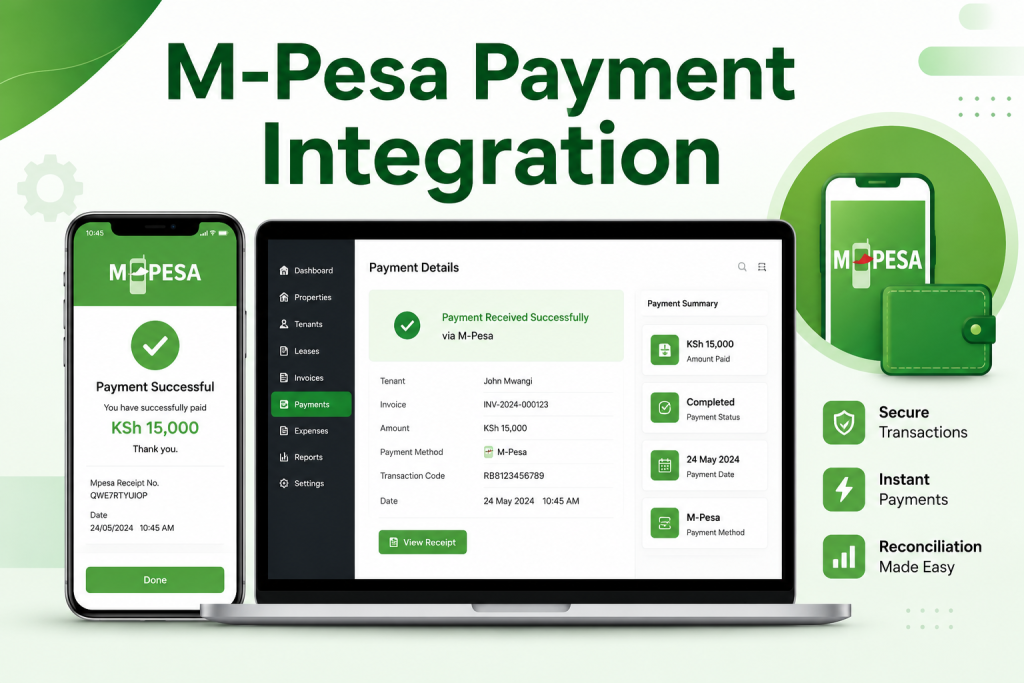
Digital payments have transformed the way many tenants pay rent.
For landlords, the challenge is not simply receiving payments but accurately matching payments to tenants and maintaining records.
A modern property management system can help organize digital payment information and simplify reconciliation.
This is particularly useful where landlords receive numerous payments every month.
Instead of relying entirely on mobile payment messages, a centralized system can create structured payment records.
Improving Rent Reconciliation
Rent reconciliation involves comparing expected payments with actual payments.
For example, if a tenant is expected to pay a certain amount each month but pays only part of it, the outstanding balance should be accurately reflected.
A property management system helps make this process easier.
This means property managers can quickly determine:
- Expected rent
- Amount received
- Balance outstanding
- Payment date
- Tenant account status
Better reconciliation improves financial accuracy.
Tenant Statements
Tenants may occasionally request statements showing their payment history.
Preparing these statements manually can take time.
A property management system can simplify the process by maintaining organized payment records.
A statement can provide an overview of:
- Previous balances
- Rent charged
- Payments received
- Adjustments
- Outstanding amounts
- Current balance
This improves communication and reduces unnecessary disputes.
Improving Security of Property Records
Paper files can be lost, damaged, misplaced, or accessed by unauthorized individuals.
Digital systems can provide more controlled access to property records.
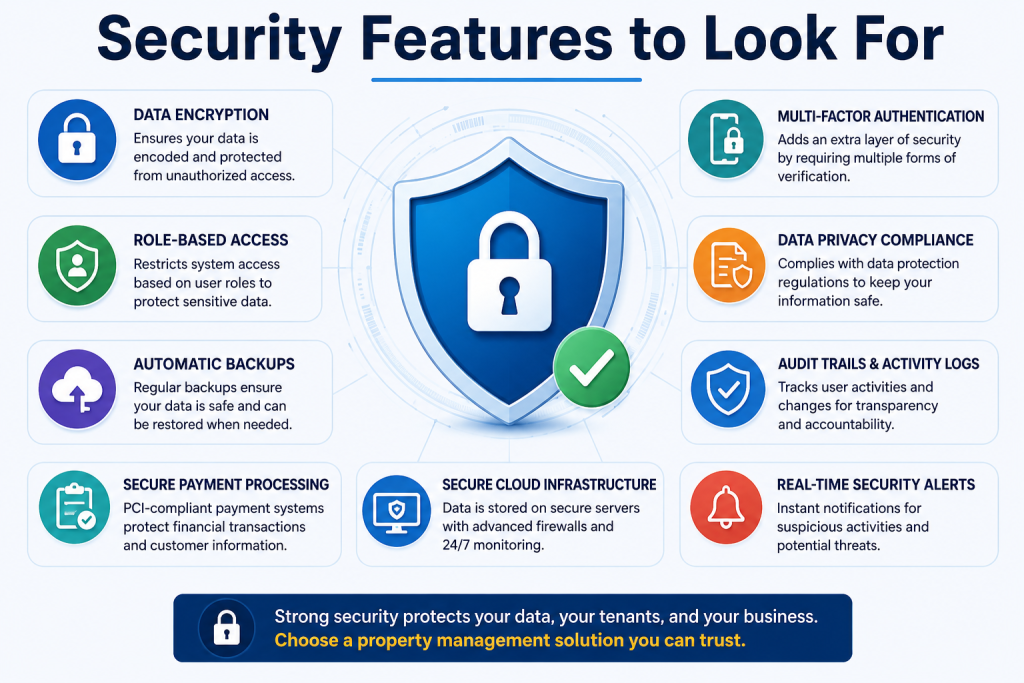
Property managers should select systems with appropriate security features and access controls.
Different users can be assigned permissions according to their responsibilities.
For example, a property manager may require access to tenant and payment records while another staff member may only need access to selected operational functions.
Choosing the Right Property Management Software
Not every property management system is equally suitable for every landlord.
When evaluating Property Management Software Lamu, property owners should consider several factors.
Ease of Use
The system should be easy to understand and navigate.
A complicated platform can discourage staff from using it consistently.
Rent Collection Features
Rent collection should be simple to manage.
Look for tools that make payment tracking, balances, and arrears easy to understand.
Tenant Management
The platform should provide organized tenant records and allow property managers to retrieve information quickly.
Reporting
Reports should help owners understand financial and operational performance.
Scalability
The software should be able to support a growing portfolio.
A landlord should not have to replace the platform every time the number of rental units increases.
Mobile Accessibility
Property managers may not always be sitting in an office.
Mobile-friendly access can make it easier to monitor properties while traveling between buildings or meeting tenants.
Customer Support
Reliable customer support is important when implementing new software.
Users should have access to assistance when they encounter problems or need help understanding the system.
How to Implement Property Management Software
Introducing new software requires proper planning.
The first step is to identify the current property management challenges.
Ask questions such as:
- How are rents currently recorded?
- How are arrears identified?
- How are tenants contacted?
- How are expenses tracked?
- How are reports prepared?
- Where are property records stored?
- Which tasks consume the most time?
Once the challenges are identified, the landlord can determine which software features are most important.
The next step is to organize existing records before moving them into the system.
This may include:
- Tenant information
- Property details
- Unit information
- Rent amounts
- Payment records
- Arrears
- Lease dates
- Contact details
The data should be reviewed carefully before being imported.
Training Property Management Staff
Software implementation is not simply about purchasing a platform.
Staff members should understand how to use the system correctly.
Training should cover areas such as:
- Adding tenants
- Adding properties
- Recording payments
- Monitoring arrears
- Generating reports
- Updating tenant information
- Managing maintenance
- Sending communications
Consistent use is important because the value of software depends on the quality of information entered into it.
Moving From Manual to Digital Property Management
Moving from manual management to Property Management Software Lamu can initially feel like a significant change.
However, the long-term benefits can outweigh the adjustment period.
The transition can be implemented gradually.
A landlord can start by digitizing:
- Property records
- Tenant information
- Rent schedules
- Payment records
- Arrears
- Expenses
- Reports
- Maintenance information
Once these areas are organized, additional workflows can be introduced.
Case Study: A Growing Rental Property Owner
Consider a hypothetical landlord managing several residential properties in Lamu.
Initially, the landlord used notebooks and spreadsheets to track rent.
As the portfolio grew, several challenges appeared.
Some payments were difficult to reconcile. Following up on overdue rent took time. Preparing monthly reports required manually reviewing multiple records.
The landlord introduced a property management platform.
Tenant information was centralized, rent schedules were organized, and outstanding balances became easier to identify.
Instead of spending hours searching through separate records, the landlord could review the portfolio through one system.
The result was better organization, faster follow-up, and improved visibility into rental performance.
Case Study: Property Management Agency
Imagine a property management agency responsible for several landlords.
The agency previously maintained separate spreadsheets for each property owner.
Every month, staff had to prepare reports manually.
As the number of managed units increased, this became increasingly difficult.
After adopting Property Management Software Lamu, the agency could centralize property records and improve its internal workflow.
Staff could monitor tenant accounts, follow up on arrears, organize property information, and prepare reports more efficiently.
The agency also gained a more professional way to communicate property performance to owners.
Case Study: Managing Rent Arrears
Consider another landlord who regularly experienced delayed rent payments.
Previously, the landlord relied on memory and manual messages to identify tenants with outstanding balances.
This meant follow-ups were sometimes delayed.
With a centralized system, outstanding accounts could be identified more systematically.
The landlord could prioritize tenants with overdue balances and communicate with them earlier.
This demonstrates how technology can support better financial discipline.
Benefits for Tenants
Property management software is not only beneficial to landlords.
Tenants can also benefit from better-managed rental properties.
Potential advantages include:
- Faster communication
- Clearer payment records
- Better access to statements
- Faster maintenance follow-up
- Fewer payment disputes
- More professional property management
When landlords have better systems, tenants often experience a more organized rental relationship.
Benefits for Property Owners
Property owners can gain several advantages from using property management technology.
Better Financial Visibility
Owners can see how much rent is expected and how much has been collected.
Better Arrears Control
Outstanding balances can be identified more easily.
Better Tenant Records
Tenant information is centralized.
Better Reporting
Owners can receive clearer information about property performance.
Time Savings
Administrative work can be reduced through automation.
Better Decision Making
Accurate information allows owners to make better decisions about their properties.
How Software Can Improve Cash Flow Management
Cash flow is crucial for rental property owners.
A property may generate significant income but still experience cash flow challenges if tenants frequently delay payments or if expenses are poorly controlled.
Property management software can help owners monitor expected income, received payments, outstanding balances, and expenses.
This gives owners better visibility into their financial position.
Using Data to Make Better Property Decisions
Modern property management is increasingly data-driven.
Rather than relying on intuition, property owners can use reports to identify trends.
For example, reports may reveal:
- Units with frequent payment delays
- Properties with high maintenance costs
- Increasing vacancy rates
- Tenants with repeated arrears
- Periods with higher expenses
- Properties generating stronger income
These insights can guide future investment decisions.
Improving Professionalism
Professional property management requires organization.
Tenants expect landlords and property managers to respond promptly and maintain accurate records.
Using Property Management Software Lamu can help property managers create structured processes.
Instead of responding to every issue differently, managers can establish consistent procedures for:
- Rent collection
- Arrears follow-up
- Tenant onboarding
- Maintenance
- Reporting
- Communication
- Record keeping
This can improve the overall tenant experience.
Property Management Software and Business Growth
Software can also support business growth.
A landlord who manages 20 units manually may struggle when the portfolio grows to 50 or 100 units.
The workload does not necessarily need to increase at the same rate if the right technology is introduced.
Automation and centralized records can help property managers manage larger portfolios without proportionally increasing administrative tasks.
This makes technology an important part of scaling a rental property business.
Common Mistakes to Avoid
When implementing property management technology, landlords should avoid several common mistakes.
Choosing Software Based Only on Price
The cheapest platform may not provide the features necessary for effective management.
Failing to Train Staff
Even good software will not deliver results if staff members do not know how to use it.
Entering Inaccurate Data
Incorrect tenant or payment information can undermine the usefulness of the system.
Ignoring Arrears
Software should be used proactively to monitor outstanding balances.
Failing to Update Records
Property records should remain current.
Choosing a System That Cannot Scale
Property owners should consider future portfolio growth before selecting software.
Frequently Asked Questions
What is Property Management Software?
Property management software is a digital system that helps landlords and property managers organize rental operations such as tenant management, rent collection, payment tracking, arrears management, maintenance, reporting, and property records.
Who Should Use Property Management Software Lamu?
Landlords, property managers, real estate companies, property agencies, and property investors can all benefit from property management software.
Can Property Management Software Lamu Manage Multiple Properties?
Yes. Many platforms are designed to help property managers organize multiple properties and units from one centralized system.
Can Software Help Track Rent Arrears?
Yes. A property management platform can help identify tenants with outstanding balances and make arrears monitoring more systematic.
Can Property Management Software Lamu Help With M-Pesa Payments?
Depending on the platform, payment integration or payment tracking features can help landlords organize digital rent payments and maintain accurate payment records.
Is Property Management Software Lamu Suitable for Small Landlords?
Yes. Small landlords can benefit from better record keeping, tenant management, rent tracking, and automated reminders. Starting early can also make it easier to scale as the property portfolio grows.
Can Property Management Software Lamu Improve Tenant Communication?
Yes. Property managers can use digital tools to organize notifications, reminders, payment communication, maintenance updates, and other tenant messages.
Does Property Management Software Replace Property Managers?
No. Software supports property managers by reducing repetitive administrative work. Human judgment, tenant relationships, inspections, negotiations, and decision-making remain important.
How Does Property Management Software Lamu Help With Maintenance?
It can help property managers record maintenance requests, assign tasks, monitor progress, and maintain records of completed work and expenses.
How Do I Choose the Right Software?
Consider ease of use, rent tracking, tenant management, arrears monitoring, reporting, scalability, payment support, mobile accessibility, security, and customer support.
Why Choose RentalDesk for Property Management?
For landlords and property managers searching for a practical digital solution, RentalDesk can help simplify rental operations through centralized property and tenant management.
The platform is designed to help property managers organize important rental activities rather than relying entirely on manual records.
With RentalDesk, property managers can improve visibility into tenant accounts, rental payments, arrears, and property management activities.
The goal is simple: help landlords spend less time dealing with scattered records and more time managing and growing their rental businesses.
Key Features to Look For in a Property Management Platform
Before selecting a system, landlords should evaluate whether it provides practical tools such as:
- Property management
- Tenant management
- Rent collection
- Rent payment tracking
- Arrears management
- Automated reminders
- Tenant statements
- Financial reporting
- Expense management
- Maintenance tracking
- Property portfolio management
- User access controls
- Mobile accessibility
- Customer support
The best solution is one that fits the landlord’s actual workflow.
Why Digital Transformation Matters for Property Owners
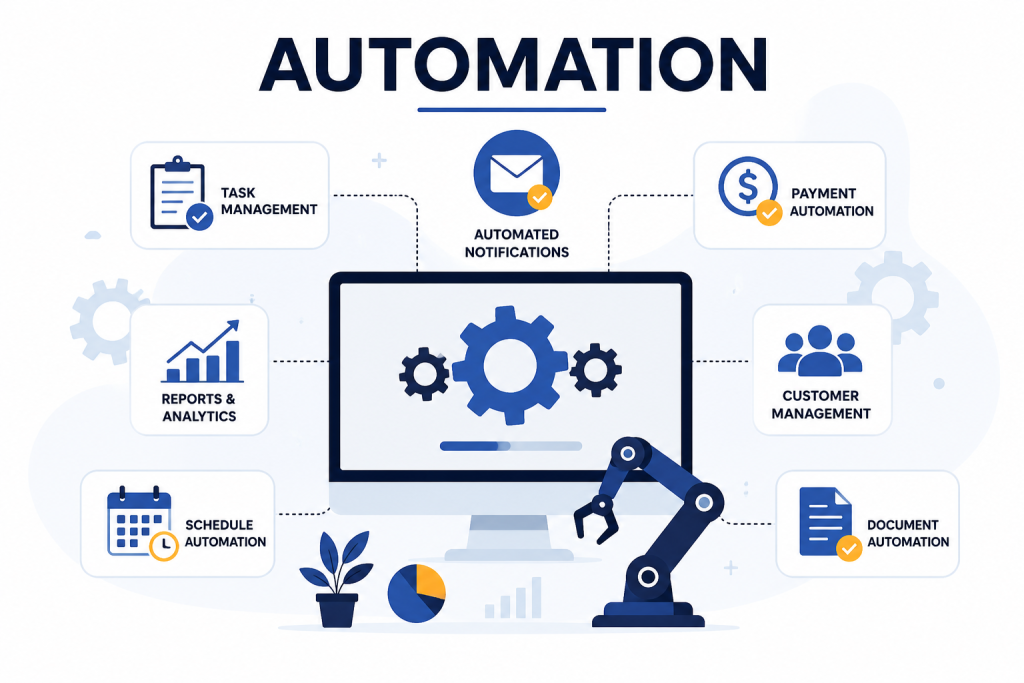
The property industry is becoming increasingly digital.
Landlords who continue relying exclusively on paper files and manual processes may face growing administrative challenges as their portfolios expand.
Digital property management allows owners to centralize information, automate routine processes, monitor financial performance, and improve tenant communication.
Technology is therefore not simply an optional convenience. For many growing property businesses, it can become an important operational advantage.
The Future of Property Management in Lamu
Property management will continue evolving as technology becomes more accessible.
Future property management systems are likely to place even greater emphasis on:
- Automation
- Digital payments
- Real-time reporting
- Mobile access
- Artificial intelligence
- Automated tenant communication
- Predictive maintenance
- Data analytics
- Digital tenant services
- Integrated financial management
Landlords who adopt technology early can position their businesses for more efficient growth.
Take Property Management in Lamu to the Next Level
Managing rental properties successfully requires more than collecting rent and responding to tenant requests. Property owners need accurate records, efficient communication, reliable payment tracking, effective arrears management, proper maintenance coordination, and clear financial reporting. This is where Property Management Software Lamu can make a significant difference.
For landlords managing apartments, residential houses, commercial properties, holiday rentals, or multiple rental units, Property Management Software Lamu provides an organized way to manage everyday property operations. Instead of relying on notebooks, spreadsheets, scattered WhatsApp messages, and manual calculations, landlords can use Property Management Software Lamu to centralize essential property information.
One of the biggest advantages of Property Management Software Lamu is improved rent management. Property owners can monitor expected rent, payments received, outstanding balances, and tenant payment histories in a more structured manner. With Property Management Software Lamu, landlords can identify overdue accounts more easily and follow up on rent arrears before they become major cash-flow challenges.
Tenant management is another area where Property Management Software Lamu can provide substantial value. Keeping tenant names, contact information, unit details, rent amounts, payment histories, and account information in one organized system makes daily administration easier. Property Management Software Lamu allows property managers to spend less time searching through physical files and more time focusing on tenants and property performance.
Effective communication is equally important in modern property management. Tenants need timely reminders, payment confirmations, maintenance updates, and important property notices. Through Property Management Software Lamu, property managers can establish more consistent communication processes and ensure that important information is not easily forgotten.
Maintenance management can also become more efficient with Property Management Software Lamu. Property owners can record maintenance requests, monitor unresolved issues, coordinate repairs, and keep track of associated expenses. This makes it easier to identify outstanding maintenance tasks and provide tenants with better service.
For landlords with several rental units, Property Management Software Lamu becomes even more valuable. Managing multiple properties manually can quickly become overwhelming because every building may have different tenants, rent amounts, payment schedules, expenses, and maintenance requirements. Property Management Software Lamu brings these records together, giving property owners a clearer overview of their entire portfolio.
Another important benefit of Property Management Software Lamu is improved financial visibility. Property owners need to know how much rent is expected, how much has been collected, which tenants have outstanding balances, and what expenses have been incurred. By organizing this information, Property Management Software Lamu can help landlords make better financial decisions.
As rental businesses grow, manual property management becomes increasingly difficult. A landlord who manages a small number of units today may eventually manage dozens or hundreds of tenants. Property Management Software Lamu provides a foundation for scaling property operations without increasing administrative work at the same rate.
The value of Property Management Software Lamu also extends to professional property management companies. Agencies managing properties on behalf of different owners can benefit from centralized tenant information, payment records, arrears monitoring, property reports, and operational workflows. Property Management Software Lamu can therefore support greater efficiency and professionalism across property management businesses.
Property owners who are still relying heavily on manual records should consider the long-term benefits of adopting Property Management Software Lamu. Digital systems can reduce repetitive administrative tasks, improve record accuracy, simplify reporting, and provide better visibility into rental performance.
Choosing the right Property Management Software Lamu is an important decision. Landlords should look for a platform that is easy to use, scalable, secure, mobile-friendly, and capable of supporting important activities such as tenant management, rent collection, payment tracking, arrears management, maintenance, and reporting.
The right Property Management Software Lamu should not simply add another complicated tool to your business. Instead, it should simplify your existing processes and help you manage properties with greater confidence and control.
For property owners in Lamu who want to modernize their operations, Property Management Software Lamu offers an opportunity to move from fragmented record keeping toward a more professional and organized system.
With Property Management Software Lamu, landlords can improve the way they manage tenants, monitor payments, follow up on arrears, coordinate maintenance, and understand their property finances. These improvements can contribute to better efficiency, stronger tenant relationships, and more sustainable rental businesses.
Ultimately, successful property management is about having the right information at the right time. Property Management Software Lamu makes that information easier to organize and access, allowing property owners to spend less time dealing with administrative challenges and more time growing their investments.
If you manage rental properties in Lamu and want to improve your operations, now is the right time to consider Property Management Software Lamu. Moving to a centralized digital platform can help transform property management from a time-consuming manual responsibility into a more streamlined and manageable business process.
Property Management Software Lamu is not simply about technology; it is about creating a smarter, more organized, and more efficient way of managing rental properties.
For landlords ready to modernize their rental operations, Property Management Software Lamu can provide the tools needed to improve rent collection, control arrears, manage tenants, monitor maintenance, organize records, and make better business decisions.
The future of property management is increasingly digital, and Property Management Software Lamu can help property owners prepare for that future. By adopting the right technology today, landlords can build more efficient systems that support both current operations and future growth.
If you are ready to take control of your rental portfolio, improve accountability, and simplify daily property management, Property Management Software Lamu is a valuable step toward achieving those goals. With the right platform and consistent use, landlords can create a more professional rental management experience for themselves, their teams, and their tenants.
Managing rental properties successfully requires accurate records, consistent communication, effective rent collection, timely maintenance, and strong financial oversight.
For landlords and property managers operating in Lamu, adopting Property Management Software Lamu can provide a more organized way to handle these responsibilities.
The right system can help centralize tenant records, track payments, monitor arrears, organize property information, improve communication, manage maintenance, record expenses, and generate useful reports.
More importantly, Property Management Software Lamu can help landlords move away from fragmented manual processes and create a more structured property management operation.
Whether you manage a small number of rental units or a growing portfolio, digital tools can make everyday operations more manageable.
By using Property Management Software Lamu, property owners can gain greater visibility into their rental businesses and make decisions using organized, accessible information.
The benefits extend beyond convenience. Better systems can improve accountability, reduce administrative workloads, strengthen tenant relationships, improve arrears follow-up, and support long-term business growth.
For property managers handling multiple buildings, Property Management Software Lamu can provide a centralized environment for monitoring tenants, rent payments, property performance, and operational activities.
For individual landlords, Property Management Software Lamu can simplify everyday tasks that would otherwise require multiple spreadsheets, notebooks, messages, and manual calculations.
For growing property management companies, Property Management Software Lamu can create processes that are easier to scale as the number of properties and tenants increases.
The most important step is choosing a platform that matches your business requirements.
Look for a solution that is easy to use, supports your rental workflow, provides reliable records, simplifies rent tracking, supports arrears management, and gives you meaningful reports.
If you are ready to improve how your rental properties are managed, now is a good time to move from fragmented manual processes to a centralized digital system.
Ready to Simplify Property Management?
RentalDesk provides a practical way for landlords and property managers to bring important rental operations into one organized system.
Instead of spending hours searching through spreadsheets, notebooks, payment messages, and separate tenant records, you can create a more structured workflow for managing your properties.
Whether your biggest challenge is rent collection, arrears follow-up, tenant records, payment tracking, or property reporting, the right technology can make your work easier.
Start managing your rental properties smarter with RentalDesk.
Visit rentaldesk.co.ke or call 0725345345 to learn more about how RentalDesk can support your property management operations.