Portfolio review meetings are useful when they turn current information into clear decisions and next actions. Begin with the questions the meeting needs to answer. A long presentation of every available record can leave a team busy but uncertain about what should happen after the discussion ends.
Choose the approved information sources and confirm the period covered. Review RentalDesk features to prepare questions about the relevant reporting workflow. The meeting should make the relationship between evidence, interpretation and decisions understandable to people who did not prepare the records.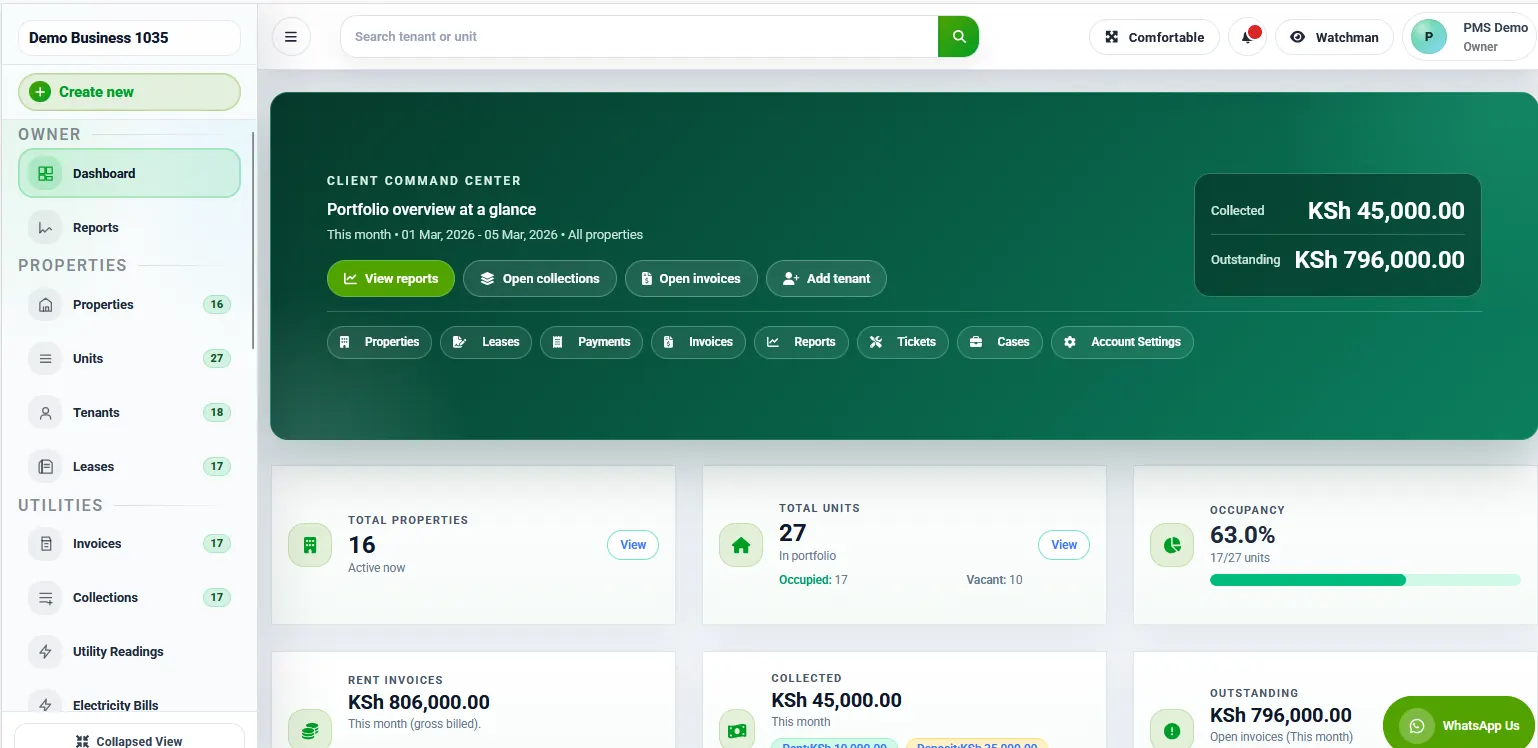
Portfolio review meetings: Set a focused agenda
Identify the properties, operational areas and decisions that need attention. Separate items needing a decision from updates provided for context. Give participants enough information to prepare, but avoid circulating unnecessary tenant details. A concise agenda helps the chair keep discussion connected to the purpose of the meeting.
Portfolio review meetings: Identify the reporting scope
State which property records and dates support each discussion. A recent export can still contain an unsuitable period or filter. Ask the preparer to explain the selection and any limitation. Do not treat a clean-looking report as evidence that every source record has been independently checked.
Portfolio review meetings should keep unresolved questions visible. Assign an owner to confirm a disputed reference rather than accepting an unsupported explanation because the meeting needs to move on. Record what is known, what remains uncertain and which decision depends on the answer.
Portfolio review meetings: Separate discussion from approval
A suggestion is not necessarily an instruction to act. Record the decision, responsible approver and approved next step through the organisation’s normal process. If an item needs another person’s authority, keep it pending. This prevents an informal conversation from being interpreted later as permission for work that was never agreed.
Member-based groups researching administration tools can review TAS separately. Awasa is another resource to evaluate directly for current availability and suitability. Neither link means that records should be shared with those sites or that RentalDesk has an integration with them.
Portfolio review meetings: Give actions named owners
An action such as follow up is incomplete without the question, responsible person and review date. Describe the result needed: confirm an appointment, obtain an explanation or review a particular record. Identify dependencies so a colleague can tell whether progress requires their own work or another person’s response.
Portfolio review meetings: Close the meeting with an action review
Read back the decisions and next actions. Ask participants to clarify any responsibility they cannot fulfil or do not understand. Keep the authoritative action record accessible to the relevant team. A private note belonging to the chair should not become the only place where an important decision exists.
Portfolio review meetings: Example: a maintenance item is still waiting
The report shows an unresolved request, but the discussion reveals that approval is pending rather than contractor attendance. The meeting records the actual blocker, assigns the approval follow-up and sets a review date. This is more useful than repeating a general instruction to finish maintenance without identifying what prevents progress.
Portfolio review meetings: What should happen between meetings?
Owners should update the approved record when an action changes, not wait until the next presentation. Keep completed, cancelled and unresolved actions distinguishable. At the following meeting, review relevant changes and outstanding decisions rather than reconstructing the full history from memory.
Portfolio review meetings: Does every portfolio need the same meeting frequency?
No. Choose a routine that fits the work and decision cycle. Review it when actions are repeatedly missed or discussion becomes repetitive. The practical test is whether colleagues leave with an accurate understanding of the current situation and their next responsibility.
Review checklist for portfolio review meetings
Before ending the discussion, choose one action and ask its owner to explain the expected result and review date. Check whether the action depends on someone else’s response. If the responsibility is unclear, resolve it before the meeting closes. This small test helps distinguish an agreed task from a general intention that participants may interpret differently afterwards.
Read the RentalDesk property management guides. Call 0725345345 to discuss the reporting and follow-up needs behind your portfolio review meetings.
Give portfolio review meetings a specific purpose
Start by deciding what the meeting needs to achieve. A review of current operational exceptions is different from a planning discussion or a detailed investigation of one property. State the purpose in the invitation or agenda so participants can prepare the right information. If several purposes are necessary, separate them clearly rather than letting one broad discussion drift between unrelated questions.
For a fictional portfolio of three buildings, the immediate purpose might be to agree the next actions for unresolved maintenance visits and incomplete administrative records. That is more useful than an agenda item called general update. It tells participants which records to bring, which questions need decisions and which topics can be handled through another process without occupying the whole meeting.
Portfolio review meetings should have an output that can be described in ordinary language. For example, each priority exception should leave with a named owner and a clear next action. A meeting that produces several pages of conversation but no usable decisions has not fulfilled that purpose. Keep the intended output visible while choosing what belongs on the agenda.
Portfolio review meetings: Define the reporting period and property scope
Identify the properties and period being reviewed before comparing information. A current operational view may differ from a report generated earlier in the week. Make that distinction explicit so participants do not spend the meeting treating different snapshots as if they should match exactly. When information comes from more than one source, label the relevant date and scope for each.
Use consistent property references throughout the meeting materials. Similar building names, abbreviated labels and local nicknames can cause participants to discuss different locations without realising it. Include the approved reference alongside any useful descriptive name. If a report excludes a property or category, explain the exclusion rather than expecting participants to infer it from a count or missing row.
In portfolio review meetings, scope should remain connected to the decision being made. If a participant introduces a wider comparison, check whether the available information supports it. Record a follow-up request where more preparation is needed. Do not broaden a conclusion beyond the records actually reviewed merely because the meeting title refers to the whole portfolio.
Portfolio review meetings: Prepare an exception list before the discussion
Ask each responsible person to identify the items that need a decision, clarification or coordination. A useful exception list includes the property reference, current position, source record, unresolved question and proposed next step. Keep factual background separate from the action being requested. This lets participants understand why the item is on the agenda without reconstructing the full history during the meeting.
Check whether an exception can be resolved before the meeting through an ordinary operational conversation. The meeting should not become the first place where staff discover a missing contact or an unexplained label. Resolve straightforward questions early where possible, then bring the remaining issue with a clear description of what has already been checked and what still requires agreement.
Portfolio review meetings benefit from a manageable list. If every record is treated as equally urgent, participants may overlook the items that require coordination now. Use the team’s agreed priorities and explain the basis for them. Avoid assigning importance through dramatic wording alone. A concise statement of the effect, dependency and next decision is usually more helpful.
Portfolio review meetings: Separate facts, interpretations and decisions
A fact might be that a scheduled visit did not take place according to the available record. An interpretation might be that the confirmation process was unclear. A decision might be to assign someone to verify the arrangement and propose a revised visit. Keep these categories distinguishable so the meeting does not turn an untested explanation into an accepted account of what happened.
When participants disagree, return to the specific question and the available source. Identify whether the disagreement concerns the record, its meaning or the appropriate next action. Each type needs a different response. A missing source requires investigation; a difference in interpretation may require clarification; a decision outside the group’s authority should be routed to the appropriate person.
Use factual language in the meeting notes. Record what was reviewed and what was agreed without attributing motives or making unsupported claims. Portfolio review meetings often involve information passed through several colleagues. Clear distinctions help later readers understand what the group actually knew at the time and which questions remained open for further checking.
Portfolio review meetings: Use an agenda that leads to action
A practical agenda can begin with the purpose and scope, continue with outstanding actions from the previous meeting, then address the current exceptions. Finish with a review of new actions and unresolved decisions. Keep the sequence predictable so participants know when to raise a correction, present an exception or confirm ownership of a task.
Allocate discussion time according to the decision needed. An item requiring a simple factual update should not consume the space needed for a cross-property coordination problem. If a detailed investigation starts to dominate the meeting, identify the people who should continue it separately and record what result they need to bring back. This keeps the remaining agenda useful for everyone present.
Portfolio review meetings should end with an explicit check of the action list. Read each action as a complete instruction: who will do what, for which property or record, and when the next update is expected. If the wording still depends on remembering the conversation, improve it before closing. The written record should carry the decision forward on its own.
Portfolio review meetings: Write actions that another colleague can follow
Avoid vague instructions such as sort this out or follow up urgently. Describe the next observable step. For example, confirm the current arrival contact for the proposed visit and report the agreed arrangement is clearer than chase contractor. The action should be specific enough for a colleague to understand what completion looks like without being told the whole meeting discussion.
Assign one coordinating owner even when several people contribute. This does not mean the owner performs every part of the work; it means the team knows who will provide the next update. Where another approval or dependency is required, record it separately. An action should not imply that the owner has authority to make a decision assigned to someone else.
For portfolio review meetings, the next review point matters as much as the action itself. Use an agreed date or event, such as after the provider confirms availability. Avoid creating artificial precision when the timing depends on an unresolved external response. Record the dependency and the expected follow-up so the item remains visible without suggesting that an unconfirmed deadline is guaranteed.
Handle corrections to the meeting record
Share the draft record through the team’s approved process and identify how participants should raise corrections. A correction may concern a factual detail, action owner or wording of an agreed decision. Keep the current version distinguishable from earlier copies. The goal is a dependable account of the meeting, rather than a collection of slightly different notes held by individual participants.
When a correction changes an action materially, notify the relevant owner. Updating a document alone may not be sufficient if the person has already begun working from the previous instruction. Explain which part changed and what the current expectation is. Keep the communication proportionate and focused on the task rather than restarting the whole discussion unnecessarily.
Portfolio review meetings should preserve unresolved disagreement accurately. If participants did not reach a decision, say so and name the next step. Do not smooth the wording into apparent agreement merely to make the minutes look complete. An honest open item is more useful than a polished statement that later readers mistake for an authorised decision.
Work through a fictional portfolio example
Consider three fictional properties with several open operational items. Before the meeting, the coordinator collects a short exception list from each responsible colleague. One building has a visit awaiting access confirmation, another has an unclear unit reference, and the third has a report requiring a corrected scope. Each item includes its source and the specific decision or coordination needed.
During the meeting, the group confirms that the visit can proceed only after the access arrangement is checked. A named coordinator takes that action. The unit reference question is assigned to the person maintaining the approved property records. The report preparer is asked to regenerate the output using the agreed properties and explain the relevant period. None of these actions is recorded simply as resolve issue.
The meeting closes with the current action list and next review points. At the following review, participants report the actual outcomes and identify any remaining dependencies. This example shows how portfolio review meetings can connect information to action without requiring every attendee to know every detail of every building. Clear scope and ownership make the discussion usable across the portfolio.
Review previous actions without repeating the whole meeting
For each earlier action, ask whether the agreed step was completed and what evidence or outcome is available. If it remains open, identify the reason and the next action. Avoid replaying the original discussion unless new information changes the decision. A consistent update format helps participants distinguish completed work from activity that has not yet produced the expected result.
Where an action is no longer relevant, record the reason for closing or replacing it through the appropriate process. Do not leave obsolete tasks circulating indefinitely. Equally, do not remove an item merely because it has appeared on several agendas. The record should explain whether it was completed, superseded, referred elsewhere or remains unresolved with an assigned owner.
Portfolio review meetings can reveal recurring process weaknesses. Several unclear visit arrangements may point to a confirmation problem; repeated report corrections may indicate inconsistent selection rules. Discuss the shared cause only when the evidence supports it. Assign a practical improvement and check its effect later, rather than adding broad promises that are too vague to evaluate.
Prepare the team for a software demonstration
Bring a fictional agenda and a few representative records to a demonstration. Ask how the relevant information can be found, reviewed and used to support the team’s discussion. Confirm the product functions, plan and configuration involved. Do not assume that a report, task list or sharing method exists merely because it would fit the meeting process you have designed.
Test a realistic exception, such as a record updated after the meeting pack was prepared. Ask how staff should distinguish the earlier snapshot from the current view. Then ask a second colleague to explain the next action from the example record. This checks whether the proposed workflow remains understandable beyond the person presenting the software or preparing the agenda.
Frequently asked meeting questions
How often should the team meet?
Choose a rhythm that fits the volume and nature of decisions the team needs to coordinate. A meeting should have a useful purpose and prepared information. If routine updates can be handled through an established process, keep meeting time for the exceptions and decisions that benefit from discussion. Review the arrangement when the portfolio or team’s responsibilities change.
Who should attend?
Include the people needed to explain the relevant records, make decisions within their authority and own the resulting actions. Attendance should follow the meeting purpose rather than a habit of inviting everyone to every discussion. Where a specialist answer is needed for one item, arrange an appropriate contribution without assuming that every participant must remain involved in unrelated topics.
What if the information is not ready?
State the limitation and decide whether a narrower discussion is still useful. Do not present an unreviewed report as a settled basis for a wider conclusion. Identify the missing information, its owner and the next review point. Portfolio review meetings can still coordinate preparation, but the notes should distinguish that work from a decision supported by complete information.
Make the next meeting easier to prepare
Keep a short, current action record with clear property references and owners. Use it to prepare the next agenda rather than rebuilding the history from messages. Ask participants which part of the previous meeting helped them act and which part remained unclear. Small improvements to the agenda, source labels and action wording can make the next discussion more productive.
The value of portfolio review meetings is the connection between a reliable record and a clear decision. Participants should leave knowing what was agreed, what remains uncertain and who will do the next piece of work. When that information survives beyond the meeting itself, the review becomes a practical part of property coordination rather than a recurring conversation with no dependable follow-through.