Online Property Management Platform: Streamline Your Rental Operations
In today’s fast-paced real estate world, landlords and property managers need smarter, faster, and more efficient ways to manage their properties. An online property management platform provides exactly that—centralized tools that simplify daily operations, improve tenant satisfaction, and maximize revenue.
Whether you manage a single rental property or a large portfolio, leveraging technology can transform how you operate. In this guide, we’ll explore the benefits, features, and reasons why investing in an online property management platform is a game-changer for landlords, property managers, and real estate investors.
What is an Online Property Management Platform?
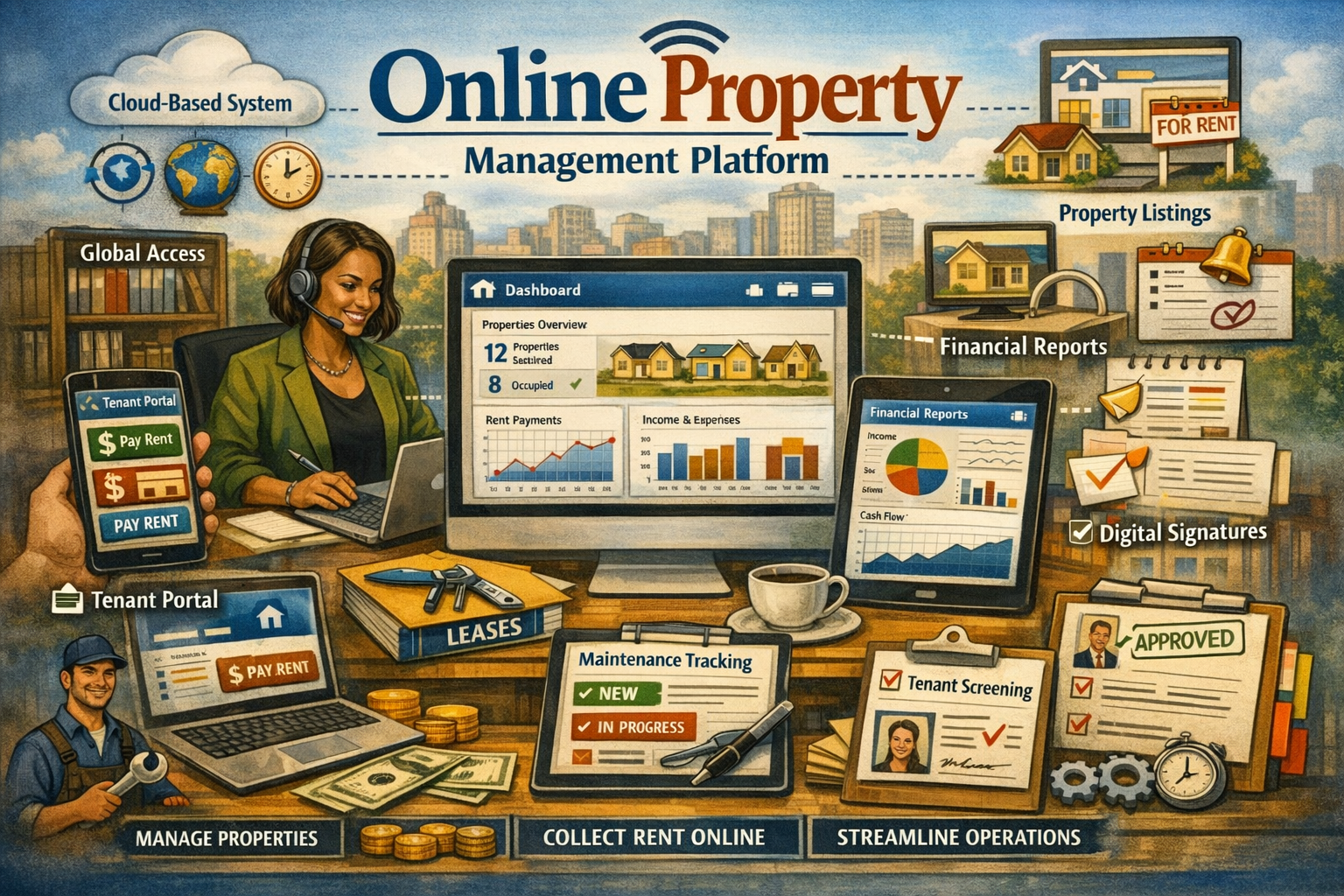
An online property management platform is a software solution designed to help landlords and property managers handle every aspect of rental operations digitally. Unlike traditional spreadsheets or manual bookkeeping, these platforms centralize tasks such as:
-
Rent collection
-
Tenant screening
-
Maintenance requests
-
Lease management
-
Financial reporting
By offering a cloud-based interface accessible from any device, landlords can manage properties anywhere, anytime.
Key Features of an Online Property Management Platform
Choosing the right online property management platform depends on the features it offers. Here are the most essential functionalities that can simplify property management:
1. Automated Rent Collection
One of the biggest challenges for landlords is ensuring timely rent payments. Modern platforms allow tenants to pay online via bank transfers, credit cards, or mobile payment systems. Features like automated reminders and late fee calculation reduce manual follow-ups.
2. Tenant Screening and Management
A robust online property management platform provides tools for background checks, credit reports, and rental history verification. Managing tenant information in one central location helps landlords track leases, communication history, and renewals efficiently.
3. Maintenance Request Tracking
Handling maintenance issues can be time-consuming. Platforms provide portals for tenants to submit requests, assign tasks to contractors, and track completion status. This ensures transparency and keeps tenants satisfied.
4. Lease and Document Management
Managing lease agreements, addendums, and other property documents online reduces paperwork and ensures compliance. Digital signatures allow tenants and landlords to sign contracts quickly, saving time and resources.
5. Financial Reporting and Analytics
Modern platforms offer dashboards that provide insights into income, expenses, occupancy rates, and other critical metrics. These analytics help landlords make data-driven decisions to optimize property performance.
6. Communication Tools
An online property management platform often includes built-in communication features, such as automated emails, SMS notifications, and tenant portals. This centralizes all interactions and reduces miscommunication.
Benefits of Using an Online Property Management Platform
Investing in an online property management platform provides tangible benefits for landlords and property managers:
1. Increased Efficiency
Automating repetitive tasks frees up time for property managers to focus on strategic decisions rather than daily administrative work.
2. Reduced Errors
Manual processes often lead to errors in rent collection, maintenance tracking, or tenant communication. Digital systems minimize these mistakes through automation.
3. Enhanced Tenant Experience
Tenants appreciate a seamless experience, from online rent payment to prompt maintenance updates. Happy tenants are more likely to renew leases, reducing turnover.
4. Better Financial Management
Platforms generate detailed financial reports, helping landlords track cash flow, forecast expenses, and plan for property improvements.
5. Scalability
Whether managing one property or a portfolio of hundreds, an online platform scales easily without additional administrative burden.
How to Choose the Right Online Property Management Platform
Selecting the ideal online property management platform requires careful consideration of your specific needs. Here are key factors to evaluate:
1. Ease of Use
The platform should have an intuitive interface for landlords, tenants, and staff. Training should be minimal.
2. Features and Integrations
Consider whether the platform offers the essential features you need—rent collection, tenant screening, reporting—and integrates with accounting software, payment gateways, or CRM tools.
3. Security
Sensitive tenant and financial data must be protected. Look for platforms with encryption, secure cloud storage, and regular security updates.
4. Customer Support
Reliable support is crucial for troubleshooting issues quickly. Check for live chat, email, and phone support options.
5. Pricing
Pricing models vary: some platforms charge per unit, while others offer flat subscription fees. Compare features and value before committing.
Top Trends in Online Property Management Platforms
The real estate industry is rapidly evolving, and technology plays a significant role. Here are current trends in online property management platforms:
1. Mobile-First Solutions
With more users relying on smartphones, platforms are prioritizing mobile apps for both landlords and tenants. Mobile access allows on-the-go management, maintenance requests, and payment processing.
2. AI and Automation
Artificial intelligence is being used for predictive maintenance, rent forecasting, and automated tenant communication. This reduces human workload and improves accuracy.
3. Cloud-Based Accessibility
Cloud-based platforms eliminate the need for local software installations. Landlords can manage multiple properties from anywhere, streamlining operations.
4. Enhanced Security
With increasing cyber threats, platforms are offering multi-factor authentication, encrypted communications, and GDPR-compliant data handling.
Why Landlords Should Invest in an Online Property Management Platform
Managing rental properties manually can be overwhelming. Here’s why adopting an online property management platform is a smart investment:
-
Time Savings: Automation handles repetitive tasks, freeing up valuable time.
-
Improved Tenant Retention: Faster response to tenant needs improves satisfaction and loyalty.
-
Data-Driven Decisions: Financial and operational analytics help optimize property performance.
-
Compliance: Ensure leases and records meet legal and tax requirements.
By leveraging technology, landlords can reduce stress, maximize profits, and maintain smoother operations across their rental portfolio.
Common Misconceptions About Online Property Management Platforms
Despite their growing popularity, some landlords hesitate to adopt these platforms due to misconceptions:
-
“It’s too expensive.”
While some platforms have upfront costs, the efficiency, reduced errors, and tenant retention savings often outweigh the investment. -
“I’ll lose control.”
Modern platforms give landlords more oversight, not less. Dashboards and reports provide real-time control over every property. -
“Tenants won’t use it.”
Most tenants prefer digital tools for rent payments, maintenance requests, and communication—they make their rental experience smoother.
Case Study: Transforming Property Management with Online Platforms
Consider a property management company handling 50 rental units. Before adopting an online property management platform, rent collection was manual, maintenance requests were scattered via phone, and financial tracking relied on spreadsheets.
After implementation:
-
Rent collection became automated, with reminders and late fees applied automatically.
-
Maintenance requests were tracked via a centralized portal, reducing delays.
-
Financial reports were generated in real-time, improving decision-making.
-
Tenant satisfaction increased, leading to higher lease renewals.
The result? A 40% reduction in administrative time and a 25% increase in operational efficiency.
How to Get Started with an Online Property Management Platform
-
Assess Your Needs: Determine the features you need based on your property size, tenant base, and operational goals.
-
Compare Platforms: Research platforms, read reviews, and consider demos.
-
Plan Implementation: Train staff and tenants to ensure smooth adoption.
-
Monitor and Optimize: Track performance, gather feedback, and leverage analytics to improve processes.
Conclusion
In the modern rental market, an online property management platform is not just a convenience—it’s a necessity. By automating tasks, improving tenant satisfaction, and providing actionable insights, landlords and property managers can streamline operations and focus on growth.
Investing in the right platform helps you save time, reduce errors, and maximize revenue, giving you a competitive edge in property management.
Make the switch today and experience the benefits of a fully digital, efficient, and scalable property management system.