
M-Pesa Property Management System Kenya: The Complete Guide to Smarter Rental Management
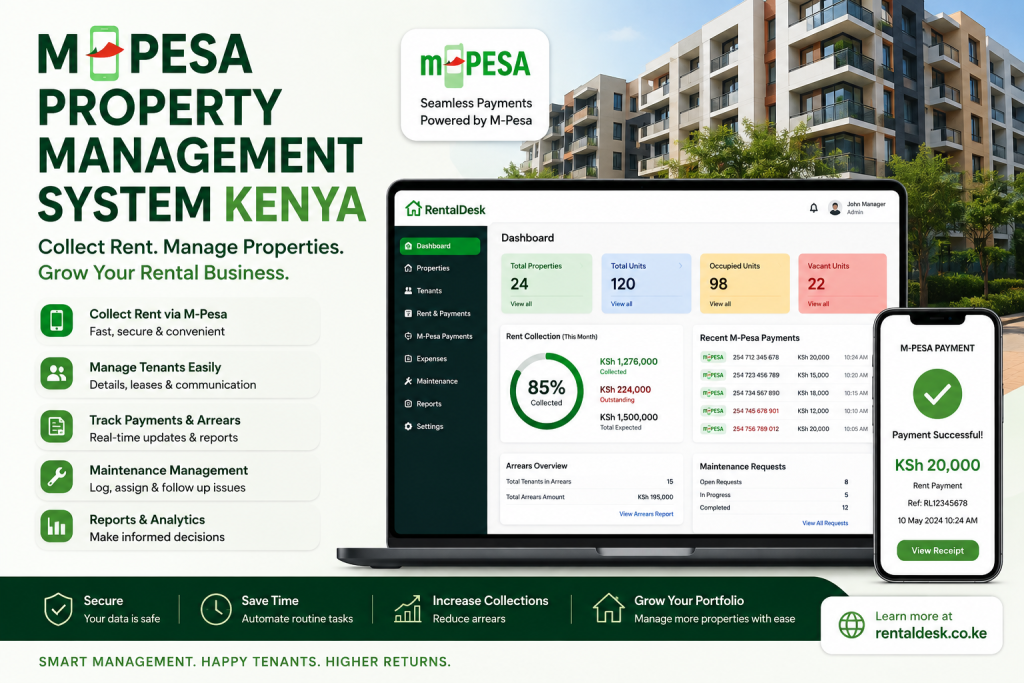
Managing rental property in Kenya can become difficult as the number of units grows. A landlord with five houses may manage rent using a notebook and phone messages, but managing 50, 100, or 500 units requires a more organized approach. This is where an M-Pesa property management system Kenya solution can make a major difference.
An M-Pesa property management system Kenya platform combines property management, tenant records, rent collection, payment tracking, reporting, communication, and other rental activities in one digital system. Instead of checking M-Pesa messages one by one, updating spreadsheets, and manually calculating arrears, property owners can use software to organize their rental operations.
Kenya’s rental market has increasingly embraced digital payments. M-Pesa is an important part of everyday financial transactions, making M-Pesa integration particularly useful for landlords and property managers. Safaricom’s Daraja platform provides APIs that can connect M-Pesa services with web and mobile applications, allowing businesses to build payment workflows into their systems.
For property owners, this creates an opportunity to move from manual rent collection to a more automated and transparent process.
What Is an M-Pesa Property Management System Kenya?
An M-Pesa property management system Kenya solution is software designed to help landlords, property managers, real estate agencies, and property companies manage rental properties while supporting M-Pesa-based payments.
Rather than using separate tools for tenants, rent, payment records, maintenance, communication, and reports, an M-Pesa property management system Kenya platform brings these activities together.
A typical system may allow a landlord to:
- Add properties and rental units
- Register tenants
- Record lease information
- Generate rent invoices
- Collect rent through M-Pesa
- Track payments
- Identify unpaid rent
- Monitor arrears
- Send payment reminders
- Issue digital receipts
- Manage maintenance requests
- Track expenses
- Generate financial reports
- Monitor occupancy
- Manage multiple properties
The biggest advantage is centralization. Information that was previously scattered across notebooks, spreadsheets, SMS messages, WhatsApp conversations, and M-Pesa statements can be organized in one place.
Why Kenyan Landlords Need an M-Pesa Property Management System Kenya
Rental property management involves more than collecting money every month. A landlord needs to know which units are occupied, which tenants have paid, who has outstanding balances, when leases expire, how much income a property generates, and how much is spent on maintenance.
Without proper systems, these tasks can consume significant time.
An M-Pesa property management system Kenya solution helps create a structured workflow around these activities.
For example, imagine a landlord managing 80 apartments. On the fifth day of the month, dozens of tenants make payments. If the landlord relies on M-Pesa messages, they may have to manually identify each tenant, record the amount, update a spreadsheet, and calculate remaining balances.
This process becomes even harder when tenants make partial payments.
With an M-Pesa property management system Kenya platform, payments can be associated with tenant accounts and rental units, reducing manual reconciliation.
How M-Pesa Can Improve Rent Collection
Rent collection is one of the most important functions of rental management software.
An M-Pesa property management system Kenya solution can create a smoother payment experience by connecting tenant records with payment workflows.
Depending on the implementation, tenants may receive payment instructions, payment prompts, or other digital payment options. Once a payment is confirmed, the property management platform can update the tenant’s account.
Safaricom’s official Daraja platform describes its APIs as a bridge between M-Pesa services and web or mobile applications. This makes API-based integration an important technology for businesses building M-Pesa-enabled software.
For landlords, the practical benefit is improved visibility.
Instead of asking, “Who has paid rent?”, a landlord can open the dashboard and view payment information.
Instead of searching through hundreds of messages, the landlord can look at a tenant’s payment history.
Instead of manually calculating balances, the software can display outstanding amounts.
Automated Rent Tracking
One of the most useful features of an M-Pesa property management system Kenya platform is automated rent tracking.
Every tenant can have an account containing information such as:
- Tenant name
- Phone number
- Property
- Unit number
- Monthly rent
- Deposit
- Payment history
- Outstanding balance
- Lease dates
- Payment status
When payment information is properly integrated, the system can update the tenant ledger.
For example, if a tenant owes KSh 20,000 and pays KSh 15,000, the system can show the remaining KSh 5,000 balance.
This is much more useful than simply seeing a payment notification because the payment is connected to the tenant’s rental account.
Reducing Rent Arrears
Rent arrears can affect a landlord’s cash flow and make property management stressful.
An M-Pesa property management system Kenya platform can help landlords identify arrears earlier.
The dashboard can categorize tenants into groups such as:
- Paid
- Partially paid
- Due
- Overdue
- In arrears
This gives the property manager a quick overview of the portfolio.
Automated reminders can also be used to notify tenants before or after the rent due date.
Instead of manually calling every tenant, the system can support scheduled SMS or other communication workflows.
The result is a more consistent rent collection process.
Tenant Management
A modern rental business needs accurate tenant information.
An M-Pesa property management system Kenya platform can provide a digital tenant database.
Each tenant profile may include contact details, unit information, lease details, payment history, documents, and communication records.
This eliminates the need to search through physical files whenever a tenant asks a question.
For example, if a tenant wants to know how much they owe, the property manager can check the tenant account immediately.
If the tenant asks when the lease expires, the information can also be available from the same profile.
Digital Rent Receipts
Rent receipts are important because they provide evidence of payment.
An M-Pesa property management system Kenya solution can generate digital receipts after successful payment recording.
A receipt may contain:
- Tenant name
- Property name
- Unit number
- Amount paid
- Payment date
- Payment reference
- Outstanding balance
- Landlord or management company details
Digital receipts can be delivered through supported communication channels, making record keeping easier for both tenants and landlords.
Managing Multiple Properties
Managing one building is different from managing a portfolio.
An M-Pesa property management system Kenya platform can help property managers organize multiple properties from one dashboard.
For example, a property manager may have:
- Apartments in Nairobi
- Shops in Mombasa
- Bedsitters in Nakuru
- Residential houses in Kiambu
- Student housing near universities
Instead of maintaining separate spreadsheets, properties can be organized within one system.
Managers can view individual properties or analyze the entire portfolio.
This is especially valuable for agencies managing properties on behalf of different owners.
Property and Unit Management
Every property has different units, rent amounts, occupancy levels, and tenant information.
An M-Pesa property management system Kenya platform should allow users to create buildings, blocks, floors, and individual units.
Each unit can have a status such as:
- Occupied
- Vacant
- Reserved
- Under maintenance
This helps property managers identify vacancies quickly.
A dashboard can also show how many units are occupied and how many are available.
Lease Management
Lease information should not be stored only in paper files.
An M-Pesa property management system Kenya platform can help property managers store lease information digitally.
Important details may include:
- Lease start date
- Lease end date
- Rent amount
- Deposit
- Payment frequency
- Tenant information
- Renewal date
- Special terms
Automated notifications can remind property managers when leases are approaching expiration.
This gives landlords more time to communicate with tenants and plan renewals.
Maintenance Management
Property management is not only about rent.
Tenants also report issues such as leaking pipes, broken doors, electrical faults, damaged roofs, plumbing problems, and other maintenance requirements.
An M-Pesa property management system Kenya platform can include maintenance management.
A tenant or property manager can create a maintenance request and record:
- Property
- Unit
- Problem
- Date reported
- Priority
- Assigned technician
- Status
- Cost
- Completion date
The request can then move through stages such as “New,” “Assigned,” “In Progress,” and “Completed.”
This creates accountability.
Expense Management
Property owners need to understand both income and expenses.
An M-Pesa property management system Kenya solution can help record expenses such as:
- Repairs
- Cleaning
- Security
- Utilities
- Caretaker payments
- Landscaping
- Management fees
- Property improvements
When rental income and expenses are recorded together, landlords can get a clearer picture of property performance.
For example, a building may collect KSh 1 million in rent every month but spend KSh 300,000 on expenses. A financial dashboard can help the owner understand the difference between gross rental income and actual operating performance.
Landlord Reporting
Property managers who manage properties for owners need professional reports.
An M-Pesa property management system Kenya platform can generate reports covering rental income, arrears, expenses, occupancy, payments, and other property information.
Instead of manually preparing spreadsheets every month, a manager can generate reports from the system.
Reports may include:
- Rent collection reports
- Arrears reports
- Tenant statements
- Expense reports
- Property income reports
- Occupancy reports
- Payment summaries
- Maintenance reports
This makes communication between property managers and property owners easier.
Case Study: A Small Landlord
Consider a landlord with 15 rental units.
Before adopting an M-Pesa property management system Kenya solution, the landlord records rent in a notebook and checks M-Pesa messages manually.
At the end of the month, the landlord spends several hours determining:
- Who has paid
- Who has not paid
- Who made partial payments
- Which units are vacant
- How much money was collected
After adopting a digital system, tenant information, unit records, payments, and balances are organized in one place.
The landlord can quickly identify unpaid rent and follow up with the relevant tenants.
The main improvement is not simply receiving payments digitally. It is having organized information around those payments.
Case Study: A Property Management Agency
Imagine a property agency managing 300 units for several property owners.
Without software, the agency may have separate Excel files for each property and rely on WhatsApp for tenant communication.
This can create confusion.
An M-Pesa property management system Kenya platform can centralize the agency’s portfolio.
Property managers can view properties, tenants, rent balances, payments, expenses, and maintenance activities from a single environment.
Management can also generate reports for individual property owners.
This improves transparency and reduces administrative work.
Case Study: An Apartment Complex
Consider an apartment complex with 100 units.
The property manager needs to monitor rent, service charges, maintenance, vacancies, and tenant communication.
An M-Pesa property management system Kenya solution can provide a centralized dashboard.
When tenants pay, payment information can be connected to their accounts. When tenants have outstanding balances, the manager can identify them quickly.
The manager can also monitor maintenance requests and expenses.
This creates a more professional rental operation.
Benefits for Tenants
An M-Pesa property management system Kenya platform is not only useful for landlords.
Tenants can also benefit.
A good system can give tenants access to:
- Payment information
- Rent balances
- Payment history
- Receipts
- Maintenance requests
- Notices
- Lease information
- Property management contacts
This reduces the need for tenants to call the property manager for basic information.
For example, instead of asking whether a payment was received, a tenant can view their payment record.
Improved Transparency
Transparency is important in property management.
An M-Pesa property management system Kenya solution creates digital records of transactions and activities.
When a payment is recorded, the landlord can see the payment details.
When a maintenance request is created, the property manager can track its progress.
When an expense is recorded, it can be associated with a property or unit.
This creates a stronger audit trail than informal record keeping.
Security and Access Control
Property management systems contain sensitive business and tenant information.
An M-Pesa property management system Kenya platform should therefore include appropriate security controls.
Different users can have different permissions.
For example:
- Landlords can view portfolio reports.
- Property managers can manage tenants.
- Caretakers can handle maintenance.
- Accountants can access financial information.
- Tenants can view their own accounts.
Role-based access reduces unnecessary exposure of information.
Businesses should also choose providers that follow appropriate security practices and protect customer information.
Mobile-Friendly Property Management
Property managers are often away from their desks.
An M-Pesa property management system Kenya solution should therefore work well on smartphones, tablets, and computers.
A mobile-friendly interface allows managers to check payment information, respond to requests, and monitor properties while traveling.
For a property manager visiting a building, being able to access tenant or unit information from a phone can save time.
Why Automation Matters
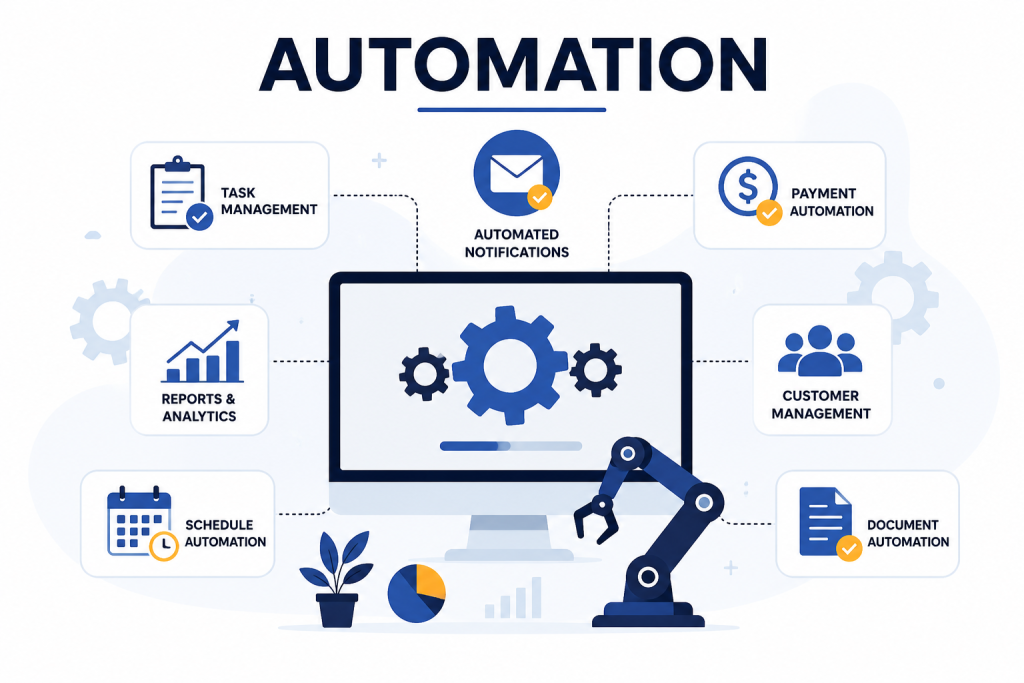
Manual property management becomes harder as a portfolio grows.
A landlord managing ten units may manage tasks manually.
A landlord managing hundreds of units needs automation.
An M-Pesa property management system Kenya solution can automate repetitive tasks such as payment recording, reminders, invoice generation, receipt creation, and reporting.
Automation does not remove the need for property managers. Instead, it allows them to spend more time on important activities such as tenant relationships, property inspections, maintenance supervision, and business growth.
Choosing the Right Property Management Software
Before choosing an M-Pesa property management system Kenya solution, landlords should evaluate the features carefully.
Important questions include:
Does it support M-Pesa?
M-Pesa integration should be reliable and properly implemented.
Can it manage multiple properties?
This is important for growing landlords and agencies.
Does it track arrears?
The system should clearly identify outstanding balances.
Can it generate reports?
Financial and property reports are essential for decision making.
Can tenants access information?
A tenant portal can improve communication and transparency.
Does it support maintenance?
Property maintenance is a major part of rental management.
Is it easy to use?
A complicated platform can discourage adoption.
Is customer support available?
Local support can be valuable when implementing new software.
M-Pesa Integration and APIs
Technical integration is an important part of building an M-Pesa property management system Kenya solution.
Safaricom’s Daraja 3.0 platform provides access to M-Pesa APIs that developers can use to connect applications with M-Pesa services. The platform also provides documentation and sandbox capabilities for developers.
This means software companies can design payment workflows that connect M-Pesa transactions to business applications.
For property management, this can support workflows such as:
Tenant → Payment request → M-Pesa → Confirmation → Property management system → Tenant ledger → Receipt
The exact implementation depends on the software architecture, payment configuration, business requirements, and approved API capabilities.
M-Pesa Property Management System Kenya vs Excel
Excel is useful for basic record keeping, but it has limitations.
An M-Pesa property management system Kenya platform is designed specifically for rental operations.
Excel requires users to manually enter and update information.
A property management platform can automate many processes.
Excel can also become difficult to maintain when several people are editing files.
A centralized system can provide controlled access and a shared source of information.
For a landlord with a few units, Excel may be sufficient. For a growing portfolio, dedicated software can provide significant operational advantages.
M-Pesa Property Management System Kenya vs Manual Records
Manual records may include notebooks, receipts, SMS messages, spreadsheets, and physical documents.
The biggest problem is fragmentation.
An M-Pesa property management system Kenya platform brings information together.
Instead of asking:
“Where did I record this payment?”
the landlord can search for the tenant and view the account.
Instead of asking:
“Which tenant has arrears?”
the landlord can generate an arrears report.
Instead of searching through messages for a receipt, the tenant payment record can be accessed digitally.
How to Implement a Property Management System
Moving from manual management to an M-Pesa property management system Kenya platform should be done systematically.
Step 1: List Your Properties
Create a complete list of buildings and units.
Step 2: Add Tenant Information
Enter current tenant details and assign each tenant to the correct unit.
Step 3: Add Rent Amounts
Record monthly rent and other recurring charges.
Step 4: Enter Existing Balances
Record outstanding arrears and credits accurately.
Step 5: Configure Payment Workflows
Set up the appropriate M-Pesa payment integration.
Step 6: Configure Notifications
Create reminders for rent due dates and overdue balances.
Step 7: Train Staff
Property managers, accountants, caretakers, and other users should understand their responsibilities.
Step 8: Monitor Results
Track rent collection, arrears, occupancy, expenses, and tenant issues.
Common Mistakes to Avoid
Choosing an M-Pesa property management system Kenya platform without evaluating the actual business requirements can lead to problems.
One common mistake is choosing software based only on price.
Another is selecting a system that cannot scale with the portfolio.
Some landlords also focus entirely on rent collection while ignoring maintenance, tenant records, reporting, and expenses.
A good platform should support the broader property management process.
Another mistake is failing to clean existing data before migration.
Incorrect tenant names, unit numbers, rent amounts, or balances can cause problems later.
The Future of Property Management in Kenya
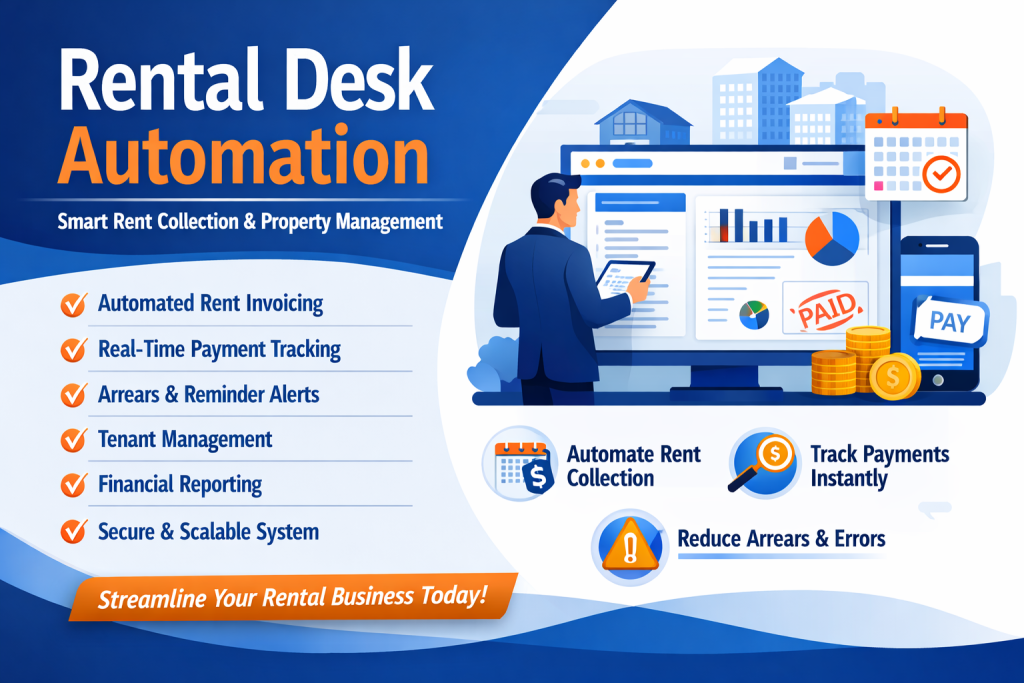
The future of rental management is increasingly digital.
As landlords manage larger portfolios, demand for automation and real-time information is likely to increase.
An M-Pesa property management system Kenya platform can become the foundation for a broader digital property ecosystem.
Future platforms may increasingly combine:
- Mobile payments
- Artificial intelligence
- Automated tenant communication
- Predictive maintenance
- Digital leases
- Smart utility billing
- Online property listings
- Financial analytics
- Automated reporting
- Tenant self-service portals
Artificial intelligence could also help landlords identify unusual payment patterns, predict maintenance requirements, summarize reports, and answer common tenant questions.
The goal is to make property management more efficient without making it more complicated.
Frequently Asked Questions
What is an M-Pesa property management system?
An M-Pesa property management system Kenya solution is software that combines property management functions with M-Pesa-supported payment workflows, allowing landlords to manage tenants, rent, payments, arrears, reports, and other rental activities digitally.
Can landlords collect rent through M-Pesa?
Yes. Landlords can use appropriate M-Pesa payment channels and integrations for rent collection. The specific payment method depends on the landlord’s business setup and the software implementation.
Can the system track rent arrears?
Yes. A properly configured M-Pesa property management system Kenya platform can maintain tenant balances and identify outstanding rent.
Can tenants receive receipts?
Yes. Many property management platforms can generate digital receipts after payments are recorded or confirmed.
Can it manage multiple buildings?
Yes. A scalable M-Pesa property management system Kenya platform can organize multiple buildings, units, and tenants under one account.
Is property management software suitable for small landlords?
Yes. Even small landlords can benefit from centralized tenant records, payment tracking, reminders, and reports.
Can property managers use the system?
Yes. Property management agencies can use software to manage properties on behalf of multiple owners.
Does M-Pesa integration eliminate all manual work?
Not necessarily. Automation can reduce repetitive tasks, but users still need to configure the system correctly, monitor transactions, resolve exceptions, and manage property operations.
Final Thoughts
Rental property management should not depend entirely on notebooks, spreadsheets, phone messages, and manual calculations.
An M-Pesa property management system Kenya solution can give landlords and property managers a more organized way to manage their rental businesses.
From rent collection and tenant management to arrears tracking, maintenance, reporting, and communication, a centralized system can improve visibility across the entire property portfolio.
The biggest benefit is control.
When landlords know who has paid, who owes money, which units are vacant, how much each property earns, what expenses have been incurred, and which maintenance issues remain open, they can make better decisions.
For Kenyan landlords looking to modernize their rental operations, adopting an M-Pesa property management system Kenya platform can be an important step toward faster, more transparent, and more efficient property management.
The right system should not simply collect rent. It should help you manage the complete rental lifecycle—from tenant onboarding to payment collection, reporting, maintenance, communication, and portfolio growth.
If your rental business is still relying heavily on manual rent records, now is a good time to consider a digital solution. An M-Pesa property management system Kenya platform can help transform property management from a time-consuming administrative task into a more organized and scalable business process.
Ready to Modernize Your Rental Business?
Whether you manage a few rental houses, an apartment block, commercial properties, or a large portfolio, the right software can help you save time and improve visibility.
Choose an M-Pesa property management system Kenya solution that fits your portfolio, supports your payment workflow, provides reliable reporting, protects your data, and is simple enough for your team and tenants to use.
Digital property management is no longer only for large real estate companies. Kenyan landlords of different sizes can use technology to simplify rent collection, improve tenant relationships, reduce administrative work, and build more professional rental businesses.
Start by reviewing your current process. Identify where you lose time, where payment records become difficult to reconcile, where arrears are missed, and where tenant communication breaks down.
Then choose an M-Pesa property management system Kenya platform designed to solve those problems.
The future of rental management is organized, connected, automated, and data-driven—and Kenyan landlords can start building that future today.