Affordable Housing Management Platform: A Practical Guide for Managing Large Housing Projects
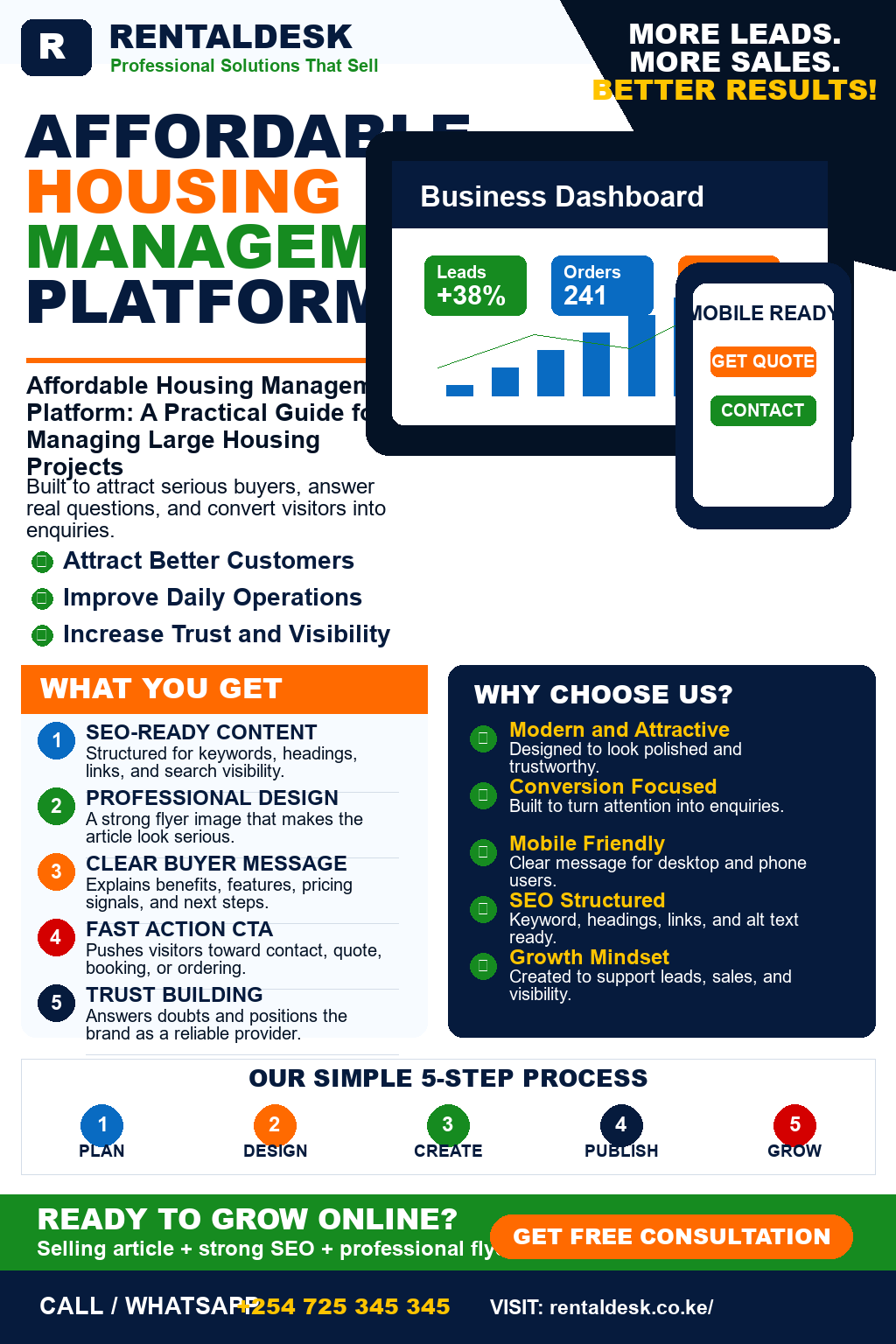
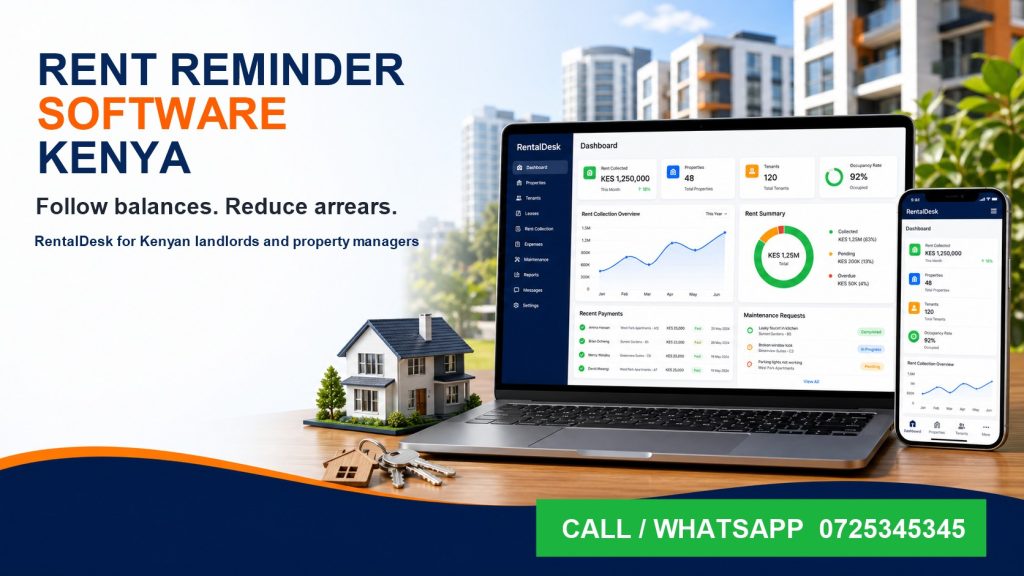
Affordable Housing Management Platform is a buyer-intent keyword because housing developers, government agencies, property managers, landlords, institutional investors, and real estate operators are not simply looking for a generic rental tool. They are looking for a structured platform that can handle large housing projects with many units, many tenants, staged allocations, rent collection, maintenance requests, arrears visibility, reporting, and communication. When a housing project grows beyond a few units, spreadsheets and scattered WhatsApp messages start creating operational risk. RentalDesk helps property teams manage these workflows from one practical rental management platform.
Affordable housing projects are usually complex because they sit between social impact, commercial sustainability, tenant service, and strict accountability. A project may involve hundreds or thousands of units, different tenant categories, rent-to-own structures, monthly rent payments, deposits, service charges, maintenance requests, inspections, utilities, owner reports, and government or donor reporting. A small mistake in tenant records or payment reconciliation can affect cash flow, resident trust, and management decisions. That is why a dedicated affordable housing management platform matters.
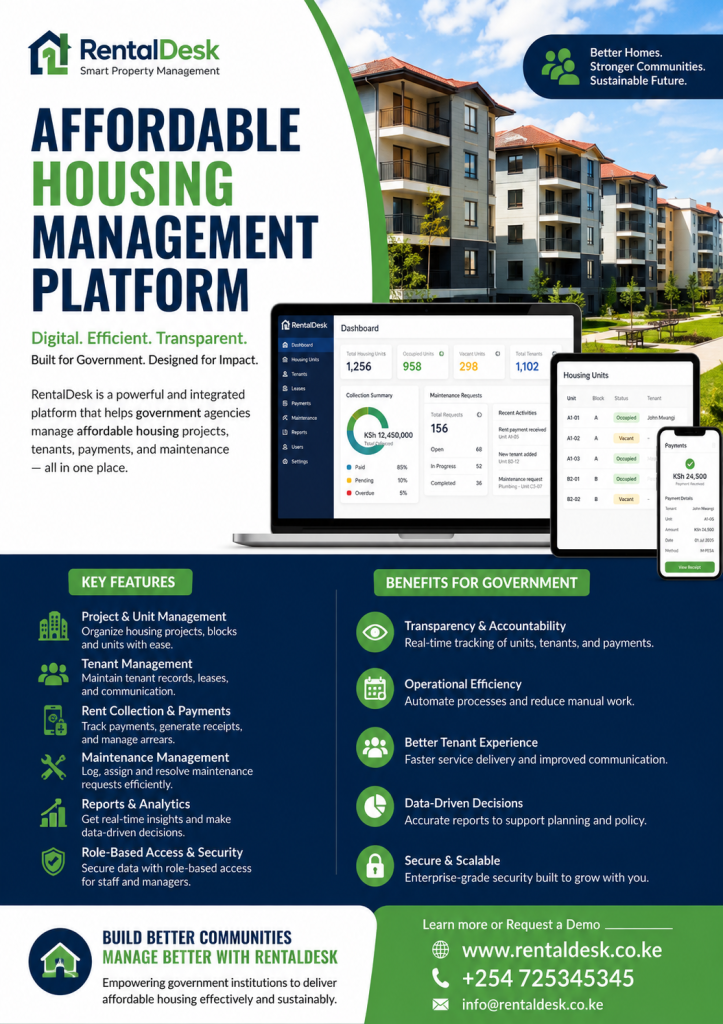
RentalDesk is built for property teams that want cleaner rent collection, better tenant management, stronger arrears control, and clearer operational reporting. For affordable housing, the platform should support the full journey: unit setup, tenant onboarding, allocation tracking, billing, collections, communication, maintenance, reporting, and management oversight. The goal is not only to digitize records. The goal is to make the housing operation easier to run, easier to audit, and easier to scale. Powered by Zama Systems.
What Is an Affordable Housing Management Platform?
An affordable housing management platform is software that helps housing operators manage residential units, tenants, rent payments, maintenance tasks, arrears, communication, reporting, and daily administration across a housing project. It is different from a simple contact list or accounting spreadsheet because it connects every unit to a tenant, every tenant to a balance, every balance to a payment record, and every issue to a workflow. This creates a single operational view for property managers, caretakers, accountants, supervisors, and decision makers.
The best platform should answer simple but important questions quickly. Which units are occupied? Which tenants have paid? Who is in arrears? Which maintenance requests are pending? Which blocks have recurring issues? Which tenants need follow-up? Which reports are due this week? Which payments need reconciliation? A good affordable housing management platform turns these questions into dashboard views, reports, and daily task lists instead of forcing teams to search through notebooks, bank messages, manual receipts, and personal phones.
For Kenyan property teams, the platform also needs to fit the local operating environment. Rent collection often involves mobile money, bank transfers, cash-office records, agents, caretakers, and manual confirmations. Tenant communication may happen by SMS, phone, WhatsApp, email, or printed notices. A practical platform should make these realities easier to control. It should not force the organization into a rigid workflow that ignores how residents, staff, and payment channels actually behave.
Why Affordable Housing Projects Need Better Systems
Affordable housing is often managed at scale, and scale changes everything. A spreadsheet that seems manageable for 20 units becomes fragile at 200 units. At 2,000 units, manual records become a serious operational liability. Staff members may update different files, payment follow-up may depend on individual memory, and maintenance issues may be handled informally until tenants start complaining. Without a structured platform, the management team can lose visibility even when everyone is working hard.
Housing projects also need trust. Tenants want to know that payments are recorded correctly, requests are acknowledged, and notices are clear. Owners, developers, investors, and public-sector partners want to know that collections, occupancy, arrears, and maintenance costs are visible. Property managers want fewer disputes and faster reporting. A dedicated affordable housing management platform supports this trust by giving each record a place, each workflow an owner, and each report a reliable source of data.
Many affordable housing teams start with manual processes because they are familiar and cheap. The hidden cost appears later. Staff spend hours reconciling payments. Tenants call repeatedly for balance confirmations. Maintenance requests are duplicated or forgotten. Managers cannot see portfolio performance without waiting for someone to prepare a report. Arrears follow-up becomes inconsistent. When leadership finally asks for clean data, the team has to assemble it under pressure. RentalDesk helps avoid that cycle by keeping daily operations structured from the start.
Core Features to Look For
A serious affordable housing management platform should begin with unit and property records. Each estate, block, floor, unit, house, or apartment should have a clear profile. The system should show whether the unit is vacant, occupied, reserved, under maintenance, allocated, or pending handover. For large housing projects, this structure is essential because managers need to understand occupancy and availability without walking through every block or calling multiple caretakers.
Tenant management is the second foundation. Each tenant record should include contact details, identification notes where applicable, unit assignment, lease or occupancy terms, deposit records, start date, billing schedule, payment history, arrears position, documents, and communication notes. When a tenant calls or visits the office, staff should not have to search through several files to understand the situation. A single tenant profile should show the most important operational facts.
Rent collection and arrears tracking are the third foundation. Affordable housing projects depend on predictable collections. The platform should generate charges, record payments, show balances, flag arrears, and make follow-up easier. It should support rent, deposits, service charges, penalties where applicable, utilities, and other recurring items. Managers should be able to see total expected rent, total collected, outstanding amounts, and arrears aging across the project.
Maintenance management is equally important. Affordable housing projects usually have recurring repairs, shared facilities, water issues, electrical faults, plumbing complaints, security concerns, and cleaning requests. A platform should allow staff to log requests, assign responsibility, track status, record cost, and maintain a service history for each unit or block. This helps the management team move from reactive complaint handling to organized facilities management.
Tenant Onboarding and Unit Allocation
Tenant onboarding is one of the most sensitive stages in affordable housing operations. The team may need to capture applicant details, allocation notes, deposit payments, house rules, emergency contacts, move-in dates, and documents. If the onboarding process is not structured, mistakes begin early. A tenant may be assigned to the wrong unit, a deposit may be recorded separately from the tenant profile, or important terms may remain in someone’s email rather than in the management system.
A good affordable housing management platform should help teams standardize onboarding. It should support a clear process: create or import tenant details, assign the unit, record deposits and starting balances, attach documents, set the billing cycle, confirm contacts, and activate the tenant account. This is especially useful for projects that onboard many tenants at once after construction, handover, allocation, or a new phase launch.
Allocation visibility also matters. In some affordable housing projects, not every unit is immediately available. Some units may be reserved, under inspection, allocated but not occupied, or occupied but pending full documentation. RentalDesk can help teams maintain a cleaner operational view so management knows which units are generating income, which units need action, and which records are incomplete. That clarity is hard to maintain manually when the project is large.
Rent Collection and Payment Visibility
Rent collection is the operational heartbeat of affordable housing management. Even when the project has a social or public-good mission, it still needs predictable income to maintain services, pay vendors, manage repairs, support staff, and meet owner or investor obligations. A platform should therefore make payment visibility immediate. Managers should not wait until the end of the month to discover that collections are behind target.
An affordable housing management platform should show payments by tenant, unit, block, property, date, amount, channel, and balance. It should help teams identify partial payments, missed payments, duplicate records, and tenants who need follow-up. It should also produce statements and receipts that tenants can understand. When tenants trust the balance, disputes reduce. When managers trust the reports, decisions improve.
In Kenya, M-Pesa and bank payments are common, so payment reconciliation is a major workflow. A housing team may receive hundreds of transactions with different references, names, or phone numbers. If these are handled manually, reconciliation becomes slow and error-prone. RentalDesk is positioned for rent collection workflows where payment tracking, tenant records, and arrears visibility need to work together instead of living in separate spreadsheets.
Arrears Management Without Confusion
Arrears management is not just about listing who has not paid. It is about understanding the size, age, reason, and follow-up status of the debt. A tenant who missed one week because of a temporary delay is different from a tenant who has not paid for three months. A unit with a data-entry error is different from a true arrears case. A good platform should help managers separate these situations so that follow-up is firm, fair, and accurate.
Affordable housing teams need arrears reports that show current balances, aging, repeated late payers, promise-to-pay notes, follow-up history, and payment patterns. These details help supervisors decide what action to take. They also help leadership understand whether arrears are isolated, seasonal, block-specific, tenant-category-specific, or caused by weak internal follow-up. Without a platform, arrears conversations become emotional and reactive because the evidence is scattered.
RentalDesk helps property teams make arrears more visible. The value is not only in showing a number. The value is in connecting the arrears position to the tenant profile, payment history, communication notes, and reports. This gives managers a practical operating view rather than a static debt list. For affordable housing, that clarity supports both financial discipline and better tenant service.
Maintenance and Facility Management
Maintenance is where many housing projects lose tenant trust. A tenant may report a leak, broken door, electrical issue, drainage problem, or shared facility concern. If the request is not captured properly, the tenant may have to repeat the complaint several times. If no one owns the follow-up, the issue can remain unresolved until it becomes more expensive. A platform should give the team a simple way to capture, assign, track, and close maintenance requests.
For affordable housing, maintenance data also helps with planning. If one block has repeated plumbing issues, management needs to know. If a certain contractor keeps returning to the same problem, supervisors need visibility. If repairs are rising in cost, leadership needs reports. A maintenance module should therefore do more than collect complaints. It should create a service history that supports better decisions.
RentalDesk supports maintenance visibility by helping teams connect requests to tenants, units, and properties. This makes it easier to see what has been reported, what is pending, what has been resolved, and what needs escalation. For housing projects with many units, this structure saves time and reduces the number of issues that disappear into phone calls or informal chats.
Reporting for Managers, Developers, and Owners
Affordable housing projects often have several stakeholders. A property manager may need daily operational reports. A developer may need occupancy and handover reports. An owner may need income summaries. A finance team may need collections and arrears reports. A public-sector or institutional partner may need performance indicators. If each report requires manual compilation, the management team spends too much time preparing documents and too little time improving operations.
A good affordable housing management platform should make reporting faster and more reliable. Useful reports include occupancy, vacancy, collections, arrears, tenant balances, deposits, maintenance requests, outstanding tasks, service charge status, and portfolio performance. Reports should help decision makers identify problems early. They should not simply describe the past after the damage has already happened.
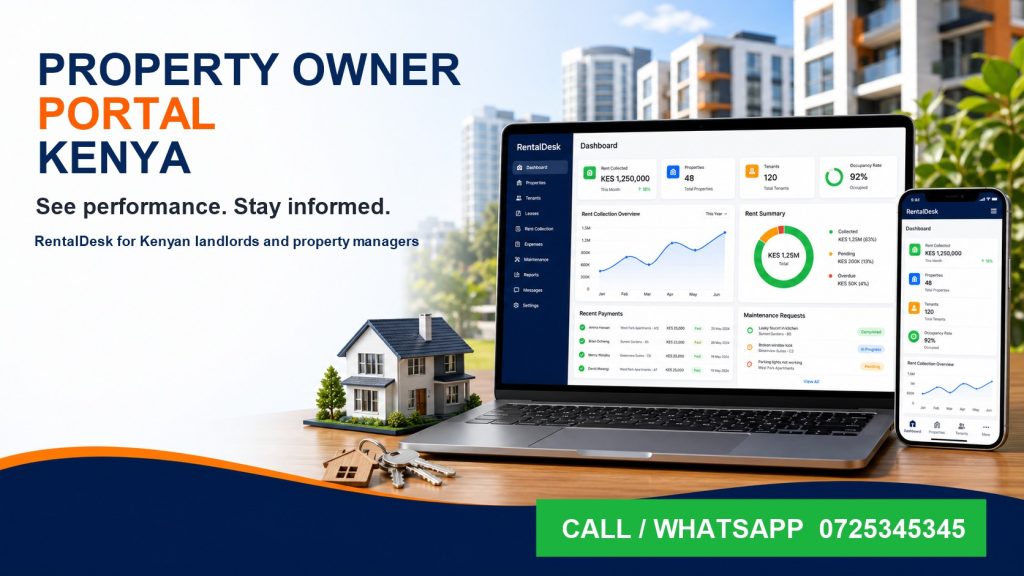
RentalDesk is useful for teams that want clearer owner and management visibility. The platform helps connect daily records to reports so that leaders can see what is happening across the project. This matters for affordable housing because good reporting supports accountability, funding conversations, operational planning, and tenant confidence. When data is clean, management meetings become more practical.
Dashboards for Affordable Housing Decision Makers
Dashboards are valuable because they turn daily activity into a management view. In an affordable housing project, different people need different dashboards. A caretaker may need open maintenance requests, pending inspections, and move-in tasks. An accountant may need collections, arrears, deposits, and reconciliation exceptions. A property manager may need occupancy, vacancies, tenant issues, and aging balances. A director or developer may need portfolio performance, income trends, collection rates, and risk indicators. A strong affordable housing management platform should support these views without forcing every user to read the same report.
Good dashboards also help managers act earlier. If collections drop in one block, the team can investigate before the end of the month. If maintenance requests increase in a certain estate, the facilities team can review the root cause. If vacancies stay open too long, leasing or allocation teams can respond. Without dashboards, these patterns are often discovered late, after tenants complain or after revenue has already been lost. RentalDesk helps turn daily property records into operational visibility that managers can use.
Data Migration From Spreadsheets and Manual Records
Many housing teams worry about moving from spreadsheets because they have years of tenant data, payment notes, balances, unit lists, and maintenance records. The safest approach is not to move every historical detail at once. Start with the current operating data: active units, current tenants, opening balances, deposits, contact details, recurring charges, and active maintenance issues. Once the live workflow is stable, older records can be archived or imported in phases if they are still useful.
Data migration should include cleaning and validation. Unit numbers should follow a consistent format. Tenant names should be checked. Phone numbers should be corrected. Balances should be approved before launch. Duplicate records should be merged. This work may feel administrative, but it protects the platform from becoming a digital version of the same messy spreadsheet. RentalDesk works best when the onboarding process includes practical data cleanup, staff review, and a clear go-live checklist.
Resident Experience and Service Quality
Affordable housing management is not only about internal reports. It also affects the resident experience. A tenant who receives clear notices, accurate balances, faster maintenance feedback, and consistent follow-up is more likely to trust the management team. A tenant who must repeat the same issue to three staff members is more likely to become frustrated. Software cannot solve every resident concern, but it can give staff the information they need to respond professionally.
Service quality improves when the team can see context. If a resident reports a leaking pipe, the staff member should see the unit, tenant details, past requests, current balance, and previous repairs. If a tenant disputes an arrears notice, the team should see payment history and communication notes. If a family is moving in, onboarding tasks should be clear. These small improvements add up across hundreds of units. RentalDesk helps housing teams build a more consistent service experience because important details are easier to find.
Cost Control and Maintenance Planning
Maintenance costs can quietly grow inside affordable housing projects. A team may know that repairs are frequent, but without structured records it becomes hard to see which issues repeat, which blocks cost more, which contractors handle which jobs, and which repairs should be escalated into preventive maintenance. A platform helps turn repair activity into data. That data can support budgeting, vendor review, and better facility planning.
Cost control does not mean ignoring repairs. In housing management, delayed repairs often become more expensive. Cost control means seeing the work clearly, assigning it properly, tracking completion, and learning from patterns. If plumbing issues keep returning in one section, management can plan a deeper intervention. If electrical faults increase after a weather event, supervisors can review safety risks. RentalDesk gives teams a better structure for recording maintenance so that costs are easier to understand and justify.
Communication and Tenant Support
Communication is a major part of housing management. Tenants need notices, balance updates, maintenance feedback, policy reminders, move-in instructions, and sometimes escalation responses. If communication is scattered across personal phones and informal messages, there is no reliable record of what was said, when it was said, and who handled it. That creates conflict when tenants and staff remember conversations differently.
An affordable housing management platform should help teams keep communication organized. It should support notes, reminders, follow-up tasks, and clear tenant records. Even when actual communication happens through SMS, phone, or WhatsApp, the important details should be reflected in the tenant profile. This helps staff serve tenants better and helps managers understand unresolved issues.
Good communication also reduces unnecessary office visits. When tenants can receive clear statements, notices, receipts, or updates, they do not have to call repeatedly for basic information. For large housing projects, reducing avoidable calls and walk-ins can save many staff hours per month. RentalDesk supports this by keeping tenant records, balances, maintenance, and follow-up information easier to access.
Affordable Housing and Compliance Readiness
Affordable housing projects may need to satisfy internal policies, investor expectations, public-sector reporting, tenant rules, and financial controls. Even when there is no complicated compliance framework, good records are still essential. Management should be able to explain who occupies each unit, what each tenant owes, what has been paid, what maintenance has been done, and what actions have been taken. A platform makes that easier.
Audit readiness starts with daily discipline. If payments, balances, unit assignments, maintenance tasks, and tenant details are captured properly as work happens, reporting becomes easier later. If the team waits until audit time to clean records, the process becomes painful. An affordable housing management platform helps teams build cleaner records day by day.
For organizations managing public or institutional housing, transparency is especially important. Stakeholders may ask for evidence of occupancy, collections, arrears, repairs, and tenant support. RentalDesk helps property teams produce a more organized record trail. That can improve confidence in the management process and reduce the stress of preparing reports under pressure.
How to Choose the Right Platform
When comparing an affordable housing management platform, start with your workflow, not the software brochure. List the actual steps your team handles every month: tenant onboarding, unit allocation, billing, rent collection, arrears follow-up, maintenance, communication, reporting, and management review. Then ask whether the platform can support those steps in a way your staff will actually use.
Next, evaluate scale. A platform that works for 50 units may not work for 2,000 units. Ask whether it can support multiple properties, blocks, unit categories, tenant types, roles, and reports. Ask how quickly staff can find a tenant, confirm a balance, log a request, or generate a report. Speed matters because housing teams handle many small tasks every day.
Also evaluate support and onboarding. Affordable housing data can be messy when migrating from spreadsheets or paper records. The provider should help structure the setup, clean important fields, import data carefully, and train the team. Software alone is not enough. The rollout process determines whether the platform becomes part of daily work or remains an unused system. RentalDesk focuses on practical adoption for property teams that need results, not complexity for its own sake.
Implementation Plan for Housing Projects
A practical implementation should begin with data mapping. Identify every property, block, unit, tenant, balance, deposit, and recurring charge. Decide which records are essential for launch and which can be cleaned later. This prevents the rollout from getting stuck because the team is trying to perfect every historical detail before going live. For many housing projects, the best approach is to launch with the most important current records and improve the archive progressively.
The next step is role design. Decide who will manage tenant records, who will record payments, who will handle maintenance, who will review arrears, and who will generate reports. A platform works best when roles are clear. If everyone can change everything without process, the system becomes messy. If permissions are too restrictive, staff cannot do their work. The right balance depends on the organization.
After setup, run a short parallel period. Compare the platform reports with existing records, confirm balances, test maintenance workflows, train caretakers and managers, and collect feedback. Once the team trusts the data, move daily operations into RentalDesk. A phased rollout reduces fear and gives the management team time to adjust. For large affordable housing projects, this is usually better than a sudden switch without preparation.
Common Mistakes to Avoid
The first mistake is treating affordable housing management as simple rent collection. Rent collection is important, but it is only one part of the workflow. The project also needs tenant records, unit status, maintenance follow-up, communication notes, reports, and accountability. If the platform only records payments, the team will still need other tools for everything else.
The second mistake is ignoring data quality. If tenant names, unit numbers, balances, and contacts are imported poorly, staff will quickly lose trust in the platform. Data cleanup may feel slow at the beginning, but it saves time later. A good rollout should include validation checks, clear naming rules, and staff training on how to maintain clean records.
The third mistake is choosing software without thinking about adoption. A platform may have many features but still fail if the daily users find it confusing. Affordable housing teams include managers, accountants, caretakers, support staff, and sometimes external stakeholders. The platform should make their work easier. RentalDesk is strongest when the team maps real workflows first and uses the system to support those workflows consistently.
Why RentalDesk Fits Affordable Housing Management
RentalDesk is designed around practical rental management workflows: tenants, units, rent collection, balances, arrears, maintenance, reports, and communication. That makes it relevant for affordable housing projects that need operational control without turning the management process into a complicated enterprise software project. It gives property teams a structured way to manage the daily work that determines whether housing operations run smoothly.
The platform is useful for apartment blocks, estates, housing projects, mixed-use developments, student hostels, commercial buildings, and property portfolios. For affordable housing, the most important value is visibility. Managers can see who occupies what, who has paid, who owes money, what maintenance is pending, and what reports are needed. This visibility helps the team respond faster and plan better.
RentalDesk also connects naturally with broader property management education through PMS.co.ke, which focuses on property management software, real estate software, and platform comparisons. For teams ready to explore the actual product, the main platform is RentalDesk. For estate and service charge workflows, EstateAdmin may also be relevant where resident associations and gated communities need specialized estate management.
SEO FAQ: Affordable Housing Management Platform
What is the best affordable housing management platform for Kenyan property teams?
The best platform is one that fits the local workflow: unit records, tenant management, rent collection, arrears tracking, maintenance, reporting, and communication. RentalDesk is built for property teams in Kenya that need a practical rental management platform for housing projects, apartment blocks, estates, and portfolios.
Can an affordable housing management platform track rent and arrears?
Yes. Rent and arrears tracking are core requirements. The platform should show tenant balances, payment history, outstanding amounts, arrears aging, follow-up notes, and collection reports. This gives managers better control than spreadsheets or manual receipt books.
Does RentalDesk support maintenance management?
RentalDesk helps property teams organize maintenance requests, connect issues to units or tenants, track status, and improve follow-up. This is important for affordable housing because maintenance delays can quickly affect tenant satisfaction and project reputation.
Is this only for landlords?
No. An affordable housing management platform can support landlords, property managers, developers, government-linked housing teams, real estate companies, estate managers, housing project administrators, and organizations managing large residential portfolios.
How should a housing project start implementation?
Start by mapping properties, blocks, units, tenants, balances, deposits, and recurring charges. Then define staff roles, import clean data, test billing and reports, train users, and move daily operations into the platform in a controlled rollout.
Conclusion
An Affordable Housing Management Platform is no longer optional for serious housing projects that want cleaner operations, transparent rent collection, better tenant service, stronger maintenance follow-up, and reliable reporting. Manual tools may work at the beginning, but they become expensive when the project grows. The cost appears in delayed reports, weak arrears control, tenant disputes, missed maintenance, and management decisions made with incomplete information.
RentalDesk gives property teams a practical way to manage affordable housing projects from one organized platform. It supports the records and workflows that matter most: units, tenants, rent collection, balances, arrears, maintenance, communication, and reports. For managers, developers, owners, and housing organizations that want better control, the next step is to review the current workflow and request a RentalDesk demo around the real structure of the project.