Rental Marketplace: The Smart Way to Rent, List, and Earn Online
A rental marketplace is transforming how individuals and businesses rent out products, properties, vehicles, and equipment. Instead of owning everything, users can now access what they need on demand—saving money, increasing flexibility, and unlocking new income streams.
Whether you’re a renter looking for affordable options or a business owner aiming to maximize asset utilization, a rental marketplace provides a seamless, digital solution for both sides.
What Is a Rental Marketplace?
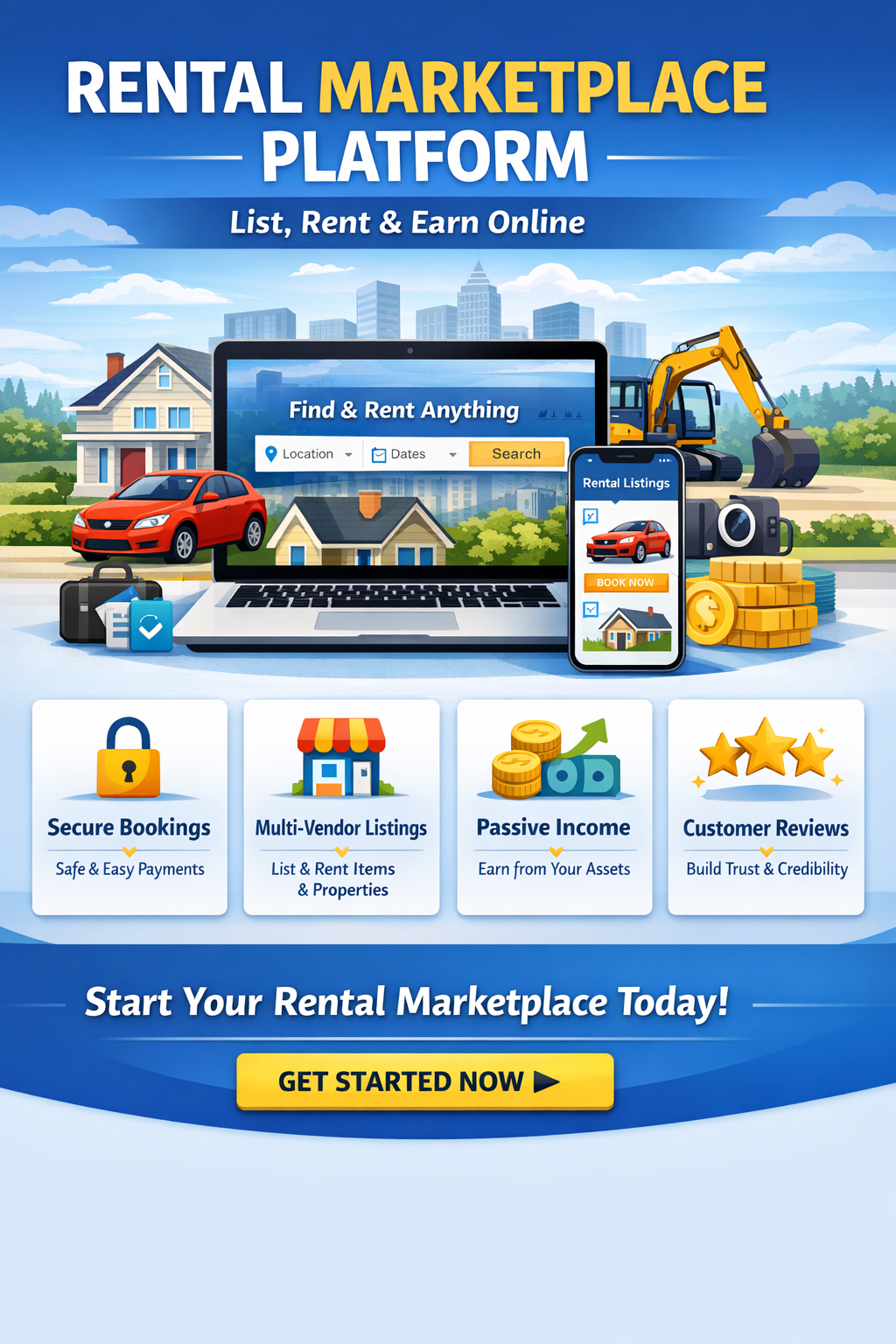
A rental marketplace is an online platform that connects renters with owners who offer items, spaces, or services for short-term or long-term rental. These platforms manage listings, bookings, payments, availability, and communication in one centralized system.
Popular rental marketplace categories include:
-
Car rental marketplaces
-
Furniture and appliance rental platforms
-
Equipment and tool rental marketplaces
-
Property and vacation rental websites
-
Event and office space rental platforms
How a Rental Marketplace Works
-
Owners list rental items or properties with pricing, availability, and images
-
Customers search and compare listings based on location, price, and features
-
Secure online booking and payments are processed through the platform
-
Automated scheduling, contracts, and notifications simplify transactions
-
Ratings and reviews build trust and credibility
This end-to-end process makes renting fast, secure, and transparent.
Key Features of a Modern Rental Marketplace
A high-performing rental marketplace includes:
-
User-friendly search and filters
-
Real-time availability calendar
-
Secure online payments
-
Vendor and customer dashboards
-
Booking and reservation management
-
Automated invoices and contracts
-
Reviews and rating system
-
Mobile-responsive design
These features ensure a smooth experience for both renters and rental providers.
Benefits of Using a Rental Marketplace
For Customers
-
Access affordable rentals without ownership costs
-
Compare multiple rental options instantly
-
Flexible short-term and long-term rentals
-
Secure payments and verified listings
For Rental Businesses & Owners
-
Earn passive income from unused assets
-
Reach a wider audience online
-
Automated bookings and payment tracking
-
Reduced administrative workload
-
Data insights to optimize pricing and inventory
Why Rental Marketplaces Are Growing Rapidly
The rise of the sharing economy, mobile commerce, and cashless payments has fueled the growth of rental marketplaces worldwide. Customers now prefer access over ownership, while businesses benefit from scalable digital platforms.
Rental marketplaces also support sustainability by reducing waste and promoting asset reuse—making them a future-ready business model.
Rental Marketplace for Businesses
Businesses across industries use rental marketplaces to:
-
Launch rental services quickly
-
Digitize traditional rental operations
-
Manage multiple vendors or branches
-
Expand into new markets without high overhead costs
From startups to established enterprises, rental marketplaces offer unmatched scalability.
How to Choose the Right Rental Marketplace Platform
When selecting or building a rental marketplace, consider:
-
Customizable listings and pricing
-
Multi-vendor support
-
Payment gateway integration
-
Local currency and tax support
-
SEO-friendly architecture
-
Security and data protection
A well-optimized rental marketplace ensures better visibility, user trust, and higher conversion rates.
Types of Rental Marketplaces
A rental marketplace can serve different industries depending on user demand and business goals. Common types include:
1. Peer-to-Peer Rental Marketplace
Allows individuals to rent out personal assets such as cars, tools, furniture, or electronics. This model encourages asset sharing and passive income.
2. Business-to-Consumer (B2C) Rental Marketplace
Companies list products or services for rent directly to customers. Ideal for equipment rental, office furniture, and electronics.
3. Property & Space Rental Marketplace
Focuses on apartments, vacation homes, co-working spaces, storage units, and event venues.
4. Niche Rental Marketplaces
Designed for specific industries like medical equipment rental, construction tools, photography gear, or event supplies.
Each model benefits from the same digital infrastructure but targets different user needs.
Essential Pages Every Rental Marketplace Website Needs
To improve SEO and user experience, your rental marketplace should include:
-
Home page optimized for “rental marketplace”
-
Category pages (cars, furniture, equipment, etc.)
-
Individual listing pages with rich content
-
Vendor registration page
-
Customer signup and login pages
-
Pricing and commission page
-
FAQ and support center
-
Blog or resource hub
Well-structured pages help search engines crawl and rank your platform efficiently.
Rental Marketplace SEO Best Practices
To rank your rental marketplace higher on Google:
-
Use rental marketplace in H1, H2, and URL
-
Optimize listing titles and descriptions with long-tail keywords
-
Add structured data (schema markup)
-
Improve page speed and mobile usability
-
Publish consistent, keyword-rich blog content
-
Optimize images with descriptive alt text
-
Build backlinks from rental and business directories
These practices increase visibility and organic traffic.
Monetization Models for a Rental Marketplace
A rental marketplace can generate revenue in multiple ways:
-
Commission per booking
-
Subscription plans for vendors
-
Featured or promoted listings
-
Transaction or service fees
-
Advertising and partnerships
Choosing the right monetization strategy ensures long-term profitability.
Rental Marketplace Security & Trust Features
Trust is essential in any rental marketplace. Important security features include:
-
Verified user profiles
-
Secure payment gateways
-
Identity verification (KYC)
-
Insurance or damage protection options
-
Transparent cancellation and refund policies
These features improve user confidence and retention.
Mobile Optimization for Rental Marketplaces
Most users access rental marketplaces via smartphones. A mobile-optimized platform should offer:
-
Fast-loading pages
-
Simple navigation
-
One-click booking
-
Mobile payment options
-
Push notifications for bookings
Mobile optimization directly impacts SEO rankings and conversions.
Future Trends in Rental Marketplaces
The rental marketplace industry continues to evolve with:
-
AI-powered recommendations
-
Dynamic pricing algorithms
-
Contactless rentals and digital contracts
-
Integration with POS and ERP systems
-
Eco-friendly and sustainable rental solutions
Adopting these trends keeps your platform competitive and future-ready.
Frequently Asked Questions (FAQ)
What is a rental marketplace platform?
A rental marketplace platform is an online system that connects renters with owners, handling listings, bookings, payments, and customer management digitally.
Is a rental marketplace profitable?
Yes. With the right niche, traffic, and monetization strategy, rental marketplaces can generate consistent and scalable income.
Can I start a rental marketplace without inventory?
Yes. Multi-vendor rental marketplaces allow third-party vendors to list assets, eliminating the need for owning inventory.
How do I attract users to a rental marketplace?
SEO, paid ads, social media marketing, partnerships, and referral programs are effective growth strategies.
Rental Marketplace vs Traditional Rental Businesses
Traditional rental businesses rely heavily on manual processes, physical offices, and limited reach. In contrast, a rental marketplace operates digitally and scales faster.
| Traditional Rental Business | Rental Marketplace |
|---|---|
| Manual bookings | Automated online bookings |
| Limited local reach | Global or multi-city reach |
| High operational costs | Lower overhead |
| Fixed inventory | Multi-vendor inventory |
| Cash or offline payments | Secure digital payments |
A rental marketplace allows businesses to grow without increasing operational complexity.
Industries That Benefit from a Rental Marketplace
A rental marketplace can serve nearly any industry, including:
-
Car & vehicle rentals
-
Furniture and appliance rentals
-
Construction and industrial equipment rentals
-
Office space and co-working rentals
-
Event equipment and tent rentals
-
Medical equipment rentals
-
Electronics and gadget rentals
This flexibility makes rental marketplaces attractive to entrepreneurs and enterprises alike.
Building Trust and Credibility in a Rental Marketplace
Trust drives conversions. To strengthen credibility:
-
Display verified reviews and ratings
-
Use high-quality listing images
-
Offer transparent pricing with no hidden fees
-
Show vendor response times
-
Provide clear dispute resolution policies
A trusted rental marketplace enjoys higher repeat bookings and referrals.
Rental Marketplace User Experience (UX) Best Practices
An intuitive UX improves SEO engagement metrics such as time on site and bounce rate.
Best practices include:
-
Clean, simple navigation
-
Clear call-to-action buttons
-
Step-by-step booking flow
-
Advanced filters (price, location, availability)
-
Personalized recommendations
Good UX directly improves ranking and conversion performance.
Content Marketing for Rental Marketplace Growth
Content plays a critical role in driving organic traffic to a rental marketplace.
High-performing content ideas:
-
“Best rental platforms for [industry]”
-
“How to start a rental marketplace business”
-
“Short-term vs long-term rentals: which is better?”
-
“Rental marketplace tips for vendors”
-
“How to earn passive income through rentals”
These topics naturally support keyword clustering around rental marketplace.
Local SEO for Rental Marketplaces
Local optimization is essential for city-based or country-based rental platforms.
Local SEO tips:
-
Create location-specific landing pages
-
Optimize Google Business Profile
-
Use geo-targeted keywords (e.g., rental marketplace in Nairobi)
-
Add local schema markup
-
Collect location-based reviews
Local SEO helps attract high-intent users ready to book.
Analytics & Performance Tracking for Rental Marketplaces
Tracking performance helps optimize growth and revenue.
Key metrics to monitor:
-
Organic traffic and keyword rankings
-
Conversion rate and booking value
-
Vendor acquisition and retention
-
Customer lifetime value (CLV)
-
Bounce rate and session duration
Data-driven decisions improve profitability and user satisfaction.
Legal & Compliance Considerations
A professional rental marketplace must address:
-
Rental agreements and digital contracts
-
Data protection and privacy compliance
-
Tax calculation and reporting
-
Cancellation and refund policies
-
Insurance and liability coverage
Clear legal frameworks protect both platform owners and users.
Scaling a Rental Marketplace Successfully
To scale your rental marketplace:
-
Expand into new categories or locations
-
Introduce vendor onboarding incentives
-
Use referral and loyalty programs
-
Optimize SEO and paid acquisition
-
Integrate third-party tools (CRM, POS, ERP)
Scalability is one of the biggest advantages of the rental marketplace model.