
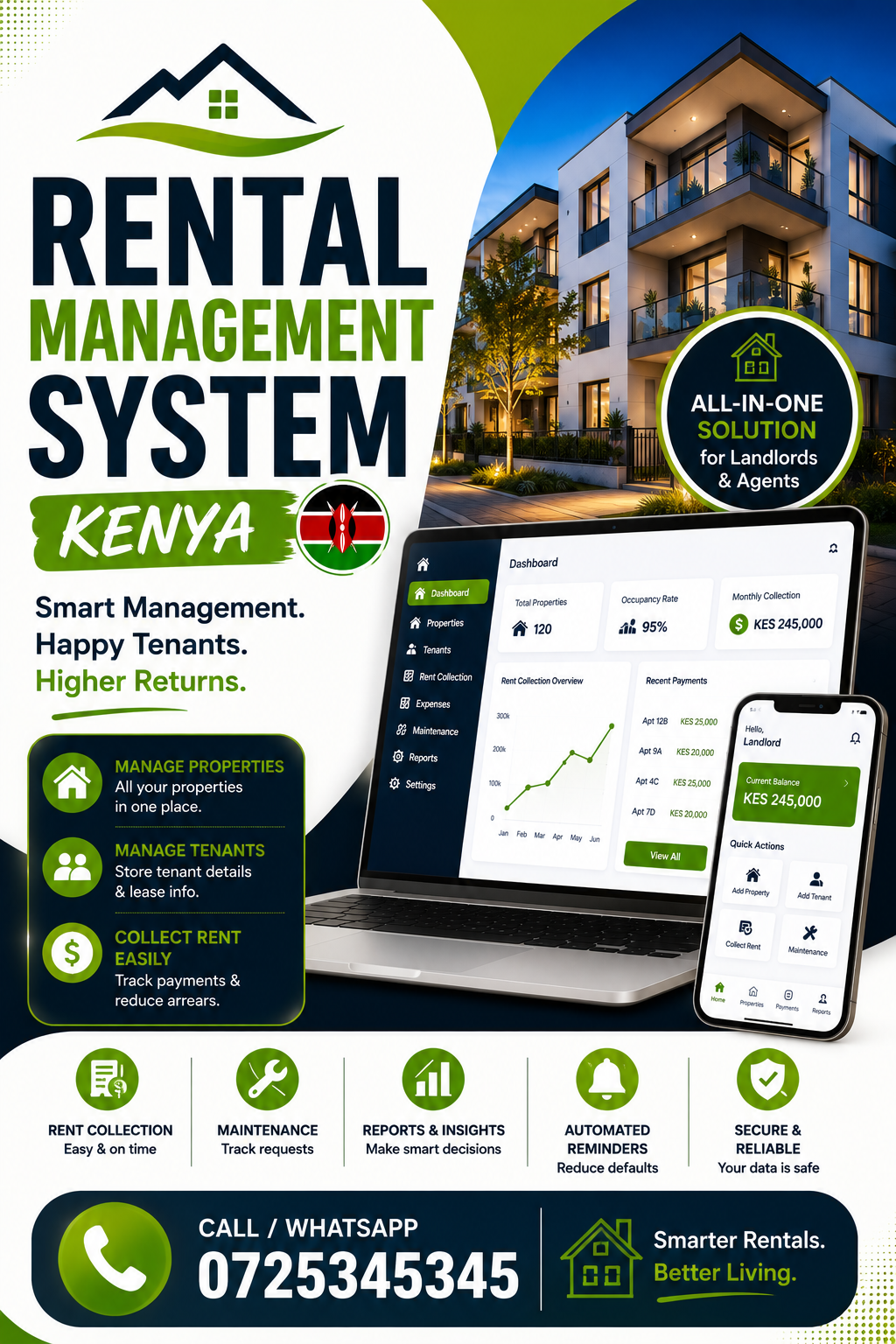
Rental Management System Kenya: A Complete Guide for Smarter Property Management
Managing rental properties manually can become increasingly difficult as a landlord or property manager takes on more units, tenants, payments, maintenance requests, and financial responsibilities. A digital platform can bring these activities together in one place. A rental management system kenya can help property owners and managers organize their rental operations, maintain accurate records, monitor payments, communicate with tenants, and make better use of property information.
For landlords managing apartments, residential houses, commercial spaces, or mixed-use properties, having organized information is essential. Paper files, spreadsheets, notebooks, messaging applications, and separate accounting records can make it difficult to maintain a clear picture of property performance.
Technology provides an opportunity to simplify these processes. Instead of relying on several disconnected tools, property managers can use a centralized system to manage important rental activities from one platform.
This guide explains how modern rental management works, the challenges Kenyan landlords face, the features to consider when selecting property management software, and how digital systems can improve everyday rental operations.
What Is a Rental Management System?
A rental management system kenya is software designed to help landlords, property managers, agencies, and property management teams organize and manage rental properties.
Depending on the platform, it can bring together functions such as:
- Property registration
- Unit management
- Tenant records
- Lease information
- Rent tracking
- Payment records
- Receipts
- Invoices
- Expense tracking
- Maintenance requests
- Tenant communication
- Financial reporting
- Occupancy monitoring
- Property performance reporting
The main purpose is centralization. Instead of keeping information in different files or applications, property managers can access relevant information from a structured digital environment.
For a small landlord, the software may help with basic tenant and rent records. For a larger property management company, it can support more complex workflows involving multiple buildings, units, employees, tenants, payments, and maintenance activities.
A rental management system kenya can therefore become an important operational tool for businesses that want to reduce administrative work while maintaining organized rental records.
Why Rental Property Management Is Becoming More Digital
The Kenyan rental market includes landlords with different types and sizes of property portfolios. Some manage a single residential building, while others manage dozens or hundreds of units.
As the portfolio grows, the amount of information that must be managed also increases.
A landlord may need to know:
- Which units are occupied
- Which units are vacant
- Which tenants have outstanding balances
- Which leases are approaching expiry
- Which maintenance jobs are pending
- How much rent was collected
- What expenses were incurred
- Which properties generate the most income
- Which tenants have active balances
- Which payments still need reconciliation
Managing this information manually can consume significant time.
A rental management system kenya provides a structured way to organize these records. Information can be entered once and then used across relevant management activities.
For example, when a tenant is assigned to a particular unit, the property manager can maintain the tenant’s details, lease information, rent amount, payment history, and other records within the same system.
Challenges of Managing Rental Properties Manually
Manual property management is not necessarily impossible, especially for a landlord with a very small portfolio. However, problems can become more visible as the number of units increases.
1. Scattered Information
Rental information may exist in notebooks, spreadsheets, receipts, emails, WhatsApp conversations, and other files.
This makes it difficult to establish one reliable source of information.
A rental management system kenya can centralize important records so that property managers do not have to search through multiple locations whenever they need information.
2. Difficulty Tracking Rent
Rent collection is one of the most important responsibilities of a property manager.
Without structured records, it can be difficult to identify:
- Paid tenants
- Partially paid tenants
- Tenants with outstanding balances
- Payment dates
- Historical transactions
- Expected monthly income
Digital rent management can make these records easier to monitor.
3. Maintenance Delays
Maintenance requests can arrive through phone calls, messages, emails, or verbal communication.
Without a formal tracking process, a request may be forgotten or delayed.
A rental management system kenya can provide a centralized approach for recording maintenance requests, assigning responsibilities, monitoring progress, and documenting completed work.
4. Time-Consuming Reporting
Property owners often need reports showing income, expenses, outstanding rent, occupancy, or other operational information.
Creating these reports manually can take considerable time.
Automated reporting can make it easier to retrieve information when required.
How a Rental Management System Works
A typical rental management platform starts by allowing the property manager to create records for properties and units.
The manager can then add tenants and connect them to their respective units.
Depending on the software, other information may include:
- Property details
- Unit details
- Tenant information
- Lease terms
- Rent amount
- Payment records
- Deposits
- Expenses
- Maintenance records
- Communication history
Once this information has been organized, the system can support daily operations.
For example, a rental management system kenya can connect tenant records with units and payment information, helping managers understand the status of individual accounts without reviewing several separate documents.
Property and Unit Management
Property management begins with knowing what assets are being managed.
A property management platform can allow users to organize buildings, blocks, floors, units, and other relevant information.
For example, a property manager could have:
- Apartment Block A
- Apartment Block B
- Commercial Building C
- Residential Houses D
Each property may contain multiple units.
The manager can record details such as unit numbers, unit types, rental rates, occupancy status, and tenant assignments.
A rental management system kenya can help structure this information so managers have a clearer overview of their portfolio.
This becomes especially useful when managing multiple properties.
Tenant Management
Tenant records are another important part of rental operations.
A property manager may need to maintain information such as:
- Tenant name
- Contact details
- Unit
- Lease dates
- Rent amount
- Deposit information
- Payment history
- Outstanding balance
- Communication records
Keeping this information organized can make tenant administration easier.
A rental management system kenya can provide a centralized tenant database that helps managers access relevant information when handling rent, leases, maintenance, or communication.
Tenant management also becomes more efficient when information can be searched rather than manually retrieved from physical files.
Rent Collection and Tracking
Rent collection is central to the financial performance of a rental property.
Property managers need to know not only how much rent should be collected but also how much has actually been received.
A digital system can help track expected and received payments.
A rental management system kenya can organize rent records by property, unit, tenant, month, or transaction.
This can make it easier to identify outstanding balances.
For example, if an apartment has 40 units, manually checking every tenant’s payment record each month can become tedious. A centralized platform can provide a more structured view of payment status.
Managing M-Pesa and Other Payment Records
Digital payments are important in modern Kenyan business operations.
Many tenants may pay rent electronically, and property managers need reliable records of transactions.
A rental platform can help organize payment information and connect transactions to relevant tenant accounts.
A rental management system kenya can support more organized payment tracking by associating payments with properties, units, and tenants.
The exact payment and integration features depend on the software being used, so property managers should evaluate whether a platform supports their preferred payment workflows.
Rent Arrears Management
Outstanding rent can affect property cash flow and create additional administrative work.
Property managers need visibility into overdue balances so that they can follow up appropriately.
A digital platform can help identify tenants with unpaid balances and provide records for follow-up.
A rental management system kenya can make arrears monitoring more structured by presenting outstanding amounts alongside tenant and unit information.
Instead of reviewing separate spreadsheets, a property manager can use centralized records to determine which accounts require attention.
Lease Management
Leases contain important information about the rental relationship.
These agreements can include:
- Start date
- End date
- Rent amount
- Deposit
- Renewal conditions
- Payment terms
- Other agreed requirements
Keeping track of lease dates manually can create challenges when managing many tenants.
A rental management system kenya can help managers maintain lease-related information alongside tenant and property records.
Lease visibility can also help property managers prepare for renewals and identify agreements that require attention.
Occupancy Management
Property owners need to understand how much of their available space is occupied.
Occupancy information can provide useful operational insight.
A building with many vacant units may require different management attention from a fully occupied building.
A rental management system kenya can help property managers monitor occupancy by property and unit.
Managers can use this information when planning marketing activities, following up on vacant units, or reviewing portfolio performance.
Vacancy Management
Vacant units do not generate rental income while they remain unoccupied.
Managing vacancies therefore requires timely information.
Property managers can record:
- Available units
- Vacancy dates
- Previous tenants
- Unit type
- Rental price
- Viewing information
- New tenant details
A rental management system kenya can provide a centralized view of vacancies and occupied units.
This makes it easier to distinguish between units that are currently rented and those that require tenant placement.
Maintenance Management
Property maintenance is an ongoing responsibility.
Common maintenance issues can include:
- Plumbing problems
- Electrical faults
- Broken doors
- Leaking roofs
- Damaged fixtures
- Painting requirements
- Security-related repairs
- Common-area maintenance
Without proper records, maintenance requests can become difficult to track.
A rental management system kenya can help property managers record maintenance requests and monitor their progress.
A typical workflow may involve:
- Tenant reports an issue.
- Manager records the request.
- Request is assigned to a responsible person or contractor.
- Work is scheduled.
- Repair is completed.
- Cost is recorded.
- Request is closed.
This creates a more organized maintenance history.
Rental Property Expense Tracking
Income is only one side of property management.
Landlords also need to understand property-related expenses.
These may include:
- Repairs
- Maintenance
- Cleaning
- Security
- Utilities
- Management costs
- Contractor payments
- Common-area expenses
- Other operating costs
A rental management system kenya can help organize expense records by property or category.
With structured expense information, property owners can gain a clearer understanding of where money is being spent.
Property Financial Reporting
Financial reporting allows landlords to review the performance of their rental operations.
Useful reports may include:
- Rent collection reports
- Arrears reports
- Income reports
- Expense reports
- Tenant statements
- Property statements
- Payment reports
- Occupancy reports
A rental management system kenya can make it easier to access organized information for reporting.
The value of reporting comes from having reliable underlying records. If payments and expenses are incomplete or inaccurate, reports will also be unreliable.
Tenant Statements
Tenants may sometimes request information about their accounts.
A tenant statement can show relevant transactions over a particular period.
It may include:
- Opening balance
- Rent charged
- Payments received
- Adjustments
- Outstanding balance
A rental management system kenya can help organize these records and make account information easier to retrieve.
This can reduce the need to manually reconstruct transaction histories from receipts and spreadsheets.
Improving Tenant Communication
Good communication is an important part of rental management.
Property managers may need to communicate about:
- Rent reminders
- Maintenance updates
- Lease matters
- Notices
- Payment confirmations
- Property announcements
- Inspection arrangements
A centralized system can support more organized communication processes.
A rental management system kenya can help managers maintain tenant information that supports communication and administrative activities.
The exact communication tools available depend on the platform.
Managing Multiple Properties
Managing one property is different from managing several.
With multiple buildings, property managers need to distinguish information between locations.
For example:
| Property | Units | Occupancy | Monthly Rent Records |
|---|---|---|---|
| Apartment A | 30 | Tracked | Centralized |
| Apartment B | 45 | Tracked | Centralized |
| Commercial Block | 20 | Tracked | Centralized |
| Residential Block | 25 | Tracked | Centralized |
A rental management system kenya can help organize these properties within one management environment.
This can be particularly useful for professional property management companies serving multiple landlords.
Managing Rental Operations From One Platform
One of the main advantages of centralized software is that property information can be connected.
A tenant belongs to a unit.
The unit belongs to a property.
The tenant has a lease.
The lease has a rent amount.
The tenant makes payments.
The property has expenses.
The property may also have maintenance activities.
A rental management system kenya can bring these relationships into a structured workflow.
This reduces the need to maintain completely separate records for each activity.
Benefits for Individual Landlords
Individual landlords can also benefit from digital property management.
Even when a landlord owns only a few units, maintaining accurate records can help with:
- Rent tracking
- Tenant information
- Expense management
- Maintenance records
- Lease monitoring
- Financial reporting
A rental management system kenya can help reduce repetitive administrative tasks and provide a more organized way to manage rental information.
As the portfolio grows, having an established digital process can make expansion easier.
Benefits for Property Management Companies
Professional property managers often handle properties on behalf of multiple owners.
This introduces additional complexity.
Managers may need to separate:
- Landlord accounts
- Property records
- Tenant accounts
- Rental income
- Property expenses
- Maintenance costs
- Reports
A rental management system kenya can support centralized management while keeping property-related information organized.
A professional platform can also help standardize internal processes across properties.
Rental Management for Apartments
Apartment buildings often contain many similar units with different tenants and account statuses.
This creates repetitive administrative tasks.
Managers need to monitor:
- Occupancy
- Rent
- Arrears
- Maintenance
- Tenant details
- Unit status
A rental management system kenya can help centralize these activities.
For apartment managers, the ability to search for a unit or tenant quickly can be particularly useful when handling daily requests.
Rental Management for Commercial Properties
Commercial properties can have different requirements from residential properties.
Tenants may include:
- Shops
- Offices
- Restaurants
- Professional firms
- Warehouses
- Service businesses
Lease terms, payment structures, and maintenance requirements can vary.
A rental management system kenya can provide a central platform for organizing commercial rental records.
Managers should select software that supports the specific requirements of their property portfolio.
Rental Management for Mixed-Use Properties
Mixed-use properties may contain both residential and commercial spaces.
This can make management more complex because different units may have different rental arrangements.
A centralized platform can help separate units while maintaining one portfolio view.
A rental management system kenya can help organize different properties and units according to their respective management requirements.
This can make it easier to maintain consistent records across a diverse portfolio.
Reducing Administrative Work
Administrative work can consume a large part of a property manager’s day.
Tasks may include:
- Entering tenant information
- Updating payment records
- Preparing statements
- Following up on arrears
- Recording maintenance requests
- Preparing reports
- Searching for documents
Automation and centralized data can reduce some repetitive activities.
A rental management system kenya can help property teams create more consistent workflows.
The goal is not necessarily to remove every human task but to make routine administrative work more structured and manageable.
Better Access to Property Information
Property managers often need information quickly.
For example, a tenant may ask about an outstanding balance, or an owner may request a report.
When records are organized digitally, managers can retrieve relevant information more efficiently.
A rental management system kenya can provide a centralized location for important rental information.
This can improve responsiveness and reduce time spent searching through physical files.
Data Organization and Record Keeping
Good property management depends on good records.
Important records can include:
- Tenant information
- Lease agreements
- Payment transactions
- Expenses
- Maintenance requests
- Property details
- Unit information
- Statements
A rental management system kenya can help bring these records into one organized environment.
Property managers should also establish internal procedures for entering and updating information consistently.
Using Reports for Better Management
Reports are useful because raw data does not always provide an immediate overview.
A manager may have hundreds of payment records but still need a summary of total collections or outstanding balances.
A rental management system kenya can transform organized rental records into reports that support day-to-day administration.
Reports may help managers identify patterns and areas that require attention without manually calculating every figure.
Choosing the Right Rental Management Software
Not every property management platform is identical.
Before selecting software, landlords and property managers should identify their actual requirements.
Important considerations include:
Ease of Use
The platform should be understandable to the people who will use it regularly.
A rental management system kenya should provide workflows that property staff can learn and use without unnecessary complexity.
Property Portfolio Size
A landlord managing ten units may have different requirements from a company managing several hundred.
Consider whether the software can accommodate current and future needs.
Tenant Management
Check whether tenant records can be created, updated, searched, and connected to units.
A rental management system kenya should make tenant administration practical for the intended users.
Payment Tracking
Payment management is essential.
Ask whether the system can record expected rent, payments received, outstanding balances, and historical transactions.
A rental management system kenya should support the payment workflows relevant to the business.
Maintenance Features
If maintenance is a significant part of your operations, evaluate whether the software supports issue reporting, assignment, status tracking, and expense recording.
A rental management system kenya can be particularly useful when maintenance records are connected to property and tenant information.
Reporting
Determine which reports are needed before choosing a system.
A rental management system kenya should ideally provide access to information that supports the organization’s reporting requirements.
Security and Access Control
Rental management software handles important information.
This may include tenant details, financial records, property information, and business data.
When selecting software, property managers should consider:
- User access controls
- Password protection
- Data backup procedures
- Permission management
- Secure connections
- Account management
- Data recovery procedures
A rental management system kenya should be evaluated not only on features but also on how it handles access and information security.
Businesses should ask providers for clear information about their security practices before implementation.
Training Property Management Staff
Introducing new software works best when staff understand how to use it.
Training can cover:
- Property setup
- Unit management
- Tenant registration
- Rent recording
- Payment updates
- Maintenance requests
- Reporting
- User permissions
A rental management system kenya can provide value only when users consistently enter and maintain accurate information.
Staff should therefore understand both the software and the organization’s internal procedures.
Moving From Spreadsheets to Software
Many landlords begin with spreadsheets because they are familiar and flexible.
However, spreadsheets can become difficult to manage as the portfolio expands.
Common problems include:
- Duplicate information
- Accidental edits
- Broken formulas
- Difficult multi-user access
- Manual reporting
- Scattered files
- Limited workflow automation
A rental management system kenya can provide a purpose-built alternative for rental operations.
The transition should be planned carefully so existing tenant, property, and payment records are transferred accurately.
How to Implement a Rental Management System
Implementation does not have to happen all at once.
A practical approach is:
Step 1: List Your Properties
Record all properties that will be managed.
Step 2: List Units
Create individual records for every rental unit.
Step 3: Add Tenant Information
Enter the relevant tenant records.
Step 4: Add Lease Details
Record lease dates, rent amounts, deposits, and other necessary information.
Step 5: Configure Payment Records
Enter the information required for rent tracking.
Step 6: Add Expenses
Set up relevant expense categories.
Step 7: Configure Users
Create accounts and permissions for staff members who need access.
Step 8: Test Workflows
Before full adoption, test common processes such as rent recording, tenant management, maintenance, and reporting.
A rental management system kenya can become easier to adopt when implementation is structured rather than rushed.
Common Mistakes to Avoid
Technology alone does not guarantee good property management.
Several mistakes can reduce the benefits of software.
Entering Incomplete Data
If tenant or payment records are incomplete, reports may not accurately represent the portfolio.
Failing to Update Records
Information must remain current.
When tenants move, leases change, or payments are received, the system should be updated promptly.
Giving Everyone the Same Access
Different staff members may have different responsibilities.
Access should be aligned with organizational needs.
Ignoring Maintenance Records
Maintenance information should not be treated as an informal side process.
Recording issues properly can help managers track recurring problems and costs.
A rental management system kenya is most useful when it becomes part of everyday operations rather than an occasional reporting tool.
Rental Management and Cash Flow
Rental income contributes directly to the financial operation of a property business.
However, expected rent is not always equal to collected rent.
Managers therefore need visibility into:
- Expected income
- Actual collections
- Outstanding balances
- Property expenses
- Maintenance costs
- Other operational payments
A rental management system kenya can help organize these figures.
With better records, landlords can review financial information more systematically.
Monitoring Property Performance
Property owners may want to understand how individual properties perform.
Useful indicators can include:
- Occupancy
- Rent collection
- Arrears
- Expenses
- Maintenance activity
- Vacancy periods
A rental management system kenya can help organize these records for review.
The software does not replace financial judgment. Instead, it provides structured information that property owners and managers can use when reviewing their operations.
Supporting Professional Property Management
As a rental business grows, property management may move from an individual landlord to a team.
This introduces a need for consistent processes.
Different employees may handle:
- Tenant registration
- Rent collection
- Maintenance
- Accounting
- Inspections
- Customer service
A rental management system kenya can provide a shared platform where authorized staff work with the same property information.
This can help reduce dependency on one person’s private spreadsheets or notebooks.
Rental Management for Growing Property Portfolios
Growth creates new administrative requirements.
A landlord who manages five units may be able to remember many details personally.
A portfolio with hundreds of units requires structured processes.
A rental management system kenya can help property managers scale their administrative workflows.
Before expanding a portfolio, owners can also evaluate whether their current processes are capable of handling additional tenants, payments, maintenance requests, and reporting requirements.
The Role of Automation
Automation can reduce repetitive tasks.
Depending on the software, automation may support:
- Payment recording
- Receipts
- Reminders
- Reports
- Notifications
- Recurring charges
- Account updates
A rental management system kenya can help property managers introduce automation into selected parts of their workflow.
Automation should be configured carefully because inaccurate underlying information can also produce inaccurate automated results.
Improving Transparency
Clear records can improve transparency between landlords, property managers, and tenants.
When transactions are properly recorded, it becomes easier to explain:
- What was charged
- What was paid
- What remains outstanding
- Which expenses were recorded
- Which maintenance requests were completed
A rental management system kenya can support organized records that make property administration easier to review.
Rental Management in the Kenyan Context
Kenyan property managers may manage rental businesses using a combination of digital payments, mobile communication, spreadsheets, accounting tools, and physical documentation.
This mixed approach can work, but it may also create disconnected information.
A centralized rental platform can bring key activities into one workflow.
A rental management system kenya can help landlords organize rental operations while adapting their processes to the needs of their properties and tenants.
The exact functionality required will depend on the size and nature of the rental portfolio.
Questions to Ask Before Buying Rental Software
Before committing to a platform, ask:
- How many properties can the system manage?
- How many units can be registered?
- Can tenant records be maintained?
- Can rent payments be tracked?
- Can arrears be monitored?
- Does it support maintenance management?
- Can expenses be recorded?
- What reports are available?
- Can multiple staff members use the platform?
- What access controls are available?
- Can existing records be imported?
- What support is available?
- Does the platform support the organization’s preferred payment processes?
- Can the system grow with the portfolio?
A rental management system kenya should be assessed against actual business requirements rather than simply the number of features listed by a provider.
Rental Management Software vs Manual Records
Manual records may be suitable for a very small rental operation.
However, digital software can become more valuable as complexity increases.
| Management Area | Manual Approach | Digital Approach |
|---|---|---|
| Tenant records | Files or spreadsheets | Centralized database |
| Rent tracking | Manual entries | Structured payment records |
| Arrears | Manual checking | Organized outstanding balances |
| Maintenance | Calls/messages | Recorded requests |
| Reporting | Manual preparation | System-generated reports |
| Property information | Separate files | Centralized records |
| Access | Physical files | Controlled user access |
A rental management system kenya can provide a more structured environment for landlords who have outgrown basic manual processes.
Improving the Tenant Experience
Property management is not only about collecting rent.
Tenants also expect timely communication and effective handling of issues.
When tenant records and maintenance requests are properly organized, managers can respond to requests more systematically.
A rental management system kenya can help property teams maintain better visibility into tenant-related activities.
For example, a maintenance request can be recorded and followed through to completion rather than remaining buried in an informal conversation.
Rental Management and Maintenance Costs
Maintenance expenses can accumulate over time.
Without proper records, it may be difficult to determine where maintenance budgets are going.
A digital platform can categorize maintenance-related expenses by property, unit, issue, or period.
A rental management system kenya can help managers connect maintenance activities with their associated records.
This can make it easier to review recurring issues and understand the operational costs associated with different properties.
Preparing for Future Growth
A property management system should not only address today’s challenges.
Property owners should also consider where the business may be in one, three, or five years.
If the portfolio grows from 20 units to 100 units, processes that work today may become difficult to maintain.
A rental management system kenya can provide a foundation for more structured management as the portfolio develops.
Choosing scalable software can therefore be part of long-term operational planning.
How Rental Software Can Support Decision-Making
Property decisions depend on reliable information.
Owners may need to evaluate:
- Rental income
- Vacancy
- Expenses
- Maintenance
- Arrears
- Occupancy
A rental management system kenya can organize this information into accessible records and reports.
The system itself does not make investment decisions. Instead, it can help provide the information required for property owners and managers to review their operations.
Practical Example of Digital Rental Management
Consider a landlord managing several apartment blocks.
Previously, the landlord may have used one spreadsheet for tenants, another document for expenses, physical receipts for payments, and messages for maintenance requests.
This approach creates multiple information sources.
After adopting a centralized platform, the landlord can structure the portfolio around properties, units, tenants, leases, payments, expenses, and maintenance.
A rental management system kenya can support this type of organization.
The result is a workflow where information is easier to retrieve and update.
Why Centralized Records Matter
Centralized information reduces the need to repeatedly search through unrelated sources.
If a manager wants to review a tenant’s account, they should be able to find the tenant and access relevant information without checking several separate systems.
A rental management system kenya can help create this centralized structure.
This is particularly useful when multiple employees participate in property management.
Building a Consistent Rental Management Process
A consistent process might look like this:
Property → Unit → Tenant → Lease → Rent → Payment → Statement → Reporting
Maintenance can run alongside the process:
Tenant Request → Maintenance Task → Assignment → Completion → Expense
A rental management system kenya can help connect these activities within a single management framework.
The exact workflow will vary depending on the software and the property manager’s procedures.
Frequently Asked Questions
1. What is a rental management system?
A rental management system kenya is software used to organize rental property activities such as property records, tenants, rent, payments, maintenance, expenses, and reports.
2. Can small landlords use rental management software?
Yes. Small landlords can use software to organize tenant records, payments, expenses, and property information. The appropriate system depends on the landlord’s requirements and portfolio size.
3. Can rental software manage multiple properties?
Many rental platforms are designed to manage multiple properties and units. Before choosing a platform, confirm its capacity and the specific portfolio management features provided.
4. Can a rental system track arrears?
A rental management system kenya can support arrears tracking when payment and rent records are properly maintained. Features vary between platforms.
5. Can rental software track maintenance?
Many property management platforms include maintenance management features that allow managers to record requests, assign tasks, monitor progress, and document expenses.
6. Can landlords use rental software for reporting?
Yes. Depending on the platform, landlords may access reports related to rent, payments, expenses, arrears, occupancy, tenants, and properties.
7. Is rental management software useful for property managers?
Professional property managers can use centralized software to manage multiple properties, tenants, payments, maintenance requests, expenses, and reports.
8. What should I consider when selecting rental software?
Consider ease of use, property capacity, tenant management, rent tracking, payment workflows, maintenance, reporting, user permissions, security, support, and scalability.
A rental management system kenya should be selected according to the actual needs of the rental business.
Conclusion
Modern rental property management involves much more than collecting rent. Landlords and property managers must maintain tenant records, monitor payments, manage leases, coordinate maintenance, track expenses, handle vacancies, communicate with tenants, and prepare reports.
A rental management system kenya can bring many of these activities into a centralized digital environment.
For landlords with growing portfolios, structured software can make it easier to manage information across multiple properties and units. Instead of depending entirely on notebooks, spreadsheets, paper receipts, and disconnected communication channels, property managers can use a dedicated platform to create consistent workflows.
The right solution should match the organization’s actual requirements. Property managers should evaluate features such as tenant management, rent tracking, payment recording, arrears monitoring, maintenance, expense management, reporting, user access, and scalability.
A rental management system kenya is most valuable when it becomes part of the daily property management process. Accurate data entry, regular updates, clear responsibilities, and proper staff training are just as important as the software itself.
As rental portfolios become more complex, having organized and accessible property information can help managers spend less time searching for records and more time focusing on the operations of their properties.
For Kenyan landlords, agencies, and property management teams looking to modernize their workflows, evaluating a suitable rental management system kenya can be an important step toward more organized rental administration.
A digital approach can support better visibility into tenants, units, payments, maintenance, expenses, vacancies, and property performance. The objective is to create a reliable management process that can serve the business today while remaining adaptable as the rental portfolio grows.
Ultimately, successful property management depends on accurate records, consistent processes, timely communication, and responsible financial administration. Technology can provide the infrastructure that brings these activities together.
By selecting software carefully and implementing it properly, landlords and property managers can build a more structured approach to managing rental properties in Kenya.