How to track vacant units and reduce vacancy time in Kenya is one of the most critical questions facing landlords and property managers in today’s competitive rental market. Empty units generate no income, yet landlords still incur maintenance costs, security expenses, loan repayments, and utility charges. Industry data reveals that 30% of rental income is lost to vacancies, delayed maintenance, and compliance issues. In practical Kenyan rental management, a unit that sits empty for two months not only loses rent but also costs the landlord in marketing, cleaning, and lost opportunity. RentalDesk provides a complete solution for tracking vacant units, monitoring occupancy rates, and implementing strategies to fill properties faster.
Why Tracking Vacant Units Matters in Kenya
The how to track vacant units and reduce vacancy time in Kenya conversation matters because property owners cannot afford to ignore the financial drain of empty units. A Nairobi landlord with a KShs. 25,000 unit that remains vacant for three months loses KShs. 75,000 in rental income—not counting the additional costs of marketing, cleaning, and preparing the unit for the next tenant. For landlords with multiple properties, the losses compound significantly.
Modern landlords increasingly prefer digital tools because they provide real-time visibility into property operations. Using cloud-based property management software, landlords can monitor properties remotely from mobile phones, tablets, laptops, and desktop computers. This flexibility improves operational control and helps identify vacancies faster.
The how to track vacant units and reduce vacancy time in Kenya approach recognizes that manual tracking methods—notebooks, spreadsheets, and WhatsApp messages—consistently fail. Manual tracking creates problems such as lost records, delayed updates, inaccurate occupancy reports, poor coordination, difficulty tracking repairs, and slow unit turnover. A digital system solves these issues through automation and centralized management.
How RentalDesk Helps Track Vacant Units and Reduce Vacancy Time in Kenya
RentalDesk is built specifically for Kenyan rental operations, supporting vacancy tracking alongside rent collection, tenant management, arrears tracking, maintenance, and portfolio reporting. Here is how the platform transforms vacancy management:
Centralized Vacancy Dashboard
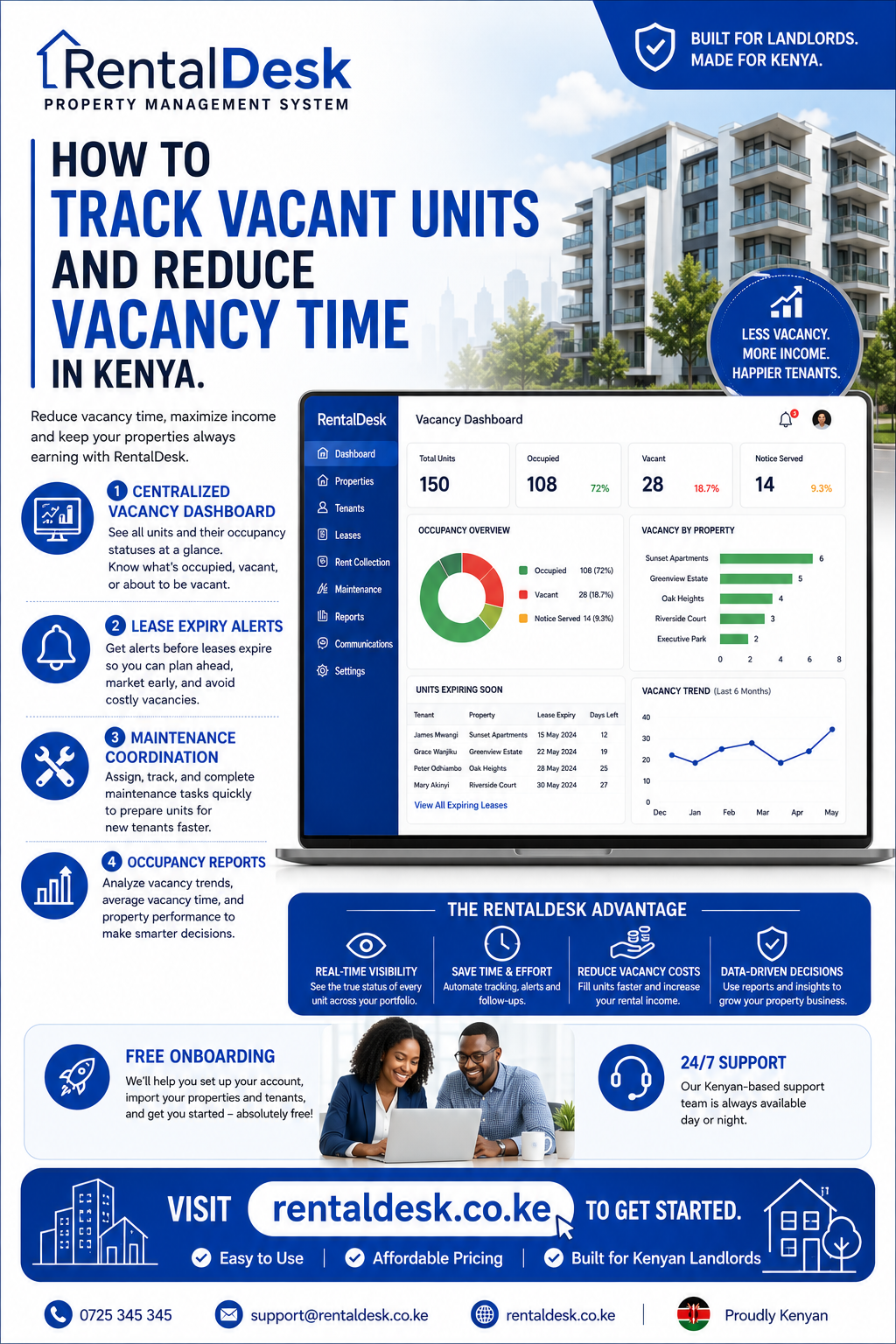
The how to track vacant units and reduce vacancy time in Kenya process starts with a clear dashboard. RentalDesk provides a centralized view of all properties, units, and occupancy status. Landlords can instantly see:
-
Occupied units
-
Vacant units
-
Units under maintenance
-
Pending inspection units
-
Units ready for leasing
This real-time visibility means managers no longer need to check multiple spreadsheets, WhatsApp groups, or physical records to understand occupancy. The dashboard provides a snapshot of the entire portfolio, making it easy to identify which units require immediate attention.
Occupancy Rate Tracking
The how to track vacant units and reduce vacancy time in Kenya includes understanding occupancy rates. Occupancy rate refers to the percentage of occupied units compared to total available units. For example, if a landlord has 100 units and 90 are occupied, the occupancy rate is 90%.
Occupancy Rate Formula: Occupied Units ÷ Total Units × 100 = Occupancy Rate
RentalDesk calculates occupancy rates automatically, providing landlords with clear performance metrics for each property. This data helps identify underperforming properties that need targeted marketing or improvements.
Lease Expiry Monitoring
The how to track vacant units and reduce vacancy time in Kenya includes proactive lease management. One of the most effective strategies to reduce vacancy time is to anticipate vacancies before they happen. RentalDesk monitors:
-
Lease start dates
-
Lease expiry dates
-
Renewal deadlines
-
Notice periods
-
Vacating schedules
Automated reminders help property managers begin renewal discussions early, reducing unnecessary vacancies. When a tenant indicates they will not renew, the landlord can begin marketing the unit immediately, significantly reducing the time it sits empty.
Maintenance and Turnaround Tracking
The how to track vacant units and reduce vacancy time in Kenya process includes managing unit turnover. When a tenant moves out, the unit must be inspected, cleaned, repaired, and prepared for the next tenant. Delays in this process extend vacancy periods and cost landlords money.
RentalDesk helps coordinate maintenance teams by ensuring work is scheduled immediately after tenants move out. The platform allows property managers to:
-
Create digital move-out checklists
-
Assign maintenance tasks to contractors
-
Track repair progress with photos
-
Update unit status from “under maintenance” to “ready for leasing”
One Mombasa agency using this approach cut its average repair turnaround from 72 hours to 12 hours, boosting tenant satisfaction scores by 30% and reducing vacancy periods.
Automated Vacancy Alerts
The how to track vacant units and reduce vacancy time in Kenya includes proactive notifications. RentalDesk can automatically notify property managers when:
-
A tenant gives notice
-
A lease is expiring
-
A unit becomes vacant
-
Repairs are completed
-
A unit becomes available for occupancy
Automation reduces delays and improves coordination. Instead of waiting to discover a vacancy, landlords are alerted immediately and can begin marketing the unit.
Unit Status Classification
The how to track vacant units and reduce vacancy time in Kenya requires clear status classification. RentalDesk supports multiple statuses for each unit:
-
Occupied
-
Vacant
-
Under Maintenance
-
Pending Inspection
-
Ready for Leasing
This classification ensures everyone on the team knows exactly where each unit stands. Leasing agents can focus on “ready for leasing” units while maintenance teams prioritize “under maintenance” units to return them to the rental market quickly.
Strategies to Reduce Vacancy Time in Kenya
Tracking vacancies is only half the battle—the how to track vacant units and reduce vacancy time in Kenya approach must also include strategies to fill units faster. Here are proven strategies supported by RentalDesk :
Start Marketing Before Tenants Move Out
The strongest agencies do not wait until a unit is empty to start marketing. They review exceptions every day, including upcoming vacancies. RentalDesk provides lease expiry alerts that help landlords identify upcoming vacancies weeks or months in advance. This allows time to market the unit, schedule viewings, and secure a new tenant before the current tenant vacates.
Use Technology to Reach More Tenants
Platforms like Reemio have shown that technology can help landlords reduce marketing costs, shorten vacancy periods, and reach a wider pool of prospective tenants, including Kenyans living abroad. RentalDesk helps landlords quickly identify available units ready for listing, allowing faster advertising through social media, websites, property portals, and real estate agents.
Price Competitively
Pricing intelligence is essential for the how to track vacant units and reduce vacancy time in Kenya process. By analysing market trends in Nairobi, Kilifi, and beyond, property management platforms can recommend rent adjustments that maximize occupancy without undercutting profits. RentalDesk provides historical occupancy data that can help landlords identify seasonal demand patterns and adjust pricing accordingly.
Improve Unit Turnaround Time
A self-managing Kenyan landlord spends an average of 48 hours to fix one maintenance task. When a unit is vacant, every day of delay costs money. RentalDesk improves coordination between maintenance and property management by ensuring work is scheduled immediately after tenants move out. Faster repair scheduling and better contractor coordination reduce turnaround times significantly.
Leverage Data-Driven Decisions
A professional vacancy management system provides valuable data such as high-demand unit types, average vacancy duration, tenant turnover rates, occupancy performance, and seasonal demand patterns. RentalDesk generates these insights, helping landlords improve pricing strategies and investment planning. For example, if data shows that two-bedroom apartments in a specific area have lower vacancy rates than studio units, landlords can adjust their marketing and investment strategies accordingly.
Build a Daily Review Routine
The strongest agencies review exceptions every day. A practical morning routine checks new payments, unmatched transactions, tenants due for reminders, overdue balances, vacant units, maintenance issues affecting occupancy, and owner questions that need a response. RentalDesk makes this routine efficient by providing a single dashboard where all this information is visible.
How RentalDesk Supports Multi-Property Vacancy Management
For landlords with properties in multiple locations, the how to track vacant units and reduce vacancy time in Kenya approach must support portfolio-wide visibility. RentalDesk supports properties in areas such as Nairobi, Kiambu, Thika, Nakuru, and Eldoret, allowing landlords to monitor occupancy across all locations from one dashboard.
Real estate agencies handling multiple landlords also benefit from centralized vacancy tracking. The system helps agencies manage multiple buildings, different landlords, caretaker coordination, property availability, tenant onboarding, and property marketing. This improves service delivery and professionalism.
The Financial Impact of Vacancy Management
The how to track vacant units and reduce vacancy time in Kenya approach delivers measurable financial results. Agencies that implement data-driven vacancy management see significant improvements:
-
One Nairobi agency using predictive vacancy analytics boosted occupancy from 78% to 94% in six months
-
A Mombasa agency reduced vacancy from 18% to 6% in six months, resulting in an extra KSh 3.2 million annual revenue from the same buildings
-
Agencies that adopt integrated systems see a 20-30% lift in gross rental income within the first year
-
One Nairobi firm flagged a tenant who had switched SIM cards and recovered the unit before two months’ rent was lost
Industry estimates suggest that 30% of rental income is lost to vacancies, delayed maintenance, and compliance issues. By implementing structured vacancy tracking, landlords can recover a significant portion of this lost income.
Common Mistakes to Avoid in Vacancy Management
The how to track vacant units and reduce vacancy time in Kenya journey includes avoiding common pitfalls:
Mistake 1: Waiting Until a Unit Is Empty to Start Marketing
Many landlords only begin marketing a unit after the tenant has moved out. This approach guarantees at least one month of vacancy. By marketing before the tenant vacates, landlords can secure a new tenant who moves in immediately after the outgoing tenant leaves.
Mistake 2: Not Tracking Lease Expirations
Without a system, landlords often forget when leases are expiring until the tenant gives notice. This delays marketing and extends vacancy periods. RentalDesk provides automated lease expiry alerts to prevent this.
Mistake 3: Slow Maintenance Turnaround
Delays in cleaning, repairs, and inspections extend vacancy periods. RentalDesk helps coordinate maintenance teams to ensure work is completed quickly.
Mistake 4: Not Using Data to Understand Vacancy Patterns
Without occupancy data, landlords cannot identify trends or make informed decisions. RentalDesk provides reports on vacancy duration, seasonal demand, and unit performance.
Mistake 5: Poor Communication with Outgoing Tenants
Lack of clarity about move-out procedures leads to delays in unit turnover. RentalDesk provides move-out checklists and communication tools to streamline the process.
How to Get Started with Vacancy Tracking
Implementing the how to track vacant units and reduce vacancy time in Kenya solution is straightforward with RentalDesk :
Step 1: Standardize Your Records
Clean property, unit, tenant, and balance data before migration. A cleaner setup gives every tenant a reliable identity and every unit a clear relationship to the tenant occupying it.
Step 2: Set Up Your Property Portfolio
Create an account on RentalDesk and set up your property portfolio. Add properties, units, and tenants. The platform is designed for Kenyan rental operations, making it easy to organize your properties the way you already manage them.
Step 3: Configure Vacancy Tracking
Set up unit statuses and vacancy alerts. Define what triggers a vacancy alert—tenant giving notice, lease expiry, or unit becoming empty.
Step 4: Enable Lease Monitoring
Input lease start dates, expiry dates, and notice periods. RentalDesk will automatically monitor these and alert you when renewals are due.
Step 5: Build a Daily Review Routine
Use RentalDesk dashboards to review vacancies, upcoming vacancies, and maintenance issues daily. A routine review keeps problems small and manageable.
Step 6: Market Available Units
Use RentalDesk to identify available units ready for listing. Market through social media, property portals, and real estate agents.
Real-World Success Story
A property management company in Nairobi managing 150 units across Kilimani, Westlands, and Kasarani struggled with high vacancy rates averaging 15%. Using RentalDesk , they implemented centralized vacancy tracking with lease expiry alerts and maintenance coordination.
Within six months:
-
Vacancy rates dropped from 15% to 6%
-
Average vacancy period reduced from 45 days to 18 days
-
Annual rental income increased by KSh 2.4 million
-
Tenant satisfaction improved with faster unit turnover
This success demonstrates how the how to track vacant units and reduce vacancy time in Kenya approach can deliver measurable financial results.
- How to track vacant units and reduce vacancy time in Kenya
- How to track vacant units and reduce vacancy time in Kenya
- How to track vacant units and reduce vacancy time in Kenya
- How to track vacant units and reduce vacancy time in Kenya
- How to track vacant units and reduce vacancy time in Kenya
- How to track vacant units and reduce vacancy time in Kenya
- How to track vacant units and reduce vacancy time in Kenya
- How to track vacant units and reduce vacancy time in Kenya
- How to track vacant units and reduce vacancy time in Kenya
- How to track vacant units and reduce vacancy time in Kenya
- How to track vacant units and reduce vacancy time in Kenya