
Property Management System vs Cash Rent Collection: Which Is Better for Modern Landlords in Kenya?
Introduction
The real estate industry in Kenya has changed dramatically over the past decade. As rental properties continue to grow in cities like Nairobi, Mombasa, Kisumu, Nakuru, Eldoret, and many other towns, landlords are increasingly looking for smarter ways to manage tenants and rent collection.
One of the biggest debates today is Property Management System vs Cash Rent Collection. While some landlords still rely on collecting rent manually in cash, others have embraced digital property management systems that automate rent collection, tenant communication, financial reporting, maintenance tracking, and much more.
Understanding Property Management System vs Cash Rent Collection is important because the choice directly affects your rental income, tenant satisfaction, operational efficiency, and business growth.
In this comprehensive guide, we’ll compare Property Management System vs Cash Rent Collection in detail, highlighting the advantages, disadvantages, costs, security, scalability, and long-term profitability of each approach.
Whether you own a single rental house or hundreds of apartments, this guide will help you make an informed decision.
Understanding Cash Rent Collection
Cash rent collection is the traditional method where tenants physically hand over cash to landlords, caretakers, or property managers.
In many parts of Kenya, this method is still common because it appears simple and familiar.
Typical cash collection involves:
- Tenant visits landlord
- Cash is received
- Receipt is handwritten
- Payment recorded in a notebook
- Deposits made later at the bank
Although this process has worked for years, growing property portfolios expose many weaknesses.
When comparing Property Management System vs Cash Rent Collection, manual cash handling often creates unnecessary risks and administrative work.
What Is a Property Management System?
A property management system is software designed to automate rental property operations.
Instead of relying on notebooks, paper receipts, and manual calculations, landlords manage everything from one dashboard.
A modern property management system includes:
- Tenant management
- Digital rent collection
- M-Pesa integration
- Financial reports
- Vacancy tracking
- Maintenance management
- Automated reminders
- Expense tracking
- Lease management
- Owner reports
- User permissions
- Real-time dashboards
This technology transforms property management from a manual process into an efficient digital business.
This is why discussions around Property Management System vs Cash Rent Collection have become increasingly relevant.
Why This Comparison Matters
The discussion around Property Management System vs Cash Rent Collection is more important today than ever before. The real estate industry is becoming increasingly competitive, and landlords are expected to provide faster, more convenient, and more transparent services to tenants. The way rent is collected and managed has a direct impact on profitability, tenant satisfaction, and the overall success of a rental business.
Many landlords continue to rely on cash because it is the method they have used for years. While this may seem simple, the challenges associated with manual cash handling become more apparent as the number of properties and tenants grows. Managing rent manually often results in long queues, delayed payments, lost receipts, bookkeeping errors, and disputes over payment records. These issues can consume valuable time and reduce operational efficiency.
When comparing Property Management System vs Cash Rent Collection, it is important to consider not only the immediate costs but also the long-term impact on your business. A property management system is an investment that helps automate repetitive tasks, improve financial visibility, and eliminate many of the risks associated with manual processes.
For example, a landlord managing just five rental units may find cash collection manageable. However, as the portfolio grows to 20, 50, or even 100 units, manual rent collection becomes increasingly difficult. Following up with tenants, recording payments, issuing receipts, reconciling bank deposits, and preparing financial reports can quickly become overwhelming.
Another reason Property Management System vs Cash Rent Collection is an important comparison is the growing demand for digital payment solutions. Today’s tenants prefer convenient payment methods such as M-Pesa, online banking, and mobile money. They expect instant payment confirmations, digital receipts, and the ability to access their payment history without visiting a landlord’s office. A property management system meets these expectations, while cash collection often creates unnecessary inconvenience for both landlords and tenants.
Financial transparency is another critical factor. Investors, accountants, and property owners need accurate financial records to make informed decisions. Manual cash collection often relies on notebooks, spreadsheets, or handwritten receipts, increasing the likelihood of errors or missing information. A property management system automatically records every transaction, making audits, tax preparation, and financial reporting much easier.
Security is equally important. Handling large amounts of cash exposes landlords and property managers to theft, fraud, and misappropriation. Lost receipts or misplaced records can lead to costly disputes with tenants. In contrast, a property management system stores payment records securely in the cloud, maintains detailed audit trails, and restricts system access through user permissions, significantly reducing these risks.
The comparison of Property Management System vs Cash Rent Collection also matters because time is one of the most valuable resources for any property owner. Every hour spent collecting cash, reconciling payments, or manually updating records is time that could be invested in acquiring new properties, improving tenant relationships, or growing the business. Automation allows landlords to focus on strategic activities rather than repetitive administrative work.
In addition, compliance and professionalism have become increasingly important in the real estate sector. Property owners who maintain accurate digital records are better prepared for tax reporting, financial audits, and regulatory requirements. They also present a more professional image to tenants, investors, and business partners, building trust and credibility.
Ultimately, Property Management System vs Cash Rent Collection is about choosing between a traditional approach that depends heavily on manual effort and a modern solution designed for efficiency, accuracy, and growth. As technology continues to reshape the property industry, landlords who embrace digital property management are better positioned to reduce costs, improve service delivery, and maximize the return on their investments.
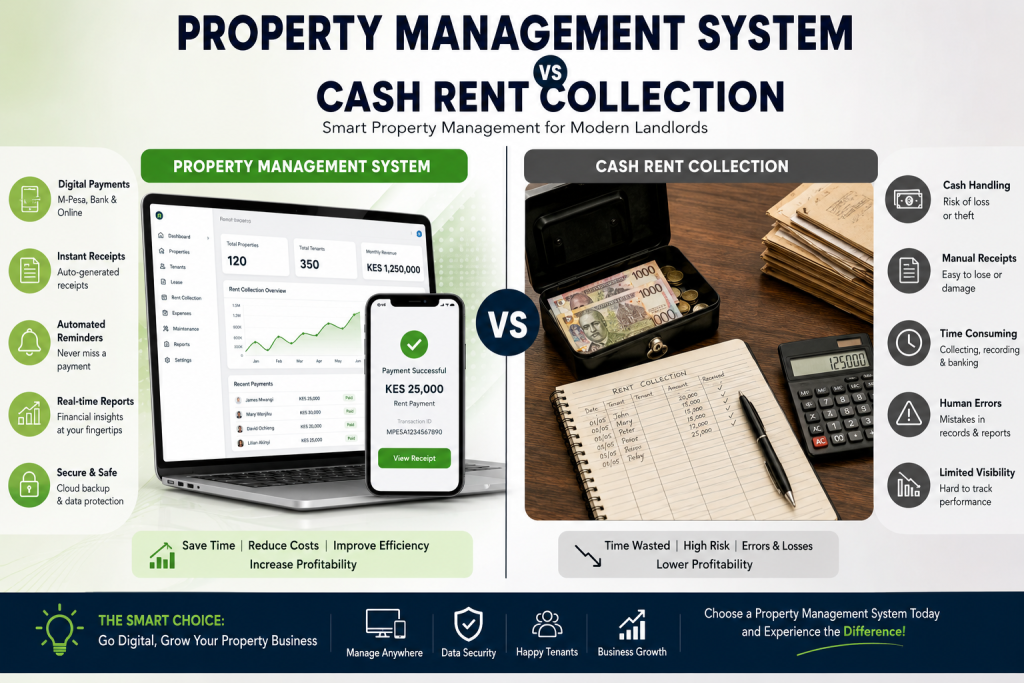
Property Management System vs Cash Rent Collection: Key Differences
| Feature | Property Management System | Cash Rent Collection |
|---|---|---|
| Rent Collection | Automated | Manual |
| Payment Records | Instant | Paper-based |
| Reports | Automatic | Manual |
| Receipts | Digital | Handwritten |
| Tenant Reminders | Automatic | Manual |
| Security | High | Low |
| Scalability | Excellent | Poor |
| Accountability | Excellent | Limited |
| Time Saving | High | Low |
| Transparency | Complete | Limited |
The comparison of Property Management System vs Cash Rent Collection clearly shows how digital systems streamline operations and reduce risk.
1. Convenience
Convenience is one of the biggest differences in Property Management System vs Cash Rent Collection.
Cash Collection
Landlords must:
- Travel
- Meet tenants
- Count cash
- Issue receipts
- Record payments
- Deposit money
This consumes valuable time.
Property Management System
Everything happens digitally.
Tenants pay using:
- M-Pesa
- Bank transfer
- Mobile banking
Payments update automatically.
Receipts are generated instantly.
No physical meetings are required.
2. Security
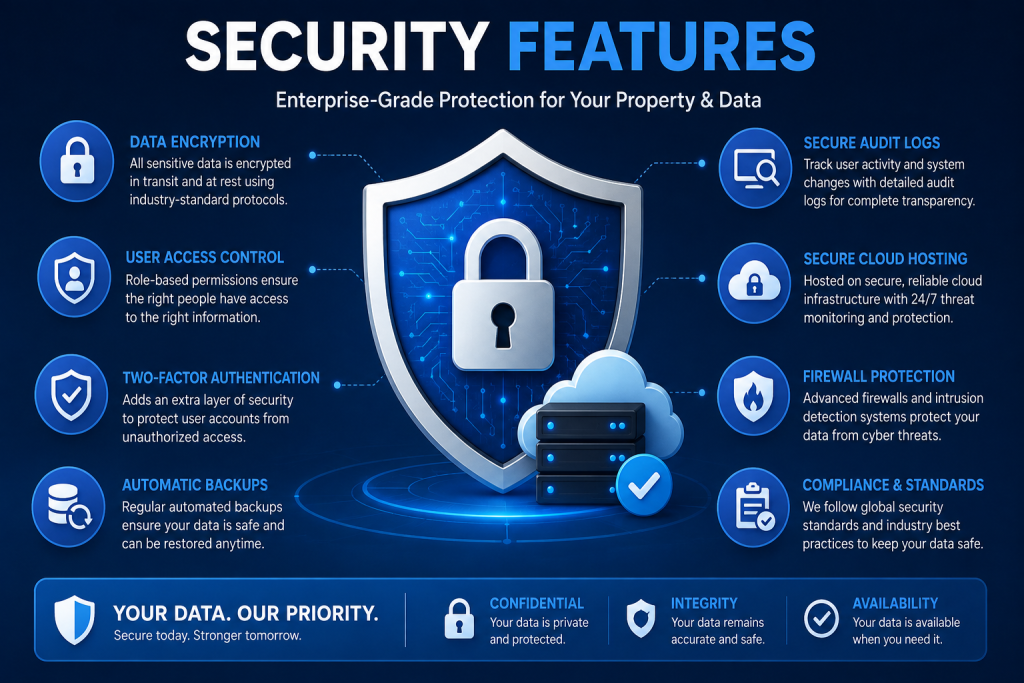
Security is another major consideration in Property Management System vs Cash Rent Collection.
Cash can be:
- Lost
- Stolen
- Miscounted
- Misplaced
Paper records can disappear or become damaged.
Digital systems secure data through:
- Cloud backups
- Password protection
- Audit logs
- User permissions
- Encrypted databases
This significantly reduces financial risk.
3. Accuracy
Manual bookkeeping inevitably introduces mistakes.
Common cash collection errors include:
- Incorrect balances
- Duplicate entries
- Missing receipts
- Arithmetic mistakes
A property management system performs automatic calculations, improving accuracy and reducing disputes.
This is another important advantage in Property Management System vs Cash Rent Collection.
4. Rent Tracking
Tracking tenants manually becomes increasingly difficult as properties grow.
A property management system instantly shows:
- Paid tenants
- Late payments
- Outstanding balances
- Monthly collections
- Historical payments
With cash collection, landlords often rely on notebooks or spreadsheets, making tracking slow and prone to error.
5. Automated Reminders
Late payments are common in rental businesses.
With manual systems:
- Phone calls
- SMS messages
- Physical visits
must be done individually.
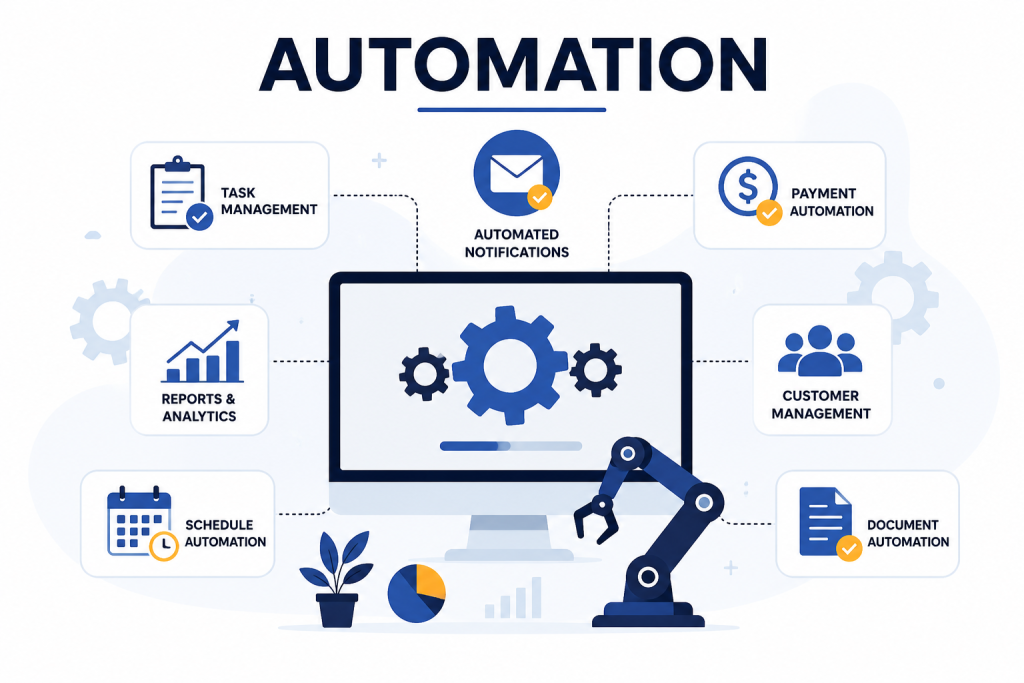
A property management system automatically sends reminders before and after due dates.
This saves time while improving rent collection rates.
6. Financial Reporting
Financial reporting is one of the biggest differences when comparing Property Management System vs Cash Rent Collection.
With cash rent collection, landlords often spend hours adding receipts, checking notebooks, and calculating monthly income. Preparing reports for accountants or investors can become stressful, especially when managing multiple properties.
A modern property management system generates reports automatically. Within seconds, landlords can access:
- Monthly rent collection reports
- Annual income summaries
- Outstanding rent balances
- Occupancy reports
- Expense reports
- Profit and loss statements
- Tenant payment history
- Property performance reports
When evaluating Property Management System vs Cash Rent Collection, automated reporting helps landlords make informed business decisions while reducing accounting errors.
7. Transparency
Transparency is essential in property management.
Cash transactions can sometimes lead to disputes over whether rent was paid or receipts were issued correctly.
A property management system records every transaction with:
- Payment date
- Amount paid
- Tenant details
- Property details
- Payment method
- Receipt number
- User who processed the transaction
This digital audit trail provides accountability and reduces misunderstandings.
The transparency offered by Property Management System vs Cash Rent Collection is one of the primary reasons professional property managers are moving away from manual methods.
8. Scalability
Managing five houses manually may be manageable.
Managing fifty or five hundred units is an entirely different challenge.
As your portfolio grows, manual rent collection becomes increasingly difficult.
Tasks such as:
- Visiting tenants
- Issuing receipts
- Updating notebooks
- Banking cash
- Reconciling payments
consume significant time.
A property management system grows with your business. Whether you manage 10 units or 10,000 units, the software automates routine processes and centralizes your operations.
This makes Property Management System vs Cash Rent Collection an important consideration for landlords planning to expand.
9. Time Efficiency
Time is money.
Cash rent collection requires landlords or caretakers to spend countless hours:
- Receiving tenants
- Counting money
- Recording payments
- Following up on defaulters
- Depositing cash
A property management system automates many of these activities.
Instead of spending days collecting rent, landlords can monitor payments from a mobile phone or computer.
The time savings associated with Property Management System vs Cash Rent Collection allow landlords to focus on acquiring new properties and improving tenant services.
10. Tenant Experience
Modern tenants expect convenience.
Most tenants already use:
- M-Pesa
- Mobile banking
- Online banking
- Digital wallets
They appreciate paying rent without travelling to meet landlords.
Property management systems also provide:
- Digital receipts
- Payment confirmations
- Maintenance requests
- Lease information
- Payment history
This improves tenant satisfaction and encourages long-term occupancy.
When discussing Property Management System vs Cash Rent Collection, tenant convenience is an increasingly important factor.
Hidden Costs of Cash Rent Collection
Many landlords assume cash collection is free because there is no software subscription.
However, hidden costs include:
- Transport expenses
- Lost working hours
- Bank deposit charges
- Fraud
- Theft
- Human error
- Paper receipts
- Printing costs
- Filing cabinets
- Storage space
- Accounting costs
- Collection delays
Over time, these expenses often exceed the cost of implementing a property management system.
This is a key insight when comparing Property Management System vs Cash Rent Collection.
Risks Associated with Cash Rent Collection
Cash handling exposes landlords to several risks, including:
- Theft during transport
- Missing payments
- Receipt manipulation
- Fraud by employees
- Delayed bank deposits
- Cash shortages
- Disputes with tenants
- Poor financial records
A property management system minimizes these risks through digital records, secure payment integrations, and user activity logs.
This makes Property Management System vs Cash Rent Collection not only a question of convenience but also one of business security.
Benefits of a Property Management System
Choosing a property management system offers numerous advantages:
- Faster rent collection
- Improved financial control
- Better tenant communication
- Accurate reporting
- Reduced paperwork
- Automated reminders
- Digital receipts
- Secure cloud storage
- Maintenance tracking
- Easy portfolio expansion
- Better compliance
- Centralized property information
These features demonstrate why Property Management System vs Cash Rent Collection increasingly favors digital solutions.
Case Study: Small Landlord in Nairobi
A landlord in Nairobi owned 15 rental units and relied on cash rent collection.
Challenges included:
- Late payments
- Missing receipts
- Time-consuming follow-ups
- Manual bookkeeping
- Frequent disputes
After adopting a property management system:
- Rent collection became largely digital.
- Payment reminders were automated.
- Monthly reports were generated instantly.
- Outstanding balances became easier to track.
- Administrative workload was significantly reduced.
This example illustrates how Property Management System vs Cash Rent Collection can directly affect operational efficiency and profitability.
Case Study: Property Management Company
A property management company managing over 200 units struggled with:
- Multiple caretakers
- Manual reconciliation
- Delayed owner reports
- Cash handling risks
After implementing a property management system, they achieved:
- Centralized payment tracking
- Faster financial reporting
- Improved transparency
- Better communication with landlords
- Reduced manual errors
The transition from Property Management System vs Cash Rent Collection enabled the company to scale its operations more effectively.
Customer Testimonial
“We used to spend several days every month collecting rent and reconciling payments. After switching to a property management system, everything became easier. Tenants receive reminders automatically, reports are generated instantly, and we have complete visibility of our rental income.”
— Property Manager, Nairobi
Frequently Asked Questions
Is cash rent collection still suitable for small landlords?
Yes, it may work for landlords with only one or two units. However, as the portfolio grows, a property management system offers greater efficiency and control.
Is a property management system expensive?
Many cloud-based systems offer affordable subscription plans that are often less costly than the hidden expenses associated with manual cash collection.
Can tenants still pay using M-Pesa?
Yes. Most modern property management systems integrate with M-Pesa, allowing tenants to make secure digital payments.
Is training required?
Most providers offer onboarding, training, and customer support to help landlords and property managers use the system effectively.
Which option is more secure?
A property management system generally provides stronger security through digital records, controlled access, backups, and automated tracking, making it a safer alternative to handling cash manually.
Why RentalDesk Is the Smart Choice
If you are looking to modernize your rental operations in Kenya, RentalDesk offers a comprehensive property management solution designed for landlords, property managers, and real estate agencies.
With RentalDesk, you can:
- Collect rent digitally
- Automate payment reminders
- Track tenant balances
- Generate financial reports
- Manage maintenance requests
- Monitor vacancies
- Access data securely from anywhere
Instead of relying on manual cash collection, RentalDesk helps streamline your operations, improve accountability, and support business growth.
Property Management System vs Cash Rent Collection
The comparison of Property Management System vs Cash Rent Collection clearly shows that while cash collection may seem familiar and inexpensive at first, it comes with significant hidden costs, security risks, and operational challenges. Manual processes can lead to delayed payments, lost receipts, accounting errors, and unnecessary time spent on administrative tasks.
On the other hand, a modern property management system transforms rental management into a streamlined, secure, and scalable business operation. From automated rent collection and instant financial reporting to tenant communication and maintenance tracking, digital systems help landlords save time, reduce costs, and improve tenant satisfaction.
For landlords managing multiple properties—or those planning to grow—the choice between Property Management System vs Cash Rent Collection is straightforward. Investing in technology is no longer a luxury but a necessity for staying competitive in today’s real estate market.
If your goal is to increase efficiency, improve accountability, and maximize rental income, adopting a property management system is the smarter long-term decision. Property Management System vs Cash Rent Collection is no longer just a comparison; it is a roadmap for the future of property management. By choosing a digital solution, landlords gain better visibility into their business, reduce manual work, and create a professional experience for tenants.
Whether you own apartments, commercial buildings, hostels, or rental houses, moving from Property Management System vs Cash Rent Collection to a fully digital property management approach can significantly improve your operations. The sooner you make the transition, the sooner you can enjoy faster rent collection, accurate reporting, and greater peace of mind.
Call to Action
Ready to move beyond manual rent collection?
RentalDesk is an all-in-one cloud-based property management system built to help landlords, property managers, and real estate agencies manage their properties with ease.
With RentalDesk you can:
- Collect rent digitally through M-Pesa and other payment channels.
- Automate rent reminders and payment confirmations.
- Monitor tenant balances in real time.
- Generate professional financial reports instantly.
- Manage maintenance requests efficiently.
- Track occupancy and vacancies from one dashboard.
- Access your property data anytime, anywhere.
Stop struggling with manual cash collection and embrace a smarter way to manage your rental business.
Visit RentalDesk.co.ke today to request a demo and discover why more landlords are choosing digital property management over traditional cash collection.