
Table of Contents
ToggleTenant Management in Kenya: The Ultimate Guide to Modern Rental Success for Landlords and Property Managers
1. Introduction
Tenant management in Kenya is no longer a simple administrative task—it has evolved into a full-scale operational system that determines whether a rental property succeeds or fails. In today’s rapidly growing real estate market, landlords are no longer just collecting rent; they are running structured rental businesses that require organization, automation, financial tracking, communication systems, and legal compliance.
Over the past decade, Kenya has experienced significant urban expansion. Cities such as Nairobi, Mombasa, Kisumu, Nakuru, Eldoret, and Thika have witnessed massive growth in population and infrastructure. This growth has led to increased demand for rental housing, commercial spaces, and mixed-use developments. As a result, thousands of new landlords have entered the market, each managing properties of varying sizes and complexities.
However, despite this growth, many landlords still rely on outdated methods for tenant management in Kenya. These include handwritten rent records, Excel spreadsheets, informal WhatsApp conversations, and manual cash tracking systems. While these methods may seem manageable for a small number of tenants, they quickly become chaotic and inefficient as property portfolios grow.
The biggest problem with traditional tenant management Kenya systems is lack of structure. Without a centralized system, landlords struggle with tracking rent payments, managing tenant information, monitoring maintenance requests, and maintaining clear communication. This leads to confusion, financial errors, and disputes between landlords and tenants.
For example, a landlord managing 10–20 tenants manually may still keep track of payments fairly well. But once the number grows beyond that, errors become inevitable. Payments may be missed, recorded incorrectly, or forgotten entirely. Tenants may claim they have paid, while landlords may not have proper records to verify. These small inconsistencies often escalate into serious disputes.
Another major challenge in tenant management Kenya is time consumption. Landlords often spend hours every week following up on rent, sending reminders, updating records, and responding to tenant complaints. This reduces productivity and makes property management feel more like a full-time job rather than an investment activity.
Communication is also a major weakness in traditional systems. Most landlords rely on informal channels like phone calls or messaging apps. While convenient, these methods lack structure and documentation. Important messages may be lost, forgotten, or misinterpreted, leading to misunderstandings between tenants and landlords.
Maintenance management is another area where tenant management Kenya systems often fail. Repair requests are frequently reported verbally or through messages, but without proper tracking systems, they are easily forgotten or delayed. This affects tenant satisfaction and increases turnover rates.
As Kenya’s rental market becomes more competitive, tenant expectations are also rising. Modern tenants expect transparency, fast responses, clear billing, and professional management. They are no longer satisfied with informal or inconsistent systems. This shift is forcing landlords to rethink how they manage tenants.
This is why tenant management in Kenya has become a critical focus in the real estate industry. It is no longer just about collecting rent—it is about creating structured systems that ensure efficiency, accuracy, and scalability.
Modern tenant management Kenya is about building a professional rental ecosystem. This includes:
- Proper tenant screening
- Formal lease agreements
- Automated rent tracking
- Structured communication systems
- Maintenance tracking systems
- Financial reporting tools
Landlords who adopt structured tenant management Kenya systems are able to operate more efficiently, reduce stress, and increase profitability.
At its core, tenant management Kenya is about control. It gives landlords full visibility into their rental operations and eliminates guesswork. Instead of relying on memory or scattered records, landlords can access accurate, real-time information about their properties.
This transformation is especially important in Kenya, where mobile money systems like M-Pesa have made digital payments the norm. Despite this, many landlords still fail to integrate proper tracking systems, leading to gaps in financial records. Modern tenant management Kenya systems bridge this gap by automatically recording transactions and updating balances in real time.
In conclusion, tenant management in Kenya has evolved from a simple task into a complex business function. Landlords who fail to adapt risk inefficiency, financial loss, and tenant dissatisfaction. Those who embrace structured systems, however, position themselves for long-term success in an increasingly competitive market.
2. What is Tenant Management in Kenya?
Tenant management Kenya refers to the structured process of managing all interactions, responsibilities, and operations involving tenants within a rental property. It begins when a tenant is screened and accepted into a property and continues throughout the duration of their stay until they exit.
Tenant management in Kenya includes several key functions:
- Tenant screening and selection
- Lease agreement preparation
- Rent collection and tracking
- Communication between landlords and tenants
- Maintenance and repairs
- Dispute resolution
- Lease renewal and termination processes
In simple terms, tenant management in Kenya is the backbone of rental property operations. Without it, landlords cannot maintain order, consistency, or profitability in their rental business.
Effective tenant management in Kenya ensures that both landlords and tenants clearly understand their responsibilities and that all processes are documented and structured.
3. Importance of Tenant Management in Kenya
The importance of tenant management Kenya cannot be overstated. It directly affects the financial performance and long-term success of any rental property investment.
A well-structured tenant management Kenya system ensures:
- Steady and predictable rental income
- Reduced rent arrears and defaults
- Improved tenant satisfaction
- Better communication and transparency
- Reduced property damage and disputes
- Higher tenant retention rates
On the other hand, poor tenant management Kenya leads to inconsistent income, increased vacancies, and frequent conflicts between landlords and tenants.
For example, a landlord without a proper tenant management Kenya system may struggle to track who has paid rent, who is in arrears, or when leases are expiring. This lack of structure creates confusion and financial losses.
Therefore, tenant management Kenya is not just an administrative function—it is a core business strategy for property investors.
4. Tenant Screening in Tenant Management in Kenya
Tenant screening is one of the most important steps in tenant management Kenya. It determines the quality of tenants a landlord brings into a property.
A strong tenant management Kenya screening process evaluates:
- Employment stability
- Monthly income level
- Rental history and behavior
- References from previous landlords
- Ability to pay rent consistently
Proper screening reduces risks such as late payments, property damage, and eviction challenges.
Unfortunately, many landlords in Kenya still rely on informal screening methods, such as verbal promises or quick assessments without verification. This weakens tenant management Kenya systems and leads to long-term problems.
A structured tenant management Kenya approach ensures that only qualified and reliable tenants are accepted into a property.
5. Lease Agreements in Tenant Management in Kenya
Lease agreements form the legal foundation of tenant management Kenya. They define the rights and responsibilities of both landlords and tenants.
A proper lease agreement in tenant management Kenya includes:
- Monthly rent amount
- Payment deadlines
- Duration of tenancy
- Deposit requirements
- Maintenance responsibilities
- Rules and regulations
- Termination conditions
Without formal agreements, tenant management Kenya becomes informal and legally risky. Disputes become harder to resolve because there is no clear documentation.
A strong tenant management Kenya system always includes clear, written, and legally binding lease agreements.
6. Rent Collection in Tenant Management in Kenya
Rent collection is one of the most sensitive and important aspects of tenant management Kenya. It directly affects a landlord’s cash flow and financial stability.
In Kenya, rent collection is commonly done through:
- Cash payments
- Bank transfers
- Mobile money (especially M-Pesa)
However, without proper systems, rent tracking becomes inconsistent. Payments may be missed, unrecorded, or disputed.
Modern tenant management Kenya systems solve this problem by introducing structured tracking methods. These systems automatically record payments, generate receipts, and update tenant balances in real time.
This improves transparency and reduces conflict between landlords and tenants.
7. Communication in Tenant Management in Kenya
Communication is a critical pillar of tenant management Kenya. Poor communication often leads to misunderstandings, disputes, and dissatisfaction.
In many traditional setups, communication happens through WhatsApp messages, phone calls, or informal visits. While convenient, these methods are unstructured and often lead to lost information.
A modern tenant management Kenya system ensures:
- Clear rent reminders
- Structured maintenance updates
- Formal notices for lease changes
- Transparent billing communication
Good communication improves tenant trust and strengthens relationships, which is essential for long-term rental success.
8. Maintenance in Tenant Management in Kenya
Maintenance is a key part of tenant management Kenya and directly impacts tenant satisfaction.
Common maintenance responsibilities include:
- Plumbing repairs
- Electrical issues
- Structural maintenance
- Cleaning and sanitation
Delayed maintenance often leads to tenant dissatisfaction and increased turnover.
A proper tenant management Kenya system ensures that maintenance requests are recorded, tracked, and resolved efficiently.
9. Challenges in Tenant Management in Kenya
Despite its importance, tenant management Kenya faces several challenges:
- Late rent payments
- Poor record keeping
- Lack of structured communication
- Maintenance delays
- Tenant disputes
- High tenant turnover
These challenges highlight the need for better systems and structured approaches in tenant management Kenya.
10. Transition to Modern Tenant Management in Kenya
As rental markets become more competitive, landlords are increasingly adopting digital tools to improve tenant management Kenya.
Modern systems offer:
- Automated rent tracking
- Cloud-based tenant records
- Digital communication tools
- Maintenance request tracking
These innovations reduce manual work and improve efficiency in tenant management Kenya.
11. Tenant Retention Strategies in Tenant in Management Kenya
Tenant retention is one of the most overlooked yet powerful aspects of tenant management in Kenya. Many landlords focus heavily on acquiring new tenants while ignoring the importance of keeping existing ones. However, in real estate, retaining a good tenant is significantly more profitable than constantly searching for new ones.
A strong tenant management Kenya strategy prioritizes long-term occupancy by creating a positive rental experience. This includes fair rent pricing, timely maintenance response, and clear communication. When tenants feel valued and respected, they are more likely to renew their leases and stay longer.
One key retention strategy in tenant management Kenya is maintaining consistent property conditions. Tenants are more likely to stay in properties where repairs are handled quickly and living conditions are stable. Delayed maintenance is one of the leading causes of tenant turnover in Kenya’s rental market.
Another important factor is transparency. Tenants appreciate clear billing, accurate receipts, and predictable rent structures. When tenant management Kenya systems are disorganized, tenants may feel mistrustful and seek alternative housing options.
Good communication also plays a major role in retention. Regular updates about rent, maintenance schedules, and property changes help build trust between landlords and tenants. Structured tenant management Kenya systems ensure that communication is not random or inconsistent.
Ultimately, tenant retention is about creating a stable, respectful, and well-managed rental environment.
12. Legal Compliance in Tenant Management Kenya
Legal compliance is a critical component of tenant management Kenya. Every landlord is required to operate within the legal framework governing rental properties in the country. Failure to comply with these regulations can lead to disputes, fines, or even legal action.
One of the most important legal requirements in tenant management Kenya is the use of written lease agreements. These agreements clearly define the rights and responsibilities of both tenants and landlords. Without them, disputes become difficult to resolve because there is no formal reference point.
Another key legal aspect is the proper handling of eviction procedures. In tenant management Kenya, landlords cannot simply remove tenants without following due process. Proper notice periods must be given, and legal channels must be respected.
Fair rent practices are also part of legal compliance. While landlords have the right to set rent levels, tenant management Kenya must ensure that changes are communicated appropriately and in accordance with lease terms.
Additionally, landlords must comply with housing and safety regulations. This includes maintaining habitable living conditions, ensuring structural safety, and addressing maintenance issues promptly.
Proper tenant management Kenya systems help landlords stay compliant by maintaining accurate records, documentation, and communication logs.
13. Digital Transformation in Tenant Management Kenya
The real estate sector in Kenya is undergoing a major digital transformation, and tenant management in Kenya is at the center of this change. Technology is replacing manual processes with automated, efficient, and scalable systems.
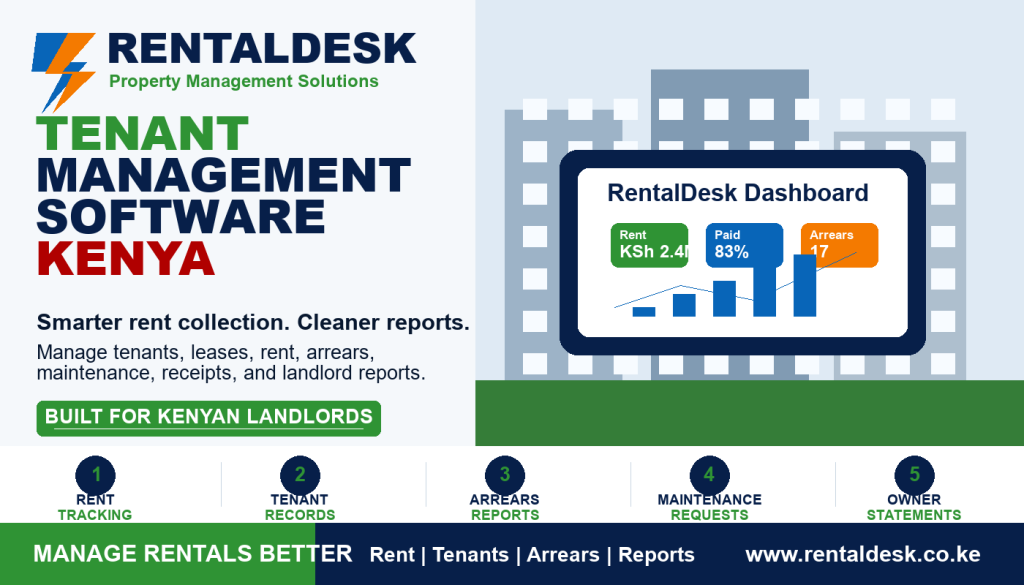
Modern tenant management Kenya platforms now offer cloud-based dashboards that allow landlords to manage tenants from anywhere. These systems store tenant data, rent records, and lease agreements in one centralized location.
Automation is one of the biggest advantages of digital tenant management Kenya systems. Rent reminders, invoices, and payment tracking can all be automated, reducing the need for manual follow-ups.
Mobile accessibility is also transforming tenant management Kenya. Landlords can now manage properties using smartphones, allowing them to respond to tenant issues in real time, even while traveling.
Another major advancement is real-time reporting. Digital systems provide instant financial insights, helping landlords understand income, expenses, and arrears without waiting for manual calculations.
Overall, digital transformation is making tenant management Kenya more efficient, accurate, and scalable than ever before.
14. Benefits of Modern Tenant Management in Kenya Systems
Modern systems have significantly improved tenant management in Kenya by introducing automation, structure, and transparency.
Some key benefits include:
✔ Improved Efficiency
Tasks such as rent tracking, communication, and reporting are automated.
✔ Reduced Errors
Manual mistakes in financial records are minimized.
✔ Better Tenant Relationships
Structured communication improves trust and satisfaction.
✔ Faster Rent Collection
Automated reminders reduce late payments.
✔ Real-Time Insights
Landlords can monitor property performance instantly.
These benefits make modern tenant management Kenya systems essential for both small and large property owners.
15. Small vs Large Scale Tenant Management in Kenya
The needs of landlords vary depending on the size of their property portfolio.
Small Landlords
Small-scale landlords often manage tenant management in Kenya manually. They rely on notebooks, spreadsheets, or simple mobile money records. While this may work initially, it becomes difficult as the number of tenants increases.
Large Landlords
Large property owners require structured tenant management Kenya systems. They manage multiple properties and need automation, centralized data, and real-time reporting to stay organized.
As portfolios grow, manual tenant management Kenya becomes unsustainable, making digital systems necessary.
16. Common Mistakes in Tenant Management in Kenya
Many landlords struggle with tenant management Kenya due to avoidable mistakes.
Some of the most common include:
- Failing to properly screen tenants
- Not using written lease agreements
- Poor record keeping
- Weak communication systems
- Ignoring maintenance issues
- Delayed rent follow-ups
These mistakes lead to financial losses and tenant dissatisfaction.
A structured tenant management Kenya system helps eliminate these issues by introducing consistency and accountability.
17. Future of Tenant Management in Kenya
The future of tenant management in Kenya is heavily driven by technology, automation, and data analytics.
Several key trends are shaping the future:
✔ AI-Powered Tenant Screening
Artificial intelligence will help landlords identify reliable tenants more accurately.
✔ Fully Automated Rent Systems
Rent collection, reminders, and reconciliation will be fully automated.
✔ Smart Communication Systems
Chatbots and tenant portals will streamline communication.
✔ Predictive Maintenance
Systems will predict maintenance issues before they occur.
✔ Integrated Property Ecosystems
All property operations will be managed in unified platforms.
These innovations will redefine how tenant management Kenya is done in the coming years.
Tenant management in Kenya has evolved from a simple administrative task into a complex and strategic function that determines the success of rental property investments. In today’s fast-growing real estate market, landlords can no longer rely on manual systems alone to manage tenants effectively.
The increasing demand for housing in Kenya’s urban centers has made tenant relationships, rent collection, maintenance, and communication more important than ever. Poorly managed tenant systems lead to financial instability, disputes, and high tenant turnover, all of which reduce profitability.
On the other hand, modern and structured tenant management in Kenya practices provide stability, transparency, and efficiency. Landlords who adopt digital systems and automation tools benefit from improved cash flow, better tenant satisfaction, and reduced operational stress.
As technology continues to advance, tenant management Kenya will become even more automated and data-driven. Landlords who embrace these changes early will be better positioned to scale their investments and remain competitive in the evolving real estate market.
In conclusion, effective tenant management Kenya is no longer optional—it is a necessity for long-term success in real estate. It is the foundation upon which profitable, sustainable, and scalable rental businesses are built.