Property Management System East Africa: The Ultimate Guide to Modern Property Management in 2026
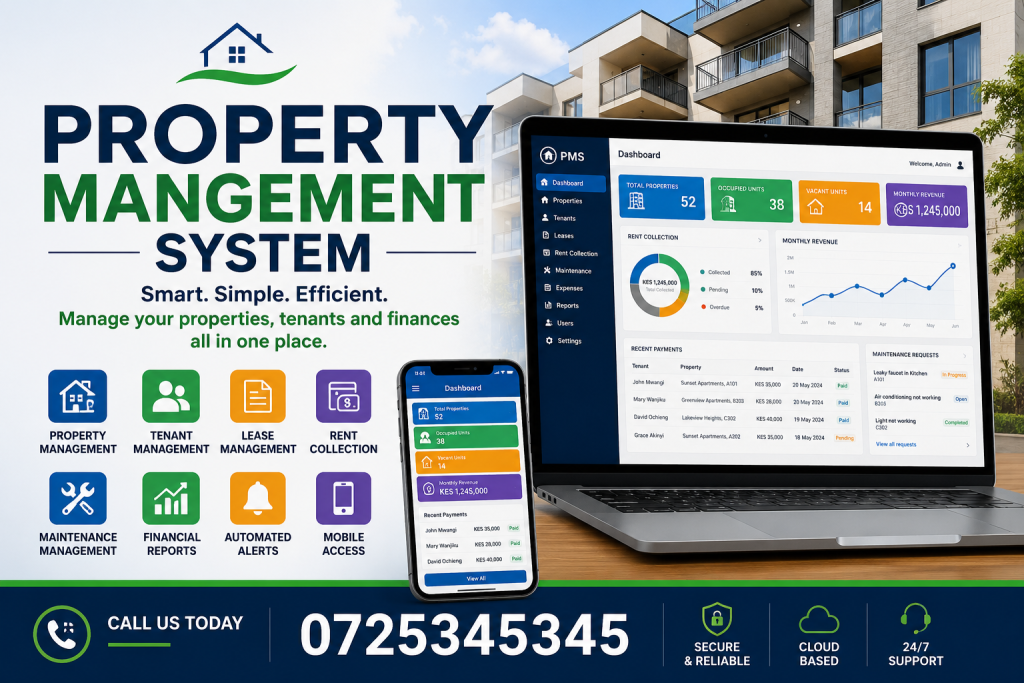
The real estate industry across East Africa is expanding rapidly. Countries such as Kenya, Uganda, Tanzania, Rwanda, Burundi, South Sudan, and Ethiopia are experiencing increased urbanization, rising demand for rental housing, and significant investment in commercial and residential developments. As property portfolios grow, managing tenants, collecting rent, tracking maintenance, and preparing financial reports manually becomes increasingly difficult.
This is where a Property Management System East Africa becomes an essential business tool. Modern property management software enables landlords, estate managers, property developers, and real estate agencies to automate routine tasks, improve operational efficiency, and provide better services to tenants.
Whether you own ten apartments, manage hundreds of rental units, or oversee multiple commercial properties, investing in a reliable Property Management System East Africa can transform how you run your business.
In this comprehensive guide, we explain everything you need to know about choosing the right property management software, its features, benefits, implementation process, and why digital property management is shaping the future of East Africa’s real estate sector.
What Is a Property Management System?
A Property Management System (PMS) is specialized software designed to simplify and automate property management activities. Instead of relying on spreadsheets, notebooks, or disconnected software, users can manage every aspect of their properties from one centralized dashboard.
A modern Property Management System East Africa helps users:
- Register properties
- Manage tenants
- Collect rent
- Generate invoices
- Track maintenance
- Record expenses
- Produce financial reports
- Monitor occupancy
- Manage lease agreements
- Send automated reminders
- Store documents securely
The software serves as the operational hub of a real estate business, ensuring that all information is organized, accurate, and easily accessible.
Why East Africa Needs Modern Property Management Software
The property market across East Africa has changed dramatically over the past decade. Urban populations continue to increase, creating higher demand for residential housing, office spaces, shopping centres, and mixed-use developments.
Property owners are also managing larger portfolios than ever before. Manual systems that once worked for a few rental units become inefficient as businesses expand.
Some of the biggest challenges property managers face include:
- Late rent payments
- Lost tenant records
- Poor maintenance tracking
- Inaccurate financial reporting
- Human errors
- Slow communication with tenants
- Difficulty managing multiple properties
- Lack of real-time reporting
A Property Management System East Africa addresses these challenges through automation, centralized data management, and real-time reporting.
Who Can Use a Property Management System?
The software is suitable for many organizations and individuals, including:
Property Management Companies
Manage multiple clients and hundreds of rental units from one secure platform.
Individual Landlords
Whether you own five houses or fifty apartments, automation simplifies rent collection and tenant management.
Real Estate Agencies
Track rental properties, manage leases, and improve customer service.
Property Developers
Monitor completed developments, manage tenants, and oversee occupancy.
Commercial Property Owners
Manage office buildings, shopping malls, warehouses, and retail spaces efficiently.
Student Hostels
Handle student registrations, room allocations, rent payments, and maintenance requests.
Housing Cooperatives
Organize member information, financial records, and property allocations from one platform.
Core Features of a Property Management System East Africa
A quality Property Management System East Africa should include powerful features that simplify day-to-day operations.
1. Property Management
The software should allow users to register multiple properties with details such as:
- Property name
- Property location
- Property type
- Number of units
- Occupancy status
- Rental rates
- Ownership details
Property managers can quickly switch between different buildings without confusion.
2. Tenant Management
Tenant management is one of the most important modules.
Users can store:
- Tenant names
- National identification details
- Phone numbers
- Email addresses
- Lease agreements
- Payment history
- Emergency contacts
- Move-in dates
- Move-out dates
Having all tenant information in one secure database improves organization and customer service.
3. Rent Collection
Rent collection automation saves significant administrative time.
The system can automatically:
- Generate monthly invoices
- Track due dates
- Record payments
- Calculate balances
- Apply penalties for late payments
- Produce digital receipts
This reduces errors while improving cash flow.
4. Automated Rent Reminders
Many tenants simply forget payment dates.
An advanced Property Management System East Africa automatically sends reminders before and after rent due dates through:
- SMS
- Push notifications
Automation reduces the need for manual follow-up.
5. Lease Management
Managing lease agreements manually often leads to missed renewal dates.
The software stores:
- Lease start dates
- Lease expiry dates
- Renewal schedules
- Rent review dates
- Security deposit information
Automatic alerts ensure no important deadlines are missed.
6. Maintenance Management
Maintenance requests should never disappear in WhatsApp conversations or paper notebooks.
The software allows tenants to report issues such as:
- Plumbing repairs
- Electrical faults
- Broken windows
- Security concerns
- Cleaning requests
- Water supply issues
Property managers can assign technicians, monitor progress, and close completed jobs efficiently.
7. Financial Reporting
Accurate financial reporting is critical for informed decision-making.
A modern Property Management System East Africa generates reports such as:
- Rent collection reports
- Income statements
- Expense summaries
- Outstanding balances
- Occupancy reports
- Cash flow reports
- Profit and loss statements
- Tax-ready reports
Real-time reporting helps property owners understand the financial performance of each property.
8. Expense Management
Property expenses should be tracked alongside rental income.
The system records costs including:
- Repairs
- Security services
- Cleaning
- Utility bills
- Staff salaries
- Landscaping
- Insurance
- Property taxes
Managers can analyze profitability more accurately.
9. Vacancy Tracking
Vacant units reduce revenue.
The software displays:
- Vacant units
- Reserved units
- Occupied units
- Available apartments
- Upcoming vacancies
This helps property managers market available units more quickly and maximize occupancy.
10. Document Management
Instead of storing paperwork in filing cabinets, documents can be securely uploaded and organized, including:
- Lease agreements
- Tenant identification documents
- Inspection reports
- Property photos
- Receipts
- Contracts
- Maintenance records
Cloud storage improves security whilmaking documents accessible from anywhere
Mobile Money Integration: A Must-Have Feature
One of the reasons a Property Management System East Africa has become indispensable is the widespread use of mobile money. Unlike many regions where bank transfers dominate, East Africa has embraced mobile payment platforms, making digital rent collection easier and more convenient.
A modern property management solution should seamlessly integrate with:
- M-Pesa
- Airtel Money
- MTN Mobile Money
- Tigo Pesa
- Bank payment gateways
- Credit and debit card payment systems
With these integrations, tenants can pay rent from their mobile phones, and the system automatically updates payment records without manual intervention.
Benefits of Mobile Payment Integration
Mobile money integration provides numerous advantages, including:
- Faster rent collection
- Reduced cash handling
- Automatic receipt generation
- Real-time payment confirmation
- Improved financial transparency
- Reduced accounting errors
- Better tenant convenience
- Enhanced security
As cashless transactions continue to grow across East Africa, integrating payment solutions into a Property Management System East Africa is no longer optional—it is becoming the industry standard.
Cloud-Based Property Management
Traditional desktop software limits accessibility because users must work from one computer. Cloud technology has transformed property management by allowing users to access their data anytime and from anywhere.
A cloud-based Property Management System East Africa stores information securely on remote servers, making it accessible through laptops, tablets, and smartphones.
Advantages of Cloud Software
Cloud-based systems offer several benefits:
- Automatic software updates
- Secure data backups
- Remote access
- Multi-user collaboration
- Reduced IT maintenance
- Improved system reliability
- Easy scalability
- Better disaster recovery
Whether managing properties in Nairobi, Kampala, Dar es Salaam, Kigali, Addis Ababa, Juba, or Bujumbura, cloud technology ensures uninterrupted access to property information.
Multi-Property Management
Many landlords and property companies own multiple properties spread across different towns or even countries.
A quality Property Management System East Africa enables users to manage:
- Residential apartments
- Commercial buildings
- Office complexes
- Shopping malls
- Warehouses
- Student hostels
- Holiday rentals
- Mixed-use developments
Users can switch between properties from one dashboard while maintaining separate financial records for each property.
Occupancy Management
High occupancy rates directly impact profitability.
Property management software allows users to monitor:
- Occupied units
- Vacant units
- Reserved apartments
- Upcoming vacancies
- Lease expirations
Visual dashboards make it easy to identify available units and plan marketing campaigns before vacancies become prolonged.
Automated Communication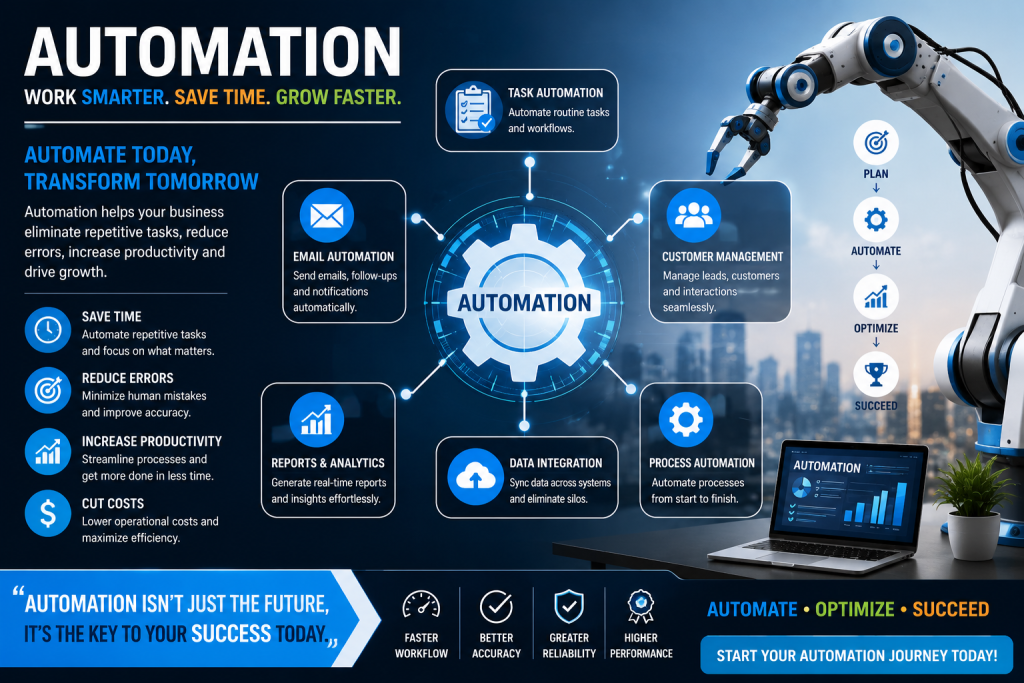
Communication is one of the biggest responsibilities of property managers.
A modern Property Management System East Africa automates communication with tenants by sending:
- Rent reminders
- Payment confirmations
- Maintenance updates
- Lease renewal notices
- General announcements
- Emergency notifications
Automation reduces administrative workload while improving tenant satisfaction.
Financial Management and Accounting
Financial management is at the heart of every successful real estate business.
An advanced property management system provides accurate accounting tools that help users monitor income and expenses.
Financial Features
Typical accounting features include:
- Income tracking
- Expense management
- Bank reconciliation
- Tenant balances
- Security deposit management
- Invoice generation
- Receipt generation
- Profit and loss reports
- Cash flow reports
- Tax summaries
Accurate financial reporting enables better budgeting and strategic decision-making.
Maintenance Management
Property maintenance significantly influences tenant satisfaction and property value.
A Property Management System East Africa streamlines maintenance by allowing tenants to submit requests online.
The system records:
- Maintenance issue
- Property location
- Assigned technician
- Estimated completion time
- Repair status
- Cost of repairs
- Completion history
Managers can monitor pending jobs and ensure maintenance requests are resolved promptly.
Benefits of Using a Property Management System East Africa
Improved Efficiency
Automation eliminates repetitive administrative work, allowing staff to focus on customer service and business growth.
Better Cash Flow
Automated invoicing and payment reminders improve rent collection rates and reduce late payments.
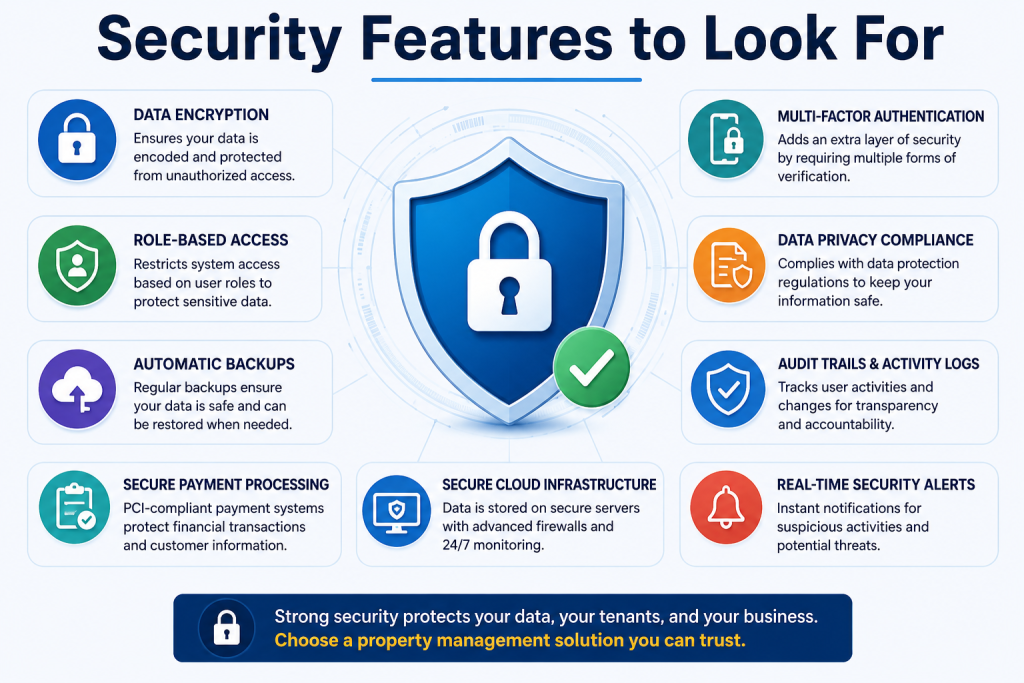
Enhanced Data Security
Digital records are far more secure than paper files.
Cloud systems use:
- User authentication
- Role-based access
- Data encryption
- Automatic backups
- Audit logs
These features help protect sensitive tenant and financial information.
Increased Productivity
Property managers spend less time on paperwork and more time growing their businesses.
Routine tasks such as invoicing, reminders, reporting, and receipt generation happen automatically.
Better Decision Making
Real-time dashboards provide valuable insights into:
- Rental income
- Vacancy rates
- Maintenance costs
- Outstanding balances
- Property profitability
- Occupancy trends
This information supports better strategic planning.
Industries That Benefit from Property Management Software
A Property Management System East Africa serves a wide range of industries.
Residential Apartments
Manage tenants, rent collection, maintenance, and lease renewals efficiently.
Commercial Buildings
Track office occupancy, rental agreements, maintenance, and financial performance.
Shopping Centres
Manage retail tenants, rental schedules, common area maintenance, and service charges.
Student Accommodation
Automate room allocation, student records, rent collection, and maintenance requests.
Mixed-Use Developments
Handle residential and commercial units within one integrated platform.
Hotels and Serviced Apartments
Manage bookings, occupancy, housekeeping, and billing from a centralized system where applicable.
Choosing the Right Property Management System East Africa
Not all software solutions are created equal. Before investing, consider the following factors.
Ease of Use
Choose software with an intuitive interface that requires minimal training.
Scalability
Your property portfolio will likely grow over time. Select software that can accommodate future expansion without requiring a complete replacement.
Security
Look for systems with:
- Data encryption
- Automatic backups
- User permissions
- Two-factor authentication
- Secure cloud hosting
Customer Support
Reliable technical support is essential.
Choose a provider offering:
- Phone support
- Email assistance
- WhatsApp support
- User training
- Knowledge base
- Regular software updates
Customization
Every property business has unique needs.
The ideal Property Management System East Africa should allow customization of:
- Rent structures
- Invoice templates
- User roles
- Reports
- Notifications
- Payment workflows
Country-Specific Applications Across East Africa
Kenya
Property managers in Kenya benefit from mobile money integrations, automated rent reminders, and digital financial reporting. Growing urban centres such as Nairobi, Mombasa, Kisumu, Nakuru, Eldoret, and Kiambu continue to drive demand for efficient property management solutions.
Uganda
With increasing investments in residential apartments and commercial developments, Ugandan property managers require centralized software to manage tenants, rent payments, and maintenance efficiently.
Tanzania
Rapid urban development in cities such as Dar es Salaam, Arusha, and Mwanza has increased the need for cloud-based property management systems that support multiple properties and streamlined operations.
Rwanda
Rwanda’s focus on digital transformation makes cloud-based property management software an attractive solution for improving efficiency and transparency in the real estate sector.
Ethiopia
As the housing and commercial property markets continue to expand, property owners can improve operational efficiency through automated tenant management and financial reporting.
South Sudan
Emerging real estate investments can benefit from centralized management systems that reduce paperwork and improve accountability.
Burundi
Property owners and estate managers can simplify rent collection, maintenance tracking, and financial management by adopting modern property management software designed for growing portfolios.
Artificial Intelligence and Automation in Property Management
Artificial Intelligence (AI) is rapidly changing how real estate businesses operate. A modern Property Management System East Africa is no longer limited to storing tenant information and recording rent payments. Today’s software is becoming smarter by helping property managers make informed decisions through automation and predictive insights.
AI-powered capabilities can include:
- Automated rent reminders
- Intelligent tenant communication
- Predictive maintenance scheduling
- Vacancy forecasting
- Financial trend analysis
- Automated report generation
- Smart dashboards
- Digital document processing
These technologies reduce administrative work, improve efficiency, and help property managers focus on growing their businesses.
The Future of Property Management in East Africa
The East African property market continues to evolve, and digital transformation is expected to accelerate over the coming years. As internet connectivity improves and smartphone adoption increases, more landlords and property managers are moving away from manual processes.
Some of the trends shaping the future of Property Management System East Africa include:
Smart Buildings
Modern buildings increasingly use smart devices to monitor electricity, water usage, access control, and security systems. Property management software can integrate with these technologies to provide centralized control.
Digital Lease Agreements
Paper contracts are gradually being replaced with digital lease agreements that can be signed electronically, reducing paperwork and speeding up the leasing process.
Mobile-First Property Management
Since smartphones are widely used across East Africa, property management platforms are focusing on mobile-friendly experiences. Managers can approve maintenance requests, review financial reports, and communicate with tenants directly from their phones.
Business Intelligence Dashboards
Interactive dashboards provide real-time insights into occupancy rates, rental income, maintenance costs, and outstanding balances, enabling faster and more informed decisions.
Enhanced Security
As more property data moves online, software providers continue to strengthen cybersecurity through encryption, secure authentication, audit trails, and regular system updates.
How to Implement a Property Management System East Africa
Successfully implementing a Property Management System East Africa requires careful planning. Following a structured process helps ensure a smooth transition from manual methods or older software.
Step 1: Assess Your Business Needs
Start by identifying your current challenges.
Ask questions such as:
- How many properties do you manage?
- How many tenants do you have?
- What processes consume the most time?
- Which reports do you require regularly?
- Do you need mobile money integration?
- Will multiple staff members use the system?
Understanding your requirements makes it easier to choose the right solution.
Step 2: Choose the Right Software
Compare different solutions based on:
- Features
- Ease of use
- Security
- Customer support
- Scalability
- Integration capabilities
- Pricing
- Cloud availability
Avoid selecting software based solely on price. Long-term value is more important than the lowest upfront cost.
Step 3: Migrate Existing Data
Transfer important information into the new system, including:
- Tenant records
- Property details
- Lease agreements
- Financial records
- Maintenance history
- Outstanding balances
Verify the accuracy of all imported data before going live.
Step 4: Train Your Team
Provide adequate training for everyone who will use the system. Staff should understand how to:
- Register new tenants
- Generate invoices
- Record payments
- Process maintenance requests
- Produce reports
- Manage user permissions
Well-trained users are more likely to use the software effectively.
Step 5: Monitor Performance
After implementation, regularly review how the system is performing. Monitor key metrics such as:
- Rent collection rates
- Occupancy levels
- Maintenance response times
- Tenant satisfaction
- Financial reporting accuracy
Use these insights to improve operational efficiency over time.
Common Mistakes to Avoid
Even the best Property Management System East Africa will not deliver optimal results if it is implemented poorly. Avoid these common mistakes:
Ignoring Staff Training
Without proper training, users may rely on old manual processes and fail to use the software effectively.
Poor Data Quality
Incorrect tenant information, duplicate records, and missing financial data can reduce the system’s reliability.
Delaying System Updates
Regular software updates improve security, fix bugs, and introduce new features.
Weak Password Practices
Protect your system by using strong passwords, enabling multi-factor authentication where available, and restricting user access based on responsibilities.
Choosing Software That Cannot Scale
As your portfolio grows, your software should grow with it. Select a solution that supports additional properties, users, and advanced features.
Frequently Asked Questions
What is a Property Management System East Africa ?
A Property Management System is software that helps landlords and property managers automate tasks such as tenant management, rent collection, lease administration, maintenance tracking, and financial reporting.
Who should use a Property Management System East Africa?
The software is suitable for landlords, property management companies, real estate agencies, commercial property owners, housing cooperatives, student hostels, and property developers.
Can small landlords benefit from property management software?
Yes. Even landlords with a few rental units can save time, improve rent collection, and keep organized records using a modern system.
Does the software support multiple properties?
Most modern platforms allow users to manage multiple residential and commercial properties from a single dashboard.
Is cloud-based property management software secure?
Reputable cloud providers implement security measures such as encryption, automatic backups, secure authentication, and user access controls to protect sensitive information.
Can tenants pay rent online?
Many modern solutions support online payments through mobile money platforms, bank transfers, and payment gateways, making rent collection more convenient.
Why Digital Property Management System East Africa Matters
Property management is becoming more competitive as real estate markets expand across East Africa. Tenants expect faster communication, convenient payment options, and prompt maintenance services. At the same time, landlords want higher occupancy rates, reliable financial reporting, and improved profitability.
A Property Management System East Africa helps bridge these expectations by providing one centralized platform for managing daily operations. Automation reduces paperwork, improves accuracy, and gives property managers more time to focus on customer service and business growth.
Organizations that embrace digital property management today are better positioned to adapt to changing market demands and scale their operations efficiently.
The real estate sector across East Africa is entering a new era of digital transformation. Whether you manage apartments, commercial buildings, student accommodation, mixed-use developments, or large property portfolios, adopting a Property Management System East Africa can significantly improve operational efficiency, financial transparency, and tenant satisfaction.
From automated rent collection and mobile money integration to maintenance management and real-time reporting, a Property Management System East Africa provides the tools needed to simplify complex property operations. As your portfolio grows, the software grows with you, making it easier to manage multiple properties while maintaining accurate records and delivering exceptional service.
Investing in a reliable Property Management System East Africa is more than a technology upgrade—it’s a strategic decision that supports sustainable growth, better decision-making, and stronger relationships with tenants. Businesses that embrace a modern Property Management System East Africa today will be well-equipped to thrive in the rapidly evolving real estate markets of Kenya, Uganda, Tanzania, Rwanda, Ethiopia, Burundi, and South Sudan.
Whether you are an individual landlord or a large property management company, implementing a Property Management System East Africa can streamline operations, increase revenue, reduce administrative workload, and position your business for long-term success. Now is the ideal time to adopt a Property Management System East Africa and unlock the full potential of digital property management.