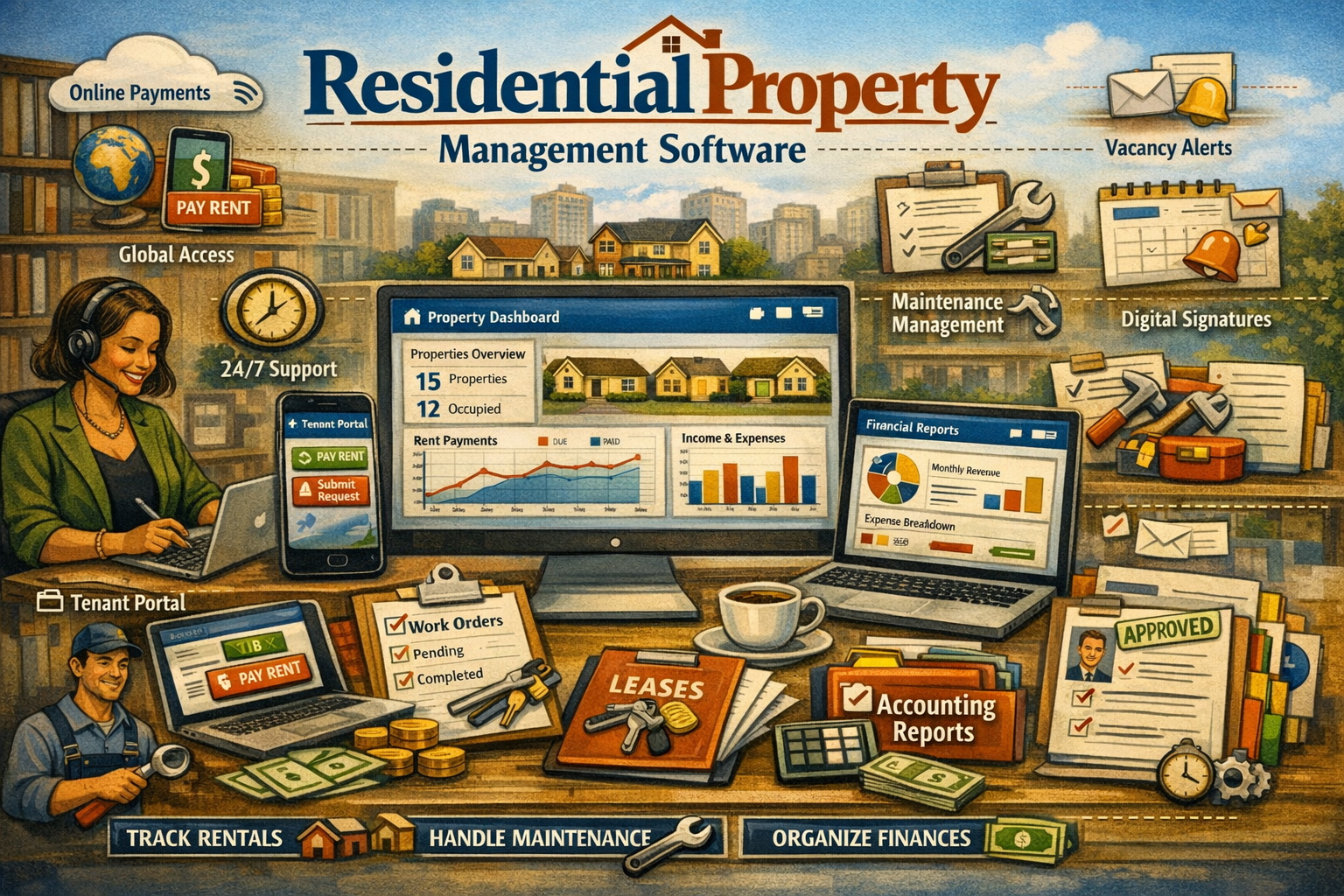
Residential Property Management Software: Simplifying Property Ownership
In today’s fast-paced real estate industry, property owners and managers are increasingly turning to technology to streamline operations. Residential property management software has emerged as a vital tool for landlords, property managers, and real estate professionals who want to optimize efficiency, reduce costs, and enhance tenant satisfaction. This guide explores everything you need to know about residential property management software, its benefits, features, and how it can transform property management in Kenya and beyond.
What is Residential Property Management Software?
Residential property management software is a digital platform designed to automate, manage, and simplify all aspects of managing residential properties. From rent collection and lease tracking to maintenance management and tenant communication, these software solutions provide a centralized hub for property managers and landlords.
Instead of relying on spreadsheets, manual records, or fragmented tools, this software consolidates essential property management tasks into a single, easy-to-use platform. By using residential property management software, property managers can save time, reduce errors, and focus on growing their real estate business.
Key Features of Residential Property Management Software
Modern residential property management software comes equipped with an array of features designed to enhance property operations. Some of the most valuable features include:
1. Online Rent Collection
One of the core functionalities is the ability to collect rent digitally. Tenants can pay online, reducing late payments and providing landlords with automated reminders and transaction tracking.
2. Tenant Management
Property managers can store detailed tenant profiles, track lease agreements, and monitor rental histories. This ensures efficient communication and better tenant relationships.
3. Maintenance Tracking
From routine inspections to urgent repair requests, maintenance management is simplified. Managers can assign tasks to vendors, track progress, and maintain a digital record of repairs.
4. Accounting and Financial Reporting
Integrated accounting tools allow property managers to track income, expenses, and generate financial reports. This eliminates the need for separate accounting software.
5. Automated Lease Management
Lease agreements can be created, stored, and monitored digitally. Automatic reminders for renewals or lease expirations reduce administrative workload.
6. Communication Tools
Built-in messaging systems enable instant communication with tenants, service providers, and team members. Notifications for payments, maintenance updates, and policy changes improve tenant satisfaction.
7. Mobile Access
Most modern software comes with mobile apps, enabling property managers to oversee operations from anywhere, at any time.
Benefits of Using Residential Property Management Software
Investing in residential property management software offers multiple benefits for landlords and property managers:
1. Time Efficiency
Automating daily tasks, such as rent collection and maintenance scheduling, frees up valuable time that property managers can dedicate to growth and strategic decision-making.
2. Improved Accuracy
Manual processes are prone to human error. With property management software, accounting, tenant records, and lease agreements are maintained digitally, ensuring accuracy.
3. Enhanced Tenant Satisfaction
Fast response times, streamlined communication, and easy rent payment options enhance the overall tenant experience, leading to higher retention rates.
4. Financial Control
With real-time reporting and analytics, property owners gain full visibility over cash flows, expenses, and profitability, allowing for informed decision-making.
5. Scalability
Whether managing a single residential property or a large portfolio, property management software scales to meet growing business demands, making expansion smoother.
Choosing the Right Residential Property Management Software
Selecting the right software can be overwhelming given the variety of options available. Here are key factors to consider:
1. User-Friendly Interface
A clean, intuitive interface reduces the learning curve and ensures efficient use of the software.
2. Customizable Features
Different properties have unique needs. Look for software that can be customized to fit your specific requirements.
3. Cloud-Based Access
Cloud-based solutions provide access anytime, anywhere, and often include automatic updates and backups.
4. Integration Capabilities
Integration with accounting software, payment gateways, and maintenance vendors ensures seamless operations.
5. Security and Compliance
Ensure the software adheres to data security standards and complies with local regulations for tenant data and financial records.
Top Trends in Residential Property Management Software
The property management industry is evolving rapidly. Staying ahead of technology trends can offer a competitive edge:
1. AI and Automation
Artificial Intelligence is now being used to predict tenant behavior, optimize rent pricing, and automate routine tasks.
2. Mobile-First Solutions
Mobile apps enable on-the-go management, real-time notifications, and digital communication with tenants.
3. Data Analytics
Advanced analytics tools allow property managers to monitor occupancy trends, maintenance costs, and tenant satisfaction levels.
4. Virtual Tours and Inspections
Especially relevant in post-pandemic real estate, virtual property tours and inspections save time and increase engagement with prospective tenants.
How Residential Property Management Software Transforms Property Management in Kenya
Kenya’s real estate sector is rapidly modernizing, and digital property management solutions are playing a key role. By adopting residential property management software, Kenyan landlords and property managers can:
-
Streamline operations for multiple properties across cities like Nairobi, Mombasa, and Kisumu.
-
Simplify rent collection through digital payment platforms popular in Kenya, such as M-Pesa.
-
Maintain compliance with local laws and rental regulations efficiently.
-
Improve tenant experiences, which leads to better occupancy rates and rental income stability.
This technological shift is helping property owners reduce operational headaches and improve profitability, making property management more professional and efficient.
Implementation Tips for Residential Property Management Software
Successfully implementing property management software requires careful planning:
1. Assess Your Needs
List the features essential for your operations, such as accounting, maintenance tracking, or tenant communication.
2. Train Your Team
Provide training to property managers, accountants, and support staff to ensure smooth adoption.
3. Migrate Data Carefully
Transition tenant records, lease agreements, and financial information carefully to avoid data loss.
4. Monitor Performance
Track the software’s effectiveness in improving operations, reducing errors, and enhancing tenant satisfaction.
5. Seek Continuous Feedback
Encourage your team and tenants to provide feedback, enabling continuous improvement of the management process.
Common Mistakes to Avoid
While residential property management software offers many benefits, mistakes during selection or implementation can reduce effectiveness:
-
Choosing software with unnecessary features that complicate operations.
-
Neglecting data security and compliance requirements.
-
Underestimating the training needed for staff to adopt the software.
-
Failing to integrate with other systems, such as accounting or payment platforms.
Conclusion
Investing in residential property management software is no longer optional; it’s a strategic necessity for property owners and managers who want to maximize efficiency, reduce operational costs, and improve tenant satisfaction. With features like online rent collection, automated lease management, maintenance tracking, and financial reporting, this software is transforming property management globally, including in Kenya.
By selecting the right platform and implementing it correctly, property managers can focus on growth, improve profitability, and deliver a superior tenant experience. Whether you manage a single apartment or an extensive residential portfolio, residential property management software is the key to modern, effective, and stress-free property management.