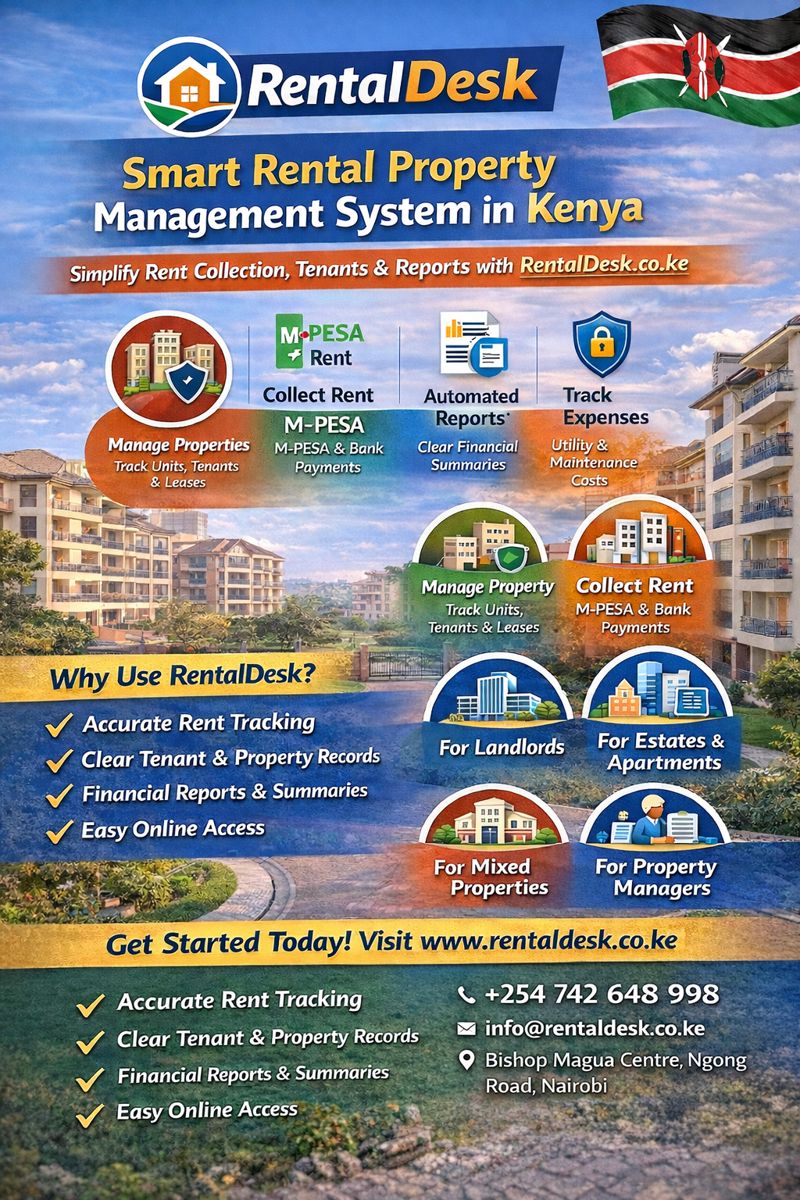
Managing multi-unit buildings in Kenya can be both rewarding and challenging. With numerous tenants, rent payments, maintenance requests, and legal obligations to handle, landlords and property managers often find themselves overwhelmed. Traditional management methods, such as manual ledgers or spreadsheets, are time-consuming and prone to errors.
This is where RentalDesk for multi-unit buildings steps in—a modern, cloud-based property management solution that simplifies operations, improves tenant satisfaction, and maximizes profitability. In this comprehensive guide, we explore how RentalDesk can transform the management of multi-unit buildings in Kenya.
RentalDesk is a property management software platform designed for landlords, property managers, and real estate companies. Its main purpose is to streamline the day-to-day operations of rental properties, particularly multi-unit buildings, by automating tasks like rent collection, tenant management, maintenance tracking, and reporting.
Unlike conventional systems, RentalDesk integrates all property management functions into one cloud-based platform. This ensures accessibility, transparency, and efficiency, which are especially critical for multi-unit buildings where managing multiple tenants simultaneously can become complex.
RentalDesk is packed with features that specifically address the needs of multi-unit property owners. Some of the most valuable include:
1. Automated Rent Collection
Collecting rent from multiple tenants can be a logistical headache. RentalDesk simplifies this by allowing tenants to pay rent online using secure platforms such as M-Pesa, bank transfers, or credit/debit cards. Automated reminders and late-fee settings reduce missed payments and ensure consistent cash flow for property owners.
2. Tenant Management
Managing multiple tenants involves maintaining leases, tracking payment history, and managing personal information. RentalDesk provides a centralized tenant database, making it easy to:
This feature not only saves time but also minimizes disputes by keeping everything transparent and well-documented.
3. Maintenance Requests and Tracking
Multi-unit buildings often have ongoing maintenance issues that need quick resolution. With RentalDesk, tenants can submit maintenance requests directly through the platform. Property managers can:
-
Assign requests to maintenance staff or contractors
-
Track the progress of each request
-
Update tenants on status
-
Schedule preventive maintenance
This system ensures that all issues are handled efficiently, reducing tenant complaints and improving retention.
4. Multi-Unit Analytics
RentalDesk offers real-time analytics for multi-unit buildings, giving landlords insights into occupancy rates, revenue, expenses, and maintenance costs. This data helps property managers make informed decisions, optimize operations, and maximize profitability.
5. Document Management
Managing legal and financial documents can be challenging for multi-unit properties. RentalDesk allows landlords to securely store leases, payment receipts, notices, and other critical documents. Quick access to these records saves time and ensures compliance with Kenyan tenancy laws.
6. Customizable Notifications
RentalDesk enables property managers to set up automated notifications for events such as rent due dates, lease renewals, inspections, or policy updates. This keeps tenants informed and ensures that landlords never miss critical deadlines.
Using RentalDesk for multi-unit buildings offers numerous benefits tailored to the Kenyan market:
1. Increased Efficiency
Manual property management is time-consuming and prone to errors. RentalDesk automates most administrative tasks, freeing up property managers to focus on growth and tenant relations.
2. Enhanced Tenant Satisfaction
When tenants can pay rent online, submit maintenance requests easily, and receive timely notifications, their experience improves significantly. Happy tenants are more likely to renew leases, reducing vacancy rates.
3. Improved Financial Management
RentalDesk helps track income and expenses in real-time, enabling better budgeting and financial planning. Automated rent reminders and receipts reduce delays and increase cash flow reliability.
4. Scalability
Whether managing 10 units or 100, RentalDesk scales effortlessly with your property portfolio. This is especially important in Kenya’s growing urban markets, where multi-unit apartment buildings are becoming increasingly common.
5. Legal Compliance
RentalDesk ensures proper documentation of leases, notices, and payments, helping landlords comply with Kenya’s Landlord and Tenant Laws. This reduces the risk of legal disputes and penalties.
rket
Kenya’s rental market has unique characteristics:
-
High mobile money adoption (M-Pesa, Airtel Money)
-
Rapid urbanization in cities like Nairobi, Mombasa, and Kisumu
-
Growing demand for multi-unit apartment buildings
RentalDesk is designed with these factors in mind. Its mobile-friendly interface allows tenants to pay rent and submit requests from their phones. Integration with local payment systems like M-Pesa makes transactions seamless. Additionally, its reporting and analytics tools are tailored for Kenya’s urban rental markets, helping landlords optimize operations efficiently.
Let’s break down the practical ways RentalDesk simplifies multi-unit building management in Kenya:
Centralized Management
Instead of juggling spreadsheets, physical files, and multiple communication channels, RentalDesk centralizes everything. All tenant data, payment history, maintenance requests, and documents are in one platform.
Automated Workflows
From rent reminders to lease renewals and maintenance scheduling, RentalDesk automates repetitive tasks, reducing manual effort and human error.
Real-Time Communication
Tenants and landlords can communicate directly through the platform. This ensures quick resolution of issues and transparent communication, which is crucial in multi-unit buildings.
Comprehensive Reporting
RentalDesk provides detailed financial and operational reports. Property managers can track cash flow, occupancy, maintenance costs, and tenant trends, enabling smarter business decisions.
Starting with RentalDesk for multi-unit buildings is simple. Here’s a step-by-step guide:
Step 1: Sign Up
Create an account on RentalDesk and enter your property details. The platform allows you to define each unit, building, and associated leases.
Step 2: Add Units and Tenants
Input details for each unit, including type, rent amount, and lease terms. Add tenants and their contact information. This creates a complete digital record of your property portfolio.
Step 3: Set Up Payments
Integrate local payment methods such as M-Pesa for seamless rent collection. Enable automated reminders and receipts for tenants.
Step 4: Manage Maintenance
Create a workflow for maintenance requests. Assign staff or contractors, track progress, and update tenants until the issue is resolved.
Step 5: Monitor Performance
Use RentalDesk dashboards to analyze occupancy rates, revenue, and tenant activity. Adjust pricing, policies, or maintenance schedules based on real-time insights.
Tips for Maximizing RentalDesk Efficiency
-
Encourage Tenants to Use the Platform – Educate tenants on paying rent, submitting requests, and accessing notices through RentalDesk.
-
Regularly Update Records – Keep lease agreements, tenant info, and payment histories current.
-
Leverage Reports – Use analytics to identify underperforming units or areas needing attention.
-
Integrate with Accounting Software – Export data to your accounting system for seamless financial management.
-
Schedule Preventive Maintenance – Avoid costly repairs by using RentalDesk’s maintenance scheduling tools.
Consider a Nairobi-based property manager handling a 50-unit apartment complex. Before RentalDesk, rent collection was manual, maintenance requests were logged on paper, and tenant complaints were frequent.
After implementing RentalDesk:
-
Rent collection became 100% digital, reducing delays.
-
Maintenance requests were tracked and resolved faster.
-
Tenant satisfaction increased, leading to higher lease renewals.
-
Financial reporting was automated, providing real-time insights into property performance.
This case highlights how RentalDesk transforms multi-unit building management, making it more efficient, transparent, and profitable.
Conclusion
For landlords and property managers in Kenya, RentalDesk for multi-unit buildings is more than just software—it’s a complete solution for modern property management. By automating rent collection, streamlining tenant management, and providing actionable analytics, RentalDesk saves time, reduces stress, and maximizes revenue.