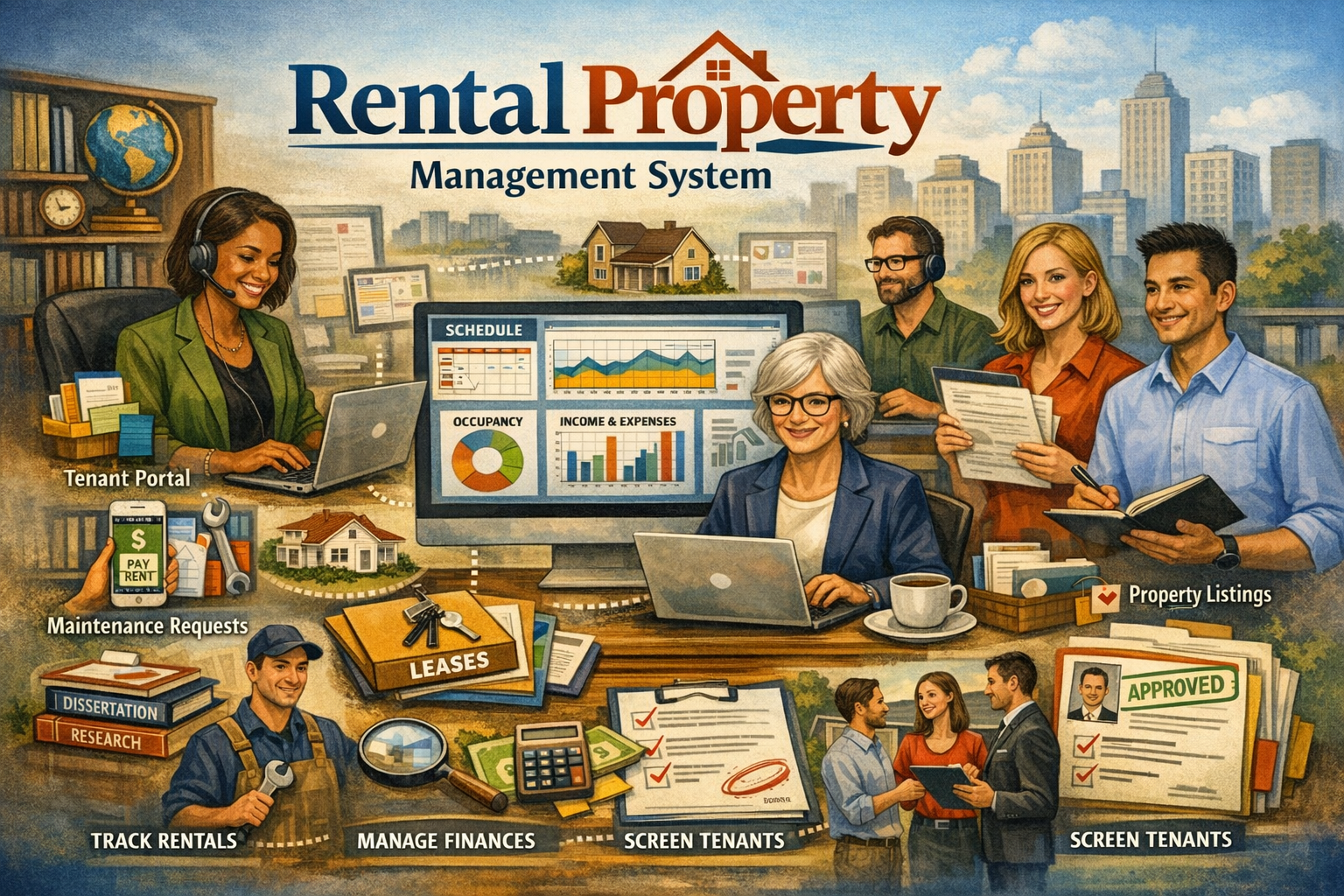
Rental Management System: The Ultimate Guide to Streamlining Your Rental Business
Introduction
In today’s fast-paced digital world, businesses that rely on rentals must operate efficiently, accurately, and with minimal manual effort. Whether you manage properties, vehicles, equipment, or vacation homes, a rental management system has become an essential tool for success. This powerful software solution helps businesses automate operations, manage bookings, track inventory, handle payments, and improve customer experiences.
A modern rental management system eliminates the challenges of manual tracking, reduces human errors, and provides real-time insights that allow businesses to scale smoothly. Companies that adopt a reliable rental solution gain a competitive advantage, improve profitability, and increase customer satisfaction.
This comprehensive guide explores everything you need to know about a rental management system, including its features, benefits, industries that use it, how to choose the best one, and future trends shaping the industry.
What Is a Rental Management System?
A rental management system is specialized software designed to manage rental operations efficiently. It centralizes all rental-related activities, such as inventory tracking, booking management, billing, reporting, and customer communication.
Instead of relying on spreadsheets or paper-based records, businesses can use a rental management system to automate repetitive tasks and maintain accurate records. This ensures that rental operations run smoothly and customers receive timely service.
Key Functions of a Rental Management System
A well-designed rental management system typically includes:
- Booking and reservation management
- Inventory tracking
- Billing and invoicing
- Payment processing
- Customer relationship management
- Reporting and analytics
- Maintenance scheduling
- Contract and agreement management
By integrating all these features into one platform, a rental management system improves efficiency and reduces operational costs.
Why Your Business Needs a Rental Management System
Managing rentals manually becomes increasingly difficult as a business grows. Without proper automation, companies may face missed bookings, inventory shortages, payment delays, and customer dissatisfaction.
Here are the main reasons why investing in a rental management system is critical:
1. Improved Operational Efficiency
A rental management system automates routine tasks such as scheduling, billing, and inventory updates. This reduces manual work and allows staff to focus on customer service and business growth.
2. Accurate Inventory Tracking
Inventory errors can result in lost revenue and customer frustration. A rental management system tracks availability in real time, ensuring that items are always accounted for.
3. Enhanced Customer Experience
Customers expect fast, reliable service. With automated confirmations, reminders, and easy payment options, a rental management system delivers a seamless experience.
4. Better Financial Management
Automated billing and reporting tools help businesses track revenue, expenses, and outstanding payments accurately.
5. Scalability for Business Growth
As your rental business expands, a rental management system allows you to manage multiple locations, products, and customers efficiently.
Key Features of a Modern Rental Management System
When selecting a rental management system, it is important to understand the features that drive performance and usability.
1. Reservation and Booking Management
Booking management is the core function of any rental management system. It allows businesses to schedule reservations, check availability, and avoid double bookings.
Essential booking features include:
- Online reservation portals
- Real-time availability tracking
- Automated confirmations
- Calendar management
- Booking reminders
These tools improve accuracy and customer satisfaction.
2. Inventory Management
A rental management system must provide precise inventory tracking to prevent shortages and overbooking.
Inventory features include:
- Real-time inventory updates
- Barcode and RFID integration
- Item categorization
- Availability tracking
- Damage and maintenance records
This ensures that all rental assets remain in optimal condition.
3. Billing and Invoicing
Automated billing reduces human error and speeds up payment processing.
A strong rental management system should support:
- Automated invoicing
- Flexible pricing models
- Discounts and promotions
- Late fee calculations
- Tax management
These features simplify financial management and improve cash flow.
4. Payment Integration
Customers prefer convenient payment options. A rental management system should support multiple payment methods, including:
- Credit and debit cards
- Mobile payments
- Online transfers
- Recurring billing
Secure payment integration enhances customer trust and business efficiency.
5. Reporting and Analytics
Data-driven decision-making is essential for growth. A rental management system provides valuable insights through reports and dashboards.
Common reports include:
- Revenue analysis
- Inventory usage
- Customer trends
- Profit margins
- Maintenance costs
These insights help businesses optimize operations and maximize profitability.
6. Maintenance Management
Rental items require regular maintenance to remain functional.
A rental management system can:
- Schedule maintenance tasks
- Track repair history
- Send maintenance alerts
- Reduce equipment downtime
Proper maintenance improves asset longevity and customer satisfaction.
7. Customer Relationship Management (CRM)
Customer retention is vital for long-term success. Many rental management systems include CRM tools that store customer information and communication history.
CRM features include:
- Customer profiles
- Communication logs
- Feedback tracking
- Loyalty programs
These tools help build strong customer relationships.
Industries That Use Rental Management Systems
A rental management system is useful across various industries. Here are the most common sectors that benefit from this technology.
Property Management
Property managers rely heavily on rental management systems to manage tenants, leases, and payments.
Typical uses include:
- Tenant tracking
- Lease management
- Rent collection
- Maintenance scheduling
Property management companies improve efficiency and tenant satisfaction using these tools.
Vehicle Rental Businesses
Car rental companies use rental management systems to manage fleets and bookings.
Key benefits include:
- Vehicle tracking
- Reservation management
- Maintenance scheduling
- Driver documentation
This ensures smooth fleet operations.
Equipment Rental Companies
Construction and industrial equipment rental businesses use rental management systems to manage heavy machinery.
Features include:
- Equipment tracking
- Usage monitoring
- Maintenance alerts
- Safety compliance tracking
This helps maintain equipment reliability.
Event and Party Rentals
Businesses that rent event equipment such as tents, chairs, and sound systems benefit from organized inventory and scheduling tools.
A rental management system helps:
- Manage event bookings
- Track item availability
- Coordinate deliveries
- Handle deposits
This ensures successful event planning.
Vacation Rental Businesses
Vacation rental owners use rental management systems to handle bookings, guest communication, and property maintenance.
This improves guest experiences and increases occupancy rates.
Benefits of Using a Rental Management System
Adopting a rental management system offers several measurable advantages.
Increased Productivity
Automation reduces manual tasks, allowing employees to focus on strategic activities.
Reduced Errors
Manual processes often lead to mistakes. A rental management system minimizes errors in bookings, billing, and inventory tracking.
Improved Customer Satisfaction
Fast booking processes and automated communication enhance customer experiences.
Better Data Security
Digital systems store sensitive data securely, protecting customer and financial information.
Higher Revenue Potential
Accurate tracking and improved efficiency lead to better resource utilization and increased profitability.
How to Choose the Best Rental Management System
Selecting the right rental management system requires careful evaluation of business needs and available features.
1. Identify Your Business Requirements
Start by understanding your operational needs. Consider:
- Number of rental items
- Type of rental services
- Budget constraints
- Required integrations
This helps narrow down suitable options.
2. Evaluate Ease of Use
A user-friendly rental management system ensures faster adoption by employees.
Look for:
- Simple dashboards
- Clear navigation
- Minimal training requirements
Ease of use reduces downtime and increases productivity.
3. Check Integration Capabilities
Your rental management system should integrate with:
- Accounting software
- Payment gateways
- CRM platforms
- Inventory tools
Integration improves workflow efficiency.
4. Consider Cloud-Based Solutions
Cloud-based rental management systems provide:
- Remote access
- Automatic updates
- Secure data backups
This makes them ideal for modern businesses.
5. Review Customer Support
Reliable customer support ensures that technical issues are resolved quickly.
Look for:
- 24/7 support
- Training resources
- Documentation
- Community forums
Strong support improves long-term usability.
Steps to Implement a Rental Management System
Successful implementation requires planning and execution.
Step 1: Analyze Current Processes
Review existing workflows and identify inefficiencies.
Step 2: Choose the Right System
Select a rental management system that matches your needs.
Step 3: Train Your Staff
Provide training to ensure employees understand how to use the system effectively.
Step 4: Migrate Data
Transfer existing customer and inventory data into the new system.
Step 5: Monitor Performance
Track performance metrics to ensure the system delivers expected results.
Future Trends in Rental Management Systems
Technology continues to evolve, shaping the future of rental management systems.
Artificial Intelligence Integration
AI-powered rental management systems can predict demand, automate customer support, and optimize pricing.
Mobile Accessibility
Mobile-friendly platforms allow businesses to manage rentals from smartphones and tablets.
Internet of Things (IoT)
IoT devices enable real-time asset tracking and remote monitoring.
Advanced Analytics
Data analytics tools provide deeper insights into customer behavior and operational efficiency.
Automation and Self-Service
Self-service portals allow customers to book, pay, and manage rentals independently.
Common Challenges Without a Rental Management System
Businesses that operate without a rental management system often face several difficulties.
Manual Errors
Handwritten records and spreadsheets increase the likelihood of mistakes.
Limited Visibility
Without centralized data, tracking inventory and bookings becomes difficult.
Poor Customer Experience
Delayed responses and inaccurate bookings lead to dissatisfied customers.
Inefficient Reporting
Manual reporting consumes time and reduces decision-making speed.
Best Practices for Maximizing Your Rental Management System
To get the most value from your rental management system, follow these best practices:
- Regularly update inventory data
- Use automated reminders
- Monitor performance metrics
- Train employees continuously
- Customize workflows to match business needs
These strategies ensure optimal system performance.
Frequently Asked Questions About Rental Management Systems
What is the main purpose of a rental management system?
The primary purpose of a rental management system is to automate rental operations, manage inventory, and improve efficiency.
Is a rental management system suitable for small businesses?
Yes, small businesses benefit significantly from using a rental management system because it reduces manual work and improves accuracy.
Can a rental management system handle multiple locations?
Most modern rental management systems support multi-location management, making them suitable for growing businesses.
How secure is a rental management system?
Modern systems use advanced security protocols such as encryption and access controls to protect sensitive data.
What is the cost of a rental management system?
Costs vary depending on features, number of users, and deployment method.
Conclusion
A rental management system is no longer a luxury—it is a necessity for businesses that want to stay competitive in the modern rental industry. From managing bookings and tracking inventory to automating billing and generating reports, this powerful tool streamlines operations and improves overall efficiency.
Businesses across industries—including property management, vehicle rentals, equipment leasing, and event rentals—are adopting rental management systems to enhance productivity and deliver better customer experiences.