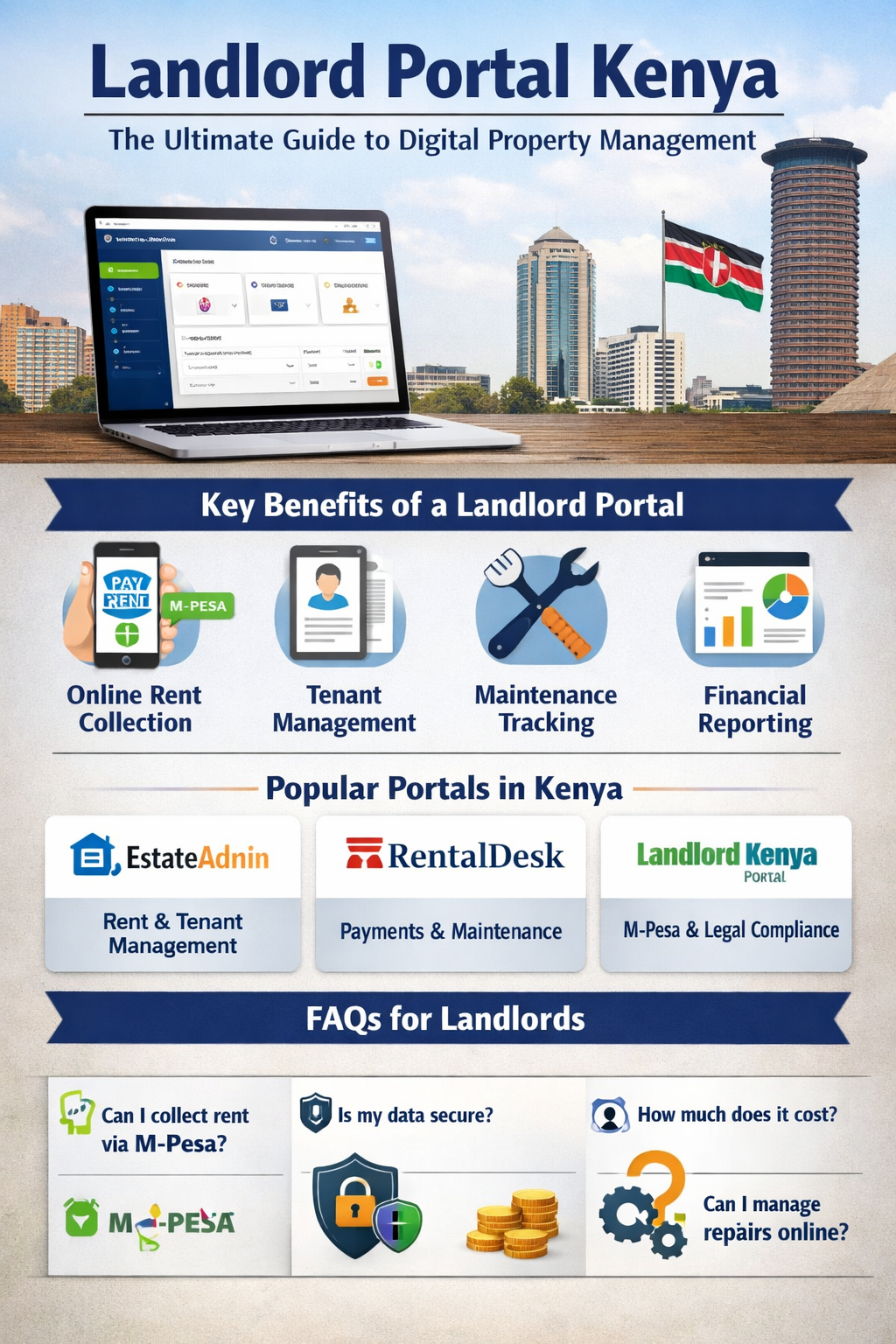
Landlord Portal Kenya: Simplifying Property Management for Landlords
Managing rental properties in Kenya can be challenging. From collecting rent on time to keeping accurate records and maintaining tenant communication, landlords often face a mountain of tasks. Fortunately, a Landlord Portal in Kenya can make property management simpler, faster, and more efficient.
What is a Landlord Portal?
A landlord portal is an online platform designed for property owners to manage their rentals digitally. These portals provide tools for tracking rent payments, sending reminders, managing tenant records, generating reports, and even handling maintenance requests. For landlords in Kenya, this means less paperwork, fewer manual errors, and more control over rental properties from anywhere.
Benefits of Using a Landlord Portal in Kenya
-
Efficient Rent Collection:
Digital portals allow tenants to pay rent online, reducing delays and missed payments. Automated reminders ensure timely transactions. -
Tenant Management Made Easy:
Maintain comprehensive tenant records, including lease agreements, payment history, and communication logs in one secure platform. -
Maintenance Requests Tracking:
Tenants can submit repair requests through the portal, and landlords can track and respond promptly, ensuring property upkeep and tenant satisfaction. -
Financial Reporting:
Generate detailed reports on income, expenses, and outstanding payments. This helps with budgeting, taxes, and overall property profitability. -
Convenient Communication:
The portal provides a centralized system for messages, announcements, and notifications between landlords and tenants, reducing miscommunication. -
Accessible Anywhere:
Cloud-based portals allow landlords to manage their properties from smartphones, tablets, or computers, whether in Nairobi, Mombasa, or Kisumu.
Key Features of a Reliable Landlord Portal in Kenya
-
Online Rent Payment & Invoicing – Simplify rent collection for tenants.
-
Tenant Screening & Onboarding – Ensure quality tenants from the start.
-
Automated Notifications – Remind tenants about rent, lease renewals, and maintenance schedules.
-
Document Management – Store digital copies of lease agreements, receipts, and contracts.
-
Real-Time Analytics – Track property performance and occupancy rates.
Why Landlords in Kenya Need a Digital Portal
Kenya’s property market is growing rapidly, and landlords face increasing competition and tenant expectations. A landlord portal not only streamlines operations but also enhances tenant satisfaction. Digital property management reduces stress, saves time, and increases efficiency — ultimately boosting your rental business’s profitability.
Choosing the Right Landlord Portai
l
n Kenya
When selecting a landlord portal in Kenya, consider the following:
-
User-friendly interface for both landlords and tenants
-
Secure online payment integrations (M-Pesa, bank transfers, etc.)
-
Local customer support and compliance with Kenyan property regulations
-
Mobile accessibility for management on the go
Popular platforms now offer specialized features for the Kenyan market, including automated M-Pesa payments, tenant screening services, and tax-friendly reporting tailored to local requirements.
Conclusion
A landlord portal in Kenya is no longer a luxury—it’s a necessity for modern property management. With streamlined rent collection, tenant management, and maintenance tracking, landlords can focus on growing their property portfolio rather than handling tedious administrative tasks. Embrace digital property management today and transform how you manage your rentals.
Landlord Portal Kenya: The Ultimate Guide to Digital Property Management
Managing rental properties in Kenya can be overwhelming. From tracking rent payments to handling tenant requests and maintaining records, landlords often juggle numerous tasks. Traditional methods like spreadsheets and manual cash collection are not only time-consuming but also prone to errors. A landlord portal in Kenya solves these challenges by providing a centralized, digital platform to manage all aspects of property management efficiently.
What is a Landlord Portal?
A landlord portal is an online software platform that allows property owners to manage their rentals digitally. Think of it as a “command center” for landlords:
-
Track rent payments
-
Manage tenant information
-
Handle maintenance requests
-
Generate financial reports
-
Communicate with tenants
For landlords in Kenya, a reliable portal is especially valuable because it supports local payment methods like M-Pesa and integrates with Kenyan property regulations.
Benefits of Using a Landlord Portal in Kenya
1. Simplified Rent Collection
Collecting rent manually can be stressful, especially if tenants delay payments. With a landlord portal, tenants can pay rent online through M-Pesa, bank transfers, or card payments, and the system automatically records the transaction. Landlords also get notifications for late or upcoming payments, reducing delays.
2. Efficient Tenant Management
Managing tenants becomes seamless with a digital portal. Landlords can:
-
Maintain tenant profiles
-
Store lease agreements digitally
-
Track payment history
-
Set automated reminders for lease renewals
This reduces paperwork and ensures landlords always have accurate, up-to-date records.
3. Maintenance Requests Made Easy
A landlord portal enables tenants to submit maintenance requests directly through the platform. Landlords can:
-
Prioritize urgent repairs
-
Assign service providers
-
Track progress in real-time
This improves tenant satisfaction and ensures properties are well-maintained.
4. Financial Management and Reporting
Landlords can generate detailed financial reports, including:
-
Monthly income and expenses
-
Outstanding rent
-
Profit and loss statements
These reports help with budgeting, taxation, and assessing property performance.
5. Enhanced Communication
Clear communication between landlords and tenants is essential. A portal centralizes messages, announcements, and notifications, reducing miscommunication and building stronger landlord-tenant relationships.
6. Accessibility Anywhere
Cloud-based landlord portals allow landlords to manage their properties from smartphones, tablets, or laptops. Whether you are in Nairobi, Kisumu, or Mombasa, you can access your property data anytime, anywhere.
Key Features of a Reliable Landlord Portal in Kenya
When choosing a portal, look for these essential features:
-
Online Rent Payment & Invoicing: Simplifies rent collection and provides tenants with digital receipts.
-
Tenant Screening & Onboarding: Allows background checks and ensures quality tenants.
-
Automated Notifications: Sends reminders for rent, lease renewals, or maintenance updates.
-
Document Management: Stores lease agreements, receipts, and legal documents securely.
-
Analytics & Reporting: Tracks income, occupancy rates, and tenant activity.
-
Mobile Accessibility: Access your portal from any device, anytime.
Why Landlords in Kenya Need a Digital Portal
Kenya’s real estate market is expanding rapidly, and tenants expect modern services. Landlords still relying on manual processes risk:
-
Missed payments
-
Poor tenant satisfaction
-
Administrative errors
-
Limited scalability
A landlord portal addresses all these challenges, allowing landlords to save time, reduce stress, and increase rental income.
Popular Landlord Portals in Kenya
Several digital platforms cater to Kenyan landlords, offering tailored solutions for local property management. Examples include:
-
EstateAdmin: Offers rent collection, tenant management, and automated reporting.
-
RentalDesk: Streamlines rent payments, maintenance requests, and financial reporting.
-
Landlord Kenya Portal: Focuses on M-Pesa payments and legal compliance for Kenyan property laws.
These platforms not only simplify property management but also provide analytics and insights to optimize rental performance.
Tips for Choosing the Right Landlord Portal in Kenya
-
Ease of Use: Ensure the platform is user-friendly for both landlords and tenants.
-
Payment Integrations: Look for M-Pesa, bank transfers, and card payment options.
-
Compliance: The portal should comply with Kenyan tenancy laws and regulations.
-
Customer Support: Opt for platforms offering local support to resolve issues quickly.
-
Scalability: Choose a system that can handle multiple properties and tenants as your portfolio grows.
Frequently Asked Questions (FAQs)
Q1: Can tenants pay rent using M-Pesa through a landlord portal in Kenya?
Yes. Most Kenyan landlord portals integrate M-Pesa for seamless online rent payments.
Q2: Are landlord portals secure?
Absolutely. Reputable portals use encryption and secure servers to protect sensitive data, including tenant information and payment details.
Q3: Can I track maintenance requests online?
Yes. Tenants can submit requests, and landlords can monitor progress in real-time.
Q4: How much does a landlord portal cost in Kenya?
Pricing varies based on features and number of properties. Some portals offer monthly subscriptions, while others charge per property or transaction.
Q5: Will a landlord portal help with taxation?
Yes. Portals generate financial reports that simplify tax filing and provide clear records of rental income.
Conclusion
A landlord portal in Kenya is an essential tool for modern property management. From rent collection and tenant management to maintenance tracking and financial reporting, these digital platforms streamline every aspect of managing rental properties. By embracing a landlord portal, Kenyan landlords can save time, reduce stress, and maximize rental income while providing tenants with a professional, efficient experience.